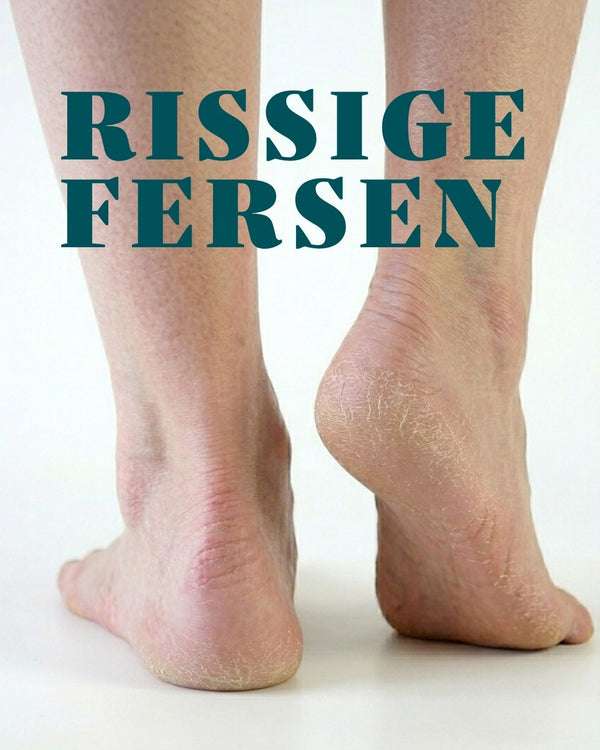
After a summer in open shoes or the first weeks of heated indoor air, a hard, yellowish edge often appears on the rim of the heel. At some point a fine line runs through it, and it feels tight when you step down. On the shelf, "fissure balm" then sits next to foot cream, deer tallow and petroleum jelly. Here you can read what is behind the word and what is in the tubes.
What the word "Schrunde" means
"Schrunde" is an old German word for a gap or crack. The Digital Dictionary of the German Language lists it as a regional word with two meanings: a small tear in the skin and a crack in rocky terrain. It is recorded as early as Old High German as "scrunta" in the 9th century; in the mountains it still refers to crevices in rock and glaciers (DWDS).
In medicine, a "Schrunde" is called a rhagade. Altmeyer's dermatological encyclopaedia lists "Schrunde", heel crack, skin crack and lip crack as synonyms and describes a slit-like, usually painful tear that forms when brittle, dried-out skin is bent and breaks. Typical sites are the heels, fingertips, the creases of joints and the corners of the mouth (Altmeyer & Bacharach-Buhles 2024); for the hands, see Cracked, split fingertips: causes and what helps.
In everyday German, even fine lines in callus are called "Schrunden". For care, depth is what counts: a crack that lies only in the dead horny layer does not hurt. If it reaches the living skin, it hurts when you step down, bleeds or weeps. Then it is no longer a matter for care products.
Callus or fissure: the difference
Callus is a protective response: where pressure and friction act constantly, the skin forms more horny cells. Fissures occur when this thick layer dries out. In a study of 93 people, callus, dry heel skin and cracked heels had significantly less moisture and were less elastic than unaffected skin (Hashmi et al. 2015). When you step down, the fat pad under the heel spreads sideways and stretches the rim; the dry callus cracks, first superficially, then deeper, until the cracks can bleed (Healthify 2025). More on this in Why heel skin gets so thick and cracks.
| Callus | Fissure | |
|---|---|---|
| What it is | thickened horny layer, protection against pressure and friction | crack in dry, usually thickened skin |
| What it looks like | yellowish to brownish, hard, often ridged along the rim of the heel | fine line to deep split |
| How it feels | rough and firm, usually painless | feels tight; deep cracks hurt when walking or bleed |
| Typical sites | heel, ball of the foot, toes, palms | rim of the heel, fingertips, creases of joints, corners of the mouth |
| What you can do | remove in moderation, moisturise regularly, reduce pressure | care for fine cracks daily; have deep cracks checked by a podiatrist or doctor |
Along the rim of the heel, dry, thickened callus is the first stage from which fissures develop (Healthify 2025); that is where care starts.
What is in fissure balm
"Fissure balm" is not a protected term, and "salve" and "cream" are not legally defined in cosmetics either (Balm, salve, cream, butter: what is the difference?). Only the ingredient list shows what is inside. On 28 October 2026 we read the lists of seven products sold in Germany as "Schrundensalbe", three from a drugstore chain and four from online pharmacies. The sample is small, but it shows which ingredients keep coming up.
| Name in the list (INCI) | In plain English | Role in the formula | In how many lists |
|---|---|---|---|
| Aqua | water | base of a cream | 6 of 7 |
| Urea | urea | binds water; in higher amounts it loosens horny flakes | 6 of 7, three times at 25% |
| Glycerin | glycerin | humectant | 6 of 7 |
| Panthenol | dexpanthenol | moisturising care | 5 of 7 |
| Petrolatum, Paraffinum Liquidum | petroleum jelly, liquid paraffin | dense film against evaporation | 4 of 7 |
| Lanolin, Lanolin Alcohol | wool wax, wool wax alcohols | fatty film | 3 of 7 |
| Allantoin | allantoin | care ingredient | 3 of 7 |
| Salicylic Acid | salicylic acid | loosens horny flakes | 1 of 7 |
| Parfum, essential oils, Camphor, Menthol | fragrances, camphor, menthol | scent, cooling feel | 6 of 7 |
Water in first place means the product is a cream, even if "salve" is printed on the tube. Only one of the seven formulas was water-free; it starts with petroleum jelly.
Urea is part of the skin's natural moisturising factor. Up to about 10 percent it holds moisture in the horny layer; above that it loosens the cohesion between horny cells (Celleno 2018); a dermatological review gives 20 to 30 percent for this (Sethi et al. 2016). More in Urea or water-free cream? Rough heels and dry hands.
Salicylic acid is also one of the substances that can loosen dead horny cells and make thick callus thinner (Healthify 2025). In cosmetic products such as a foot salve it may make up at most 2.0 percent; products for children under three must not contain it (Regulation (EU) 2019/1966).
Dexpanthenol, usually listed as "panthenol", is a precursor of pantothenic acid (vitamin B5) and has been used for decades as a moisturising ingredient. According to a review co-written by employees of a manufacturer, exactly how it works has not been fully clarified (Proksch et al. 2017).
Petroleum jelly and lanolin leave a dense film on the skin. Petroleum jelly slows evaporation the most, followed by lanolin, mineral oil and silicones; as drawbacks of such film formers the review names odour, possible allergies and the greasy feel (Sethi et al. 2016). See Petroleum jelly or beeswax salve: the difference and Lanolin or beeswax: what is the difference?
Allantoin is marketed as moisturising and as loosening callus; according to the same review, supporting studies are lacking (Sethi et al. 2016). On fragrances, see Essential Oils and Fragrance Allergens; on Latin names, INCI names explained: our ingredients in plain English.
Several packs in the sample state explicitly: not for open, bleeding or injured skin. Urea and acids can sting on cracks (Healthify 2025); why, is explained in Why does hand cream sting on cracked hands?
Fissure balm or water-free care?
Urea and salicylic acid loosen callus. A film of plant oil and wax brings hardly any moisture of its own, but it keeps the existing moisture in the skin and the callus supple; it works most clearly on slightly damp skin (Sethi et al. 2016). The table describes composition and use, not a ranking.
| Product | Base | Water | Callus-loosening ingredients | Scent | Typical use |
|---|---|---|---|---|---|
| Fissure balm with 25% urea | water, urea, oils, emulsifiers | yes | yes, urea | depends on the product | thick, callused heels; not in open cracks |
| Fissure balm based on petroleum jelly or lanolin | petroleum jelly, lanolin, often panthenol | some | some, urea or salicylic acid | yes | dry, callused areas |
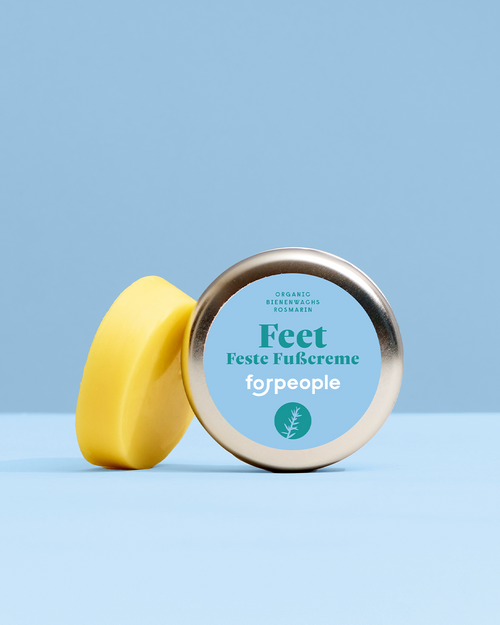
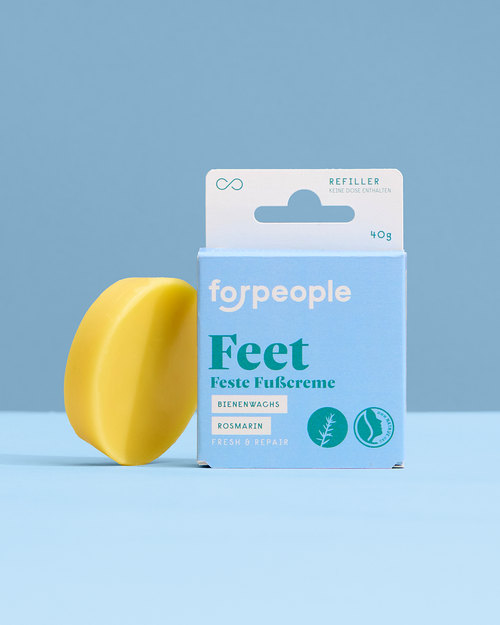
| Solid Foot Cream – Rosemary & Sage | sunflower oil, beeswax, olive oil, shea butter | no | no | essential oils | in the evening on dry, rough heels and balls of the feet, also with superficial cracks |
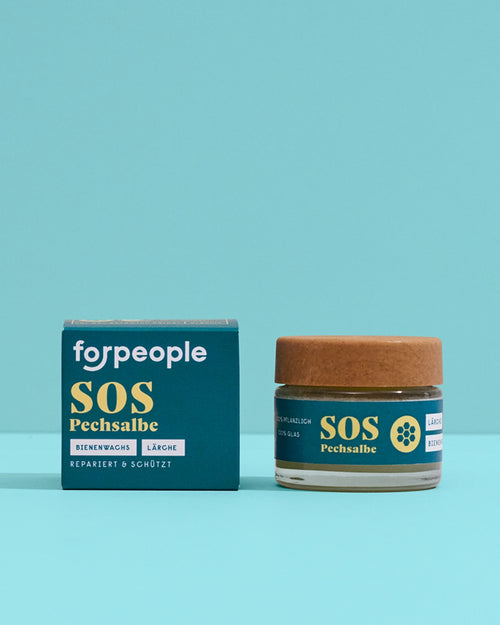
| SOS Pitch Salve – Larch Resin | olive oil, larch resin, beeswax | no | no | natural scent of the resin | targeted on rough, callused areas on hands, heels, elbows |
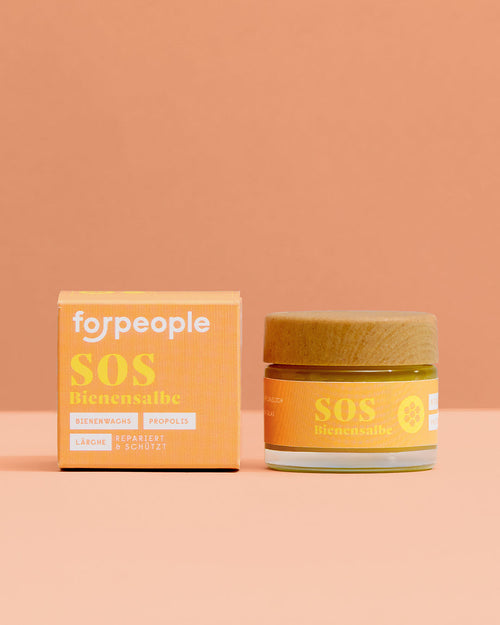
| Beeswax Salve – Larch & Mandarin | olive, almond and castor oil, beeswax, larch resin, propolis | no | no | essential oils | dry, rough areas on hands, heels, elbows |
For the heels: The Solid Foot Cream – Rosemary & Sage is intended for dry, rough feet and heels with superficial cracks. It contains no urea and no acid; essential oils of rosemary, eucalyptus and clary sage give it its scent. According to the product page it is not suitable for children under 7 and contains eucalyptol and camphor. When the tin is empty, you refill it with the Solid Foot Cream Refill - Rosemary & Sage.
For individual rough areas: The SOS Pitch Salve - Larch Resin in a Glass Jar leaves a tough film that stays put, for example on the rim of the heel. The Beeswax Salve – Larch & Mandarin in a Glass Jar is softer and contains propolis and essential oils; it is not intended for children under 3. If you react to colophony, tree resins, propolis or balsam of Peru, clarify use with a doctor first (Colophony allergy, propolis, beeswax: symptoms and advice).
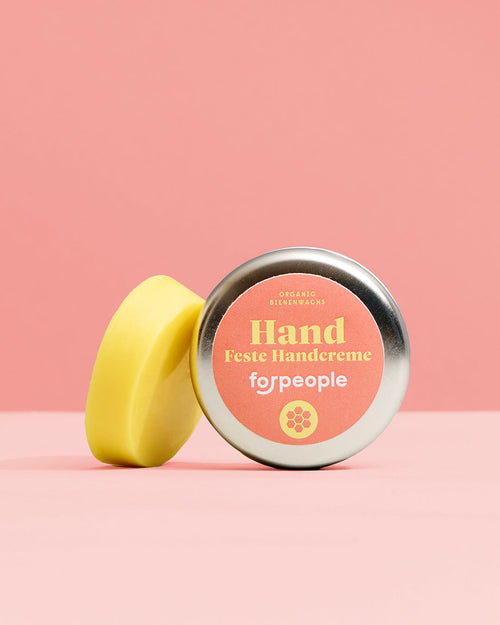
For the hands, a hand cream such as the Solid Hand Cream - Beeswax made from beeswax, olive and sunflower oil, without essential oils, is a good fit. This can be combined with a urea cream: let it absorb, then apply the water-free cream thinly over it in the evening. If you reach for deer tallow, Deer tallow: what is in it and what the alternatives are explains what it contains.
How to proceed with fine cracks in callus:
- Wash your feet in lukewarm water in the evening and dry them thoroughly.
- Smooth thick callus carefully at most once a week, leaving out cracked areas; blades and callus planes belong in trained hands (Pumice Stone Wet or Dry? How to Remove Calluses Properly).
- Apply a thin layer to the still slightly damp skin, a little more generously on the rim of the heel; loose cotton socks on top.
- As long as your heels are cracked, avoid open shoes and going barefoot (Healthify 2025).
- Do not put anything into open, bleeding or weeping cracks.
When to see a podiatrist or doctor
Cosmetics care for intact skin; they do not treat diseases. Have your feet checked by a podiatrist or doctor if cracks are deep, bleed, weep or hurt when walking, if the skin turns red, swells or feels warm, or if nothing improves despite regular care. Deep cracks can become infected; an infection of the deeper skin layers needs prompt medical help (Healthify 2025). If you have diabetes or reduced sensation or poor circulation in your feet, do not treat callus and cracks yourself, not even with callus-loosening products, and have every change checked. Cracked heels can also be linked to atopic dermatitis, psoriasis or an underactive thyroid (Healthify 2025); a doctor can clarify this. Who is responsible for what is explained in Cracked heels: when to see a podiatrist or doctor.
Frequently asked questions
What is the difference between callus and fissures?
Callus is a thickened, firm protective layer and usually does not hurt. A fissure is a crack, usually in dry callus along the rim of the heel.
What is in fissure balm?
That depends on the product. In our sample, water and urea usually came first, often with glycerin, panthenol, petroleum jelly or lanolin and fragrances; salicylic acid only once.
What does 25 percent urea mean?
A quarter of the product is urea. In this amount, urea makes thick callus softer; up to about 10 percent it mainly acts as a humectant. It can sting on cracks.
Can fissure balm go into open cracks?
No. Several manufacturers explicitly rule out open, bleeding or injured skin, and the same applies to our creams and salves. Have open cracks checked.
Deer tallow or fissure balm?
Deer tallow mainly leaves a film of fat on the skin; a fissure balm with a lot of urea loosens callus. With thick callus, the two go together: in the evening first the urea cream, then a thin film of fat.
Do fissures also occur on hands and elbows?
Yes. Besides the heels, fingertips, the creases of joints and the corners of the mouth are considered typical sites. For hands, a water-free hand cream fits; for individual rough areas on hands and elbows, a tough salve.
At forpeople
Solid Foot Cream – Rosemary & Sage, 40 g, €9.90: water-free, with essential oils, for dry, rough heels; refillable.
SOS Pitch Salve - Larch Resin in a Glass Jar, 50 g, €16.90: three ingredients, for rough areas on hands, heels and elbows.
Beeswax Salve – Larch & Mandarin in a Glass Jar, 50 g, €12.90: soft salve with propolis and essential oils.
Solid Hand Cream - Beeswax, 30 g, €9.90: without essential oils, for dry hands.
Our creams and salves contain no urea and no salicylic acid. They care for dry, rough skin and do not belong on open areas. If your skin reacts, stop using the product.
From the blog: Cracked Heels, Dry Feet: What Really Helps – and What Doesn't
Sources
- Digitales Wörterbuch der deutschen Sprache (DWDS): Schrunde. Bedeutungen nach dem Wörterbuch der deutschen Gegenwartssprache (1976), Etymologie nach Pfeifer W et al.: Etymologisches Wörterbuch des Deutschen. Berlin-Brandenburgische Akademie der Wissenschaften, accessed 28.10.2026. https://www.dwds.de/wb/Schrunde
- Altmeyer P, Bacharach-Buhles M (2024): Rhagade. Altmeyers Enzyklopädie, Fachbereich Dermatologie, last updated 20.08.2024, accessed 28.10.2026. https://www.altmeyers.org/de/dermatologie/rhagade-3506
- Hashmi F, Nester C, Wright C, Newton V, Lam S (2015): Characterising the biophysical properties of normal and hyperkeratotic foot skin. J Foot Ankle Res 8: 35. https://doi.org/10.1186/s13047-015-0092-7
- Healthify He Puna Waiora (2025): Cracked heels and how to heal them. Reviewed on 04.09.2025 by Dr Sara Jayne Pietersen (general practitioner), accessed 28.10.2026. https://healthify.nz/health-a-z/c/cracked-heel
- Celleno L (2018): Topical urea in skincare: A review. Dermatol Ther 31(6): e12690. https://doi.org/10.1111/dth.12690
- Sethi A, Kaur T, Malhotra SK, Gambhir ML (2016): Moisturizers: The Slippery Road. Indian J Dermatol 61(3): 279–287. https://doi.org/10.4103/0019-5154.182427
- European Commission (2019): Commission Regulation (EU) 2019/1966 of 27 November 2019 amending and correcting Annexes II, III and V to Regulation (EC) No 1223/2009 on cosmetic products. OJ L 307, 28.11.2019, p. 15; Annex III entry 98 (salicylic acid). https://eur-lex.europa.eu/eli/reg/2019/1966/oj
- Proksch E, de Bony R, Trapp S, Boudon S (2017): Topical use of dexpanthenol: a 70th anniversary article. J Dermatolog Treat 28(8): 766–773. https://doi.org/10.1080/09546634.2017.1325310