Before a long hike, there may still be a tin of deer tallow in the bathroom that came along on the last trip. What is actually inside is printed in small type on the back. Here you can read what deer tallow is, when to apply it and how the usual alternatives differ.
What deer tallow is and how it is obtained
Tallow is fat obtained from the fatty tissue of animals, typically cattle, sheep and deer (PharmaWiki: Talg). The fatty tissue is heated until the fat melts out and separates from the rest of the tissue; the scientific literature calls this "rendered animal fat" (Russell et al. 2024). Deer tallow consists mainly of triglycerides, that is glycerol with fatty acids attached, and as an animal raw material it is not vegan (PharmaWiki: Hirschtalg). At room temperature tallow is solid; on warm skin it softens.
PharmaWiki lists chafing, calluses and the prevention of blisters as areas of use, mainly for hiking and sport, and says to apply it before and after exertion according to the product instructions (PharmaWiki: Hirschtalg). We have not found any studies on deer tallow on human skin. A review of tallow in skin care is based on beef and mutton tallow and sees major research gaps regarding its use on human skin (Russell et al. 2024).
What deer tallow creams actually contain
"Deer tallow" on the tin tells you nothing about how much tallow is inside. Besides the tallow, deer tallow creams contain other ingredients such as waxes, essential oils and plant extracts (PharmaWiki: Hirschtalg). If the product is a cream, water and an emulsifier are added; salves and sticks consist of fats and waxes without water.
One example: in 2015 Stiftung Warentest examined cosmetics containing mineral oil, including a deer tallow cream. According to its ingredient list it contained four mineral oil-based substances: Petrolatum (petroleum jelly), Paraffinum Liquidum (liquid paraffin), Paraffin (paraffin wax) and Cera Microcristallina (microcrystalline wax). As in all 25 products tested, the laboratory found mineral oil aromatic hydrocarbons in it (Stiftung Warentest 2015). In 2018, Germany's Federal Institute for Risk Assessment (BfR) concluded that, based on current knowledge, highly refined mineral oils in cosmetics are not expected to pose health risks when applied to the skin (BfR 2018).
Formulas change, and there are also deer tallow products based on tallow and beeswax. Only the ingredient list tells you which kind you have: the further forward an ingredient appears, the larger the amount. If Petrolatum or Paraffinum Liquidum comes before the tallow, the product contains more mineral oil than deer tallow. More in How to Read an INCI List and Hand cream without mineral oil: spotting paraffin.
Deer tallow for hiking and running: before or after the tour?
Blisters form when the skin is sheared between the bones of the foot and the sock with every step; moisture increases friction (Rushton & Richie 2024). The idea behind deer tallow before a tour is a gliding film that lowers this friction. This has only been measured on forearm and abdominal skin: water and moisturising creams increased friction there, while viscous lubricants such as petroleum jelly, mineral oil and glycerol lowered it, but only for about 90 minutes. After three hours it was above the starting value. Whether lubricants prevent blisters on the feet is not known (Rushton & Richie 2024).
On the evenings before: wash your feet and apply cream to heels and balls of the feet so the hard skin goes into the boot supple. Deer tallow works for this, as does a water-free cream made from plant oil and wax, such as the Solid Foot Cream – Rosemary & Sage. It brings hardly any moisture of its own. So apply it thinly to skin that is still slightly damp after washing; that is where a film of fat slows evaporation most clearly (Sethi et al. 2016).
On the morning of the tour: dry feet, dry and smooth socks. According to the available measurements, a gliding film of deer tallow on friction spots wears off after about an hour and a half. A solid foot cream is meant for care in the evening, not as a lubricant inside the boot.
On the way: air your feet during breaks, change wet socks and tape rubbing spots straight away. There is more research on broken-in boots and suitable socks than on creams; details are in Foot care before and after hiking, and advice for thighs and underarms in Preventing chafing when running and cycling.
After the tour: wash your feet in lukewarm water, dry them thoroughly, including between the toes, check for pressure spots and apply cream to heels and balls of the feet in the evening, on intact skin only. Loose cotton socks on top keep the care on your feet (Foot cream overnight with socks: does it help?). A solid cream does not leak in your rucksack, but it does soften in the warmth.
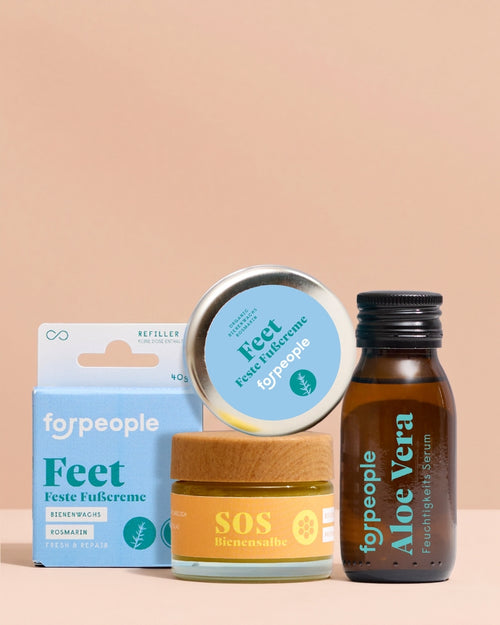
For care in steps, the foot cream and beeswax salve come together with an aloe vera serum in the Foot Care Set – 3 Steps for Cracked Heels: the serum as the water-based part on freshly washed skin, the cream on top and a little salve on particularly rough spots.
Deer tallow and the alternatives compared
The table describes composition, form and use, not a ranking.
| Product | What it is made of | Water | Form | Typical use |
|---|---|---|---|---|
| Deer tallow cream, salve or stick | deer tallow, depending on the product with waxes, essential oils, plant extracts or mineral oils | cream: yes; salve and stick: no | cream, salve, stick | before and after exertion on feet and friction spots |
| Melkfett (udder balm) | classically petroleum jelly and paraffins, no fixed formula | no | semi-solid salve | dry, rough hands, overnight |
| Petroleum jelly | Petrolatum: purified hydrocarbons from crude oil | no | semi-solid, glossy film | very dense film on very dry spots |
| Urea cream | urea in a base that usually contains water | usually yes | cream, lotion, foam | dry skin; higher concentrations for thick hard skin |
| Beef tallow | rendered beef fat, mainly oleic, palmitic and stearic acid | no | solid, melts on the skin | care balm; hardly any studies on skin |
| Solid foot cream, water-free | plant oils, shea butter, beeswax; ours with essential oils | no | solid in the tin, melts on the skin | in the evening on heels and balls of the feet |
| Pitch salve and beeswax salve | olive oil, larch resin, beeswax; beeswax salve also with almond and castor oil, propolis and essential oils | no | tough salve in a jar | targeted on individual rough spots |
Sources for the table: PharmaWiki: Hirschtalg, Stiftung Warentest 2015, Sethi et al. 2016, Celleno 2018, Russell et al. 2024; details of our products according to their ingredient lists.
Melkfett and petroleum jelly leave a particularly dense film; a dermatological review names petrolatum as the substance that slows the skin's water loss the most (Sethi et al. 2016). More in What is Melkfett (udder balm)? What it is made of and what it is for and Petroleum jelly or beeswax salve: the difference.
Urea cream works differently: urea is part of the skin's natural moisturising factor. Up to about 10 percent it acts as a humectant; at higher concentrations it loosens skin flakes (Celleno 2018). More in Urea or water-free cream? Rough heels and dry hands.
Beef tallow contains mainly oleic, palmitic and stearic acid and few polyunsaturated fatty acids; controlled studies on its use on human skin are largely lacking (Russell et al. 2024).
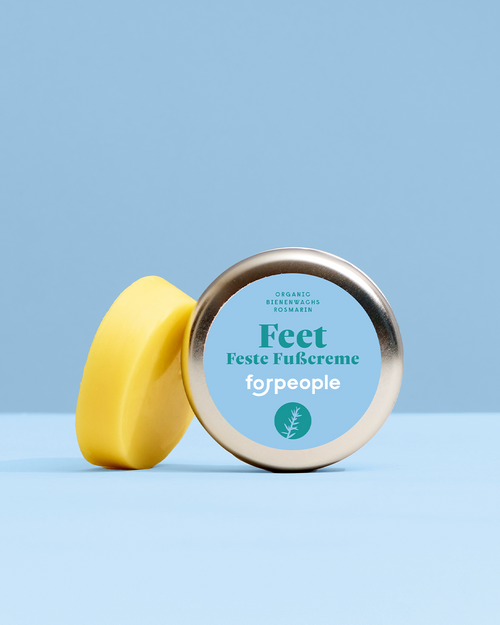
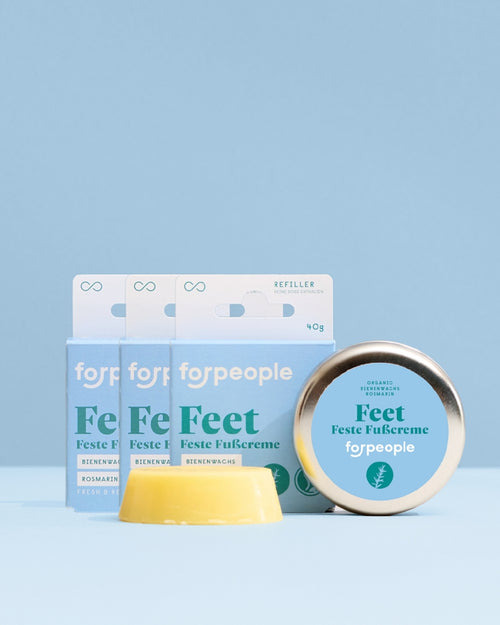
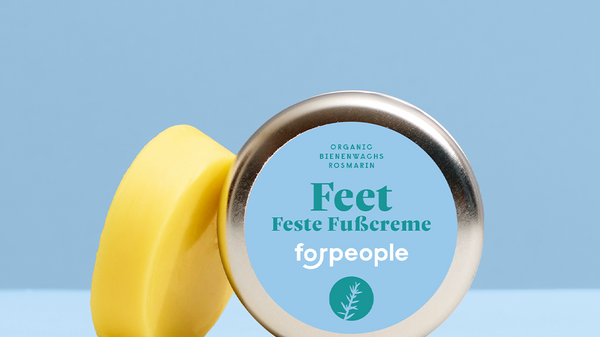
Water-free solid foot cream: the Solid Foot Cream – Rosemary & Sage is made from sunflower oil, beeswax, olive oil and shea butter, plus small amounts of St John's wort and aloe vera extract. Essential oils of rosemary, eucalyptus and clary sage give it its herbal scent; the declared fragrance components are linalool, limonene and geraniol. According to the product page, it is not suitable for children under 7 and contains eucalyptol and camphor. It contains no mineral oil and no water; because of the beeswax it is not vegan.
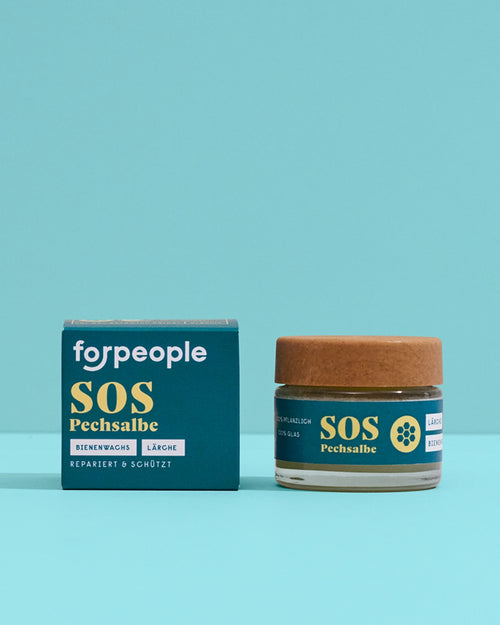
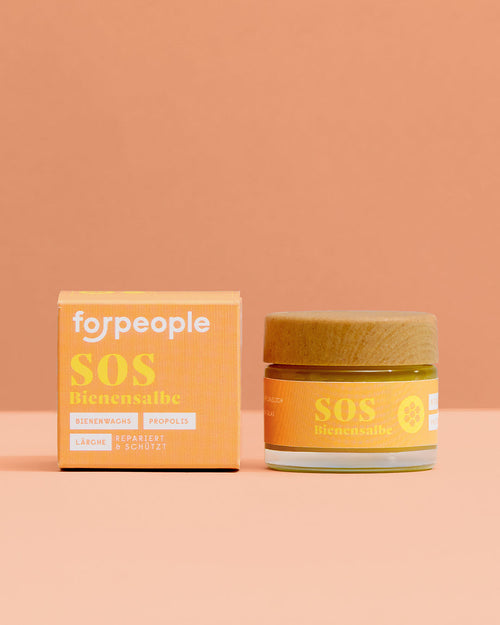
Pitch salve and beeswax salve are tougher than a cream and stay put well, for example on the edge of the heel. The SOS Pitch Salve - Larch Resin in a Glass Jar is made from olive oil, larch resin and beeswax. The Beeswax Salve – Larch & Mandarin in a Glass Jar also contains almond and castor oil, propolis and essential oils of mandarin, rosemary and silver fir; according to the product page, it is not intended for children under 3. If you react to colophony, tree resins, propolis or balsam of Peru, clarify use with a doctor first; see Colophony allergy, propolis, beeswax: symptoms and advice.
When to seek medical advice?
Care products are meant for intact skin. Get advice from a pharmacy, a podiatrist or a doctor if a blister is large, very painful or filled with blood, if a spot turns red, warm, swollen or produces pus, or if cracks in the heel are deep or bleed. If your skin reacts to a product with redness or a burning feeling, stop using it. If you have diabetes or reduced sensation in your feet, discuss long tours with a doctor or podiatrist early on. More in Cracked heels: when to see a podiatrist or doctor.
Frequently asked questions
What is in deer tallow?
Deer tallow itself is rendered deer fat consisting mainly of triglycerides. In creams, salves and sticks, depending on the product, waxes, essential oils, plant extracts, water and emulsifiers or mineral oils are added. The ingredient list shows what is in your tin.
Should I apply deer tallow before or after hiking?
Traditionally before and after exertion. For care, apply cream on the evenings before the tour and on the evening afterwards. In the morning your feet should go into the socks dry; in measurements on other skin, a gliding film lasted only about an hour and a half.
Does deer tallow protect against blisters?
There is no evidence for this. In measurements on the forearm and abdomen, viscous films of fat lowered friction only temporarily; this has not been studied on feet.
Deer tallow or petroleum jelly: what is the difference?
Petroleum jelly is a raw material from crude oil and forms a very dense, odourless film. Deer tallow is an animal fat; deer tallow creams may themselves contain petroleum jelly. If you want to avoid raw materials from crude oil, check the ingredient list for Petrolatum and Paraffin.
Deer tallow or Melkfett?
Despite its name, classic Melkfett (udder balm) consists of petroleum jelly and paraffins, not animal fat. Both leave a film of fat on the skin; how dense it is depends on the formula.
Is there a vegan alternative to deer tallow?
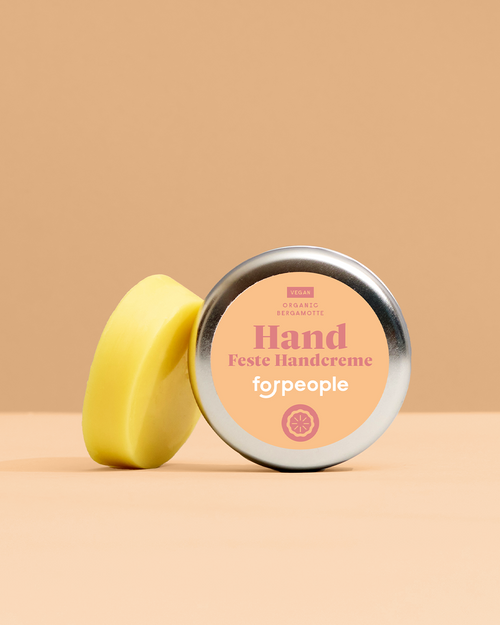
Yes, creams and balms made from plant oils, plant butters and plant wax. Our foot cream and the salves contain beeswax and are not vegan. The Solid Vegan Hand Cream - Bergamot with candelilla wax, jojoba oil, olive oil, shea butter and hemp seed oil is vegan; whether a hand cream suits your feet is covered in Hand cream on your feet, foot cream on your hands: does it work?.
Can I apply the solid foot cream right before a run?
It is meant for care in the evening, not as a lubricant inside the shoe. Applied thinly, the oils absorb and the wax stays as a light film; in the morning you put your socks on over dry feet.
At forpeople
Solid Foot Cream – Rosemary & Sage, 40 g, €9.90: water-free, made from sunflower oil, beeswax, olive oil and shea butter, with essential oils; the metal tin can be refilled with a refill.
Foot Care Set XL – for Dry Feet, 160 g, €29.90: one tin of foot cream and three refills with the same formula.
Beeswax Salve – Larch & Mandarin in a Glass Jar, 50 g, €12.90: tough salve with beeswax, propolis and larch resin.
SOS Pitch Salve - Larch Resin in a Glass Jar, 50 g, €16.90: olive oil, larch resin and beeswax.
The foot cream and the salves care for dry, rough skin; they are not blister protection. Do not apply them to open or injured skin, and stop using them if your skin reacts.
More on this: Why heel skin gets so thick and cracks · Rich cream or moisturiser? What dry skin needs
From the blog: What goes into the solid foot cream – and why
Sources
- Vögtli A (2026): Hirschtalg. PharmaWiki, letzte Änderung 07.10.2026, abgerufen am 28.10.2026. https://www.pharmawiki.ch/wiki/index.php?wiki=Hirschtalg
- Vögtli A (2026): Talg. PharmaWiki, letzte Änderung 07.10.2026, abgerufen am 28.10.2026. https://www.pharmawiki.ch/wiki/index.php?wiki=Talg
- Russell MF, Sandhu M, Vail M, Haran C, Batool U, Leo J (2024): Tallow, Rendered Animal Fat, and Its Biocompatibility With Skin: A Scoping Review. Cureus 16(5): e60981. https://doi.org/10.7759/cureus.60981
- Stiftung Warentest (2015): Mineralöle in Kosmetika: Kritische Stoffe in Cremes, Lippenpflegeprodukten und Vaseline. test.de, 26.05.2015, Tabelle „Mineralöle in Körperpflege- und Hairstylingprodukten“. https://www.test.de/Mineraloele-in-Kosmetika-Kritische-Stoffe-in-Cremes-Lippenpflegeprodukten-und-Vaseline-4853357-4853393/
- Bundesinstitut für Risikobewertung (2018): Hochraffinierte Mineralöle in Kosmetika: Gesundheitliche Risiken sind nach derzeitigem Kenntnisstand nicht zu erwarten. Aktualisierte Stellungnahme Nr. 008/2018 vom 27. Februar 2018. https://doi.org/10.17590/20180219-123914
- Rushton R, Richie D (2024): Friction Blisters of the Feet: A Critical Assessment of Current Prevention Strategies. J Athl Train 59(1): 8–21. https://doi.org/10.4085/1062-6050-0341.22
- Sethi A, Kaur T, Malhotra SK, Gambhir ML (2016): Moisturizers: The Slippery Road. Indian J Dermatol 61(3): 279–287. https://doi.org/10.4103/0019-5154.182427
- Celleno L (2018): Topical urea in skincare: A review. Dermatol Ther 31(6): e12690. https://doi.org/10.1111/dth.12690