


What Melkfett is
The Swiss reference site PharmaWiki describes Melkfett as a hydrophobic, that is water-repellent, preparation for the skin or for the udder of an animal that is milked. Classically it consists of petroleum jelly and paraffins and, chemically speaking, contains no fat at all but hydrocarbons from mineral oil. It has no defined composition: it may also contain fats, fatty oils, waxes and plant extracts. Classic Melkfett contains no fragrances and no preservatives (PharmaWiki 2025).
So “Melkfett” is a generic name, not a recipe. Three kinds are on sale side by side: classic Melkfett, as also sold by farm suppliers; Melkfett sold as a cosmetic, with plant oil, calendula or fragrance; and ointments of this name made entirely of plant oil and wax. How such preparations differ is explained on the page Salve, balm, butter, solid cream: the difference.
Melkfett and beeswax cream compared
| Feature | Classic Melkfett | Melkfett as a cosmetic with plant oil | Cream made of beeswax and plant oil |
|---|---|---|---|
| Base | petroleum jelly and paraffins | petroleum jelly and paraffins, plus plant oil or extracts | beeswax and plant oils |
| Names in the list of ingredients | Petrolatum, Paraffinum Liquidum, Paraffin, Cera Microcristallina | the same, plus oils and extracts; “Parfum” if scented | Cera Alba, plus oils such as Olea Europaea Fruit Oil |
| Film on the skin | very dense | dense | less dense, depending on the recipe |
| Skin feel | shiny, noticeable for a long time | similar | solid in the tin, melts on the skin |
| Smell | no added scent | scented, depending on the product | of wax and oil |
| Shelf life | long, hardly oxidises | limited by the plant oils | limited by the plant oils |
The middle column is a typical example; individual products differ. Sources for the table: PharmaWiki 2025, BfR 2018, Sethi et al. 2016, Stamatas et al. 2008; skin feel is based on experience. The measurements on the film are on the page Petroleum jelly or beeswax salve: the difference.
How do I know what I have bought?
What matters is what the product is intended for. The EU Cosmetics Regulation applies to products intended to be placed in contact with the external parts of the human body (Art. 2). A Melkfett sold for human skin is a cosmetic product: it undergoes a safety assessment (Art. 10) and its label carries, among other things, the intended use, information on shelf life and a list of ingredients under the heading “Ingredients” (Art. 19) (Regulation (EC) No 1223/2009). A Melkfett intended solely for udders does not fall under this regulation.
How to read the label:
- Intended use: Does it say skin care or hands, or does it only mention udders and teats?
- “Ingredients”: The ingredients are listed in descending order of weight. The first two or three names show what the ointment mainly consists of.
- Mineral oil: Petrolatum (petroleum jelly), Paraffinum Liquidum, Paraffin and Cera Microcristallina are the usual names (BfR 2018).
- Oil, wax, scent: Helianthus Annuus Seed Oil is sunflower oil, Cera Alba is beeswax, Calendula Officinalis is calendula; “Parfum” stands for added fragrance substances.
How such a list is structured is explained in How to Read an INCI List.
What the film does on the skin
Petroleum jelly is one of the occlusive substances: they lay a water-repellent layer on the skin and slow water loss, petroleum jelly most of all according to a review article. They work best on slightly damp skin, that is after washing your hands. As limits of most occlusives, the review names odour, possible allergies and the greasy feel (Sethi et al. 2016). The mechanism is explained in Occlusion and TEWL: how a wax film protects your skin.
That petroleum jelly “does not sink in” is only half true. In a study on volunteers it did not lie on the surface like a tight sheet of foil but was found between the horny cells at all levels of the horny layer (Ghadially et al. 1992). According to the German Federal Institute for Risk Assessment, the saturated hydrocarbons hardly enter the body in the process (BfR 2018).
Plant oils behave much like liquid paraffin: in one measurement, paraffin oil and two plant oils entered the upper levels of the horny layer to a comparable degree and made it swell moderately, petroleum jelly considerably more (Stamatas et al. 2008). For ointments made of beeswax and plant oil there is no comparably clear series of measurements. If you are looking for the densest film, petroleum jelly or classic Melkfett will serve you well.
Mineral oil: where things stand, in brief
Mineral oils are mixtures of saturated hydrocarbons (MOSH) and aromatic hydrocarbons (MOAH). The German Federal Institute for Risk Assessment has assessed highly refined mineral oils in cosmetic products: when they are used on the skin, no health risks are to be expected according to current knowledge. The assessment refers to grades that meet the purity requirements for medicinal products (BfR 2018). If you buy Melkfett for your own hands, choose one that is labelled as a cosmetic.
Whether you want to use mineral oil is your decision. For some people the origin of the raw materials matters, for others the shelf life: during refining, the hydrocarbons are treated so that they hardly oxidise (Sethi et al. 2016); plant oils can turn rancid. The debate about MOAH is put into context on the page Hand cream without mineral oil: spotting paraffin.
How to use a greasy ointment on your hands
- After washing: Dry your hands and rub in a little.
- Not before gripping: Do not apply it right before working with tools, riding a bike or playing an instrument. The film makes your grip less secure.
- Overnight: In the evening the layer can be thicker. Cotton gloves keep it on your hands; more in Overnight hand mask: what it does and how to do it.
- Start small with anything new: If an ointment contains fragrance, plant extracts, wool wax or resin, try it on a small area first.
On work in the stable: Cracked hands from stable work: what helps in winter?
When to seek medical advice
Neither Melkfett nor any other cosmetic belongs on open, bleeding or weeping cracks; have them looked at by a doctor. The same applies if the skin is very red or swollen or forms blisters, if cracks do not close, and if dry hands do not improve after two to three weeks despite regular care. If your skin reacts to a product with redness or stinging, stop using it.
Frequently asked questions
Is Melkfett the same as petroleum jelly?
Not quite. Petroleum jelly is a single raw material and appears in the list of ingredients as Petrolatum. Classic Melkfett consists of petroleum jelly and paraffins and is therefore very similar. But a Melkfett may also contain plant oil, wax or extracts.
Can I use Melkfett from a farm supplier on my hands?
It is not intended for that. A product solely for udders is not a cosmetic product; the requirements of the Cosmetics Regulation do not apply to it. For your own skin, choose a Melkfett that is labelled as a cosmetic.
Does Melkfett sink into the skin?
Hardly. Petroleum jelly spreads within the horny layer, the outermost layer of the skin, and stays noticeable as a film. That is intended, because the film slows evaporation.
Does Melkfett moisturise?
No. Classic Melkfett contains no water. It holds back the water that is already in the skin.
Melkfett or a beeswax cream: which should I use?
Both are rich, fat-based care for the time after work and for the night. The products differ in raw materials, smell and skin feel; petroleum jelly seals more tightly. Read the list of ingredients and use what you like and will use regularly.
At forpeople
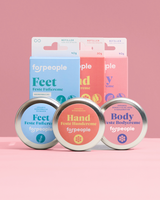
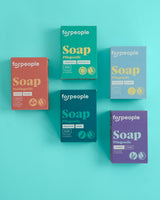
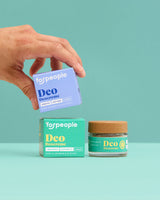
Our solid creams and salves are cosmetic products for human skin; they are not intended for animals. According to their ingredient lists they contain no mineral oil. That is a statement of fact, not a judgement on Melkfett or petroleum jelly. According to the product information, they are not to be used on injured or irritated skin.
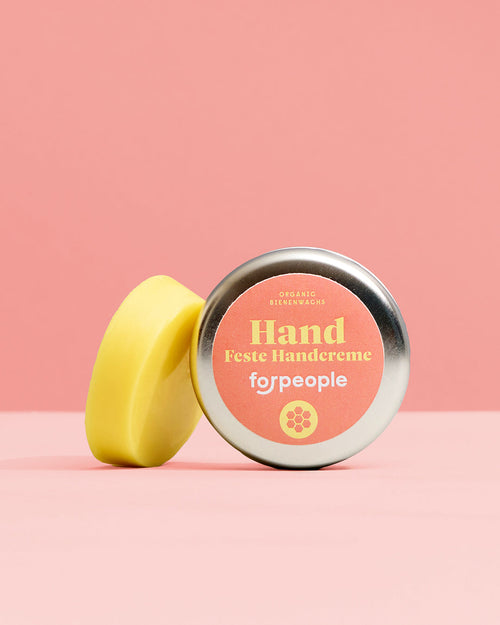
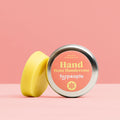
- Solid Hand Cream - Beeswax, 30 g, €9.90: according to the ingredient list, beeswax, olive and sunflower oil, St. John's wort and aloe extract. Without water and without added scent; it smells of beeswax.
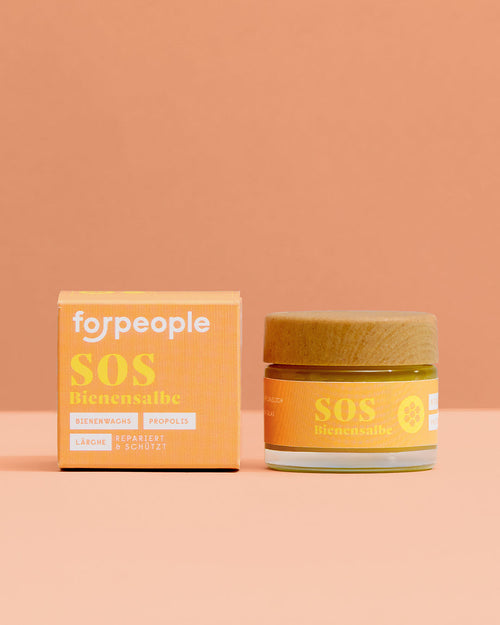
- Beeswax Salve Larch & Mandarin in a Glass Jar, 50 g, €12.90: a soft salve made of olive, almond and castor oil with beeswax. It is scented and contains larch resin, propolis and essential oils; see Allergic to tree resin, colophony or propolis?
- Bee Salve Larch & Mandarin in a Tin, 150 ml, €34.90: the same ingredient list in the large tin.
More on this: Lanolin or beeswax: what is the difference? · Deer tallow for feet: what it does and what can replace it · Petroleum jelly or beeswax salve: the difference
From the blog: Bee Balm with Beeswax and Propolis for Dry Skin
Sources
- Vögtli A (2025): Melkfett. PharmaWiki, letzte Änderung 10.03.2025 (abgerufen 08.10.2026). https://www.pharmawiki.ch/wiki/index.php?wiki=Melkfett
- Europäisches Parlament und Rat (2009): Verordnung (EG) Nr. 1223/2009 über kosmetische Mittel, Art. 2 Abs. 1 Buchst. a, Art. 10 und Art. 19. ABl. L 342: 59. https://eur-lex.europa.eu/eli/reg/2009/1223/oj
- Bundesinstitut für Risikobewertung (2018): Hochraffinierte Mineralöle in Kosmetika: Gesundheitliche Risiken sind nach derzeitigem Kenntnisstand nicht zu erwarten. Aktualisierte Stellungnahme Nr. 008/2018 vom 27. Februar 2018. https://doi.org/10.17590/20180219-123914
- Sethi A, Kaur T, Malhotra SK, Gambhir ML (2016): Moisturizers: The Slippery Road. Indian Journal of Dermatology 61(3): 279–287. https://doi.org/10.4103/0019-5154.182427
- Ghadially R, Halkier-Sorensen L, Elias PM (1992): Effects of petrolatum on stratum corneum structure and function. Journal of the American Academy of Dermatology 26(3 Pt 2): 387–396. https://doi.org/10.1016/0190-9622(92)70060-s
- Stamatas GN, de Sterke J, Hauser M, von Stetten O, van der Pol A (2008): Lipid uptake and skin occlusion following topical application of oils on adult and infant skin. Journal of Dermatological Science 50(2): 135–142. https://doi.org/10.1016/j.jdermsci.2007.11.006