The question usually comes up in autumn. The heating is on, your hands are rough after the third hand wash of the day, your cheeks feel tight after a walk in the wind, and in the bathroom there is a light day cream and a thick winter cream. Which one suits you depends less on the name on the pack than on what is in it, where you apply it and when.
What “rich cream” and “moisturiser” mean
Both are everyday words, not defined technical terms. In German, a rich cream is often sold as a “Fettcreme”, literally a “fat cream”. They usually refer to three types of formula that differ in the ratio of water to fat.
- Oil-in-water (O/W): droplets of oil are dispersed in water. Most lotions and light creams sold as moisturisers are made this way. A review gives the usual composition of body lotions as 75 to 85 per cent water, 10 to 15 per cent oil and 5 to 10 per cent humectants such as glycerin; hand creams are, according to the same review, mostly O/W emulsions with 45 to 80 per cent water (Barnes et al. 2021).
- Water-in-oil (W/O): droplets of water are dispersed in oil, and the fat is on the outside. In the technical literature, such emulsions are called oily creams (Barnes et al. 2021). This is usually what a “fat cream” on a pack means. They feel richer and are harder to wash off.
- Water-free: ointments, balms, solid creams and solid body butters consist only of oils, butters and waxes. According to a common definition, an ointment contains less than 20 per cent water and volatile substances, a cream more (Barnes et al. 2021).
An emulsion needs an emulsifier and, because of the water, usually a preservative; water-free care does without both. More on this under Emulsifiers in Cosmetics: List, Examples, O/W and W/O and Balm, salve, cream, butter: what is the difference?
If “Aqua” comes first in the ingredient list, water is the largest component. If there is no Aqua and waxes, butters and oils come first, the product is water-free. The list does not tell you directly whether a cream is O/W or W/O: W/O creams tend to feel warm when you apply them and look glossy, O/W creams feel cool and look matt (Barnes et al. 2021). The Latin names are explained in INCI names explained: our ingredients in plain English.
Binding water, holding water: what dry skin lacks
In skincare, moisture means water in the stratum corneum, the outermost layer of the skin. It is held there by water-binding substances in the skin cells and by fats between them. If these fats are lost, the stratum corneum holds water less well and the skin becomes dry. Skincare products work with three kinds of building blocks (Sethi et al. 2016):
- Humectants such as glycerin or urea attract water, from deeper layers of the skin and, in humid air, from the surroundings. This water can easily evaporate again, though, which is why they are usually combined with occlusives.
- Occlusives such as petroleum jelly, waxes or solid butters lay a water-repellent film on the skin and slow down evaporation, most clearly on slightly damp skin.
- Emollients, mainly oils, make the skin soft and smooth.
A moisturiser contains all three, a rich cream more fat. Water-free care supplies no water itself; it holds the water that is already in or on the skin. According to measurements, plant oils only penetrate the uppermost layers of the stratum corneum and partly reduce water loss; the researchers speak of semi-occlusion, and petroleum jelly sealed the skin most tightly (Patzelt et al. 2012). In detail: Humectants, occlusives, emollients and Occlusion and TEWL: how a wax film protects your skin.
The most important rule: fat alone brings no water into the skin, and water without a film of fat soon evaporates again. Dry skin needs both, in one product or in two steps.
Which care suits which situation
A review names three criteria for the choice: the area of the body, the condition of the skin and personal preference (Barnes et al. 2021). Then there are the season and the time of day.
Skin condition: if your skin only feels tight briefly after washing but looks smooth, light, water-rich care is often enough. If it is rough, flaky or cracked on the knuckles and heels, it is mainly lacking fat. These are values from experience, not measurements.
Area of the body: sebaceous glands, which supply the skin's own film of fat, are found almost everywhere on the body except the palms and soles (Smith & Thiboutot 2008). Ointment-like bases are recommended mainly for hairless areas such as the palms and soles and for dry areas on the trunk, arms and legs; on hairy skin, many people find them unpleasant. Creams are considered usable everywhere, including the face (Barnes et al. 2021). More under Why hands dry out faster than other skin.
Face: the face is one of the oilier areas of skin. Facial care is mostly formulated as an O/W emulsion; even care for dry facial skin combines water, oil and a film-forming fat (Barnes et al. 2021). For dry facial skin this usually means a water-based layer with a little fat on top, a little more in winter and in the evening, less on the forehead, nose and chin. More under Can a face oil replace face cream?
Season: in a study of women in different age groups, the stratum corneum on the face, hands and legs contained considerably fewer lipids in winter than in spring and summer (Rogers et al. 1996). Add dry heated air, and in winter there is more to be said for rich care. In hot weather, ointment-like bases are considered less suitable because they feel sticky and retain sweat (Barnes et al. 2021). Even the richest cream does not protect against frost. More under Dry skin in winter: what helps with cold and indoor heating and Cold cream: water-free, but no protection from frost.
Day and night: measurements over the course of the day show that the skin is more permeable in the evening and at night than in the morning (Yosipovitch et al. 1998). In the morning, skincare should absorb quickly; in the evening, the layer can be thicker. More under Moisturising your body: morning or evening?
| Situation | What usually suits |
|---|---|
| Face in summer | light, water-rich care, a drop of oil if needed |
| Face in winter | a water-based layer with two to three drops of oil on top |
| Hands after frequent washing | a rich cream or solid cream in a small amount |
| Heels, elbows, shins | solid cream, ointment or body butter, preferably in the evening |
| Body after showering | body butter or oil on still-damp skin; a lotion in summer too |
| Evening, overnight | richer, ointment-like care is fine |
Solid care is pure fat-based care: how to combine it
Solid creams, ointments and body butters without water are fat-based care by design, even if the tin says “hand cream”. Waxes form the film and give the shape, oils and butters make the skin supple. Because no water evaporates, a little is enough. They do not bring water with them; they hold it in the skin. The table places our products alongside other types of care, without ranking them.
| Product or type of product | Composition | Water | Typical use |
|---|---|---|---|
| Moisturiser, lotion (O/W) | water, oil, humectants, emulsifier, preservative | yes, usually the largest component | face, large areas, summer |
| Rich cream (W/O) | oil on the outside, water droplets inside, emulsifier, usually a preservative | yes, less | dry areas, winter |
| Petroleum jelly-based ointment | petroleum jelly, paraffin, sometimes waxes | no, or very little | small, very dry areas |
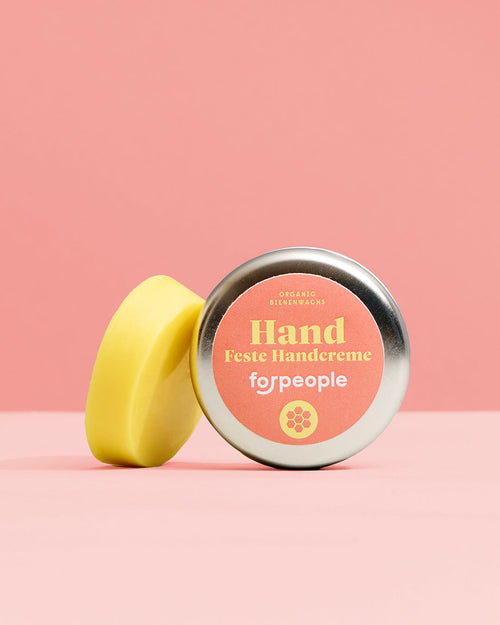
| Solid Hand Cream - Beeswax | beeswax, olive and sunflower oil, St John's wort and aloe vera extract | no | hands, in small amounts during the day |
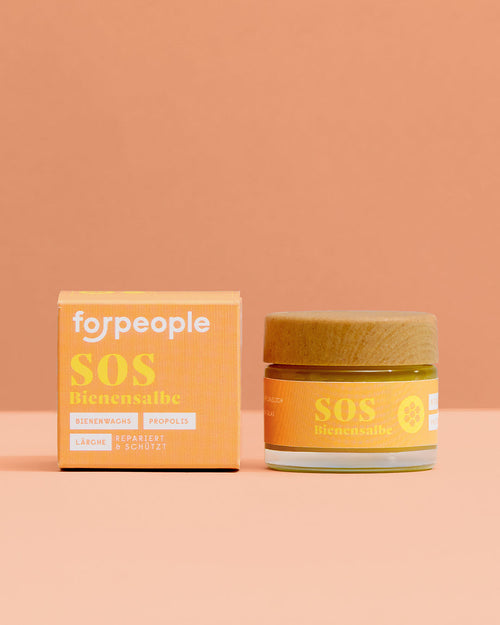
| Beeswax Salve – Larch & Mandarin in a Glass Jar | olive, almond and castor oil, beeswax, larch resin, propolis, essential oils | no | small, very dry areas, in the evening |
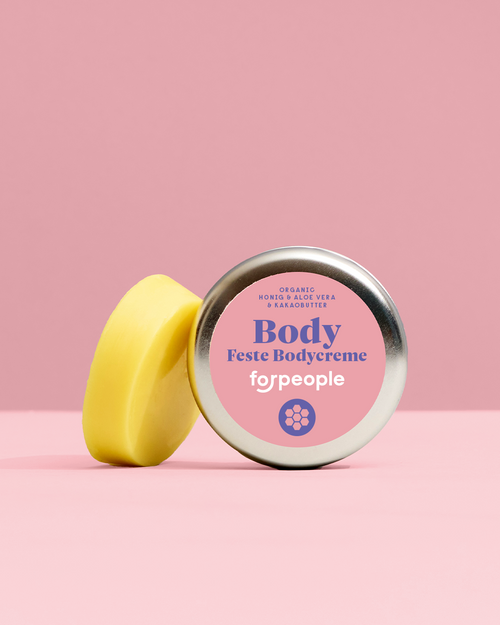
| Solid Body Butter - Beeswax & Aloe Vera | cocoa butter, olive oil, beeswax, sunflower oil, shea butter, aloe vera extract | no | body after showering |
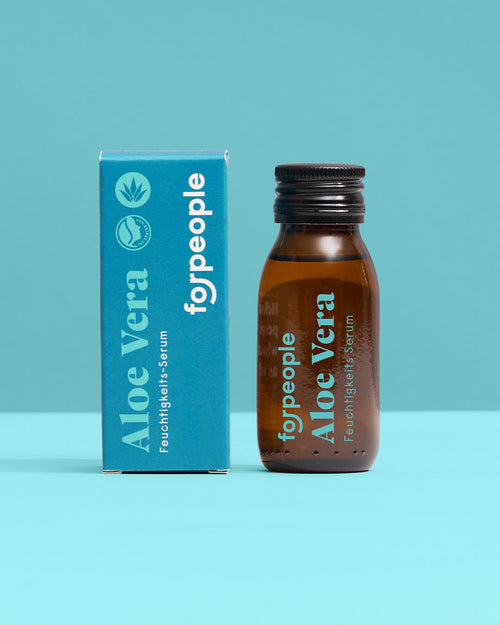
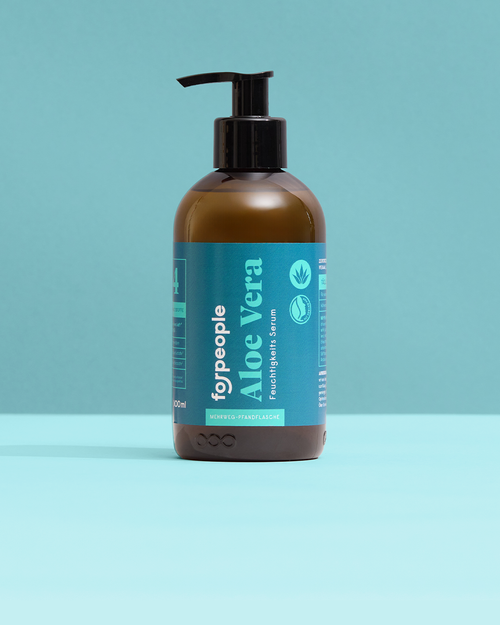
| Aloe Vera Serum 99.6% | 99.6 % aloe juice, citric acid, potassium sorbate, sodium benzoate | yes, water-based | water-based layer under oil or solid care |
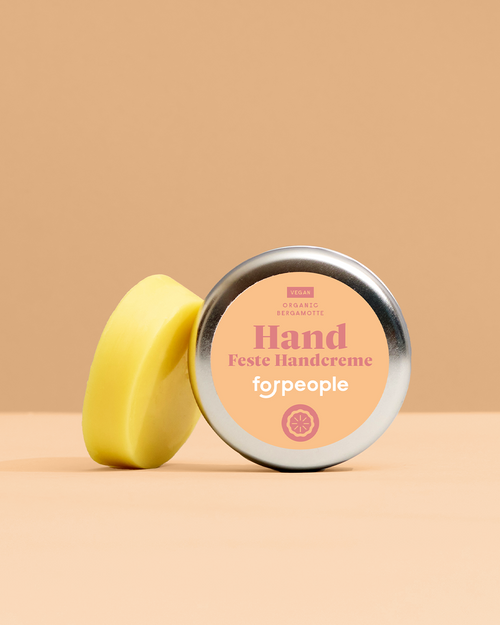
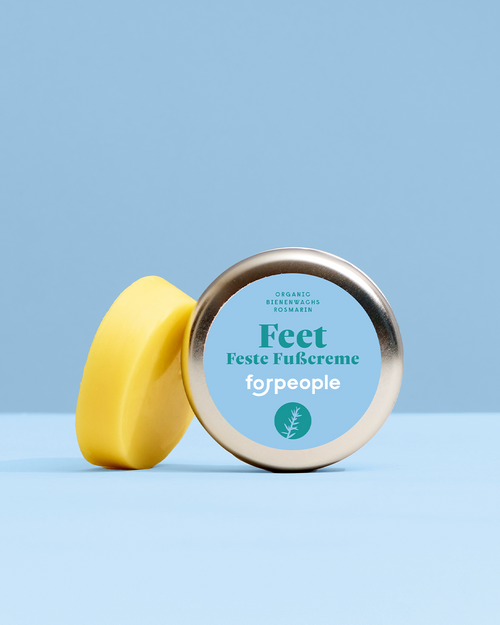
The Solid Vegan Hand Cream - Bergamot is vegan and also water-free, with candelilla wax, jojoba oil and essential oils; for the feet there is the Solid Foot Cream – Rosemary & Sage.
A water-based layer underneath adds what solid care lacks. The rule is: water-based before oil-based.
- Leave your skin slightly damp: after washing or showering, just pat it dry.
- Apply a water-based layer: for example the aloe serum, an almond-sized amount on the face. Wait until it no longer runs.
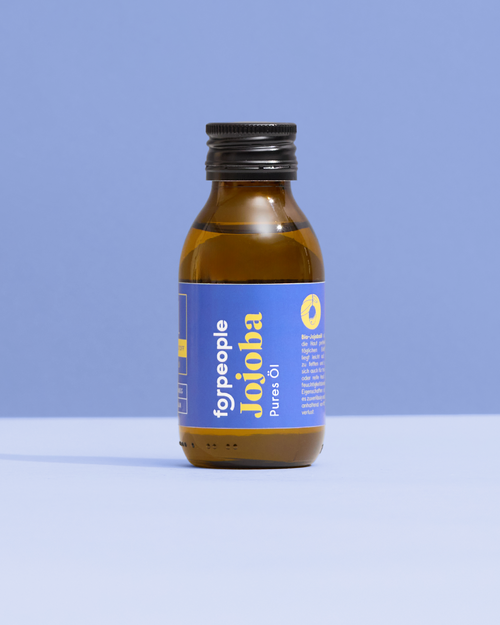
- Fat on top: two to three strokes of solid hand cream on the hands, body butter on the body, two to three drops of oil such as Jojoba Oil - pure on the face.
- Let it absorb: if your skin still looks clearly shiny after a few minutes, it was too much.
Aloe is considered a water-binding ingredient: in a study with 20 women, creams with aloe extract increased the water content of the stratum corneum but did not change water loss (Dal'Belo et al. 2006). That is slowed down only by the film of fat on top, and film-forming oils belong on damp skin (Sethi et al. 2016). You can also rub serum and oil together in your hand; this mixture does not keep, so do not mix any in advance. More under Combining aloe vera serum with oil or solid cream.
When to see a doctor
If your skin stays very dry for weeks despite regular care, cracks deeply, bleeds or weeps, is very red or keeps itching, have it checked by a doctor. Then the question is no longer fat or moisture. Do not apply skincare to injured or irritated skin unless a doctor has agreed. More under Itchy skin in winter: showering, skincare and when to see a doctor.
Frequently asked questions
What is a “fat cream”?
An everyday term, not a technical one. It usually means a water-in-oil cream with the fat on the outside, sometimes also a water-free ointment. The ingredient list shows whether it contains water.
Rich cream or ointment: what is the difference?
A rich cream in the narrower sense is an emulsion with water and therefore needs an emulsifier and usually a preservative. An ointment contains little or no water and stays on the skin as a film for longer.
Rich cream or hand cream for dry hands?
Many hand creams are light emulsions with a lot of water. For rough hands, frequent washing and in winter, richer care in a small amount usually suits better, applied to hands that are still slightly damp.
Does dry facial skin need fat or moisture?
Usually both, but in small doses: a water-based layer with a little oil on top, a little more in the evening and in winter.
Does a water-free cream moisturise?
Not literally, as it contains no water. But it slows down evaporation and so holds the water that is already in the skin.
Does a rich cream make sense in summer?
On hands and feet often yes, in a small amount. On large areas, rich care quickly feels sticky in the heat; then a lotion or a little oil on damp skin is enough.
At forpeople
We do not sell a moisturiser with an emulsifier. Our creams, ointments and body butters are water-free, so they are pure fat-based care; the water-based part comes from still-damp skin or from the aloe serum.
- Solid Hand Cream - Beeswax, 30 g, €9.90: according to the ingredient list without water and without essential oils; the tin can be refilled with a refill.
- Beeswax Salve – Larch & Mandarin in a Glass Jar, 50 g, €12.90: ointment-like, with larch resin, propolis and essential oils of mandarin, rosemary and silver fir. If you react to tree resin, propolis or fragrances, do not use it.
- Solid Body Butter - Beeswax & Aloe Vera, 40 g, €9.90: best applied after showering to skin that is still slightly damp.
- Aloe Vera Serum 99.6%, 50 ml, €9.90, for the body also as Aloe Vera Serum 99.6% - Pump Bottle with 300 ml for €27.90: contains water and is preserved; the water-based layer under the fat-based care.
For all of them: do not apply to injured or irritated skin, test anything new on a small area first, and stop if your skin reacts.
From the blog: Face and lips through winter: a routine for every day
Sources
- Barnes TM, Mijaljica D, Townley JP, Spada F, Harrison IP (2021): Vehicles for Drug Delivery and Cosmetic Moisturizers: Review and Comparison. Pharmaceutics 13(12): 2012. https://doi.org/10.3390/pharmaceutics13122012
- Sethi A, Kaur T, Malhotra SK, Gambhir ML (2016): Moisturizers: The Slippery Road. Indian Journal of Dermatology 61(3): 279–287. https://doi.org/10.4103/0019-5154.182427
- Patzelt A, Lademann J, Richter H, Darvin ME, Schanzer S, Thiede G et al. (2012): In vivo investigations on the penetration of various oils and their influence on the skin barrier. Skin Research and Technology 18(3): 364–369. https://doi.org/10.1111/j.1600-0846.2011.00578.x
- Smith KR, Thiboutot DM (2008): Thematic review series: skin lipids. Sebaceous gland lipids: friend or foe? Journal of Lipid Research 49(2): 271–281. https://doi.org/10.1194/jlr.R700015-JLR200
- Rogers J, Harding C, Mayo A, Banks J, Rawlings A (1996): Stratum corneum lipids: the effect of ageing and the seasons. Archives of Dermatological Research 288(12): 765–770. https://doi.org/10.1007/BF02505294
- Yosipovitch G, Xiong GL, Haus E, Sackett-Lundeen L, Ashkenazi I, Maibach HI (1998): Time-dependent variations of the skin barrier function in humans: transepidermal water loss, stratum corneum hydration, skin surface pH, and skin temperature. Journal of Investigative Dermatology 110(1): 20–23. https://doi.org/10.1046/j.1523-1747.1998.00069.x
- Dal'Belo SE, Gaspar LR, Maia Campos PM (2006): Moisturizing effect of cosmetic formulations containing Aloe vera extract in different concentrations assessed by skin bioengineering techniques. Skin Research and Technology 12(4): 241–246. https://doi.org/10.1111/j.0909-752X.2006.00155.x