


What is in a cream and what is in an oil
Most creams and lotions are emulsions: water and oil held together by an emulsifier. A review of moisturisers calls the emulsion the predominant form of such products (Sethi et al. 2016). Humectants such as glycerin dissolve in the water phase. They attract water and bind it in the outermost layer of the skin, the stratum corneum. Because it contains water, a cream generally needs preservation. More on this under Emulsifiers in Cosmetics: What They Do.
A face oil consists of fats only: one plant oil or a blend of several, sometimes with a little essential oil for scent. There is no water, no humectant and no emulsifier. Without water, no preservation against germs is needed either. An oil can still age: it oxidises over time and then smells rancid, see How to tell if a skin oil is rancid.
Does an oil moisturise?
Strictly speaking, no. Moisture means water in the stratum corneum, and an oil contains none. According to a review, how well the stratum corneum holds water depends on three things: the lipids between its cells, the long, tortuous path through the cell layers, and the natural moisturising factor, a mixture of water-soluble substances inside the cells (Rawlings & Harding 2004).
On the skin, an oil does two other things.
- It slows evaporation. In a study with six volunteers, four plant oils and paraffin oil penetrated only into the uppermost layers of the stratum corneum. With the plant oils, except jojoba oil, water loss through the skin fell in a similar way as with paraffin oil; petrolatum formed the tightest seal. The researchers speak of semi-occlusion (Patzelt et al. 2012). A second study using a different measuring method arrived at the same picture: paraffin oil and two plant oils made the stratum corneum swell by 10 to 20 percent, petrolatum by 40 to 60 percent. Swelling served there as a measure of how strongly a film seals the skin (Stamatas et al. 2008).
- It smooths. Oils and other lipids make skin softer, more flexible and smoother (Sethi et al. 2016). You feel that straight away, even if the water content has not changed yet.
So an oil holds on to water that is already there. It does not replace water that is missing. How a film slows evaporation is explained on the page Occlusion and TEWL: how a wax film protects your skin.
What the cream does and which part the oil takes over
This overview starts from the jobs, not from the ingredients. The third column shows where an oil on its own leaves a gap, the fourth how you close it.
| Job | Cream (emulsion) | Oil on its own | How to close the gap |
|---|---|---|---|
| Bringing water to the skin | yes, through the water phase | no | apply the oil to skin that is still damp, or put a water-based serum underneath |
| Binding water in the stratum corneum | usually, through humectants such as glycerin | no | a serum with water-binding substances underneath |
| Slowing evaporation | depending on the fat content | yes, partly | usually no gap; on very dry areas something richer with wax or butter |
| Smoothing and keeping skin supple | yes | yes | no gap |
| Sun protection | only with a stated sun protection factor | no | sunscreen as a separate, final layer |
| Emulsifier and preservation | generally needed | not needed | no gap; keep the bottle closed, cool and dark |
The table describes product types in general. What a particular product contains is shown by its ingredient list. The building blocks are explained one by one under Humectants, occlusives, emollients.
When oil alone is enough, and when it is not
The following guide is based on experience, not on measurements. It goes by what you feel, not by a skin type.
Oil alone is often enough
- if your skin does not feel tight after washing,
- if you apply it in the evening and a slight sheen does not bother you,
- if your skin is still damp. Film-forming substances have the most pronounced effect on slightly dampened skin (Sethi et al. 2016). So only pat your face lightly dry after washing.
Oil alone is usually not enough
- if your skin feels tight or stays rough despite the oil. Then water is missing, not fat.
- if cold weather and dry heated air come on top.
- if you are outdoors during the day. An oil has no sun protection factor.
Serum and oil: the steps in brief
If you want to replace the water phase of a cream, put something water-based under the oil. Aloe is one of the water-binding ingredients. In a study with 20 women, formulations containing freeze-dried aloe extract increased the water content of the stratum corneum; they did not change water loss through the skin (Dal'Belo et al. 2006). The study looked at formulations with extract on the forearm, not at a pure serum on the face. That fits the division of labour: the water-based layer brings and binds water, the oil film on top slows evaporation.
- Wash your face and only pat it lightly dry.
- Spread a small amount of serum in your palm and pat it onto your skin.
- Wait briefly until nothing runs any more. Your skin may still be slightly damp.
- Rub two to three drops of oil between your palms and press them onto your face.
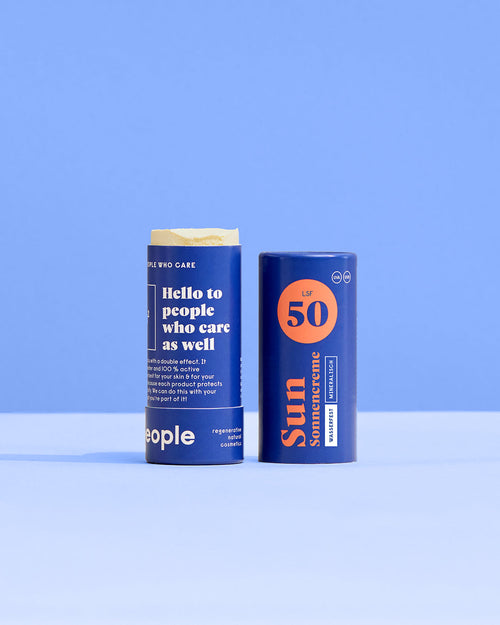
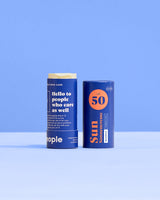
- In the morning, when the sun is out, sunscreen follows as the final layer and in a sufficient amount, for example the Solid Sunscreen SPF50.
If your skin still has a clear sheen after a few minutes, it was too much oil. The details, including mixing in your palm, are under Combining aloe vera serum with oil or solid cream.
When to seek medical advice?
Dry, tight skin is first of all a matter of skin care. Seek medical advice if the skin on your face stays red for weeks, flakes heavily, burns or weeps, if individual areas change suddenly, or if you react to several products. An oil or a serum is not a treatment for that. Do not apply skin care to injured or irritated skin. If your skin reacts to a product, stop using it.
Frequently asked questions
Does face oil moisturise?
Not in the sense of water. An oil contains neither water nor humectants. It slows evaporation and leaves skin supple. The water has to be in the skin already or come from a water-based product.
Can I use face oil and cream together?
Yes. The order follows the texture: the thinnest product first, then the thicker one, the richest in fat last. So an oil usually comes as the last skin care step, before sunscreen.
How many drops of oil do I need for my face?
Two to three drops are enough for the whole face, in the morning rather one to two. If your skin still has a clear sheen after a few minutes, use less next time.
My skin feels tight although I use oil. Why is that?
Usually water is missing, not fat. Apply the oil to skin that is still damp or put a water-based serum underneath. If the tightness lasts for weeks, have your skin looked at by a doctor.
Does face oil replace a day cream with a sun protection factor?
No. A plant oil has no stated sun protection factor. If your day cream has provided the sun protection so far, you will need it as a separate, final layer from now on.
I would rather have no scent. Which oil suits me then?
A pure oil. According to its ingredient list, jojoba oil consists of the oil alone. The Face Oil - Lavender contains essential lavender oil; the list names linalool and limonene for it. You will find an overview under Without fragrance and essential oils: ingredients at a glance.
At forpeople
We do not offer a face cream in the form of an emulsion. In our range the two building blocks are separate: a water-based serum and oils.
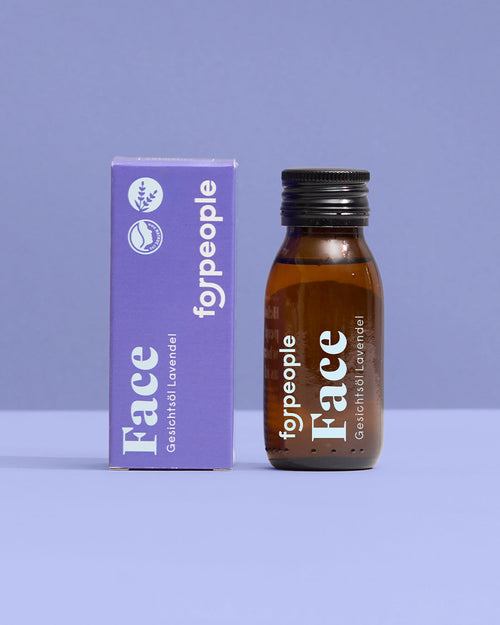
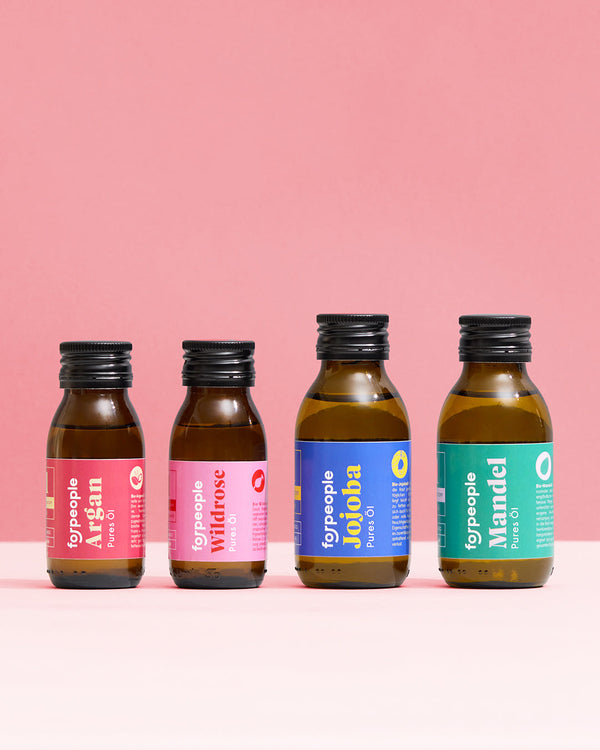
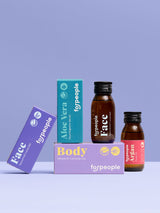
- Face Oil - Lavender, 50 ml, €21.90: a blend of argan, rosehip, jojoba, borage and hemp oil with essential lavender oil.
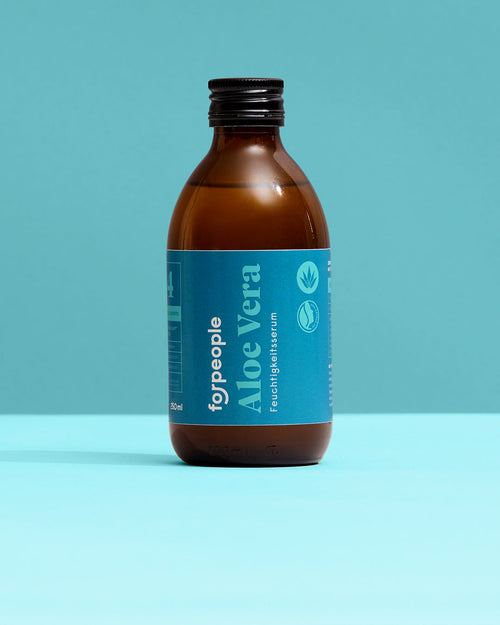
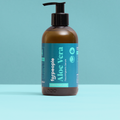
- Aloe Vera Serum 99.6%, 250 ml, €24.90: according to the ingredient list, aloe juice, citric acid, potassium sorbate and sodium benzoate. It contains water and is preserved.
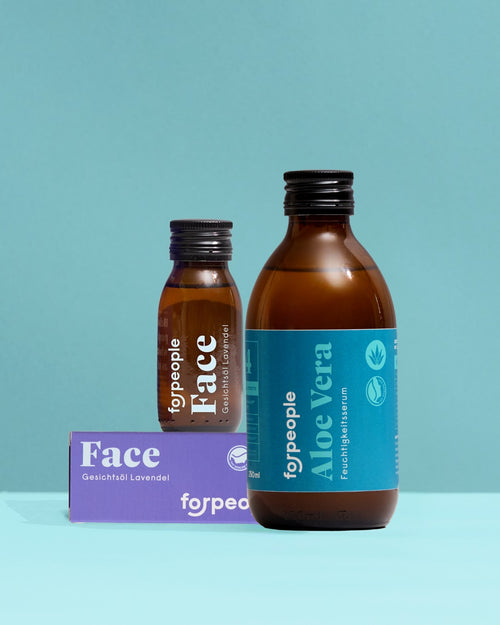
- Facial Care Set for Dry, Sensitive Skin, €44.90: Aloe Vera Serum and Face Oil Lavender together.
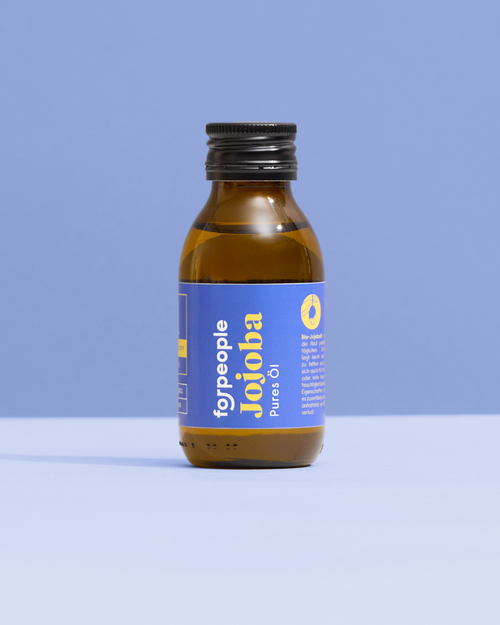
- Jojoba Oil - pure, 100 ml, €16.90: a single oil without essential oils. In the measurement mentioned above, jojoba oil did not slow evaporation the way the other plant oils did.
For all four, the product pages say: avoid contact with the eyes and do not use on injured or irritated skin. If you notice a skin reaction, stop using the product.
More on this: Face oil on oily skin: does that work? · Aloe vera instead of day cream: is the serum enough on its own? · Sunscreen before or after your day cream? · Can I use body oil on my face too?
From the blog: Face & Body Oils: Which Oil Suits Which Skin Type? · Less in the bathroom: a skincare routine with three products
Sources
- Sethi A, Kaur T, Malhotra SK, Gambhir ML (2016): Moisturizers: The Slippery Road. Indian Journal of Dermatology 61(3): 279–287. https://doi.org/10.4103/0019-5154.182427
- Rawlings AV, Harding CR (2004): Moisturization and skin barrier function. Dermatologic Therapy 17 Suppl 1: 43–48. https://doi.org/10.1111/j.1396-0296.2004.04s1005.x
- Patzelt A, Lademann J, Richter H, Darvin ME, Schanzer S, Thiede G et al. (2012): In vivo investigations on the penetration of various oils and their influence on the skin barrier. Skin Research and Technology 18(3): 364–369. https://doi.org/10.1111/j.1600-0846.2011.00578.x
- Stamatas GN, de Sterke J, Hauser M, von Stetten O, van der Pol A (2008): Lipid uptake and skin occlusion following topical application of oils on adult and infant skin. Journal of Dermatological Science 50(2): 135–142. https://doi.org/10.1016/j.jdermsci.2007.11.006
- Dal'Belo SE, Gaspar LR, Maia Campos PM (2006): Moisturizing effect of cosmetic formulations containing Aloe vera extract in different concentrations assessed by skin bioengineering techniques. Skin Research and Technology 12(4): 241–246. https://doi.org/10.1111/j.0909-752X.2006.00155.x