







Face oil or body oil: what is the difference?
The EU Cosmetics Regulation only knows the “cosmetic product”. “Face oil” and “body oil” are names chosen by the manufacturer. The manufacturer decides what a product is intended for and has to state its function unless it is clear from the presentation. The safety report that every cosmetic product in the EU needs takes into account, among other things, where, on what surface area and in what amount the product is applied (Regulation (EC) No 1223/2009).
In their formulas, the two product types differ mainly in three places:
- Scent: which essential oils they contain and which of their constituents the ingredient list names individually.
- Base oils: some raw materials are naturally coloured, for example sea buckthorn seed oil and turmeric. Whether that shows on your face or on light fabric is something you try out with a small amount.
- Amount: a body oil is meant for large areas and usually comes in larger bottles. A face oil is used drop by drop.
What both have in common: they contain no water and therefore do not supply moisture themselves. They leave skin supple and slow evaporation.
What is different about facial skin
The stratum corneum, the outermost layer of the skin, is not built the same everywhere. In a study of skin samples from 301 people, it had on average 9 cell layers on the face, 13 on the trunk and 15 on the arms and legs (Ya-Xian et al. 1999). A review sums it up like this: the stratum corneum of the face is thinner and its barrier weaker than on the trunk, arms and legs. There are differences within the face as well. Water loss is lowest on the cheeks and highest around the mouth, and on the eyelids the stratum corneum is thin and its barrier weak (Tagami 2008).
Then there are the sebaceous glands. They are particularly numerous on the face and scalp; on the face there can be 400 to 900 per square centimetre (Smith & Thiboutot 2008). So facial skin brings a lot of fat of its own.
Two things follow from this for an oil, and this is our reading, not a measurement: on the face, a few drops are enough. And whatever you apply there meets a thinner barrier than on your arm or leg. That is why a test is worthwhile for oils containing essential oils. More on how the stratum corneum is built: The skin barrier explained simply.
Four types of oil from our range compared
The table reflects what ingredient lists and product pages state. It says nothing about how your skin will react.
| Oil | Base | Essential oils | Fragrance constituents named individually | Intended for, according to the product page |
|---|---|---|---|---|
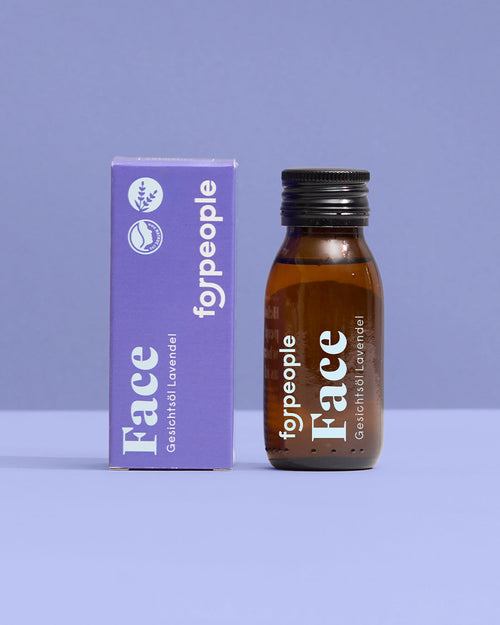
| Face Oil - Lavender | argan, rosehip, jojoba, borage and hemp oil | lavender oil | linalool, limonene | face |
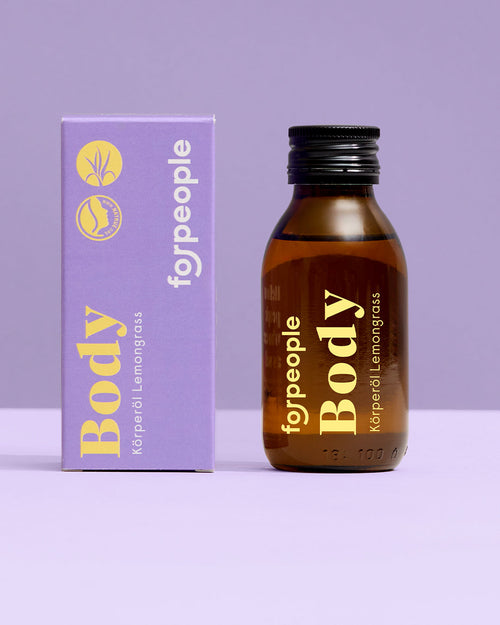
| Body Oil - Lemongrass | mainly sesame and safflower oil, plus sea buckthorn seed oil and turmeric | lemongrass oil | citral, geraniol, citronellol | body, after showering; also for massage |
| Body Oil - Cinnamon & Cloves | mainly sesame and safflower oil, plus sea buckthorn seed oil and turmeric | yes | citral, citronellol, geraniol | body, after showering |
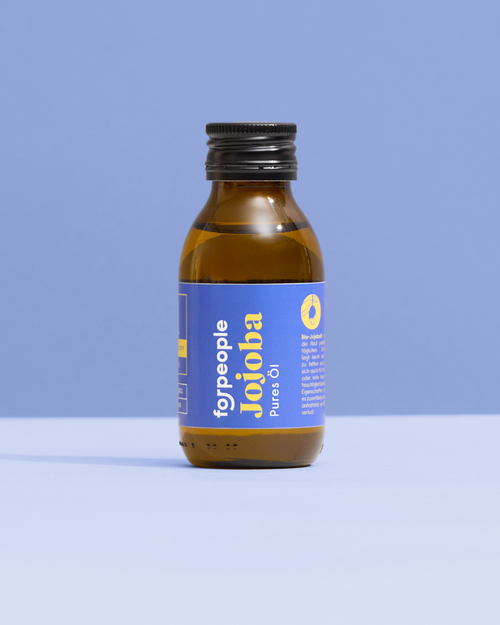
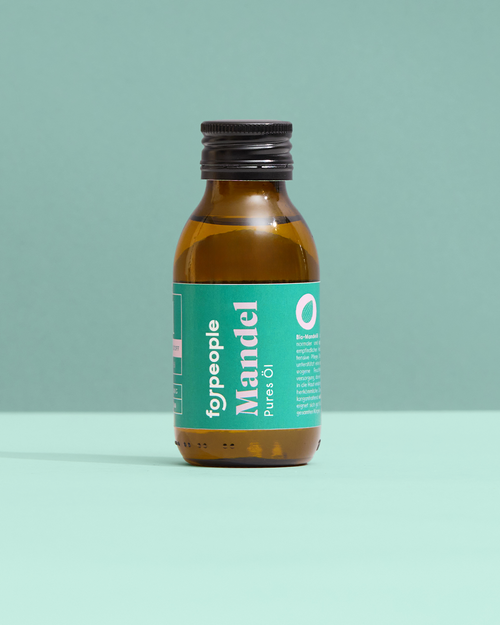
| Pure oils: Jojoba Oil - pure, Almond Oil - pure, argan oil, wild rose seed oil | one single plant oil each | none | none | face, body and hair, depending on the oil |
The table shows: the Face Oil contains essential oil too. So the difference from the body oils is not “with or without scent”, but the kind of essential oil, the base oils and what the product is intended for. Like the lemongrass oil, the Body Oil - Cinnamon & Cloves is a body oil with essential oils; for the face, the same applies to it.
Why the lists give names such as linalool or citral: fragrance constituents like these have to be stated individually as soon as a product that stays on the skin contains more than 0.001 percent of them. That also applies when they come from an essential oil. A regulation from 2023 extended the list and now also names whole essential oils, among them lavender oil and lemongrass oil (Regulation (EU) 2023/1545). The statement is information for people who react to one of these substances. It says little about the amount of scent. More on this: Essential Oils and Fragrance Allergens.
How the four pure oils differ is covered under Argan, jojoba, almond or rosehip oil: how do they differ?
Body oil on your face: how to go about it
- Read the list: does it include essential oils or individual fragrance constituents? If you know that you react to one of them, do not use the oil.
- Test first: first on the inside of your forearm, then for a few days on a small area along your jawline. The procedure is described under Trying a new product: how do I test it on a small area?
- Leave out the eye area: eyelids and the area around the eyes stay free. The product pages say for all oils: avoid contact with the eyes.
- Use little: two to three drops for the whole face, on skin that is still damp, in the evening to begin with.
- Watch your skin: if you notice redness or burning, take the oil off with a soft cloth and lukewarm water and stop.
These steps are common practice. A pure oil can trigger a reaction too; a short test is worthwhile with every new product. And an oil is not sun protection, wherever you apply it.
The other way round: face oil on the body
That is straightforward. What is intended for the face can also be used on your arms, legs or décolleté. The only thing against it is the amount: a face oil usually comes in a smaller bottle, and the body needs more. For large areas, a body oil or a pure oil in the larger bottle is the more obvious choice. It is best applied after showering to skin that is still slightly damp; more on this under Body Oil or Body Butter – Which One When?
When to seek medical advice?
Seek medical advice if a reaction does not settle after you stop using the product, if it spreads, weeps or forms small blisters, if your eyelids or lips swell, or if your skin reacts to scented products again and again. Take the product or its ingredient list with you. If oil gets into your eye, rinse it thoroughly with water straight away; if discomfort remains, have the eye looked at. No oil belongs on injured or irritated skin.
Frequently asked questions
Can I use the Body Oil Lemongrass on my face?
According to the product page it is intended for the body. It contains essential lemongrass oil; the list names citral, geraniol and citronellol. If you want to try it on your face, test it on a small area first and leave out the eye area. The pure oils contain no essential oils.
Can I use face oil on my body?
Yes. You can apply a face oil all over your body on uninjured skin. For large areas, though, the small bottle is soon empty.
Which oil works for face and body alike?
A pure plant oil without essential oils, for example jojoba oil or almond oil. According to their ingredient lists, both consist of the oil alone.
Can body oil go near the eyes?
No. For all our oils the rule is: avoid contact with the eyes. Leave out your eyelids and the area around the eyes, and wash your hands after applying.
I get on well with my oil on my body. Why should I still test it on my face?
Because the skin there is built differently. On the face the stratum corneum has fewer cell layers than on the arms and legs, and its barrier is weaker. What goes unnoticed on your arm may turn out differently on your face.
Is body oil too greasy for the face?
That depends on the amount. The face has many sebaceous glands, so a few drops are enough. If your skin gets shiny quickly, read on under Face oil on oily skin: does that work?
At forpeople
Three oils for three cases. The full ingredient list and the safety notes are on each product page.
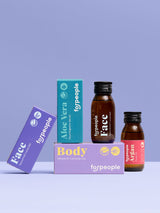
- Face Oil - Lavender, 50 ml, €21.90: for the face; a blend of five plant oils with essential lavender oil.
- Body Oil - Lemongrass, 100 ml, €16.90: for the body; with essential lemongrass oil.
- Jojoba Oil - pure, 100 ml, €16.90: a single oil without essential oils, according to the product page for face, body and hair.
For all of them: do not use on injured or irritated skin. If you notice a skin reaction, stop using the product.
More on this: Without fragrance and essential oils: ingredients at a glance · Can a face oil replace face cream? · Can I use body butter on hands, feet and face? · Does body oil stain? Clothes, bed linen, towels
From the blog: Face & Body Oils: Which Oil Suits Which Skin Type?
Sources
- Verordnung (EG) Nr. 1223/2009 des Europäischen Parlaments und des Rates vom 30. November 2009 über kosmetische Mittel, Art. 2, Art. 10, Art. 19 und Anhang I Teil A Nr. 6. ABl. L 342 vom 22.12.2009, S. 59; konsolidierte Fassung vom 01.09.2025. https://eur-lex.europa.eu/eli/reg/2009/1223/oj
- Ya-Xian Z, Suetake T, Tagami H (1999): Number of cell layers of the stratum corneum in normal skin – relationship to the anatomical location on the body, age, sex and physical parameters. Archives of Dermatological Research 291(10): 555–559. https://doi.org/10.1007/s004030050453
- Tagami H (2008): Location-related differences in structure and function of the stratum corneum with special emphasis on those of the facial skin. International Journal of Cosmetic Science 30(6): 413–434. https://doi.org/10.1111/j.1468-2494.2008.00459.x
- Smith KR, Thiboutot DM (2008): Thematic review series: skin lipids. Sebaceous gland lipids: friend or foe? Journal of Lipid Research 49(2): 271–281. https://doi.org/10.1194/jlr.R700015-JLR200
- Verordnung (EU) 2023/1545 der Kommission vom 26. Juli 2023 zur Änderung der Verordnung (EG) Nr. 1223/2009 hinsichtlich der Kennzeichnung allergieauslösender Duftstoffe in kosmetischen Mitteln. ABl. L 188 vom 27.7.2023, S. 1. https://eur-lex.europa.eu/eli/reg/2023/1545/oj