




Why oil gets into fabric
A body oil does not sink in completely; part of it stays as a film on the surface. What lies there is removed by contact. A research group in Tübingen reproduced the contact of clothing with skin in an experiment and points out that up to 90% of an applied preparation can disappear from the skin again through contact with the surroundings (Herrmann et al. 2017).
How much transfers depends, as far as experience goes, on amount, time and fabric; we did not find measurements on this. On smooth, thin fabrics such as silk, viscose and satin, a grease stain shows at once as a dark, slightly translucent patch. Terry cloth and thick cotton soak up oil without you seeing it straight away.
Preventing and washing: overview by textile
| Textile | What is typical | Prevention | Washing |
|---|---|---|---|
| Clothing | visible grease stain, especially on smooth, thin and light-coloured fabrics | little oil, on damp skin, wait until nothing shines | pre-treat a fresh stain; as warm as the care label allows |
| Pyjamas and bed linen | oil residues spread over a wide area and are often only noticed by the smell | moisturise earlier in the evening, apply thinly, wear pyjamas | change regularly, do not leave lying for long |
| Towel after showering | takes up little oil if you pat yourself dry first and then apply oil | keep to the order: pat dry, then oil | as usual; if it smells rancid, warmer and with a higher dose |
| Towels and sheets after a massage | a lot of oil in the fabric | separate towels just for this, use oil sparingly | separately and thoroughly, check the result, do not stack hot |
Avoiding stains on clothing
- Little oil on damp skin. Only pat yourself dry after showering, rub a few drops between your palms and massage them in. More on this: How soon should you moisturise after a shower? The 3-minute rule.
- Wait until nothing shines. A few minutes are usually enough. If your skin still clearly shines after that, take off the rest with a cloth that is going into the wash anyway.
- Plan around delicate clothing. Before wearing a silk blouse, it is better to apply oil in the evening; more on this under Moisturising your body: morning or evening?
A fresh stain comes out most easily. The steps for this are on the page Does deodorant cream stain? Prevent and remove; for a stain from body oil you proceed in the same way.
Towels and sheets: why oil residues smell rancid
Plant oils react with the oxygen in the air. Hydroperoxides form first; they break down into substances that make up the typical off-odour. How fast this happens depends, among other things, on temperature, light, oxygen and the fatty acid composition (Choe & Min 2006). How to recognise rancid oil in the bottle, and which oils are more sensitive, is covered under How to tell if a skin oil is rancid.
In addition, one wash does not always remove oil completely. In the experience of an institute for loss research, soiling with edible oils such as rapeseed or sesame oil is often not removed sufficiently in one wash cycle (Moors 2015). So a towel can look clean and still smell of old oil. What you can do:
- Wash soon. Do not collect oily towels and sheets in the laundry basket for weeks.
- Dose appropriately. The German Environment Agency recommends dosing detergent according to water hardness and degree of soiling as stated on the pack, and pre-treating heavy soiling. For household laundry, it says, the dose for lightly or normally soiled items is usually enough (Umweltbundesamt 2024). A towel that has soaked up oil does not fall into that category.
- Wash warm enough. Use the highest temperature the care label allows.
Oil-soaked towels and the tumble dryer
For businesses there is a little-known safety notice on this. According to an information sheet from the German Social Accident Insurance (DGUV), residues of unsaturated fatty acids in washed textiles can cause the laundry to heat up by itself and eventually catch fire: namely when the still-warm items are stacked on top of each other or packed straight after the dryer or the hot mangle (DGUV 2020). The German accident insurance institution for the food and hospitality sector (BGN) names edible fats, edible oils and massage oils as the origin of such fatty acids. In some cases the fire only started hours after drying (BGN 2023).
Where the cases come from: hotels and restaurants, wellness and spa businesses, and commercial laundries. By its own account, the BGN knows of 47 laundry fires for the years 2004 to 2019 (DGUV 2020). One example reported there: in a guesthouse, towels that had taken up large amounts of sesame oil during massages were washed and stacked in a cupboard while still warm from the dryer.
Which oils are meant: oils with many unsaturated fatty acids. With rapeseed and sesame oil, the reaction needs heat from outside, for example from the dryer (Moors 2015). The DGUV also counts sunflower, sesame and safflower oil among them. These are the base oils of many body and massage oils, including our Body Oil Lemongrass.
What this means at home: The fires described involve laundry that takes up a lot of oil day after day. The three sources give no figures for private households. A towel you dry yourself with before applying oil is not a massage towel from a wellness business. For towels that have taken up a lot of oil during a massage at home, the basic rules of the accident insurance institutions can still be adopted:
- Wash them separately and thoroughly, check the result and wash again if necessary.
- If oil residues can still be seen or smelt after washing, dry the towels on the line and not in the dryer (Moors 2015). Some manufacturers rule out laundry with greasy residues altogether in their dryer manuals.
- In the dryer, let the programme run to the end, including the cool-down phase.
- Let warm laundry cool down before you fold it and put it away in the cupboard.
- Watch out for a rancid or burnt smell.
Does the oil leave colour?
A grease stain looks darker than the fabric because the oil makes the fabric slightly translucent. That is grease, not colour.
According to the ingredient list, our Body Oil Lemongrass contains sea buckthorn seed oil and turmeric extract, two raw materials that naturally bring colour with them. With light-coloured laundry, therefore, try it on an inconspicuous spot first. The almond oil contains only almond oil according to the ingredient list. It makes grease stains like any other oil.
Frequently asked questions
Does body oil stain clothing?
Yes, if oil is still sitting on the skin. With little oil on damp skin and a few minutes' wait, clothing mostly stays clean.
How long does body oil need to sink in before I get dressed?
There is no measured time. Wait until your skin no longer shines; that is usually a few minutes.
Why do my towels smell rancid even though they have just been washed?
Then oil residues have probably stayed in the fabric and oxidised in the air. Wash them at the highest temperature the label allows and dose for heavy soiling. If they still smell afterwards, wash them a second time.
Can a towel with massage oil go in the tumble dryer?
Only if it has really been washed clean. If oil residues can still be seen or smelt, dry it on the line. Laundry only comes out of the dryer after the cool-down phase and is not stacked hot.
The body oil contains sea buckthorn seed oil and turmeric. What does that mean for light-coloured laundry?
Try it on an inconspicuous spot first, and let the oil sink in well before you put on anything light-coloured.
At forpeople
All four products are water-free and consist of fats; the solid body butter can leave marks on fabric too. For all of them: use little, let it sink in, wash oily laundry soon.
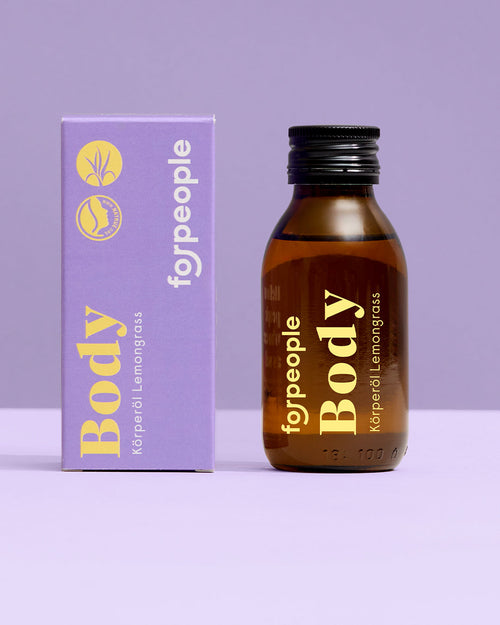
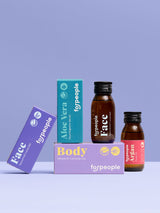
- Body Oil - Lemongrass, 100 ml, €16.90: sesame, safflower, sea buckthorn seed and sunflower oil, turmeric extract and lemongrass essential oil. With light-coloured laundry, try it on an inconspicuous spot first.
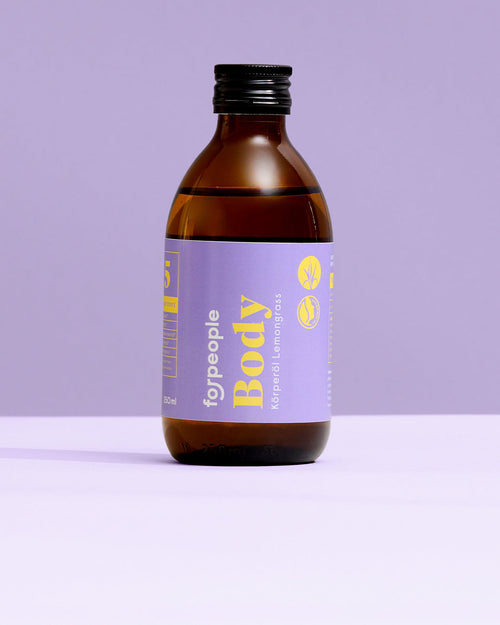
- Body Oil - Lemongrass large, 250 ml, €34.90: the same formula in the larger bottle.
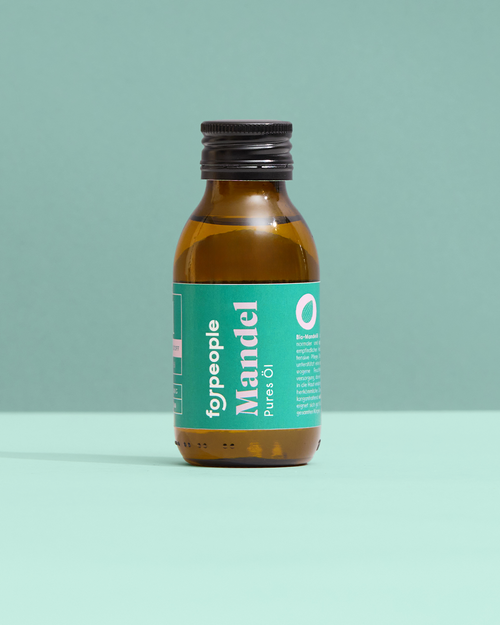
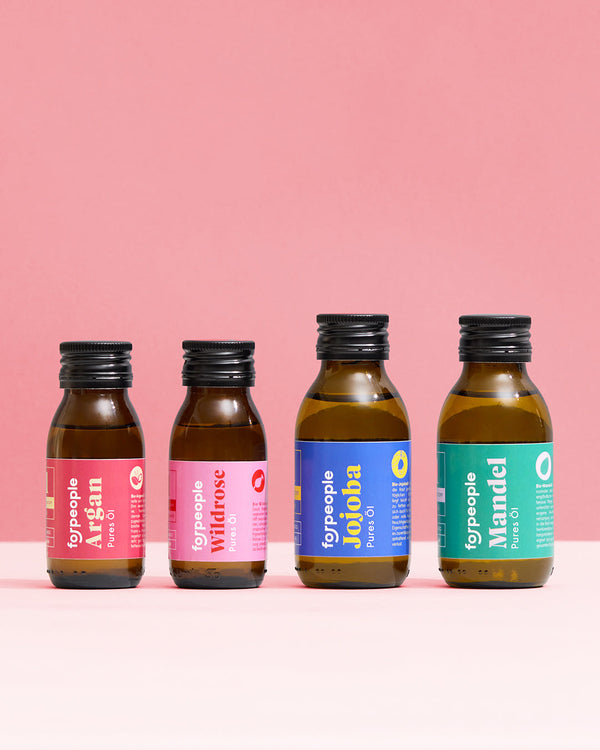
- Almond Oil - pure, 100 ml, €14.90: according to the ingredient list, almond oil only, with no added scent.
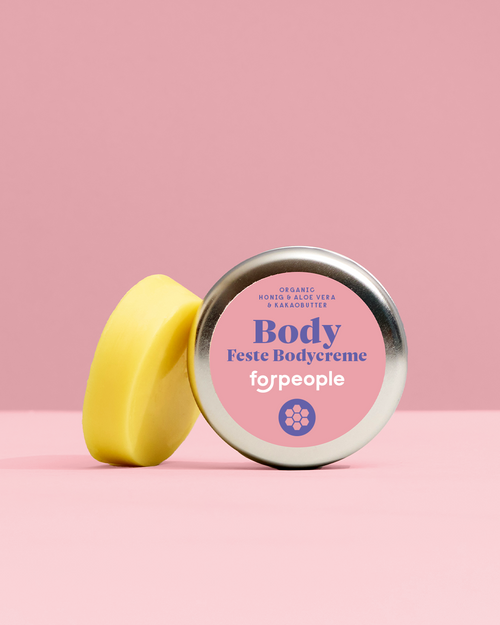
- Solid Body Butter - Beeswax & Aloe Vera, 40 g, €9.90: according to the ingredient list, cocoa butter, olive oil, beeswax, sunflower oil, shea butter and aloe vera leaf extract, with no added essential oils.
For all four, the product pages say: avoid contact with the eyes and do not use on injured or irritated skin. If you notice a skin reaction, stop using the product.
More on this: Greasy or well cared for? Why creams feel greasy · Which oil is suitable for a massage at home? · Sunscreen stains on clothes: yellow, white or greasy
From the blog: Face & Body Oils: Which Oil Suits Which Skin Type?
Sources
- Herrmann S, Daniels R, Lunter D (2017): Methods for the determination of the substantivity of topical formulations. Pharmaceutical Development and Technology 22(4): 487–491. https://doi.org/10.3109/10837450.2015.1135346
- Choe E, Min DB (2006): Mechanisms and Factors for Edible Oil Oxidation. Comprehensive Reviews in Food Science and Food Safety 5(4): 169–186. https://doi.org/10.1111/j.1541-4337.2006.00009.x
- Moors A (2015): Wäscheselbstentzündung – ein besonderes Feuerrisiko für bestimmte Betriebe. schadenprisma 3/2015: 26–30. Institut für Schadenverhütung und Schadenforschung der öffentlichen Versicherer e. V. (IFS). https://www.schadenprisma.de/wp-content/uploads/pdf/2015/sp_2015_3_6.pdf
- Umweltbundesamt (2024): Klimabewusstes Wäschewaschen entlastet die Umwelt und spart Kosten. Zuletzt aktualisiert am 02.12.2024. https://www.umweltbundesamt.de/umwelttipps-fuer-den-alltag/haushalt-wohnen/waesche-waschen-waschmittel
- Deutsche Gesetzliche Unfallversicherung e. V. (DGUV), Sachgebiet Betrieblicher Brandschutz (2020): Fachbereich AKTUELL FBFHB-009: Vermeidung von Textilbränden durch Selbstentzündung fettverschmutzter Textilien. Stand: April 2020. https://publikationen.dguv.de/widgets/pdf/download/article/3705
- Berufsgenossenschaft Nahrungsmittel und Gastgewerbe (BGN) (2023): ASI 9.30 Brandschutz im Kleinbetrieb, Abschnitt 11: Textilbrände durch Selbstentzündung fett- bzw. ölverschmutzter Textilien. Ausgabe 03.23. https://vorschriften.bgn-branchenwissen.de/daten/asi/a9_30/11.htm