








What a massage oil should do
On dry skin the hand sticks and pulls at the skin. An oil puts a film in between. In a measurement on the upper arm of 20 people, petrolatum and silicone oil reduced the friction force on the skin; the researchers attribute this to the lubricating effect (Sakata et al. 2024). Plant oils were not measured there; that they let the hands glide too is experience.
- Glide: the oil should spread easily and carry the hand over longer strokes.
- Staying power: an oil contains no water and does not evaporate; the film stays until it has been absorbed or wiped off.
- No stickiness: a fresh plant oil feels smooth. Old oil can turn thick and sticky and smells sharp; see How to tell if a skin oil is rancid.
- Scent: pleasant, or none. During a massage the oil covers a large area of skin, and the scent stays in the nose the whole time.
Body oil or massage oil: is there a difference?
Not in law. The EU Cosmetics Regulation only knows the “cosmetic product” and lists, among its examples, creams, emulsions, lotions, gels and oils for the skin. It does not name massage oil as a group of its own. What a product is meant for is decided by the manufacturer, who has to state the function of the product unless it is clear from its presentation (Regulation (EC) No 1223/2009).
There is no fixed line in the composition either: both consist of plant oils and contain no water. The difference lies in how they are used. A body oil is meant for moisturising after a shower and is often scented. For a massage you need more oil at once, so a larger bottle makes sense.
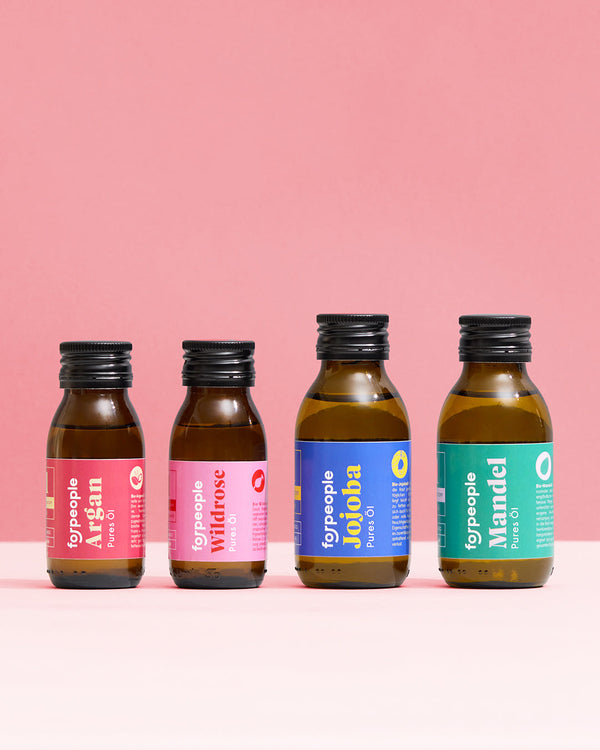
Our product pages say of the almond oil “Also suitable as a massage oil”, and of the lemongrass body oil that it also works as a massage oil or bath oil. That is what the product page states. We do not carry a dedicated massage oil.
The oils compared
The table reflects what ingredient lists and product pages state. We have not measured how long an oil glides; skin feel is a matter of experience.
| Oil | Scent | Composition and skin feel | Stability against turning rancid | For massage |
|---|---|---|---|---|
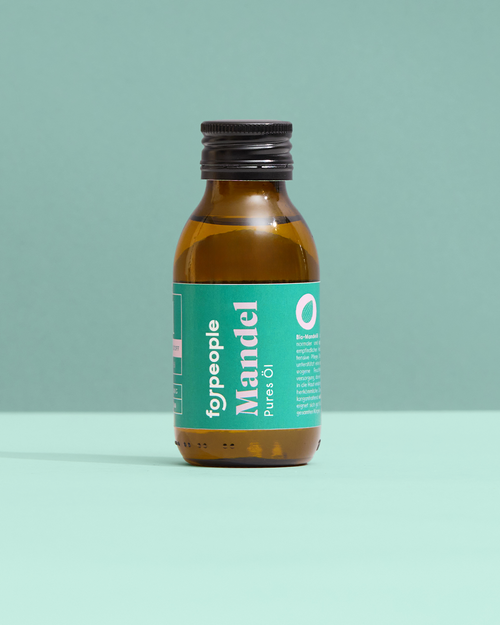
| Almond Oil - pure, 100 ml | no added scent; slightly nutty smell of its own | a single oil; feels a little fuller than jojoba oil | medium | the commonly used oil for large areas |
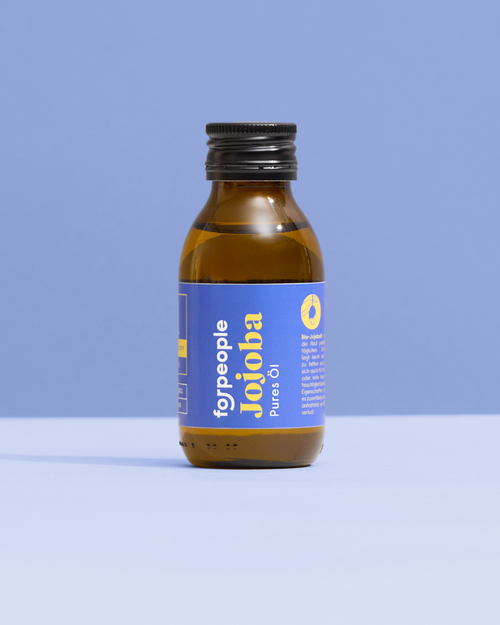
| Jojoba Oil - pure, 100 ml | no added scent; hardly any smell of its own | liquid wax, thin; described in the literature as having good lubricity without an oily, greasy feel (Gad et al. 2021) | high | when scent should play no part and the bottle is meant to last |
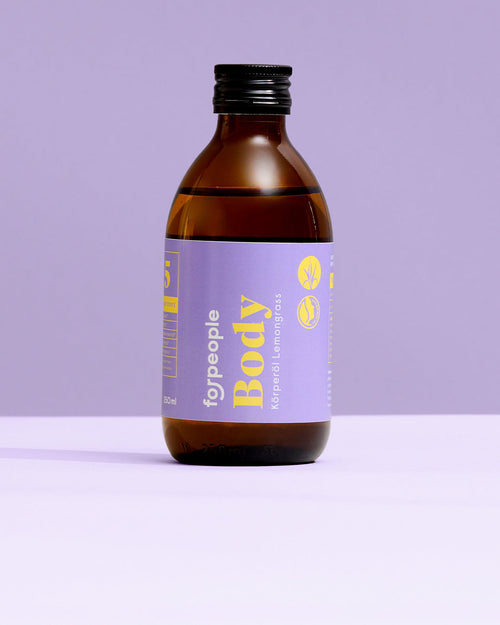
| Body Oil - Lemongrass large, 250 ml | essential lemongrass oil; the list names citral, geraniol and citronellol | sesame and safflower oil, plus sea buckthorn seed oil, sunflower oil and turmeric extract | not rated | large bottle for the whole body; ask about the scent first |
| Argan oil and wild rose seed oil, 50 ml each | no added scent | a single oil each; wild rose seed oil is yellow-orange | medium; wild rose seed oil lowest | possible, but in the small bottle meant more for the face and small areas |
Body Oil - Cinnamon & Cloves is, like the lemongrass oil, a body oil with essential oils; the same applies to it for massage. The stability ratings come from the page Argan, jojoba, almond or rosehip oil: how do they differ? Why jojoba oil is particularly stable is explained in Jojoba oil: why it is a liquid wax.
How much oil, and when to add more?
The steps are common practice, not measured values.
- Start small: tip the bottle briefly and let a little oil run into your palm, not straight onto the back. The cork dispenser of the pure oils helps you dose sparingly. Spread it between your hands and then on the skin.
- Check: if the hand drags or pulls at the skin, add more. On hairy skin you need a little more.
- Take off the excess: if the hands no longer find any grip, it was too much; a towel takes off the rest.
After the massage the skin is slippery, and so are tiles, bath and shower. Oil also leaves marks on fabric: Does body oil stain? Clothes, bed linen, towels.
Ask first: ingredients and scent
Two questions come first.
- Allergy to almonds, nuts or sesame: almond oil comes from almonds, argan oil from the kernels of the argan tree, and in the lemongrass body oil sesame oil is first on the ingredient list. Allergic reactions to foods are triggered by proteins. Full refining removes them almost completely; according to a review of edible oils, their content drops to as little as about one hundredth (Crevel et al. 2000). Cold-pressed, unrefined oils have not been refined. Whether such residues matter on the skin cannot be said in general. With a known allergy, the question belongs with a doctor, and you choose a different oil.
- Scent: the EU's Scientific Committee on Consumer Safety estimates that 1 to 3 percent of the population in Europe have a contact allergy to fragrance ingredients. The committee also mentions case series in people who massage with essential oils in their work (SCCS 2012). Anyone who reacts to fragrances, or does not know, takes an oil without added scent. Background: Essential Oils and Fragrance Allergens.
Try a new oil on a small area first: Trying a new product: how do I test it on a small area?
What oil cannot do
- It is not a lubricant for condoms. Oil-based creams, petroleum jelly and massage oils attack latex; lubricants suitable for condoms are water-soluble (BIÖG 2023).
- It is not a treatment. An oil is a cosmetic product. We make no statements about muscles or complaints.
- Scented body oil is not meant for the face. More on this: Gua sha and facial massage: which oil, and how much?
When to seek medical advice?
Seek medical advice before you give or receive a massage if pain is severe, lasts a long time or follows an accident, if a leg is swollen, hot or red, or if there is a fever as well. If the skin turns red, burns or develops hives after the oil, wash the oil off and stop using it. If the reaction persists or returns, have it checked. During pregnancy, discuss massages and scented oils with your midwife or doctor beforehand. No oil belongs on injured or irritated skin.
Frequently asked questions
Can I use body oil as a massage oil?
Yes. Body oil and massage oil are names chosen by the manufacturer, not separate product groups. Our body oils contain essential oils; ask beforehand whether the person likes the scent.
Which oil do I use for a massage without scent?
A pure plant oil. According to their ingredient lists, almond oil and jojoba oil consist only of the oil itself. They have a slight smell of their own, but no added scent.
Why not argan oil or wild rose seed oil for massage?
Only the quantity speaks against it. Both come in 50 ml bottles with us and are meant more for the face and small areas. Wild rose seed oil is also yellow-orange and, of the four pure oils, the most prone to turning rancid.
Do I have to wash the oil off after the massage?
No. Part of it is absorbed, and you take off the excess with a towel. If you shower afterwards, bath and shower become slippery.
Can I use massage oil as a lubricant?
No. According to the product pages, our oils are for external use only, and oil attacks latex condoms. There are water-soluble lubricants for that.
At forpeople
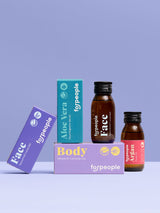
Four oils from our range for a massage at home. The ingredient list and the safety notes are on each product page.
- Almond Oil - pure, 100 ml, €14.90: a single oil without added scent; according to the product page also suitable as a massage oil.
- Jojoba Oil - pure, 100 ml, €16.90: a liquid wax without added scent, very resistant to turning rancid.
- Body Oil - Lemongrass large, 250 ml, €34.90: the large bottle for large areas, with essential lemongrass oil.
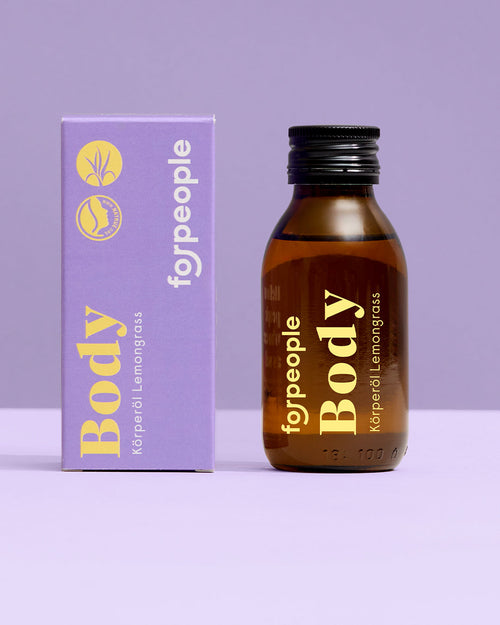
- Body Oil - Lemongrass, 100 ml, €16.90: the same formula in the smaller bottle, if you would like to get to know the scent first.
For all of them, according to the product page: avoid contact with the eyes and do not use on injured or irritated skin.
More on this: Mixing your own massage oil: how much essential oil per 100 ml? · Body Oil or Body Butter – Which One When? · Sesame oil for the skin: will the bottle from the kitchen do?
From the blog: Face & Body Oils: Which Oil Suits Which Skin Type?
Sources
- Regulation (EC) No 1223/2009 of the European Parliament and of the Council of 30 November 2009 on cosmetic products, recital 7, Art. 2(1)(a) and Art. 19(1)(f). OJ L 342, 22.12.2009, p. 59. https://eur-lex.europa.eu/eli/reg/2009/1223/oj
- Sakata Y, Mayama H, Nonomura Y (2024): Friction Dynamics of Human Skin Treated with Oil under Nonlinear Motion. Journal of Oleo Science 73(2): 177–186. https://doi.org/10.5650/jos.ess23166
- Gad HA, Roberts A, Hamzi SH, Gad HA, Touiss I, Altyar AE et al. (2021): Jojoba Oil: An Updated Comprehensive Review on Chemistry, Pharmaceutical Uses, and Toxicity. Polymers (Basel) 13(11): 1711. https://doi.org/10.3390/polym13111711
- Crevel RW, Kerkhoff MA, Koning MM (2000): Allergenicity of refined vegetable oils. Food and Chemical Toxicology 38(4): 385–393. https://doi.org/10.1016/s0278-6915(99)00158-1
- Scientific Committee on Consumer Safety (SCCS) (2012): Opinion on fragrance allergens in cosmetic products. SCCS/1459/11, adopted on 26–27 June 2012. https://ec.europa.eu/health/scientific_committees/consumer_safety/docs/sccs_o_102.pdf
- Bundesinstitut für Öffentliche Gesundheit (BIÖG) (2023): Das Kondom. familienplanung.de, as of 27.06.2023. https://www.familienplanung.de/verhuetung/verhuetungsmethoden/kondom/