


Converting percent into drops
- Percent into millilitres: amount of base oil times the percentage, divided by 100. 1 percent of 100 ml is 1 ml.
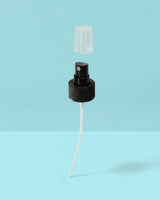
- Millilitres into drops: in pharmacy the rule of thumb is that 20 drops make 1 ml; one drop then has about 0.05 ml (Pharmazeutische Zeitung 2026). So 1 ml is 20 drops.
| Base oil | 0.5 percent | 1 percent |
|---|---|---|
| 30 ml | 3 drops (0.15 ml) | 6 drops (0.3 ml) |
| 50 ml | 5 drops (0.25 ml) | 10 drops (0.5 ml) |
| 100 ml | 10 drops (0.5 ml) | 20 drops (1 ml) |
The percentages refer to the base oil. The drop count is the least exact part: depending on the dropper insert, pipette or bottle, drops differ in size (Pharmazeutische Zeitung 2026). The dropper inserts of small bottles often give drops smaller than 0.05 ml; that is a matter of experience. Your blend then contains less essential oil than calculated. That is the safe direction, which is why we calculate with 20 drops per millilitre.
Why not more?
- Dilute strongly: according to the German Federal Institute for Risk Assessment, almost all essential oils should only be used strongly diluted, otherwise skin irritation, among other things, may result; allergic reactions are possible too (BfR 2026). The EU's Scientific Committee on Consumer Safety estimates that 1 to 3 percent of the population in Europe have a contact allergy to fragrance ingredients (SCCS 2012).
- Usual in cosmetics: apart from perfume, deodorant and aftershave, cosmetic products contain 0.1 to 1 percent fragrance compound according to the same committee (SCCS 2012). For products that stay on the skin, the BfR's Committee for Cosmetics recommends no more than 1 percent eucalyptus oil, camphor, menthol or methyl salicylate (BfR 2026).
These are usual amounts and guidance values for products whose safety is assessed individually, not limits for your own blend. With 0.5 to 1 percent you stay within this range; 100 drops per 100 ml would be around 5 percent. In addition, and this is our own assessment: a massage oil covers a large area of skin and stays there.
Oils with limits of their own
For individual essential oils and fragrance ingredients, the International Fragrance Association (IFRA) has set maximum levels. They are addressed to manufacturers and apply to the finished product; body creams, body oils and lotions belong to the same category there (IFRA 2020, 2023). They are not binding at home, but they show where 1 percent would be too much.
| Essential oil | IFRA maximum level | Per 100 ml of base oil | Reason according to IFRA |
|---|---|---|---|
| Bergamot oil, expressed | 0.4 percent | 0.4 ml, about 8 drops | phototoxic effect |
| Lemon oil, cold pressed | 2 percent | with 1 percent you are below it | phototoxic effect |
| Clove oil | 0.64 percent eugenol, so around 0.7 percent clove oil | 0.7 ml, about 14 drops | skin sensitisation, among other things |
| Cinnamon bark oil | 0.064 percent cinnamaldehyde, so around 0.1 percent cinnamon bark oil | 0.1 ml, about 2 drops | skin sensitisation, among other things |
We converted the values for clove and cinnamon bark oil: clove oil consists of 80 to 95 percent eugenol, and cinnamon bark oil contains mainly cinnamaldehyde, for example 50 to 60 percent (SCCS 2012). The calculation uses the higher content in each case.
On the sun: certain essential oils, for example from citrus fruits, can cause phototoxic reactions on the skin after exposure to sunlight; sun should then be avoided (BfR 2026). Several such oils in one blend count together (IFRA 2020, 2023). A massage oil with expressed citrus oil does not go on skin that will be exposed to the sun or a sunbed afterwards. More on this: Citrus oils in cosmetics and the sun: what does phototoxic mean?
How to mix
- Prepare the bottle: clean, completely dry, made of dark glass and not much larger than the amount.
- Check the base oil and pour it in: if the oil smells sharp or musty, do not use it; see How to tell if a skin oil is rancid.
- Count the drops: add the essential oil drop by drop. If you lose count, start again rather than guessing.
- Mix and label: close the bottle and swirl it; essential oils are fat-soluble and spread through the base oil. Write the oils, the number of drops and the date on a label.
- Test: the BfR recommends a contact test on a small area of skin before use (BfR 2026). The procedure is described in Trying a new product: how do I test it on a small area?
Essential oils do not belong undiluted on the skin or in the eyes. Wash your hands after mixing, and keep the bottles out of the reach of children.
Base oil and shelf life
A pure plant oil without added scent makes a good base. Almond oil smells slightly nutty. Jojoba oil is a liquid wax, has hardly any smell and is very resistant to turning rancid (Gad et al. 2021). For a comparison: Which oil is suitable for a massage at home?
How long the blend keeps is decided by the base oil; what counts is the bottle that has been open the longest. Do not rely on essential oil making it keep longer; it ages itself. Many fragrance substances oxidise in air. The oxidation products of limonene, linalool and linalyl acetate frequently cause allergic reactions, the unchanged substances rarely (SCCS 2012). So use fresh essential oils, close all bottles again and mix small amounts. Store the blend cool and dark. More on this: Cosmetics Shelf Life and the PAO Symbol.
Who is better off mixing without scent
The BfR advises using essential oils as little as possible, and with caution, in people with an allergic disposition, in pregnant and breastfeeding women, and in children and infants (BfR 2026).
- Pregnancy and breastfeeding: mix without essential oil, or discuss the choice beforehand with your midwife, doctor or pharmacy.
- Children: according to the BfR, infants and small children react far more strongly than adults; camphor and menthol are generally not suitable for them. For children, mix without essential oil.
- Fragrance allergy or uncertainty: without scent. Background: Essential Oils and Fragrance Allergens.
When to seek medical advice?
If the skin turns red, burns or develops hives after the oil, wash the oil off and stop using it. If the reaction persists, spreads or returns, have it checked by a doctor. If a child has swallowed essential oil, call a poison information centre; in case of breathing difficulty, seizures or drowsiness, call the emergency services immediately (BfR 2026). If oil gets into the eye, rinse it thoroughly with water.
Frequently asked questions
How many drops of essential oil go into 100 ml of massage oil?
No more than about 20 if a drop has 0.05 ml; that is roughly 1 percent. With 10 drops you are at 0.5 percent. For expressed bergamot oil, clove oil and cinnamon bark oil, less applies.
How many drops are 1 ml?
As a rule of thumb, 20. The size depends on the dropper. You know exactly once you have counted, with a measuring pipette, how many drops from your bottle make 1 ml.
Can I mix several essential oils?
Yes. Then the total of all drops counts, not each oil separately.
Does essential oil make the massage oil keep longer?
You should not rely on that. Shelf life depends on the base oil and on storage. If the blend smells clearly different from the first day, stop using it.
Can I add essential oil to a ready-made body oil?
Better not. A scented body oil already contains essential oil, and you do not know the amount.
At forpeople
We do not sell essential oils on their own. The base oils are available from us as pure, cold-pressed oils; according to the ingredient list, each consists only of the oil itself.
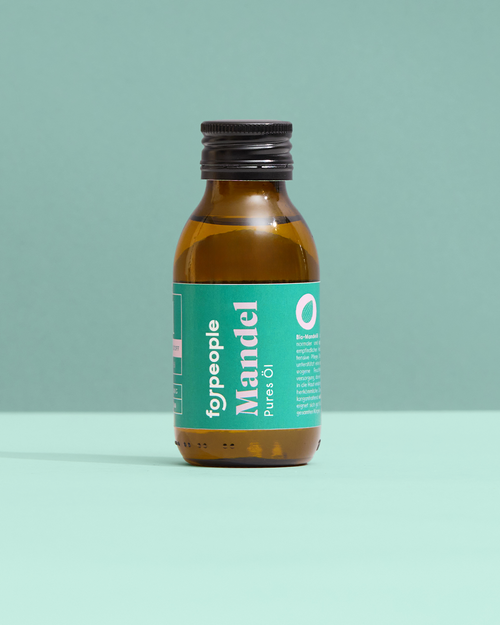
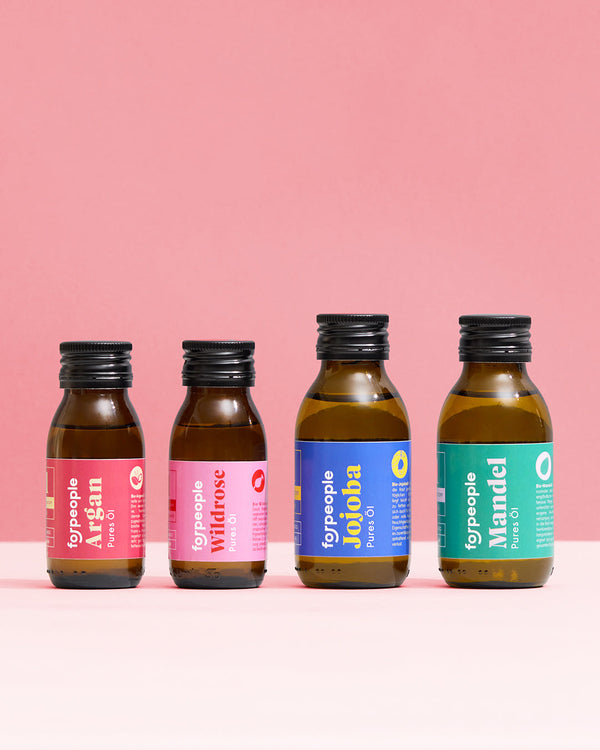
- Almond Oil - pure, 100 ml, €14.90: according to the product page also meant as a base for your own blends and as a massage oil.
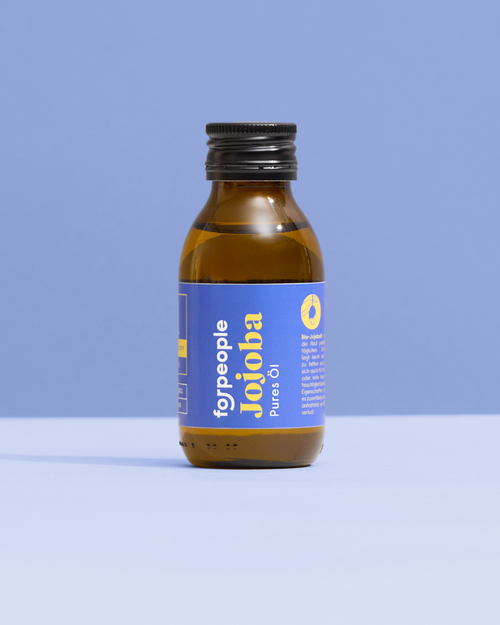
- Jojoba Oil - pure, 100 ml, €16.90: the stable base with little smell of its own.
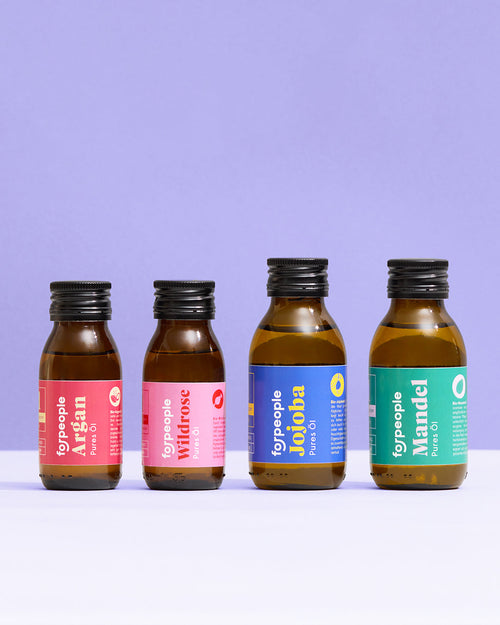
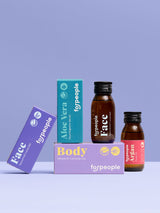
- Care Oil Set – 4 Organic Oils for Face, Body & Hair, €69.90: argan, jojoba, almond and wild rose seed oil in one bottle each; according to the product page also for blending yourself.
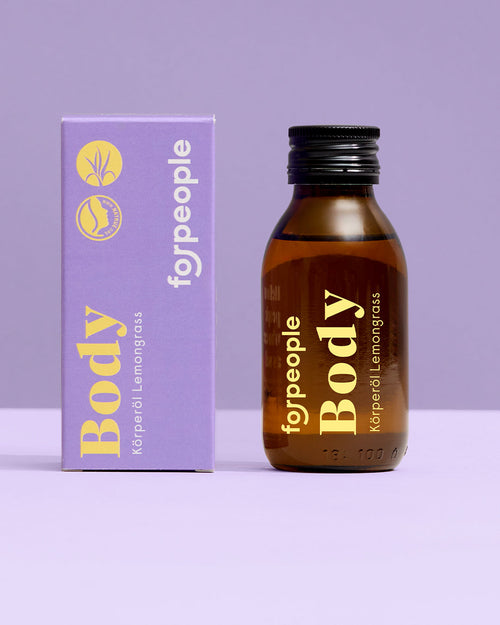
- Body Oil - Lemongrass, 100 ml, €16.90: the ready-mixed alternative with essential lemongrass oil; the ingredient list names citral, geraniol and citronellol.
Unlike a blend of your own, a product on the market has gone through a safety assessment beforehand (Regulation (EC) No 1223/2009, Article 10). For all of them, according to the product page: avoid contact with the eyes and do not use on injured or irritated skin.
More on this: Blending your own face oil: ratios, scent, shelf life · Making solid cream: how much wax to oil? · Oil macerate, extract, essential oil: what is the difference?
From the blog: Face & Body Oils: Which Oil Suits Which Skin Type?
Sources
- Bundesinstitut für Risikobewertung (BfR) (2026): Ätherische Öle: Duftende Wirkungen mit Einschränkungen. Questions and answers of 2 September 2026. https://www.bfr.bund.de/fragen-und-antworten/thema/aetherische-oele-duftende-wirkungen-mit-einschraenkungen/
- Scientific Committee on Consumer Safety (SCCS) (2012): Opinion on fragrance allergens in cosmetic products. SCCS/1459/11, adopted on 26–27 June 2012. https://ec.europa.eu/health/scientific_committees/consumer_safety/docs/sccs_o_102.pdf
- International Fragrance Association (IFRA) (2020, 2023): IFRA Standards “Bergamot oil expressed”, “Lemon oil cold pressed”, “Citrus oils and other furocoumarins containing essential oils” and “Cinnamic aldehyde” (49th Amendment, 2020) and “Eugenol” (51st Amendment, 2023); Guidance for the use of IFRA Standards of 30 June 2023, Category 5A. https://ifrafragrance.org/standards-library
- Pharmazeutische Zeitung (2026): Tropfen oder Milliliter – Fehldosierung vorprogrammiert. PZ online, 16.04.2026. https://www.pharmazeutische-zeitung.de/tropfen-oder-milliliter-fehldosierung-vorprogrammiert-164496/
- Gad HA, Roberts A, Hamzi SH, Gad HA, Touiss I, Altyar AE et al. (2021): Jojoba Oil: An Updated Comprehensive Review on Chemistry, Pharmaceutical Uses, and Toxicity. Polymers (Basel) 13(11): 1711. https://doi.org/10.3390/polym13111711
- Regulation (EC) No 1223/2009 of the European Parliament and of the Council of 30 November 2009 on cosmetic products, Article 10. OJ L 342, 22.12.2009, p. 59. https://eur-lex.europa.eu/eli/reg/2009/1223/oj