What is almond oil?
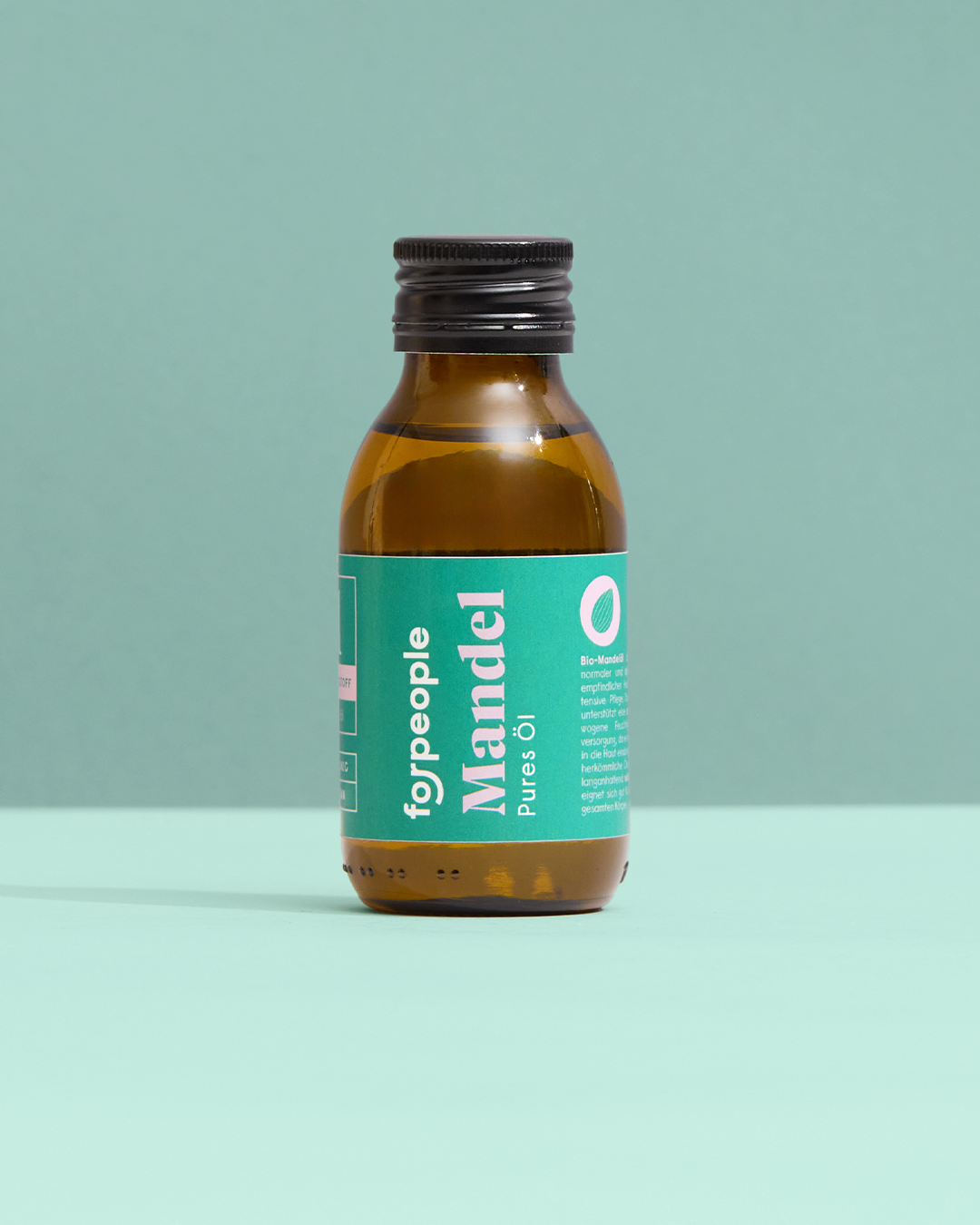
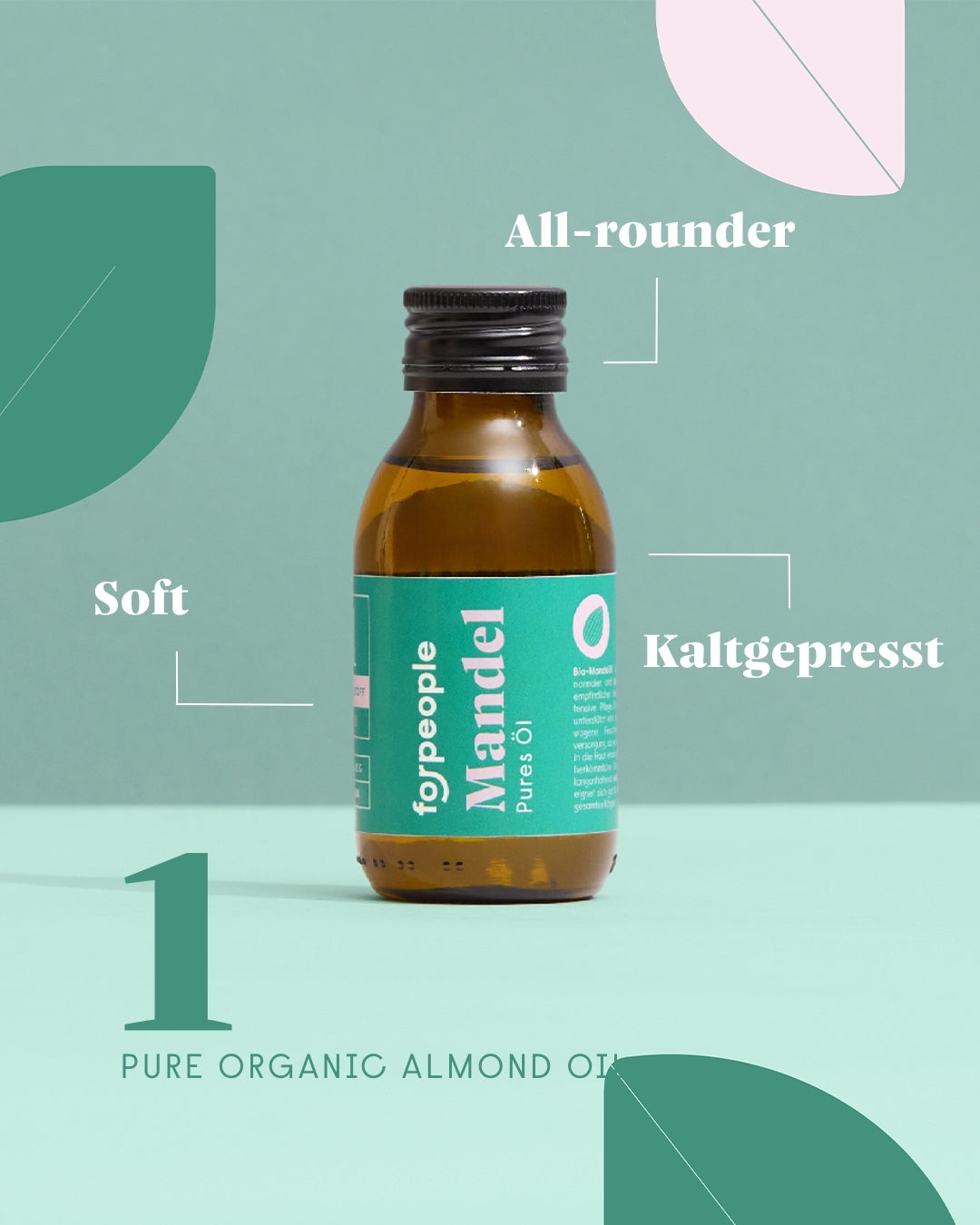
Almond oil is pressed from the kernels of the sweet almond (Prunus dulcis). It consists mostly of oleic acid, which makes up 63 to 78 % of the fatty acids, plus linoleic acid at 12 to 27 %; the proportions vary by variety. It is pale yellow, smells only slightly nutty and spreads easily. Our pure almond oil is cold-pressed and comes from certified organic farming.
Is almond oil good for the skin?
Almond oil leaves a thin film of fat on the skin. It slows water from evaporating and keeps dry skin supple. It also stays slippery for a long time, which is why it is a classic massage oil, and because it has hardly any scent of its own, it is suitable for diluting essential oils. An effect beyond that of a good care oil has not been shown.
Almond oil on the face
A few drops are enough. Apply them to skin that is still slightly damp, for example after washing or after an aloe serum. More oil leaves a visible shine; if your skin is very oily, use it sparingly.
Almond oil on the body
Apply it to damp skin after showering and massage it in; that way it spreads easily even over large areas. For a massage, use it pure or with a few drops of essential oil.
What to keep in mind
If you are allergic to almonds or nuts, clarify use with a doctor first. Almond oil can go rancid over time: store it cool and dark, and replace it if it smells sharp. How to tell is explained in Recognising rancid oil.
More background: Almond oil for skin and face · Argan, jojoba, almond or rosehip oil?
Products with almond oil
Almond, jojoba, argan or rosehip oil?
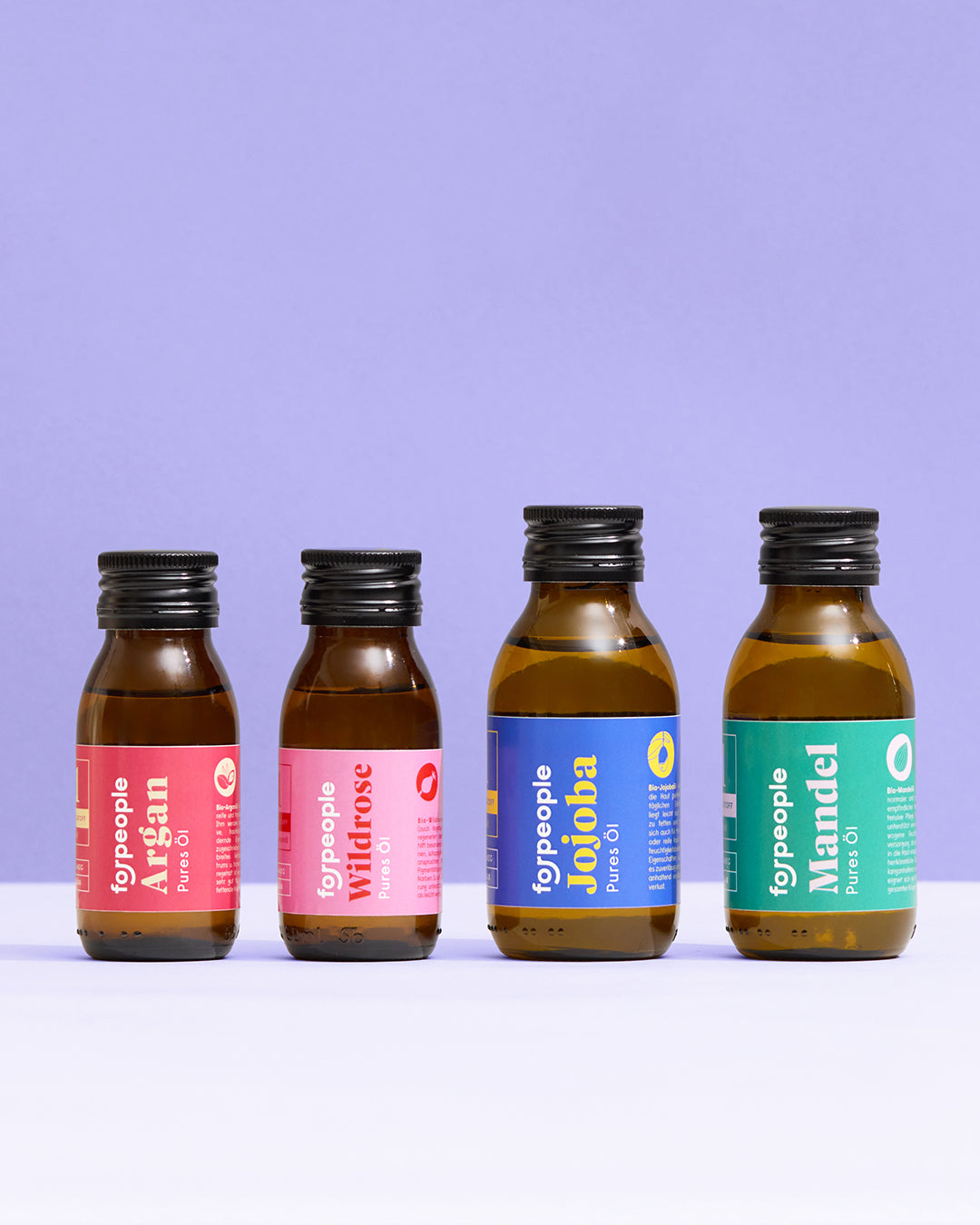
Almond oil is the classic all-round and massage oil: mild, almost odourless and with good glide. Jojoba oil is strictly speaking a liquid wax and feels lighter. Rosehip oil contains a lot of polyunsaturated fatty acids, so store it particularly cool and use it up promptly. How the oils feel and what they are suited for is covered in the comparison Argan, jojoba, almond or rosehip oil?; there is also pure argan oil.
Other uses
Almond oil removes make-up and waterproof mascara; work only on the closed eyelid. One or two drops are enough for dry hair ends. If you would like to make a solid cream yourself, Making a solid cream yourself has a basic method with wax and oil.
How do I recognise good almond oil when buying?
Look at the ingredient list first: pure almond oil from the sweet almond is called Prunus Amygdalus Dulcis Oil and stands alone. “Cold-pressed” means the oil was extracted mechanically without added heat and was not refined; it then smells slightly nutty. A dark bottle protects it from light. Our pure almond oil is cold-pressed, consists only of almond oil and comes in a dark glass bottle; more in Cold-pressed or refined.
What does “organic” mean for almond oil?
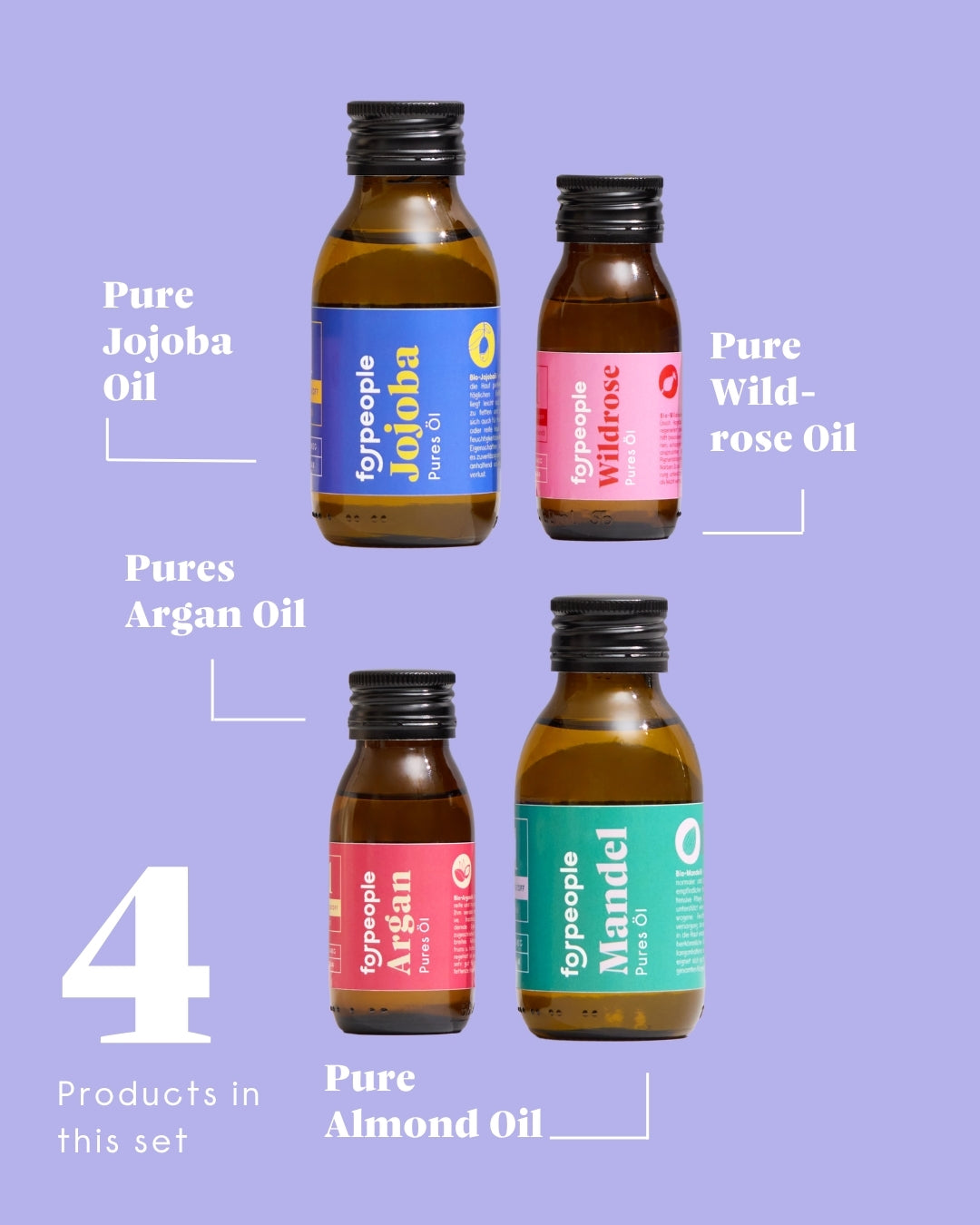
“Organic” means the almonds come from certified organic farming. In the ingredient list you can tell by the asterisk after the raw material with the note “from certified organic farming”. Our pure almond oil and all four oils in the care oil set are labelled this way. How long an oil stays fresh also depends on how you store it.
How long does a bottle of almond oil last?
The 100 ml last for about 240–280 applications, depending on how much skin you oil; a massage needs more than hands or hair ends. How long the oil keeps after opening is stated on the packaging. Close the bottle tightly, store it cool and dark and do not let water get into it.
Pure almond oil or the care oil set?
If you are looking for one oil for body and massage, pure almond oil is enough: 100 ml for €14.90. The care oil set for €69.90 also contains jojoba oil (100 ml), argan oil and rosehip seed oil (50 ml each); bought separately, the four oils cost €71.60 together. It suits you if you want to try different oils for face, body and hair; the comparison is in Argan, jojoba, almond or rosehip oil?