Two bottles of sunflower oil on the shelf: one golden yellow, with a nutty smell and the note “cold-pressed”, the other almost colourless and neutral. Both are sunflower oil with the same fatty acid pattern. The difference lies in what happened to the oil after pressing, and that affects smell, colour, shelf life and accompanying substances.
What the terms mean
We are not aware of a separate definition of these terms for cosmetics. The reference is the food sector: in Germany the German Food Code guidelines for edible fats and oils, internationally the Codex Alimentarius.
| Term | How it is obtained | Permitted afterwards | Source |
|---|---|---|---|
| cold-pressed (German guidelines) | without adding heat, by mechanical means only | decanting, filtering, dewaxing, centrifuging; roasting the seed and gentle steaming are possible; not refined | German guidelines 1.2.2 |
| native (German “nativ”) | cold-pressed, seed only mechanically pre-treated | only decanting, filtering, dewaxing, centrifuging | German guidelines 1.2.3 |
| cold pressed (Codex) | mechanical only, without heat | washing with water, settling, filtering, centrifuging; no additives | Codex 210 |
| virgin (Codex) | mechanical, heat is permitted | as for “cold pressed”; no additives | Codex 210 |
| refined | method of extraction not specified, then processed further | neutralised, bleached, deodorised, if necessary degummed; even individual steps count as refined | German guidelines 1.2.4 |
Two subtleties stand out. First: the Codex term “virgin” allows heat, whereas the German “nativ” is always cold-pressed. Second: “without adding heat” means that no additional heating is applied; neither the German guidelines nor the Codex state a maximum temperature. Olive oil has its own rules: “extra virgin” may contain no more than 0.8 grams of free fatty acids per 100 grams, and virgin olive oil must be obtained under conditions, particularly thermal ones, that do not alter the oil (Codex 33).
Argan oil is an example of how even cold-pressed oil can be made in different ways: cosmetic argan oil is pressed from unroasted kernels, culinary argan oil from briefly roasted kernels, also cold-pressed (Gharby & Charrouf 2022). More about argan oil in Argan oil for skin, hair and nails: how to use it.
What happens during refining
The aim of refining is an oil with a neutral smell and taste, a clear, light yellow colour and good stability. To achieve this, gums, waxes, free fatty acids, pigments, traces of metal, odorous substances and possible contaminants from the raw material are removed (Rhazi et al. 2022). A study in a sunflower oil plant shows what this looks like in practice:
| Step | What is removed | Conditions in the plant studied |
|---|---|---|
| Neutralising | free fatty acids | with alkali at 85 °C, then washed with water at 95 °C |
| Drying and pre-cooling | water, first waxes | dried at 100 °C, cooled to 15 °C |
| Bleaching | pigments such as carotenoids and chlorophyll | at 90 °C |
| Winterising | waxes that cause cloudiness in the cold | at 5–8 °C, filtration at 15–18 °C |
| Deodorising | odorous substances | under vacuum at 180 °C |
Source: Rhazi et al. 2022. Other plants work under other conditions; the table is an example, not a standard.
What changes in the composition
In this study, the fatty acid composition of the sunflower oil did not change significantly over all the steps. The accompanying substances, however, decreased: carotenoids by 98.6 percent, squalene by 45.0 percent, phytosterols by 19.5 percent and tocopherols by 8.5 percent. The greatest reductions were in what shapes appearance and smell, namely waxes, carotenoids and chlorophyll (Rhazi et al. 2022). The authors refer to other work in which the largest loss of tocopherols occurred during deodorising, up to 24 percent in total. With shea butter, a refined solid fraction had fewer unsaponifiable components, tocopherols and sterols than the crude butter, whereas in a refined liquid fraction these values remained unchanged (Abdel-Razek et al. 2023); more on this in Shea butter: composition, origin and refining.
| Feature | cold-pressed or native | refined |
|---|---|---|
| Fatty acids | typical of the variety | practically the same (Rhazi et al. 2022) |
| Colour and smell | its own colour, its own smell | light, neutral |
| Accompanying substances such as carotenoids, sterols, squalene, tocopherols | remain in the oil | partly clearly reduced (Rhazi et al. 2022) |
| Free fatty acids (acid value, limit) | no more than 4.0 mg KOH/g | no more than 0.6 mg KOH/g (Codex 210) |
| Peroxide value (limit) | no more than 15 mEq O₂/kg | no more than 10 mEq O₂/kg (Codex 210) |
| Iron / copper (limit) | 5.0 / 0.4 mg/kg | 1.5 / 0.1 mg/kg (Codex 210) |
| Trans oleic acid in olive oil (limit) | no more than 0.05 percent | no more than 0.20 percent (Codex 33) |
| Glycidyl and MCPD fatty acid esters | according to current knowledge, formed mainly during refining | can be present in refined oils in sometimes considerable amounts (BfR 2018) |
| Additives in edible oil | not permitted (Codex 210) | tocopherols, for example, permitted |
The limits come from food standards. The German Federal Institute for Risk Assessment considers glycidyl and MCPD fatty acid esters undesirable substances in food; we are not aware of a separate assessment for cosmetics on the skin (BfR 2018). Refined oils are therefore not worse across the board: they are light, neutral in smell and start with low acid and peroxide values, which is what many formulations need.
Shelf life: what stays fresh longer
There is no simple answer here. Refining is meant to extend shelf life because it removes free fatty acids, peroxides and traces of metal (Rhazi et al. 2022). At the same time, the oil loses its own antioxidants: in the plant studied, the crude sunflower oil was the most stable in the accelerated oxidation test and the fully refined oil the least stable (Rhazi et al. 2022). It is similar with jojoba oil: bleached or refined jojoba oil is almost white and less resistant to oxidation because the antioxidants have been removed (Gad et al. 2021); more on this in Can jojoba oil go off? Shelf life and structure.
For cold-pressed oils, the shelf life is usually set at 6 or 12 months, limited by their polyunsaturated fatty acids and the amount of antioxidants. For frying, refined oils have the advantage because cold-pressed oils contain more substances that break down at high heat (Prescha et al. 2014). For a care oil kept at room temperature, this is not decisive. What counts there is the fatty acid composition: a cold-pressed almond oil rich in oleic acid is more forgiving than a cold-pressed rosehip oil. Background on this in Why does oil go rancid? Oxidation, key values and shelf life and Linoleic or oleic acid? Fatty acids in plant oils explained.
What the difference means for the skin
We found no direct comparisons of cold-pressed and refined oil on human skin. The well-known rabbit ear test for comedogenicity gives one indication: with refined oil, sesame oil received a 1 instead of 3, olive oil and almond oil a 1 instead of 2, and avocado oil a 2 instead of 3; the author writes that the results improved with more refined oil (Fulton 1989). How little such ratings say about human skin is explained in Comedogenic oils: where the scale comes from and what it is worth.
Conversely, cold-pressed oils bring more of their own accompanying substances. They mainly protect the oil itself against oxidation; whether they have an effect of their own on the skin has not been proven. You notice them as colour and smell: rosehip oil is orange, almond oil smells slightly nutty. If you are very aware of smells, you are more likely to notice that than any effect.
How to recognise cold-pressed oil
- Not from the INCI: the INCI name states the plant and the plant part, for example “Helianthus Annuus Seed Oil”, not the method. Cold-pressed and refined sunflower oil have the same name. How to read the list is explained in INCI names explained: our ingredients in plain English.
- From an additional statement: whether an oil is cold-pressed only appears on the pack if the producer states it separately, for example in a footnote to the ingredient list.
- From colour and smell: cold-pressed oils usually have their typical colour and a smell of their own; refined ones are lighter and neutral. That is an indication, not proof.
- Not necessarily from organic labels: organic describes how the plant is grown, not the pressing method. What organic means in cosmetics is explained in Organic hand cream: what does organic mean in cosmetics?
When to seek medical advice?
Whether cold-pressed or refined: an oil is care, not treatment. If your skin reacts with redness, burning or wheals, stop using it; if the reaction persists, have it checked by a doctor. If you are allergic to nuts, ask a doctor before using nut oils such as almond or argan oil, regardless of the production method.
Frequently asked questions
Is cold-pressed oil always better?
Not in every respect. It contains more of its own accompanying substances and has not been chemically treated; refined oil is lighter, neutral in smell and starts with lower acid and peroxide values. Which suits better depends on the purpose.
Is native oil the same as cold-pressed oil?
According to the German guidelines, native oil is always cold-pressed, but stricter: the seed may only be pre-treated mechanically, and the oil may afterwards only be decanted, filtered, dewaxed and centrifuged (German guidelines).
How warm does cold-pressed oil get during pressing?
Neither the German guidelines nor the Codex set a temperature limit; what matters is that no heat is added. The oil does not necessarily stay completely cold, because pressing creates friction; how warm it gets depends on the press and the seed.
Why is refined oil almost colourless?
Bleaching removes pigments such as carotenoids and chlorophyll; in the plant studied, 98.6 percent of the carotenoids were lost (Rhazi et al. 2022).
Does refined oil keep longer?
It starts with lower acid and peroxide values but has fewer antioxidants of its own. In the accelerated test, refined sunflower oil was less stable than the crude oil (Rhazi et al. 2022). How long an oil stays fresh depends heavily on its fatty acids and on storage.
Is refined oil bad for the skin?
That cannot be said like that. Refined oils are common in many cosmetics. To our knowledge, there are no robust comparisons on human skin.
Are butters refined too?
Yes, shea butter for example. Depending on the fraction, it loses part of its unsaponifiable components, tocopherols and sterols in the process, while the peroxide value and free fatty acids decrease (Abdel-Razek et al. 2023).
At forpeople
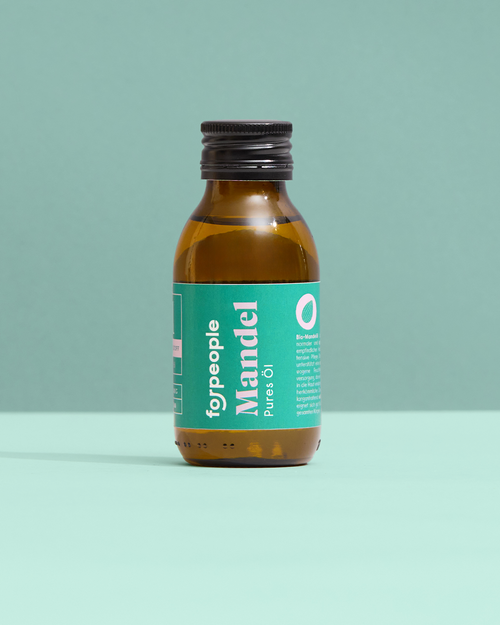
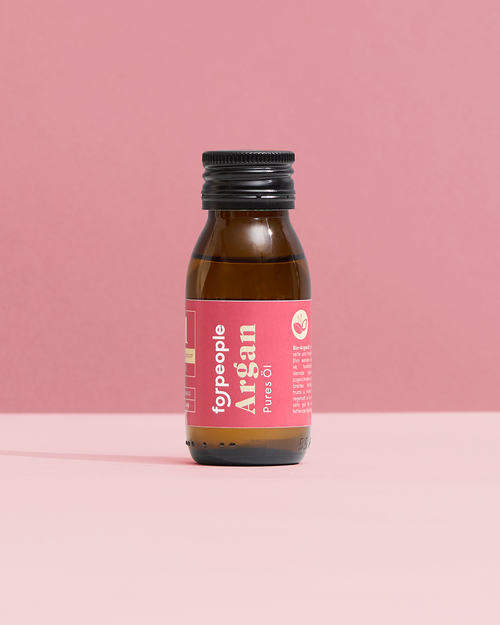
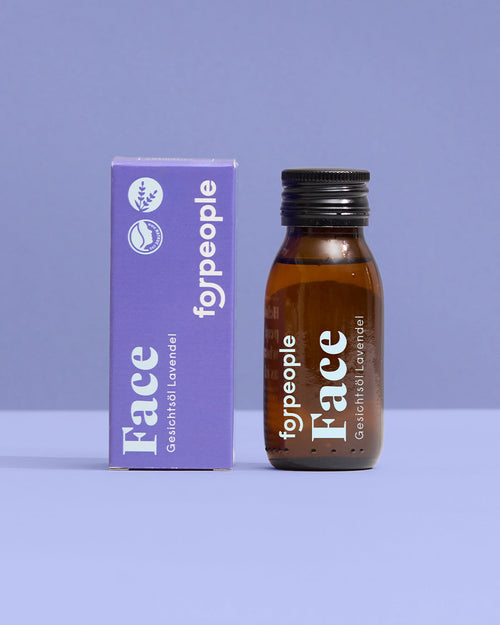
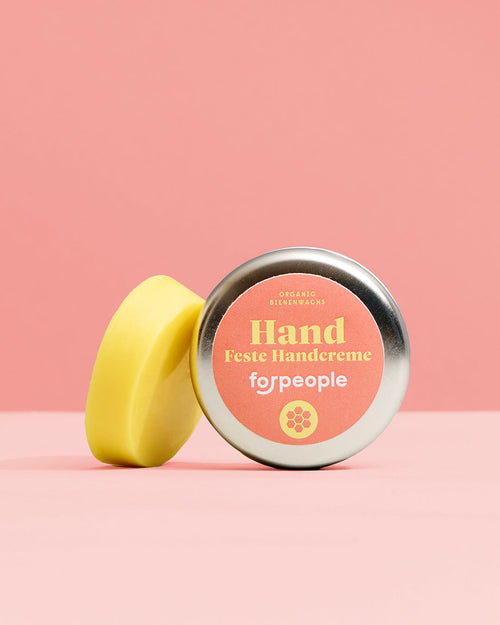
According to the product page, our pure oils are cold-pressed, and according to the ingredient list each consists of just one oil. In some blends, cold-pressed oils are marked with a footnote in the ingredient list. Whether the shea and cocoa butter in our products are refined or unrefined is not evident from the ingredient list.
- Almond Oil - pure, 100 ml, €14.90: rich in oleic acid; according to the product page for skin, hair and lips and as a massage oil.
- Argan Oil - pure, 50 ml, €19.90: from certified organic farming; according to the product page for the face in the evening and for hair.
- Face Oil - Lavender, 50 ml, €21.90: argan, rosehip, jojoba, borage and hemp oil, all gently cold-pressed according to the ingredient list, plus lavender oil.
- Solid Hand Cream - Beeswax, 30 g, €9.90: beeswax with olive and sunflower oil, both gently cold-pressed according to the ingredient list; for the hands.
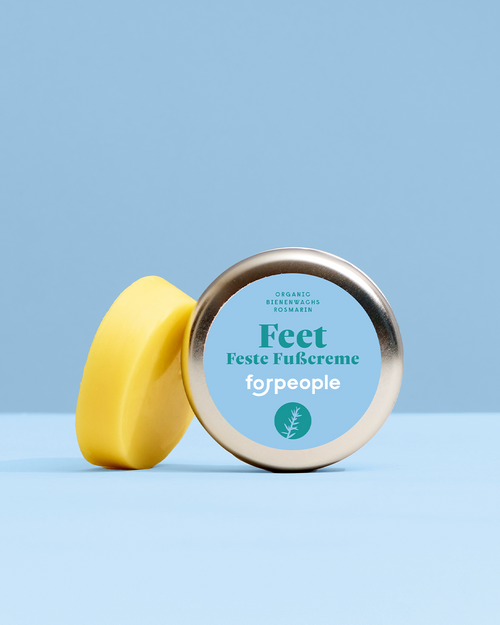
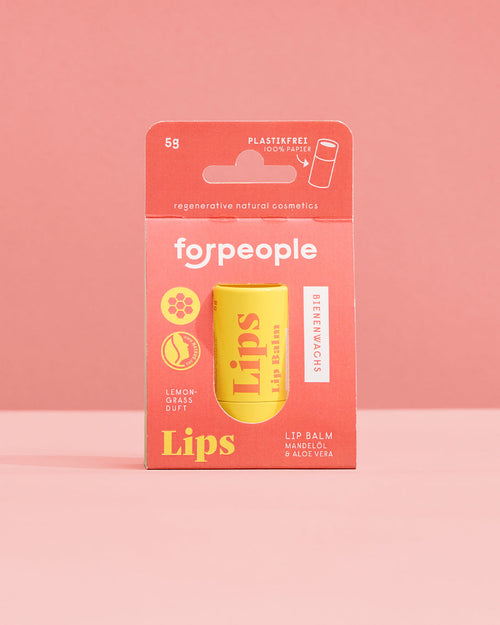
In the Solid Foot Cream – Rosemary & Sage and the Lip Balm - Lemongrass, too, the liquid oils are cold-pressed according to the ingredient list.
More on this: Argan, jojoba, almond or rosehip oil: how do they differ? · How to tell if a skin oil is rancid · Cosmetics Shelf Life: Hourglass Symbol and PAO After Opening
From the blog: What goes into the solid foot cream – and why
Sources
- Deutsche Lebensmittelbuch-Kommission (2020): Leitsätze für Speisefette und Speiseöle vom 02.07.2020 (BAnz AT 18.08.2020 B3), zuletzt geändert am 14.03.2024 (BAnz AT 18.04.2024 B2), Abschnitte 1.2.2 bis 1.2.4. bmleh.de
- Codex Alimentarius Commission (2015): Standard for Named Vegetable Oils, CODEX STAN 210-1999, Fassung mit Änderungen bis 2015, Abschnitte 2.2 und 4.1 sowie Anhang (Qualitätsmerkmale). fao.org
- Codex Alimentarius Commission (2015): Standard for Olive Oils and Olive Pomace Oils, CODEX STAN 33-1981, Revision 2015, Abschnitte 2 und 3. fao.org
- Rhazi L, Depeint F, Ayerdi Gotor A (2022): Loss in the Intrinsic Quality and the Antioxidant Activity of Sunflower (Helianthus annuus L.) Oil during an Industrial Refining Process. Molecules 27(3): 916. https://doi.org/10.3390/molecules27030916
- Bundesinstitut für Risikobewertung (2018): Fragen und Antworten zur Kontamination von Lebensmitteln mit 3-MCPD-, 2-MCPD- und Glycidyl-Fettsäureestern. FAQ vom 13. Juni 2018. bfr.bund.de
- Prescha A, Grajzer M, Dedyk M, Grajeta H (2014): The Antioxidant Activity and Oxidative Stability of Cold-Pressed Oils. Journal of the American Oil Chemists' Society 91(8): 1291–1301. https://doi.org/10.1007/s11746-014-2479-1
- Gad HA, Roberts A, Hamzi SH, Gad HA, Touiss I, Altyar AE et al. (2021): Jojoba Oil: An Updated Comprehensive Review on Chemistry, Pharmaceutical Uses, and Toxicity. Polymers 13(11): 1711. https://doi.org/10.3390/polym13111711
- Abdel-Razek AG, Abo-Elwafa GA, Al-Amrousi EF, Badr AN, Hassanein MMM, Qian Y et al. (2023): Effect of Refining and Fractionation Processes on Minor Components, Fatty Acids, Antioxidant and Antimicrobial Activities of Shea Butter. Foods 12(8): 1626. https://doi.org/10.3390/foods12081626
- Fulton JE Jr (1989): Comedogenicity and irritancy of commonly used ingredients in skin care products. Journal of the Society of Cosmetic Chemists 40(6): 321–333. library.scconline.org
- Gharby S, Charrouf Z (2022): Argan Oil: Chemical Composition, Extraction Process, and Quality Control. Frontiers in Nutrition 8: 804587. https://doi.org/10.3389/fnut.2021.804587