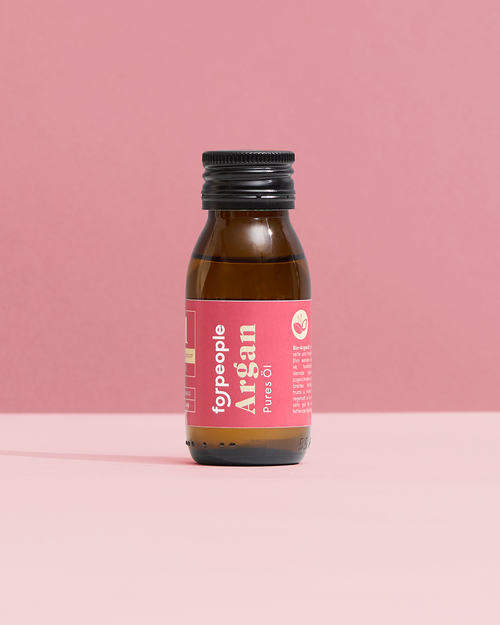
Often the bottle sits in the bathroom and is only used for the hair ends, or it stays unused because it is unclear how much, when and in what order. Three things are all you need to know: argan oil is pure fat, it needs a little moisture underneath, and a few drops are enough.
Origin and production: cosmetic or culinary argan oil
Argan oil is pressed from the kernels of the argan tree (Argania spinosa). The tree grows mainly in south-western Morocco, with scattered stands reaching into Algeria; UNESCO declared the Moroccan argan forest a biosphere reserve in 1998. The fruits are collected, dried in the sun and peeled, then the hard nuts are cracked. With the traditional method, one person needed around 24 hours of work to obtain one litre of oil from about 50 kilograms of fruit. Today the oil is mainly produced by women's cooperatives in Morocco using mechanical presses (Gharby & Charrouf 2022).
Whether an argan oil belongs in the kitchen or the bathroom comes down to one step: roasting the kernels.
| Feature | Cosmetic argan oil | Culinary argan oil |
|---|---|---|
| Kernels | unroasted, cold-pressed | roasted for a few minutes, then cold-pressed |
| Colour | gold-coloured | copper-coloured |
| Smell and taste | no roasted aroma | roasted aroma, like hazelnut |
| Intended for | skin and hair, pure or in cosmetics | food |
| Shelf life protected from light at 25 °C | about one year | about two years |
| Name on the pack | INCI: Argania Spinosa Kernel Oil | food name |
Data from Gharby & Charrouf 2022. The Argan Oil - pure from forpeople is a cosmetic oil: according to the ingredient list, pure cold-pressed organic argan oil, and according to the product description from Morocco. What INCI names mean is explained in INCI names explained: our ingredients in plain English.
What is in argan oil
Like most plant oils, argan oil consists of triglycerides, that is, fatty acids bound to glycerol. Around 80 per cent of the fatty acids are unsaturated (Gharby & Charrouf 2022):
- Oleic acid: 43–49%, monounsaturated.
- Linoleic acid: 29–36%, polyunsaturated with two double bonds.
- Alpha-linolenic acid: at most 0.3%; it oxidises particularly easily.
- Saturated: mainly palmitic acid (11.5–15%) and stearic acid (4.3–7.2%).
There are also tocopherols, forms of vitamin E: 60 to 90 milligrams per 100 grams, mostly gamma-tocopherol. Argan oil also contains plant sterols, mainly schottenol and spinasterol, as well as squalene and polyphenols. The tocopherols are closely linked to the oil's stability; laboratories use the sterol pattern to tell whether argan oil has been diluted with other oils (Gharby & Charrouf 2022).
For the skin, what matters most is the film of oil. In one measurement, four plant oils penetrated only the uppermost layers of the stratum corneum; three of them reduced water loss through the skin about as much as paraffin oil, jojoba oil did not (Patzelt et al. 2012). We make no further claims about the skin.
Pure argan oil on the face: when, how much, how
Fatty substances that slow evaporation have the most pronounced effect on slightly dampened skin (Sethi et al. 2016). So:
- Cleanse: wash your face and only pat it lightly dry.
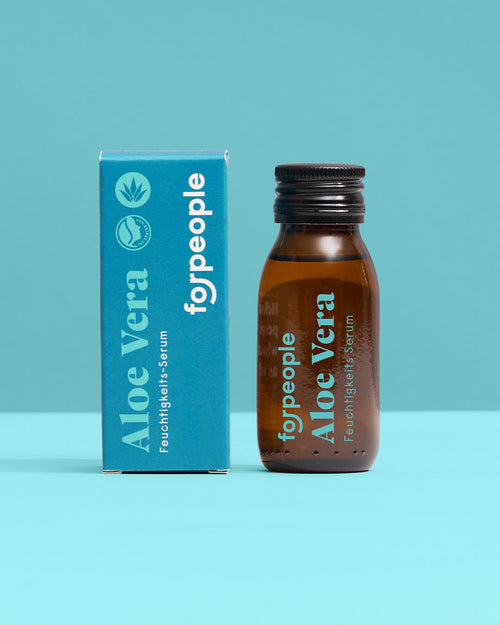
- Water-based layer: if your skin is already dry, apply something water-based first, such as the Aloe Vera Serum 99.6%. It consists almost entirely of aloe vera juice and leaves no greasy film. Water-based first, then oil.
- Oil: rub two to four drops between your hands, press them onto face and neck and massage in lightly.
- Check: after a few minutes your skin should have a slight sheen, not an oily shine. Otherwise it was too much.
The product page recommends using the oil on the face in the evening. The morning works too, with one or two drops and a few minutes' pause before sunscreen or make-up. Amounts and times are based on experience. Why oil alone does not provide moisture is explained in Rich cream or moisturiser? What dry skin needs and Can a face oil replace face cream?; for shiny skin: Face oil on oily skin: does that work?
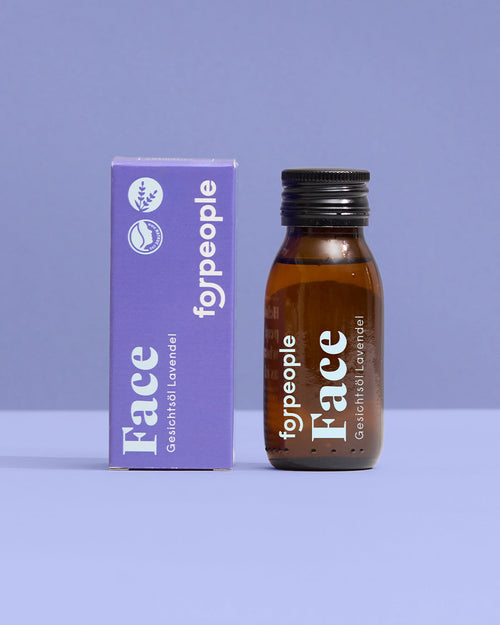
As a ready-made blend with fragrance, the Face Oil - Lavender contains argan oil alongside rosehip, jojoba, borage and hemp oil and lavender essential oil.
Argan oil in your hair: wet or dry, how long to leave it on?
In hair, oil works mainly on the surface. In tests, the force needed to comb wet hair dropped after an oil treatment; water and oil contribute to this together. Thick oil films make hair look heavy and oily; a thin layer, renewed when needed, works better (Gavazzoni Dias 2015).
- Without rinsing: rub one or two drops between your palms and apply them only to the ends and lower lengths, leaving the roots free. The oil stays in your hair until the next wash; the product page explicitly names it as a leave-in treatment.
- Wet or dry: both work. In towel-dried hair it spreads more evenly; in dry hair you see straight away whether it was too much.
- As a treatment before washing: apply enough to the dry lengths for them to shine but not drip. 30 minutes to a few hours is usual; there is no evidence-based minimum time. Then wash with shampoo or hair soap, twice if you used a lot of oil.
For argan oil, a systematic review found no robust evidence that it improves hair quality or hair growth (Phong et al. 2022). It cares for the lengths and ends from the outside: they shine, are easier to comb and feel supple. Split ends do not grow back together because of it. Amounts for fine and thick hair are in Oil for hair ends: which one, how much?
Nails, cuticles and beard
On your hands, argan oil is mainly useful for the cuticle, the thin horny rim at the base of the nail. It gets wet every time you wash your hands and then dries out again, but is often missed when you apply cream.
- In the evening: put a drop on the fingertip of your other hand and massage it into the cuticle and nail fold, one drop per nail.
- For very dry cuticles: add a thin layer of balm or solid hand cream on top so the oil is not rubbed off straight away.
- Do not cut: after showering, at most push the cuticle back carefully with a cloth.
Oil keeps nails and cuticles supple; it does not make the nail harder. More in Dry, torn cuticles: how to care for them and Brittle fingernails: what water and polish remover do to them.
In a beard, use argan oil like a beard oil: depending on length, rub two to four drops between your hands, work them into the towel-dried beard, massage down to the skin and comb through. A longer beard that sticks out is easier to shape with a balm: Beard balm or beard oil: what is the difference?
Shelf life, smell and other oils compared
In a one-year storage trial, cosmetic argan oil quickly lost quality at 40 °C. At 25 °C and protected from sunlight it was still satisfactory after twelve months according to the Moroccan standard; for stricter industry standards the authors give six months at most (Gharby et al. 2014). Unroasted oil is less stable than roasted culinary oil (Gharby & Charrouf 2022). Close the bottle tightly and store it somewhere cool and dark, not next to the radiator. How long a product keeps after opening is on the label: Cosmetics Shelf Life: Hourglass Symbol and PAO After Opening.
Without the roasted aroma, cosmetic argan oil smells fainter than culinary oil; for our oil, descriptions range from slightly nutty to almost neutral. If an oil smells sharp, musty or like old paint, it is rancid: How to tell if a skin oil is rancid.
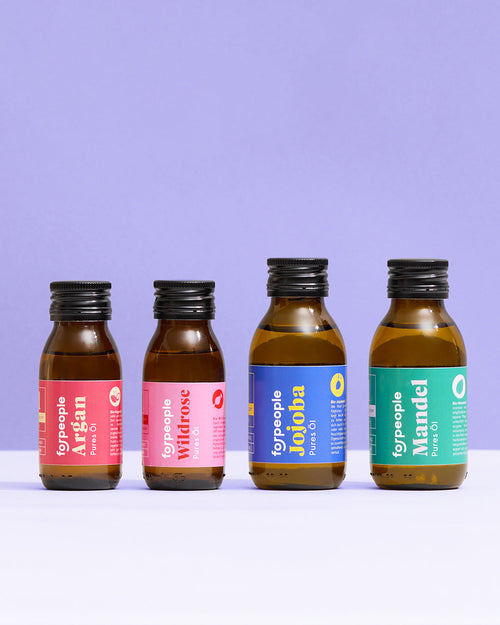
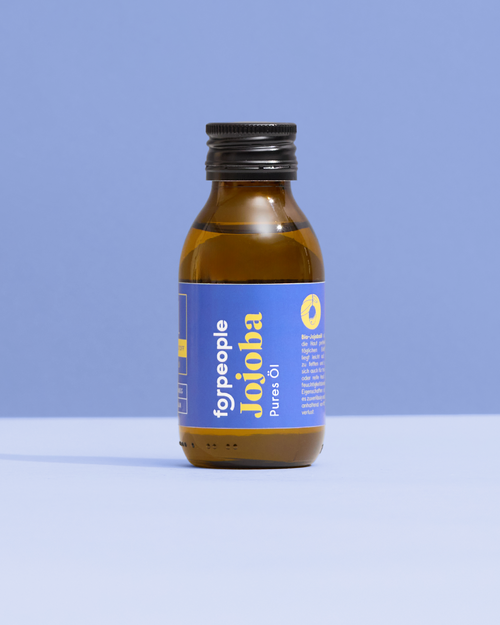
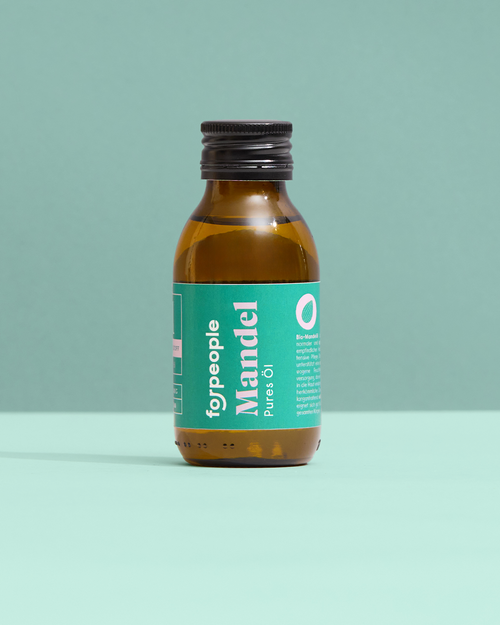
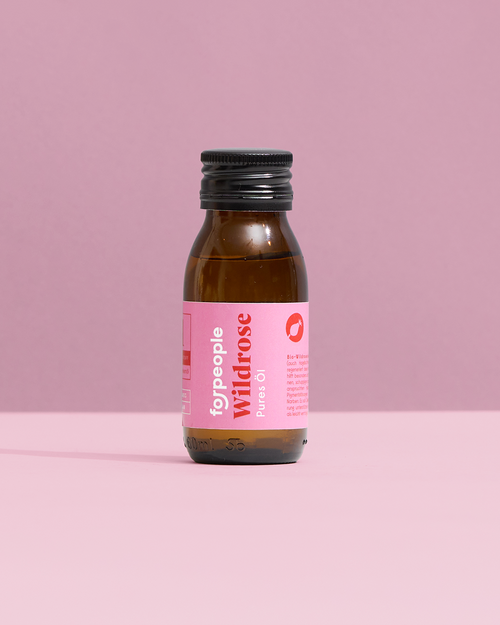
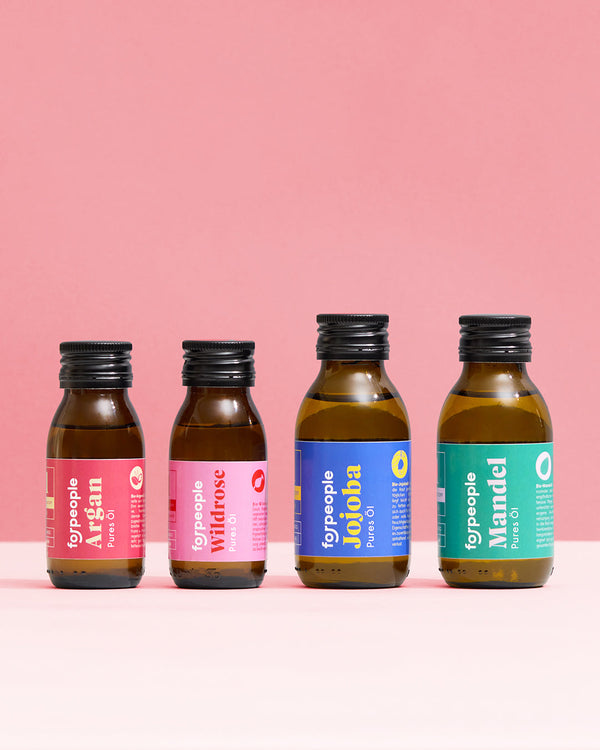
In the Care Oil Set – 4 Organic Oils for Face, Body & Hair, argan oil sits alongside three other pure oils:
| Feature | Argan oil | Jojoba oil | Almond oil | Wild rose seed oil |
|---|---|---|---|---|
| INCI name | Argania Spinosa Kernel Oil | Simmondsia Chinensis Seed Oil | Prunus Amygdalus Dulcis Oil | Rosa Canina Fruit Oil |
| Structure | triglycerides, rich in oleic and linoleic acid | liquid wax, around 98% waxes | triglycerides, mostly oleic acid | triglycerides, rich in linoleic and linolenic acid |
| Colour | gold-coloured | golden to light yellow | light yellow | yellow-orange to reddish |
| Stability against rancidity | medium | high | medium | lowest |
| Often used for | face, hair ends, cuticles, beard | face, cuticles, hair, blends | body, massage, large areas | face in the evening; briefly tints orange |
| At forpeople | Argan Oil - pure, 50 ml | Jojoba Oil - pure, 100 ml | Almond Oil - pure, 100 ml | Wild Rose Seed Oil - pure, 50 ml |
Jojoba oil according to Gad et al. 2021; stability and uses are ratings. Fatty acid shares of all four oils with sources: Argan, jojoba, almond or rosehip oil: how do they differ?; on jojoba oil: Can jojoba oil go off? Shelf life and structure.
When to seek medical advice?
Argan oil is care, not treatment. If your skin turns red, burns or develops hives after applying it, stop using it; allergic contact reactions to argan oil have been described in case reports (Foti et al. 2014). If a reaction persists, have it checked by a doctor; if you have a known nut or seed allergy, ask beforehand. You should also see a doctor about hair falling out noticeably more than usual, bald patches, a scalp that stays red or flakes heavily, and a swollen or pus-filled nail fold. Oil does not belong on broken skin or in your eyes. Try anything new on a small area first: Trying a new product: how do I test it on a small area?
Frequently asked questions
Can I put argan oil on my skin pure?
Yes. Cosmetic argan oil is intended to be applied undiluted to skin and hair (Gharby & Charrouf 2022). Use a few drops on slightly damp skin, two to four on the face.
Can I mix argan oil with water or aloe serum?
Only briefly in your palm, because oil does not dissolve in water. Rub serum and oil between your hands and apply both straight away. Do not add anything to the bottles. The order is explained in Combining aloe vera serum with oil or solid cream.
Why does my argan oil smell so strong?
A slightly nutty smell of its own is normal. A strong roasted smell suggests culinary argan oil. If the oil smells sharp or musty, it has oxidised and should no longer go on your skin.
Argan oil or jojoba oil: which suits better?
Jojoba oil is a liquid wax, feels lighter and keeps longer. Argan oil is a plant oil rich in oleic and linoleic acid. Both care for face, hair ends and cuticles; which you prefer is something only trying will show.
Does argan oil make hair grow faster?
There is no robust evidence for that (Phong et al. 2022). Argan oil cares for the lengths and ends. If you lose noticeably more hair than usual, have it checked by a doctor.
Can I use culinary argan oil from the kitchen?
It is pressed from roasted kernels and produced as a food, not as a cosmetic. For skin and hair, the unroasted cosmetic oil is the one intended.
At forpeople
- Argan Oil - pure (50 ml, €19.90): according to the ingredient list, only organic argan oil, with no added fragrance, hand-filled in Germany into a dark glass bottle with a cork dispenser.
- Care Oil Set – 4 Organic Oils for Face, Body & Hair (€69.90): argan oil and wild rose seed oil at 50 ml each, jojoba oil and almond oil at 100 ml each.
- Jojoba Oil - pure (100 ml, €16.90): the liquid wax for cuticles, face and hair.
- Aloe Vera Serum 99.6% (50 ml, €9.90): the water-based layer under the oil, without essential oils or perfume; because aloe juice contains water, it is preserved.
More on this: Argan, jojoba, almond or rosehip oil: how do they differ? · Oil for hair ends: which one, how much? · Dry, torn cuticles: how to care for them · Combining aloe vera serum with oil or solid cream
From the blog: Face & Body Oils: Which Oil Suits Which Skin Type?
Sources
- Gharby S, Charrouf Z (2022): Argan Oil: Chemical Composition, Extraction Process, and Quality Control. Front Nutr 8: 804587. https://doi.org/10.3389/fnut.2021.804587
- Patzelt A, Lademann J, Richter H, Darvin ME, Schanzer S, Thiede G et al. (2012): In vivo investigations on the penetration of various oils and their influence on the skin barrier. Skin Res Technol 18(3): 364–369. https://doi.org/10.1111/j.1600-0846.2011.00578.x
- Sethi A, Kaur T, Malhotra SK, Gambhir ML (2016): Moisturizers: The Slippery Road. Indian J Dermatol 61(3): 279–287. https://doi.org/10.4103/0019-5154.182427
- Gavazzoni Dias MF (2015): Hair cosmetics: an overview. Int J Trichology 7(1): 2–15. https://doi.org/10.4103/0974-7753.153450
- Phong C, Lee V, Yale K, Sung C, Mesinkovska N (2022): Coconut, Castor, and Argan Oil for Hair in Skin of Color Patients: A Systematic Review. J Drugs Dermatol 21(7): 751–757. https://pubmed.ncbi.nlm.nih.gov/35816075/
- Gharby S, Harhar H, Kartah B, Guillaume D, Chafchaouni-Moussaoui I, Bouzoubaa Z et al. (2014): Oxidative stability of cosmetic argan oil: a one-year study. J Cosmet Sci 65(2): 81–87. https://pubmed.ncbi.nlm.nih.gov/24797024/
- Gad HA, Roberts A, Hamzi SH, Gad HA, Touiss I, Altyar AE et al. (2021): Jojoba Oil: An Updated Comprehensive Review on Chemistry, Pharmaceutical Uses, and Toxicity. Polymers (Basel) 13(11): 1711. https://doi.org/10.3390/polym13111711
- Foti C, Romita P, Ranieri LD, Bonamonte D (2014): Allergic contact dermatitis caused by argan oil. Contact Dermatitis 71(3): 183–184. https://doi.org/10.1111/cod.12233