




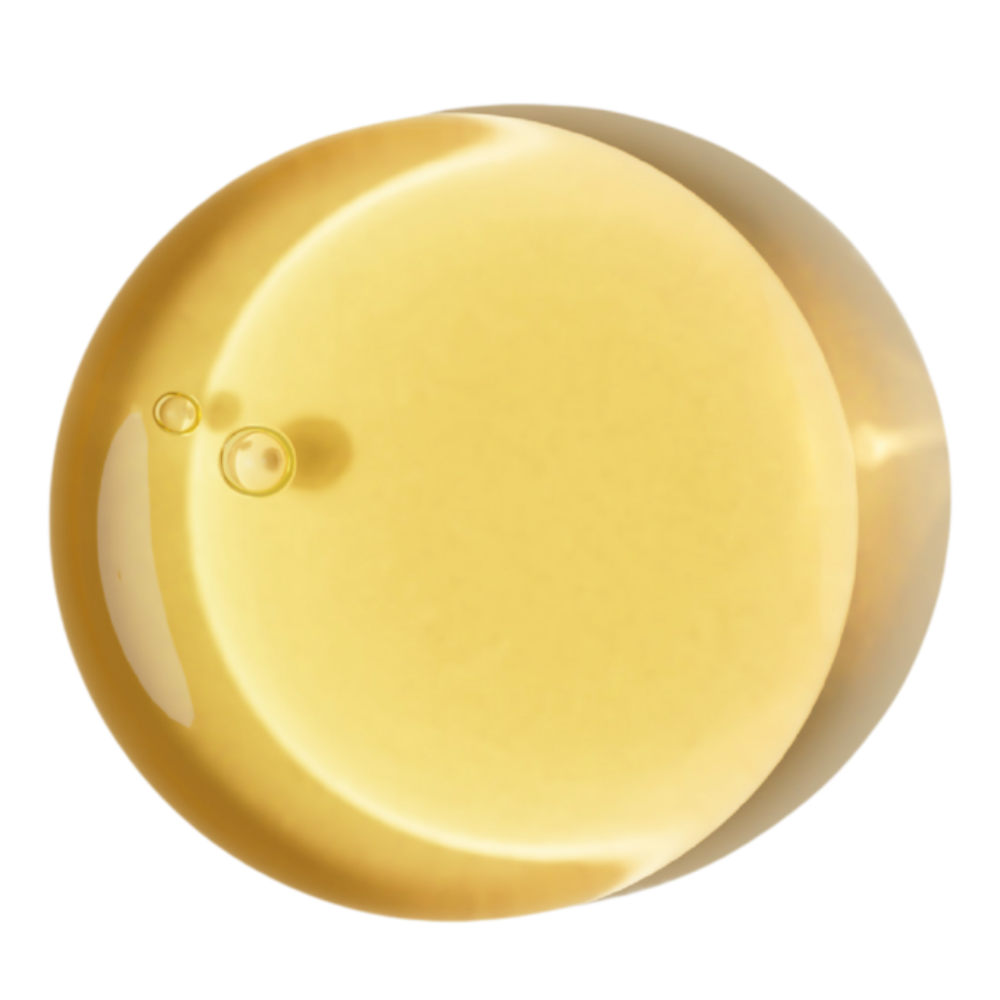


Profile
Almond oil is the mildest of all plant oils.
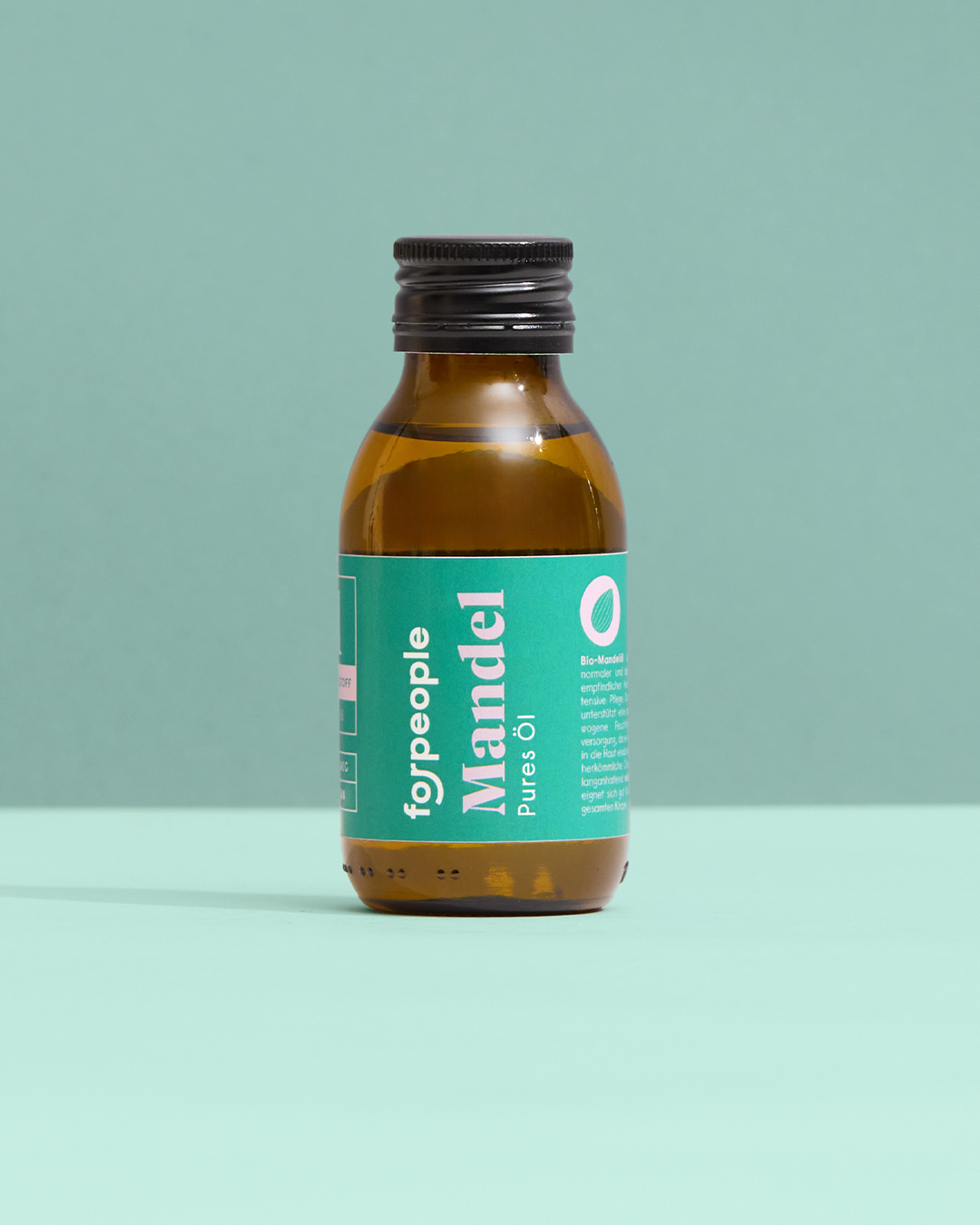
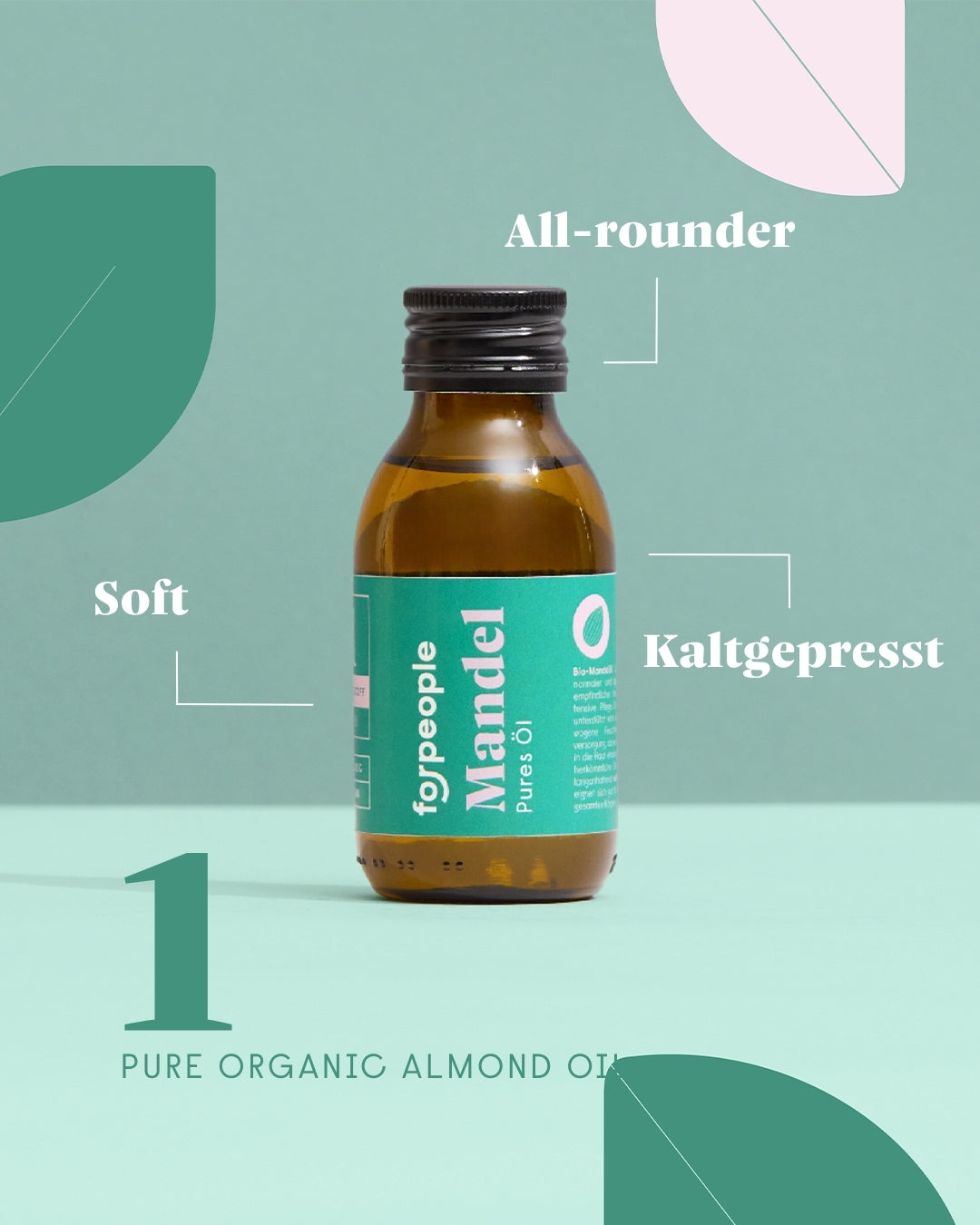
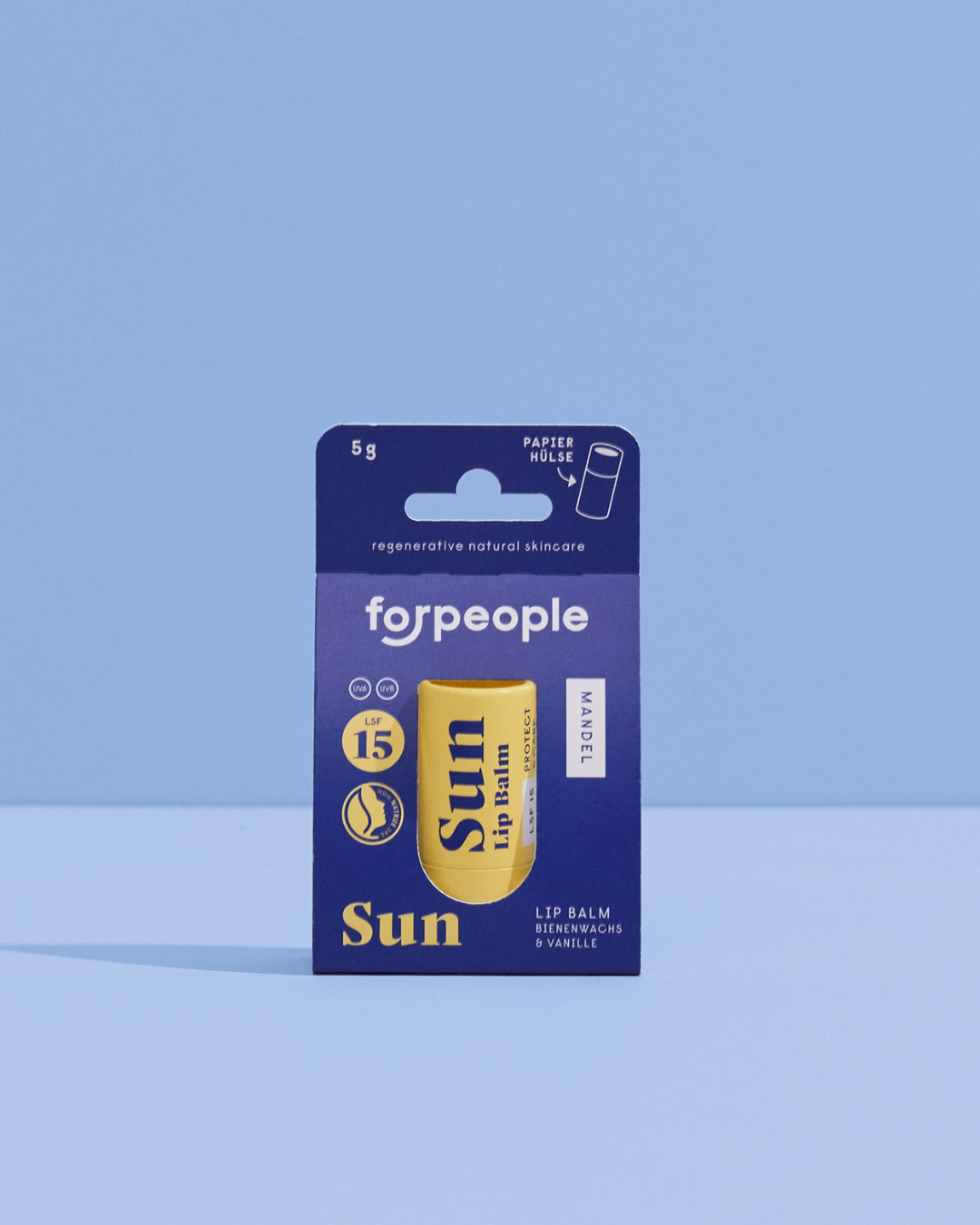
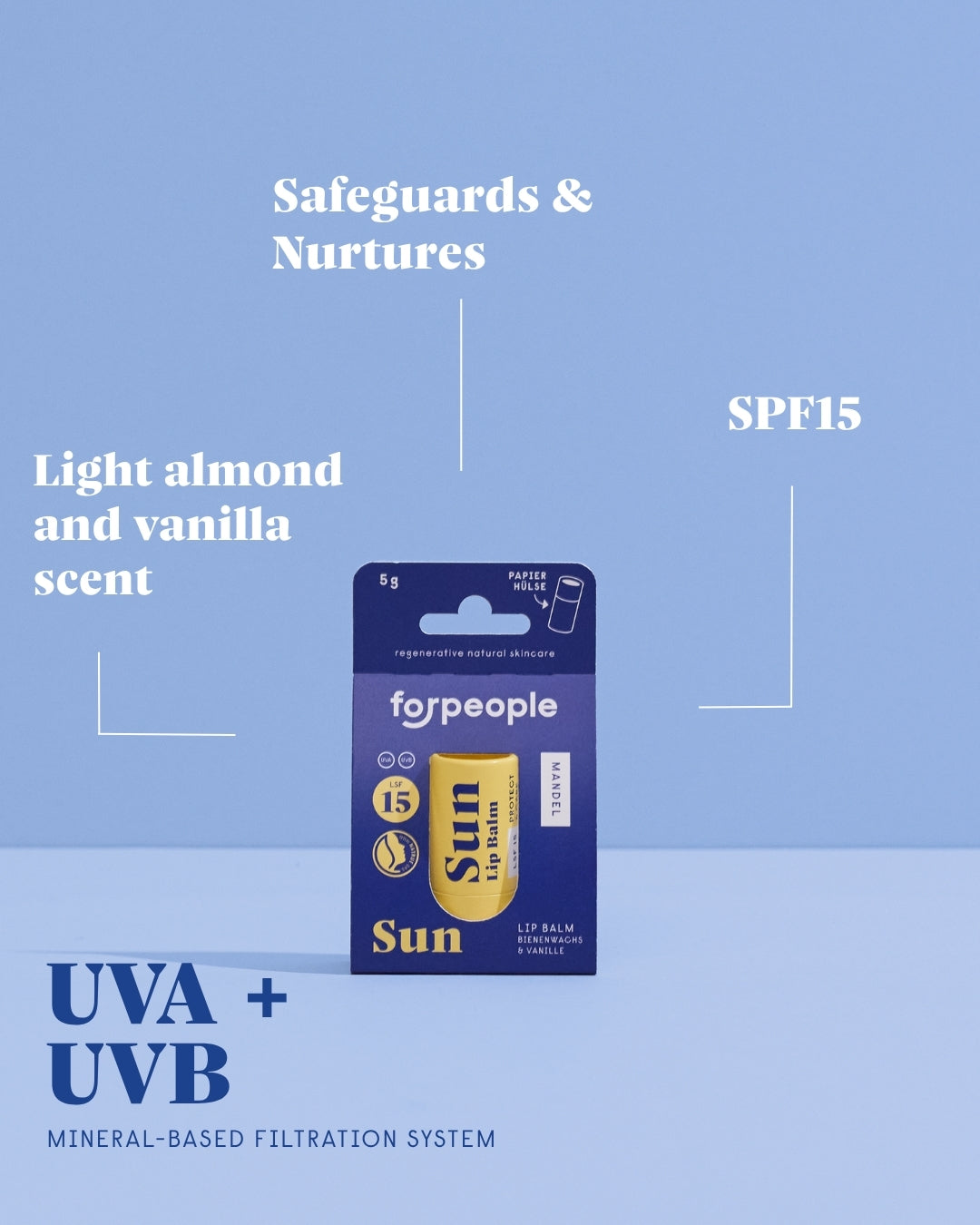
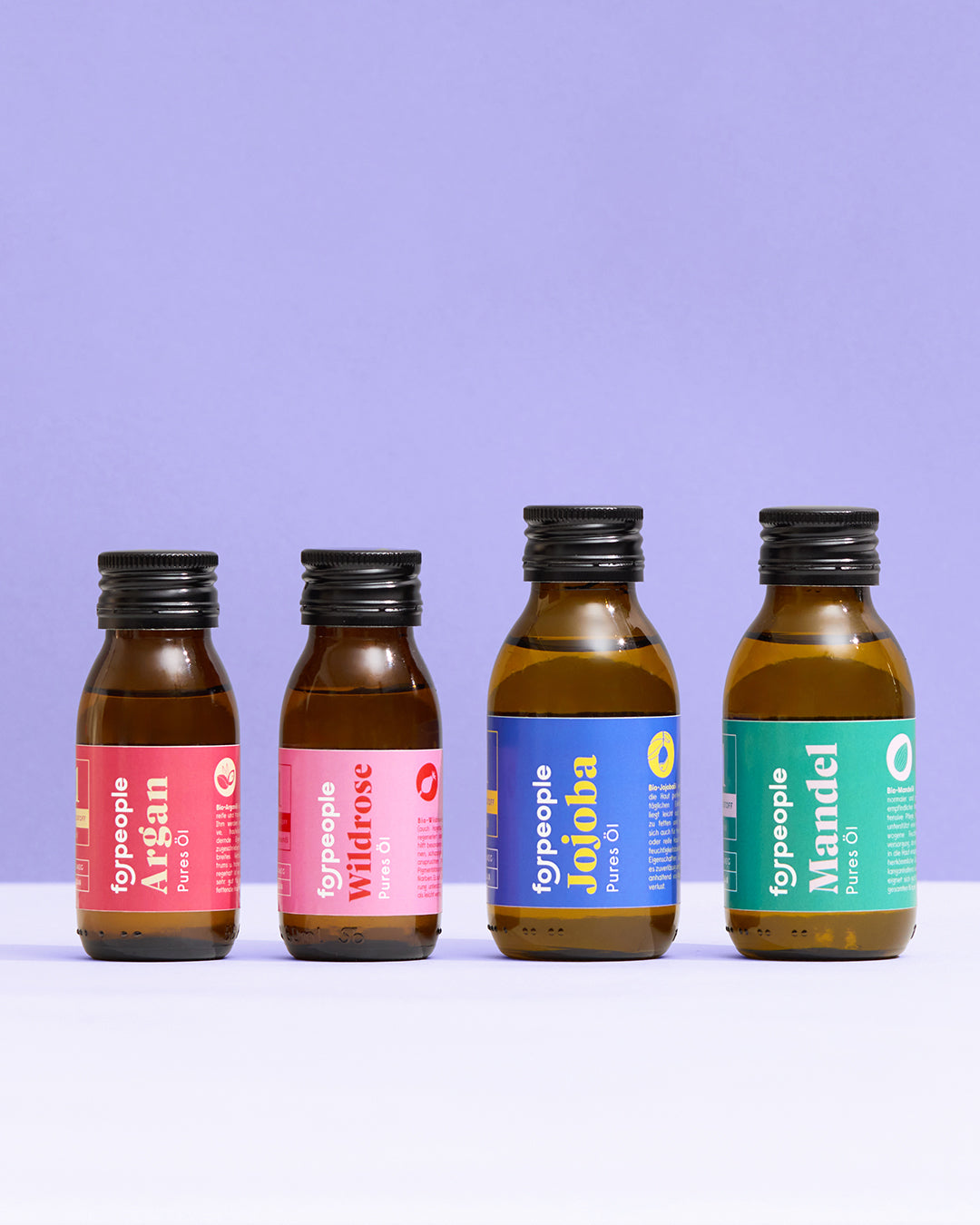
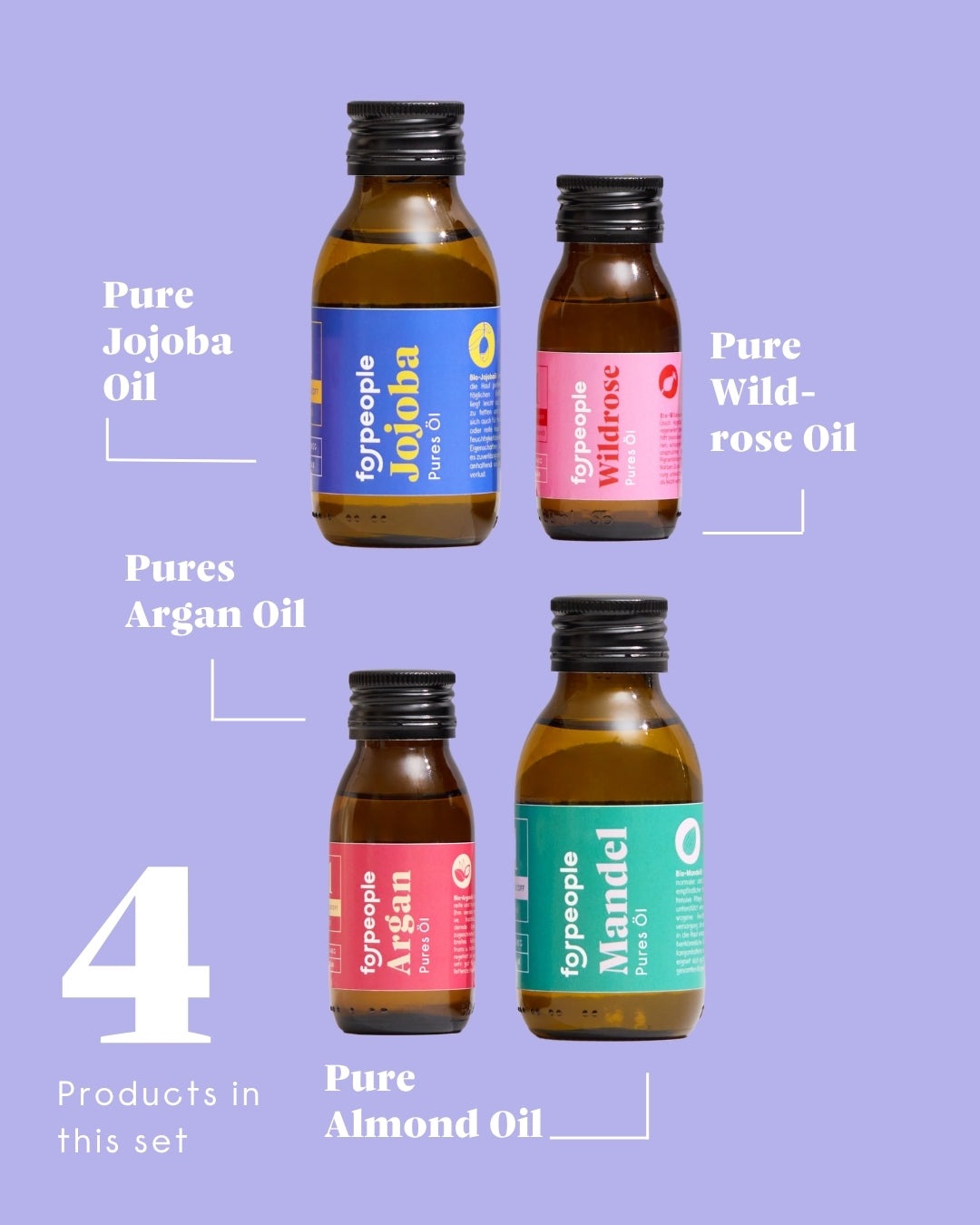
You'll find it pure with us as Almond oil pure in a glass bottle – ideal as a make-up remover or massage oil. It's also in the Lip care SPF15 Almond & Vanilla and in the Care oils four-piece set.
The mildest of all plant oils
Almond oil is extracted from the seeds of the sweet almond (Prunus dulcis). With about 65 % oleic acid and 25 % linoleic acid, it has a balanced fatty acid profile. It absorbs relatively quickly and leaves a light, velvety film on the skin. Almond oil is considered the mildest of all plant oils and is therefore traditionally found in baby and pregnancy care.
Almond oil in our mild care products
Which skin type is almond oil suited to?
Almond oil is tolerated by almost everyone and is especially strong on sensitive and dry skin.
How does almond oil work on the skin?
Three effects make almond oil the versatile standard oil of natural cosmetics.
Lipid supply
Oleic acid strengthens the skin barrier and makes up for a lack of lipids – the skin feels supple and elastic.
Soothing skin film
The light film on the skin visibly soothes redness, tightness and stress from friction.
Carrier oil function
Almond oil is neutral in taste and smell and carries essential oils ideally into the skin.
What can you use almond oil for?
Apply to damp skin after showering
Gently dissolves waterproof mascara
A classic for gentle massage and care
Helps prevent stretch marks on the belly
Standard carrier in aromatherapy
A component in lipsticks for a silky shine
Quick care in between without a greasy film
For tightness and minor irritation
Almond oil goes especially well with …
As a carrier oil, almond oil makes other actives easier to spread and gentler on the skin.
A classic aromatherapy duo – soothing, mild, versatile.
Learn moreMelts with shea butter into a creamy texture for rich care.
Learn moreIn combination, a gentler anti-aging concept than pure rosehip oil.
Learn moreTogether they form the base of many care salves and balms.
Learn moreWhat do studies say?
„Almond oil massage during pregnancy reduces the formation of stretch marks to a statistically significant degree."
„Almond oil measurably improves skin elasticity after 2 weeks of use."
„Thanks to its fatty acid profile, almond oil is considered an excellent carrier oil for essential oils."
Glossary
Magazine
Sun allergy in children? Often the sunscreen is the problem – not the sun
Red patches, itching or little bumps after a day in the sun are quickly written off as a sun allergy. But in conversations with more than 30 customers we kept hearing something different: the skin ...
