




What the oil is for in a facial massage
On dry skin a smooth stone sticks, judders and pushes the skin ahead of it. The oil has a single job here: it puts a film between skin and tool. That goes for stone and roller as much as for a massage with your fingers. Three findings put this into context.
- Oil lowers friction: In a measurement on the upper arm of 20 people, petrolatum and silicone oil reduced the frictional force on the skin. The researchers attribute this to lubrication and to skin and probe sticking to each other less (Sakata et al. 2024).
- Water raises it: A review summarises that more moisture in the skin, whether from water or from a moisturiser, makes friction rise (Sivamani et al. 2003).
- The film does not last for ever: In a series of measurements on the forearm of a single test person, most lubricants lowered friction markedly at first, but only a few did so for hours. With a product made of water and glycerine, friction quickly rose again and ended up above the value for untreated skin (Masen et al. 2020).
As far as we know, nobody has measured plant oils under a gua sha stone. The direction is clear all the same: fat lubricates, water does not. In a study on rollers and gua sha, too, each session began with a small amount of pure facial oil so that the tool would run smoothly (Ahn et al. 2025).
Which oil fits?
For glide, the amount matters more than the type. The oils differ in scent, colour and stability. We have not measured how long a particular oil glides.
| Oil | Essential oils according to the ingredient list | Properties | Note for massage |
|---|---|---|---|
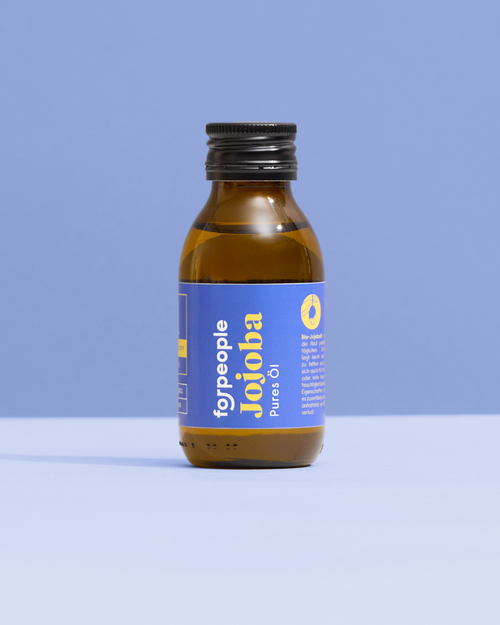
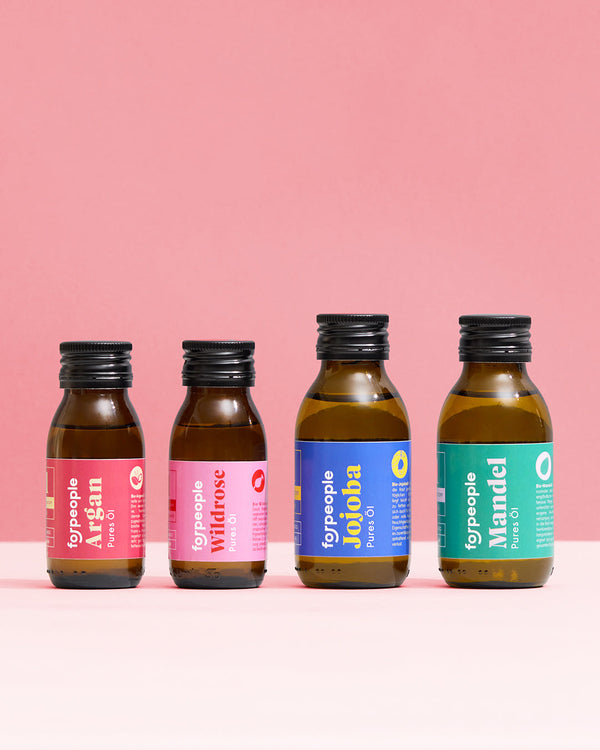
| Jojoba Oil - pure | none | liquid wax, thin, high stability against rancidity | no added scent; turns solid below about 7 °C |
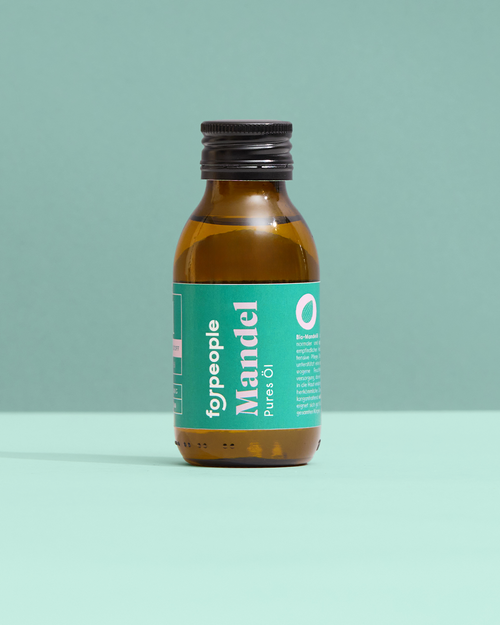
| Almond Oil - pure | none | pale yellow, medium stability | no added scent; according to the product page also intended as a massage oil |
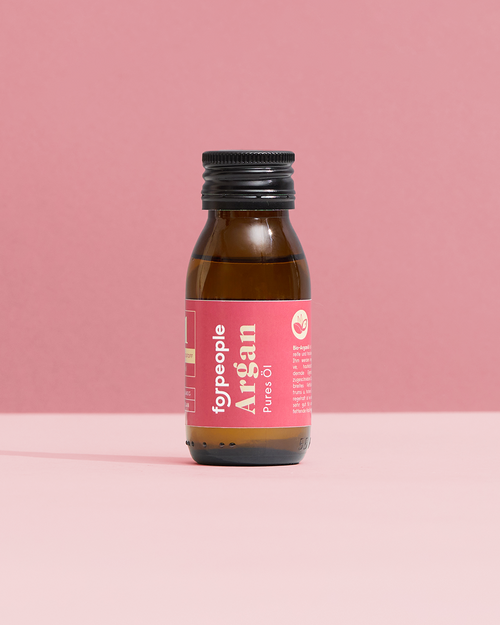
| Argan Oil - pure | none | golden, medium stability | no added scent; smaller bottle |
| Wild Rose Seed Oil - pure | none | yellow-orange to reddish, the least stable | clean the stone especially thoroughly afterwards |
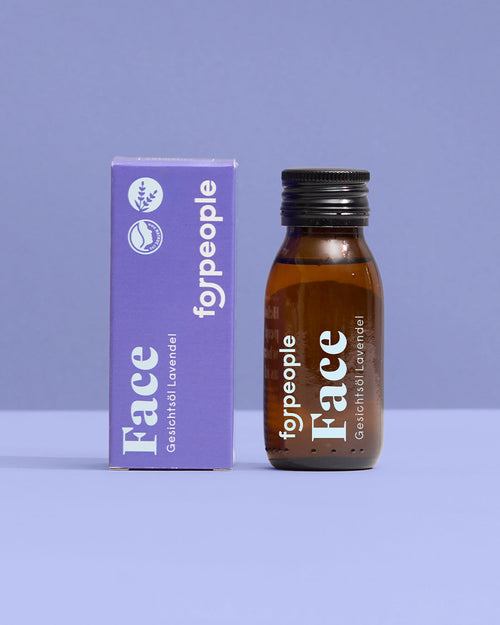
| Face Oil - Lavender | lavender oil; the list names linalool and limonene | ready-made blend of argan, rosehip, jojoba, borage and hemp oil | smells of lavender; leave out the eye area |
The properties of the pure oils are documented with sources in Argan, jojoba, almond or rosehip oil: how do they differ? and Jojoba oil: why it is a liquid wax.
How much oil, and how do you go about it?
The amounts and steps are common practice, not measured values.
- Cleanse: Wash your face and hands. The stone is clean and dry.
- Serum, if you like: A water-based serum goes on first. Wait until nothing runs any more.
- Apply oil: Rub two to three drops between your palms and lay them onto face and neck.
- Check: Place the stone flat and draw it slowly across the cheek. If it judders or pushes the skin ahead of it in ripples, add a drop.
- Work lightly: Guide the stone in long strokes with little pressure. The skin may move along, but it should not hurt and should not stay red.
- Leave out the eye area: Eyelids and lid margins stay free. The product pages say for all oils: avoid contact with the eyes.
- Afterwards: Take off excess oil with a cloth. In the morning, when the sun is out, sunscreen follows as the last layer.
If your skin turns shiny quickly, stay with the smallest amount; see Face oil on oily skin: does that work?
What has been shown and what has not?
Gua sha comes from traditional East Asian medicine. There, the body is scraped so firmly that small spots of bleeding appear in the skin. Gua sha for the face is something different: a gentle massage with a flat stone.
- Roller on the face: Five minutes of massage with a roller raised skin blood flow in the treated cheek for at least ten minutes in 12 people. After five weeks of daily use, the skin vessels of 14 people responded more strongly to a heat stimulus (Miyaji et al. 2018). One of the three authors worked in development at a company that makes such devices.
- Gua sha on the back: After a classic treatment, blood flow at the skin surface of 11 healthy people rose to four times its value in the first seven and a half minutes and stayed raised for 25 minutes (Nielsen et al. 2007). That was the back, not the face, and a technique that deliberately produces bleeding in the skin.
- Roller and gua sha compared: 34 women massaged for ten minutes five times a week over eight weeks, half with the roller, half with the gua sha edge. In both groups, measurements of the facial contour changed by a few millimetres (Ahn et al. 2025). There was no group without massage; the study therefore does not show what massage achieves compared with doing nothing.
So what has been measured, in small studies, is a short-lived increase in skin blood flow. That a stone shapes or firms the face in the long term has not been shown by this, and we do not promise it. The oil does not change that: it lets the stone glide and cares for the skin as it otherwise does.
Pressure, cleaning and breaks
- Pressure: In the comparative study, the participants were asked to work firmly enough for the skin to move visibly, but without discomfort and without bruising (Ahn et al. 2025). If the skin stays red for longer, it was too much.
- Cleaning the stone: Wash it after every use with warm water and a little soap and dry it. Oil residue turns rancid in the air; how to notice that is described in How to tell if a skin oil is rancid.
- Take a break: Do not massage over injured, irritated or sun-reddened skin.
When to seek medical advice?
A facial massage is body care, not a treatment. Ask a doctor beforehand if you have a skin condition on your face, take blood-thinning medication, bruise easily, or have recently had a procedure on your face. If the skin stays red for hours after the massage, swells, or shows pinpoint bleeding, stop and have it looked at. If the skin reacts to an oil with redness or burning, stop using it. If oil gets into the eye, rinse it thoroughly with water straight away.
Frequently asked questions
Does gua sha work without oil?
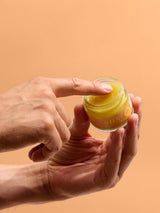
On dry skin the stone drags instead of gliding. A glide film is therefore part of it. If you do not want oil, a water-free balm of fat and wax is the alternative; water alone does not help.
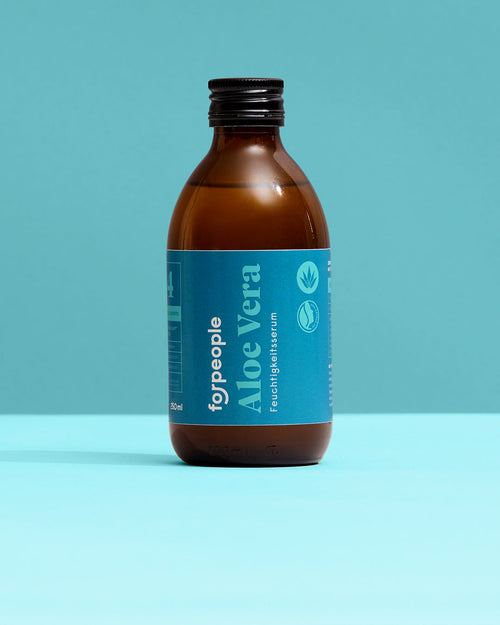
Can I use aloe vera serum instead of oil?
Not as a glide film. The serum is water-based, and damp skin tends to have more friction than dry skin. Under the oil it fits well; see Combining aloe vera serum with oil or solid cream.
How many drops of oil do I need for gua sha?
Start with two to three drops for face and neck. If the stone judders, add a drop.
Which oil do I use if I do not want any scent?
A pure oil. According to their ingredient lists, jojoba, almond and argan oil consist only of the oil itself. The Face Oil - Lavender contains essential lavender oil.
Do I have to wash the oil off after the massage?
No, it is your skin care at the same time. Whatever still shines after a few minutes, you take off with a cloth.
Can I use my body oil for the face roller?
A pure oil, yes. Scented body oils are intended for the body; more on this under Can I use body oil on my face too?
At forpeople
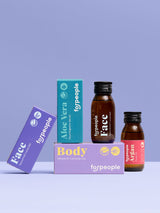
We do not sell a gua sha stone or a face roller. Our range has the oils and the serum to go underneath.
- Face Oil - Lavender, 50 ml, €21.90: a blend of five plant oils with essential lavender oil.
- Jojoba Oil - pure, 100 ml, €16.90: a single oil without essential oils.
- Argan Oil - pure, 50 ml, €19.90: likewise a single oil without essential oils.
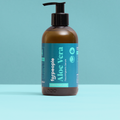
- Aloe Vera Serum 99.6%, 250 ml, €24.90: contains water and is preserved; for the step before the oil.
For all of them, the product pages say: avoid contact with the eyes and do not use on injured or irritated skin. If you notice a skin reaction, stop using the product.
More on this: Which oil is suitable for a massage at home? · Can a face oil replace face cream? · Removing make-up with oil: how does it work, and which oil? · Greasy or well cared for? Why creams feel greasy
From the blog: Face & Body Oils: Which Oil Suits Which Skin Type?
Sources
- Sakata Y, Mayama H, Nonomura Y (2024): Friction Dynamics of Human Skin Treated with Oil under Nonlinear Motion. Journal of Oleo Science 73(2): 177–186. https://doi.org/10.5650/jos.ess23166
- Sivamani RK, Goodman J, Gitis NV, Maibach HI (2003): Coefficient of friction: tribological studies in man – an overview. Skin Research and Technology 9(3): 227–234. https://doi.org/10.1034/j.1600-0846.2003.02366.x
- Masen MA, Chung A, Dawczyk JU, Dunning Z, Edwards L, Guyott C et al. (2020): Evaluating lubricant performance to reduce COVID-19 PPE-related skin injury. PLoS ONE 15(9): e0239363. https://doi.org/10.1371/journal.pone.0239363
- Miyaji A, Sugimori K, Hayashi N (2018): Short- and long-term effects of using a facial massage roller on facial skin blood flow and vascular reactivity. Complementary Therapies in Medicine 41: 271–276. https://doi.org/10.1016/j.ctim.2018.09.009
- Nielsen A, Knoblauch NT, Dobos GJ, Michalsen A, Kaptchuk TJ (2007): The effect of Gua Sha treatment on the microcirculation of surface tissue: a pilot study in healthy subjects. Explore (NY) 3(5): 456–466. https://doi.org/10.1016/j.explore.2007.06.001
- Ahn SH, Hwang UJ, Han HS, Kim JH, Lee HJ, Jeon YR et al. (2025): Comparative Effects of Facial Roller and Gua Sha Massage on Facial Contour, Muscle Tone, and Skin Elasticity: Randomized Controlled Trial. Journal of Cosmetic Dermatology 24(6): e70236. https://doi.org/10.1111/jocd.70236