



Why oil dissolves make-up and water does not
Most of what collects on your skin over the day is not water-soluble. Water alone therefore cleans incompletely. Surfactants break such residues down into fine particles that can be rinsed away (Mijaljica et al. 2022). That applies to make-up in particular: foundation comes as an emulsion, as a water-free stick or as a powder. Cream eyeshadow consists of pigments in a fatty base, and mascara can contain pigments, waxes, talc and resins (Sullivan et al. 2023). Waterproof products are made precisely to withstand water and sweat.
An oil blends with these fats and waxes and softens the film. Two studies on this:
- Plant oil in the lab: Tea seed oil, a plant oil, removed around 91 percent of a foundation and around 88 percent of an eyeliner (Parnsamut et al. 2017). This was measured in the laboratory, not on the face.
- Waterproof film on the face: 20 people washed off waterproof sunscreen. After water alone, 59 percent remained on average, after a foaming cleanser 37 percent, after a cleansing oil 6 percent (Chen et al. 2020). The study looked at sunscreen, not make-up; more on this under How do I wash off mineral sunscreen?
A ready-made cleansing oil usually contains emulsifiers and can therefore be rinsed off with water. A pure plant oil has none. It dissolves the make-up but stays on the skin with it until you remove both. What emulsifiers do is explained in Emulsifiers in Cosmetics: What They Do.
Step by step: removing make-up from the face
The routine is common practice; there is no standard for it.
- Prepare: Wash your hands and dry them. Take contact lenses out now.
- Oil on dry skin: Put oil into your dry palm and spread it over your dry face. You need enough for your fingers to glide without pulling at the skin: more than the two to three drops that are enough for skin care.
- Massage in: Massage for about half a minute without pressure, including the hairline, the sides of the nose and the chin. Leave the eyes out for now.
- Remove: Dampen a soft face cloth with warm water, lay it on briefly and wipe off oil and make-up. Wiping is enough; there is no need to rub.
- Wash afterwards if needed: If the skin still feels oily or you can see residue, wash briefly with a mild cleanser. Whether soap suits this is covered in Can I use bar soap on my face?
- Care: Pat the skin only lightly. Something water-based goes onto the still damp skin first, then a little oil if needed. The order is explained in Combining aloe vera serum with oil or solid cream.
Use face cloths that can be washed hot; oil and pigments go into the fabric. More on this: Does body oil stain? Clothes, bed linen, towels.
Eye make-up and waterproof mascara
Caution is called for here. The product pages for our oils say: avoid contact with the eyes. They are not labelled as eye make-up removers. So oil does not belong in the eye.
There are reasons for that. The skin of the eyelids is thin, and what you apply near the eye can migrate across the lid margin into the tear film (Sullivan et al. 2023). That also applies to make-up removers: they were found in the tear film even though they had been applied to closed eyelids. In a study with 20 people, three ready-made eye make-up removers increased the evaporation of the tear film; the oil-based one reduced its stability the most (Wang & Craig 2018). Pure plant oils were not tested there.
If you do use oil to dissolve eye make-up, do it like this:
- Put a few drops onto a dampened pad or a corner of the face cloth. Nothing should run out of it.
- Close the eye, lay the pad on the closed lid for a few seconds, then stroke downwards over the lashes. Do not rub back and forth. Waterproof mascara takes longer: better to lay the pad on once more than to press harder.
- Take off oil residue with a clean, damp cloth while the eye is still closed.
- If oil has got into the eye or your vision is filmy, rinse the eye thoroughly with water.
The expert report also advises removing eye make-up without heavy rubbing; according to it, waterproof products call for stronger removers (Sullivan et al. 2023). On lenses: in the lab, make-up removers and mascara changed the dimensions of soft contact lenses (Luensmann et al. 2020). If you have dry eyes or wear lenses, a remover made specifically for the eye area is the more obvious choice.
Which oil from our range fits?
The last column is our own assessment based on the ingredient list and properties. We have not measured how well the oils remove make-up.
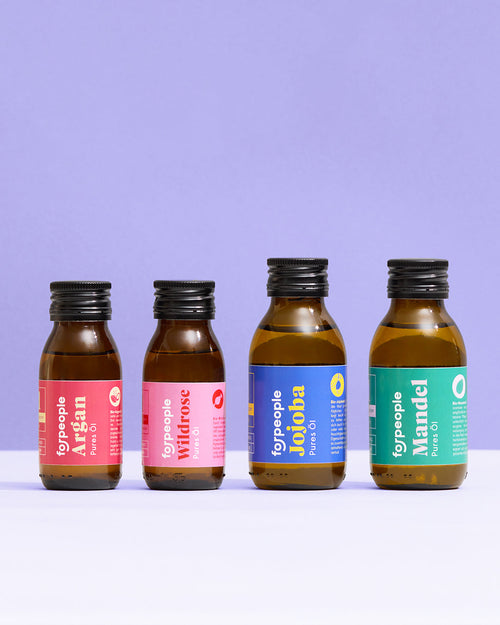
| Oil | Essential oils according to the ingredient list | Properties | For removing make-up |
|---|---|---|---|
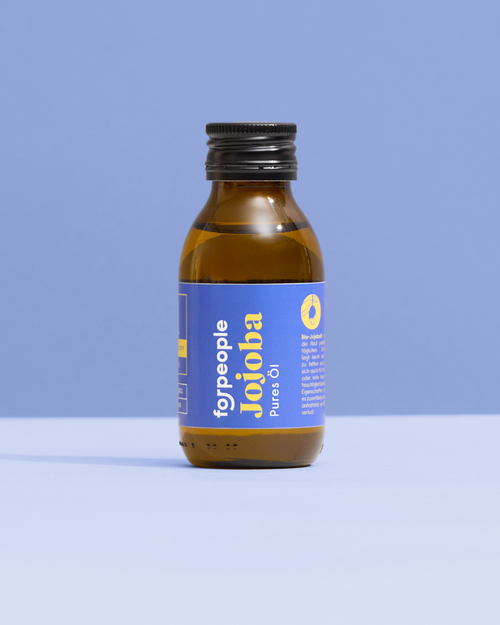
| Jojoba Oil - pure | none | liquid wax, golden yellow to pale yellow, high stability against rancidity | well suited for the face |
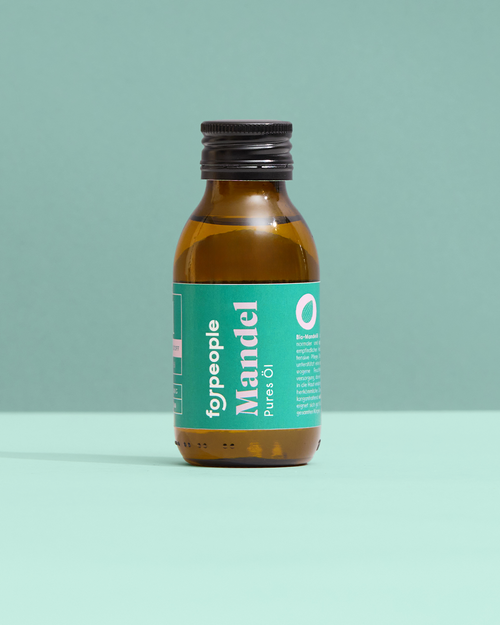
| Almond Oil - pure | none | pale yellow, medium stability | well suited for the face |
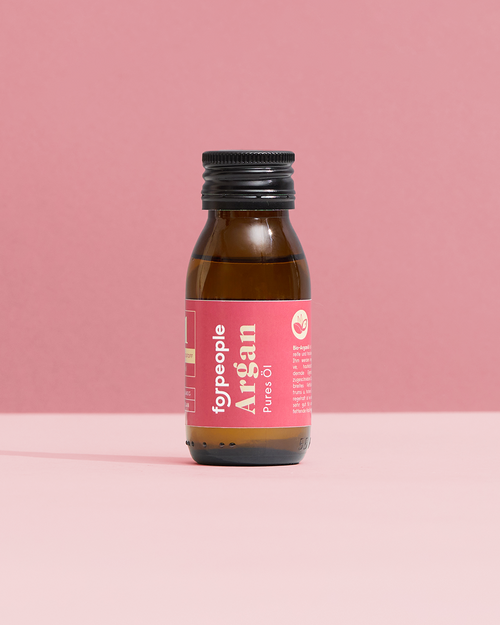
| Argan Oil - pure | none | golden, medium stability | possible; the bottle is smaller |
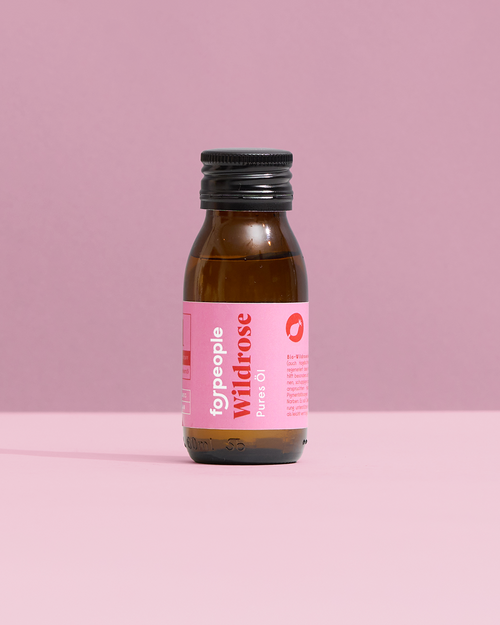
| Wild Rose Seed Oil - pure | none | yellow-orange to reddish, the least stable | possible; fits better as skin care afterwards |
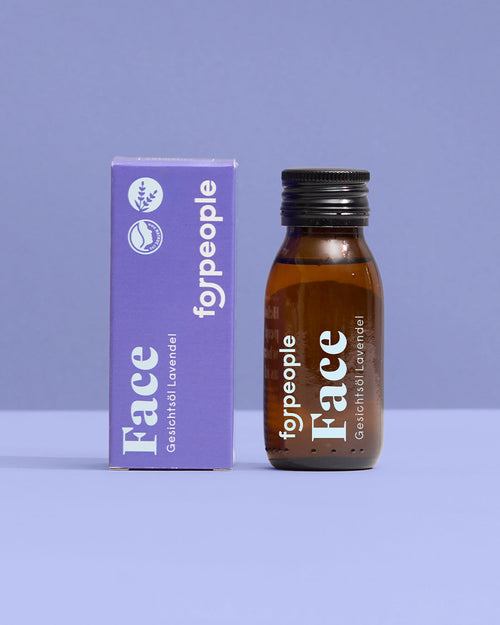
| Face Oil - Lavender | lavender oil; the list names linalool and limonene | ready-made blend of five plant oils | not near the eyes; it is intended as a care oil |
Colours and stability are documented with sources in Argan, jojoba, almond or rosehip oil: how do they differ? For the eye area, the restrictions above apply to all five. Try a new oil on a small area first: Trying a new product: how do I test it on a small area?
When to seek medical advice?
Seek medical advice if an eye stays red, hurts or waters after removing make-up despite rinsing, if your vision stays blurred, or if the eyelids swell. If the skin of your face reacts to an oil with lasting redness, burning or hives, stop using it and have it checked. If you are allergic to almonds or other nuts, ask a doctor before using almond or argan oil. Oil does not belong on injured or irritated skin.
Frequently asked questions
Can I remove make-up with pure jojoba oil?
Yes, on the face that works. According to the ingredient list it consists only of the oil itself. Because there is no emulsifier, you take it off again with a warm, damp face cloth.
Does waterproof mascara come off with oil?
Oil dissolves waxes and fats, including those of a waterproof mascara. It takes longer and needs patience rather than pressure. Our oils are not specifically labelled for this; the product pages say: avoid contact with the eyes.
Why is my vision briefly blurred after removing make-up with oil?
Oil has probably got into the tear film; it is documented that products migrate there from the eyelid. Rinse the eye thoroughly with water and use less next time. If your vision stays blurred, have the eye looked at.
Do I still need to wash with soap after the oil?
Not always. After light make-up, the warm, damp face cloth is often enough. If an oily film remains or you can see residue, wash briefly afterwards.
Can I use the Face Oil - Lavender to remove make-up?
It is intended as a care oil. It contains essential lavender oil and therefore does not belong near the eyes. For removing make-up, a pure oil is the simpler choice.
Is oil better than micellar water?
Not as a rule. Micellar water works with surfactants that enclose fatty residues so that they can be taken off. Oil works through the fat itself. Both do the job.
At forpeople
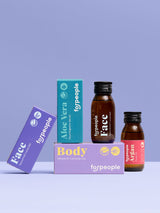
We do not currently have a product made specifically for removing make-up in our range. The pure oils are an option for the first step, the serum for afterwards.
- Jojoba Oil - pure, 100 ml, €16.90: a single oil without essential oils.
- Almond Oil - pure, 100 ml, €14.90: likewise a single oil without essential oils.
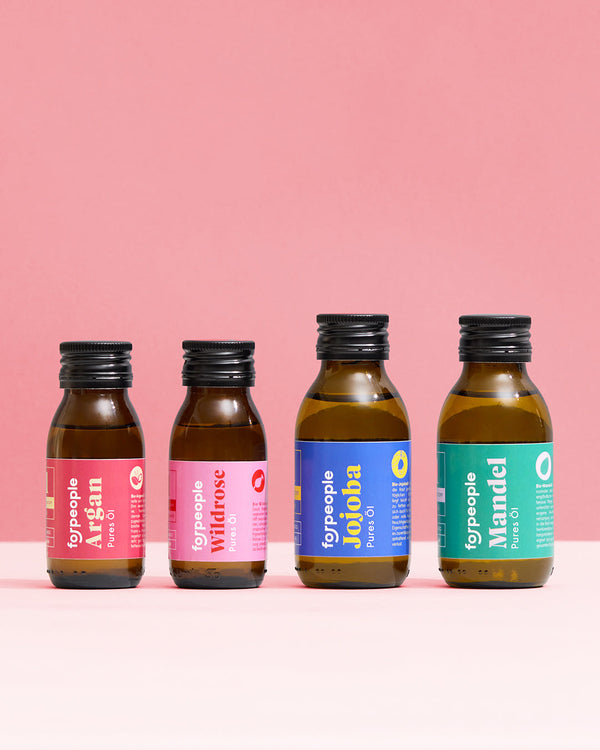
- Care Oil Set – 4 Organic Oils for Face, Body & Hair, €69.90: argan, jojoba, almond and wild rose seed oil, one bottle of each.
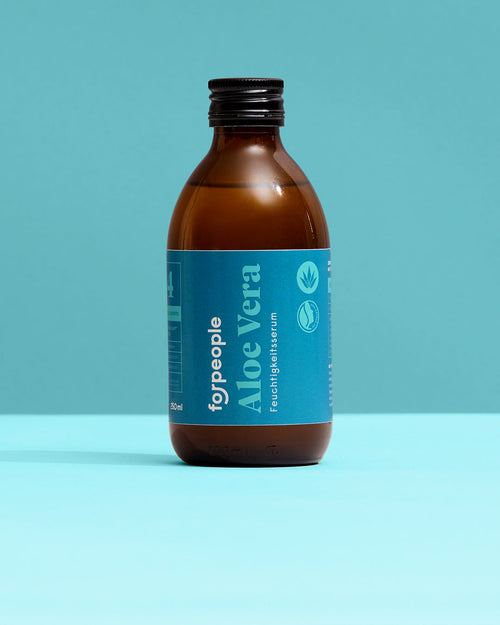
- Aloe Vera Serum 99.6%, 250 ml, €24.90: contains water and is preserved; for the step after removing make-up.
For all of them, the product pages say: avoid contact with the eyes, rinse thoroughly with water straight away if there is eye contact, and do not use on injured or irritated skin. If you notice a skin reaction, stop using the product.
More on this: Can a face oil replace face cream? · Gua sha and facial massage: which oil, and how much? · Face oil on oily skin: does that work?
From the blog: Face & Body Oils: Which Oil Suits Which Skin Type? · Less in the bathroom: a skincare routine with three products
Sources
- Mijaljica D, Spada F, Harrison IP (2022): Skin Cleansing without or with Compromise: Soaps and Syndets. Molecules 27(6): 2010. https://doi.org/10.3390/molecules27062010
- Sullivan DA, da Costa AX, Del Duca E, Doll T, Grupcheva CN, Lazreg S et al. (2023): TFOS Lifestyle: Impact of cosmetics on the ocular surface. The Ocular Surface 29: 77–130. https://doi.org/10.1016/j.jtos.2023.04.005
- Parnsamut N, Kanlayavattanakul M, Lourith N (2017): Development and efficacy assessments of tea seed oil makeup remover. Annales Pharmaceutiques Françaises 75(3): 189–195. https://doi.org/10.1016/j.pharma.2016.11.001
- Chen W, He M, Xie L, Li L (2020): The optimal cleansing method for the removal of sunscreen: Water, cleanser or cleansing oil? Journal of Cosmetic Dermatology 19(1): 180–184. https://doi.org/10.1111/jocd.12995
- Wang MT, Craig JP (2018): Investigating the effect of eye cosmetics on the tear film: current insights. Clinical Optometry 10: 33–40. https://doi.org/10.2147/OPTO.S150926
- Luensmann D, van Doorn K, May C, Srinivasan S, Jones L (2020): The Impact of Cosmetics on the Physical Dimension and Optical Performance of Contemporary Silicone Hydrogel Contact Lenses. Eye & Contact Lens 46(3): 166–173. https://doi.org/10.1097/ICL.0000000000000631