





Why mineral sunscreen adheres so well
Mineral UV filters such as zinc oxide and titanium dioxide are insoluble (BfS). They do not dissolve in the sunscreen but are dispersed in it as fine pigment particles. In a study of sunscreens containing nano-sized titanium dioxide and zinc oxide, the particles were found only on the skin surface and in the uppermost layers of the stratum corneum; they also collected in the openings of the hair follicles (Filipe et al. 2009). More on this under Do mineral UV filters penetrate the skin?
The pigments are held in place by the carrier film. In a solid, water-free sunscreen it consists of plant butter, oil and wax. This film repels water. Then there is the term “water resistant”: according to the recommendation of the European cosmetics association, it means that after two 20-minute water baths at least half of the sun protection can still be measured (Cosmetics Europe 2023). A water-resistant sunscreen is therefore designed to stay on the skin in water. During the day that is intended; in the evening it makes washing it off more laborious. More on the term under SPF, UVA and water resistance: what the labels mean.
What water, cleanser and oil each achieve
One study compared this directly. 20 people applied sunscreen to their faces and washed it off with water, with a foaming cleanser or with a cleansing oil. The residues were assessed on photographs (Chen et al. 2020):
| Cleansing | Residue with water-resistant sunscreen | Residue with non-water-resistant sunscreen | Dry skin afterwards |
|---|---|---|---|
| water only | 59.3% | 54.0% | not stated |
| foaming cleanser | 36.8% | 15.6% | 8 people |
| cleansing oil | 5.8% | 13.4% | 1 person |
| For comparison: skin without sunscreen | 3.2% | 9.9% | – |
The last row shows the value the method returns on skin without sunscreen. With the water-resistant sunscreen, only the cleansing oil came into this range. The study summary does not say which UV filters the tested products contained, and only the face was examined.
Oil mixes with the film of fat and wax in the sunscreen and softens it; the pigments come off with it. Soap and other surfactants lower the surface tension and make fat rinsable with water (Mijaljica et al. 2022). Water alone can do neither.
One difference matters: a cleansing oil usually contains emulsifiers and can therefore be rinsed off with water. A pure plant oil has none. It loosens the film just as well, but afterwards it has to be taken off with a washcloth and followed by soap. What emulsifiers do is explained under Emulsifiers in Cosmetics: What They Do.
Step by step: the face
The following routine is common practice, supported by the trial above. There is no standard for it.
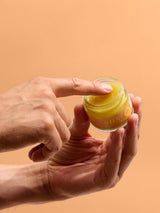
- Oil on dry skin: Put a few drops of oil into your dry hands and spread them over your dry face.
- Massage it in: Massage the oil in without pressure, including the hairline, eyebrows, sides of the nose, ears and neck. That is where the pigments collect. Keep your eyes closed and leave out the edges of the eyelids.
- Take it off: Dampen a soft washcloth with warm water and use it to remove the oil and sunscreen. Wiping is enough; rubbing is not necessary.
- Wash: Lather soap or a wash lotion in your hands, wash your face briefly and rinse thoroughly with lukewarm water.
- Pat dry and moisturise: Pat the skin dry. Surfactants also remove some of the skin's own lipids; this can leave the skin feeling tight after washing (Ananthapadmanabhan et al. 2004). According to a review, fat-based care has the most pronounced effect on slightly damp skin (Sethi et al. 2016).
Whether bar soap suits your face is covered on the page Can I use bar soap on my face? Why soap is alkaline is explained in Is there still lye in natural soap? Saponification explained.
Body, hairy areas and hands
- Body: In the shower, soap and a washcloth are usually enough. On areas where you applied a thick layer, such as the shoulders and the bridge of the nose, a little oil beforehand helps. Only use a loofah sponge on skin that is not reddened; more on this under Loofah sponge: how to clean it, how often to replace it?
- Hairy areas: At the hairline, beard, eyebrows and forearms, sunscreen clings to the hairs and looks whiter. Work the oil in against the direction of growth there and then wash.
- Hands: You do not need anything special here. Every hand wash removes sunscreen, which is more of a drawback during the day.
- Tinted sunscreen: Iron oxides and ultramarine are pigments too. They come off the same way; coloured traces on the washcloth are normal.
- Children: The routine is the same; use a soft washcloth and do not rub. General information on sun protection is under Mineral sunscreen for children: what to look for.
Marks on towels and clothing
Sunscreen leaves two things on fabric: fat and white pigments. On dark textiles the pale marks stand out, on light ones it is more the greasy edge. For washing it off, use towels and washcloths that can be washed hot. Treat fresh marks like other grease stains: lift off the excess, pre-treat with a little washing-up liquid or liquid detergent and wash as warm as the care label allows. The steps in detail are described in Does deodorant cream stain? Prevent and remove.
When to seek medical advice
If your skin is very red or hurts after the sun, do without rubbing, sponges and exfoliation. For blisters, fever or circulation problems, seek medical advice. The same applies if the skin reacts to a sunscreen or a cleanser with lasting redness, hives or itching: stop using it and have it checked. If sunscreen or soap gets into your eye, rinse thoroughly with water straight away; if the symptoms persist, see an eye doctor.
Frequently asked questions
Do I have to wash off mineral sunscreen in the evening at all?
We have not found a reliable study on whether residues left overnight harm the skin. In practice there is a lot to be said for washing it off: the film is greasy, rubs off on pillows and clothing and holds sand and dust.
Does soap alone work?
Partly. In the trial, more than a third of the water-resistant sunscreen remained after a foaming cleanser, and eight people reported dry skin afterwards. Oil first removes more and saves you soaping twice.
Which oil is suitable?
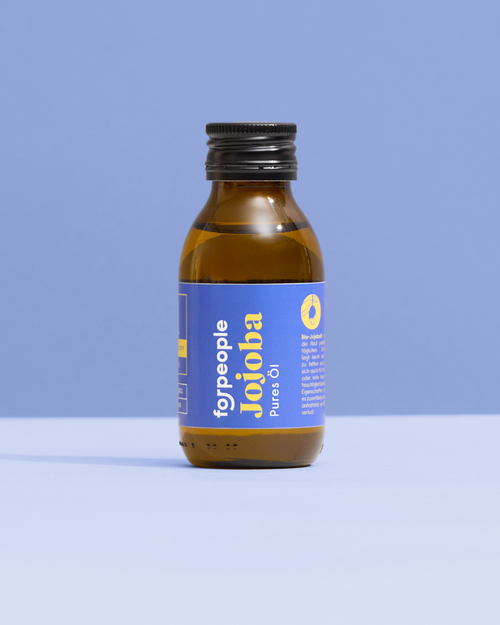
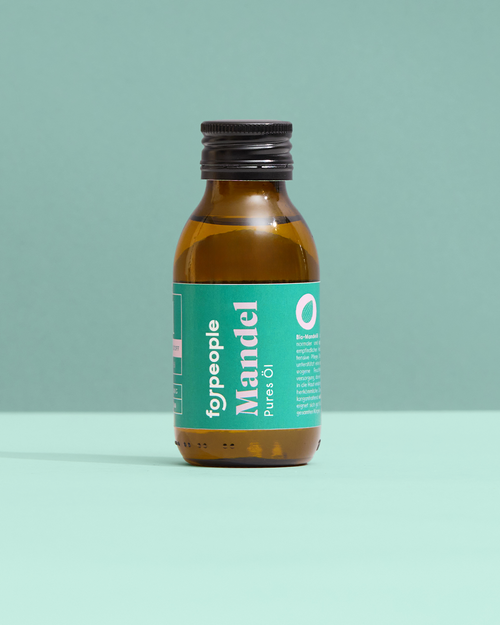
Any plant oil you tolerate well, for example a pure almond oil or Jojoba Oil - pure. For the face, an oil without essential oils is the simpler choice, because it comes close to the eyes.
Why do I still see white residue after showering?
Mostly at the hairline, in the eyebrows, behind the ears and on hairy areas. Sunscreen collects there, and water does not reach it well. A little oil and a washcloth will loosen it.
Does solid sunscreen leave marks on clothing and car seats?
It can, as long as the film is fresh. Reviews mention pale marks on clothing and car seats. Rub the sunscreen in thoroughly and wait a moment. But do not use less because of this: the protection depends on the amount, see How much solid sunscreen do I need?
What do I apply after washing it off?
After sun, water and soap, the skin is often dry. Fat-based care on skin that is still slightly damp works well. Whether oil or butter is the better fit is covered under Body Oil or Body Butter – Which One When?
At forpeople
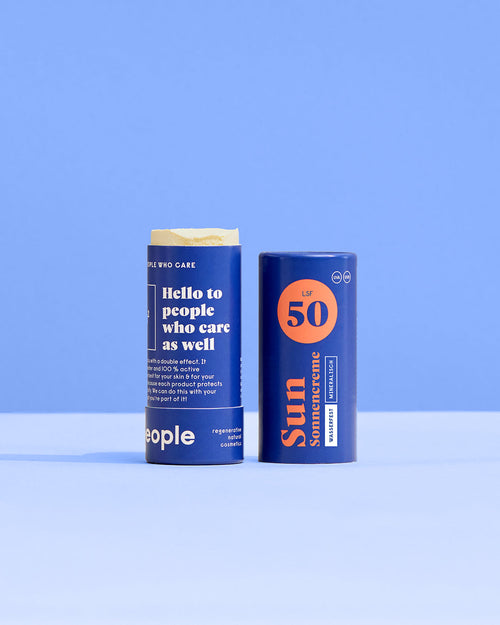
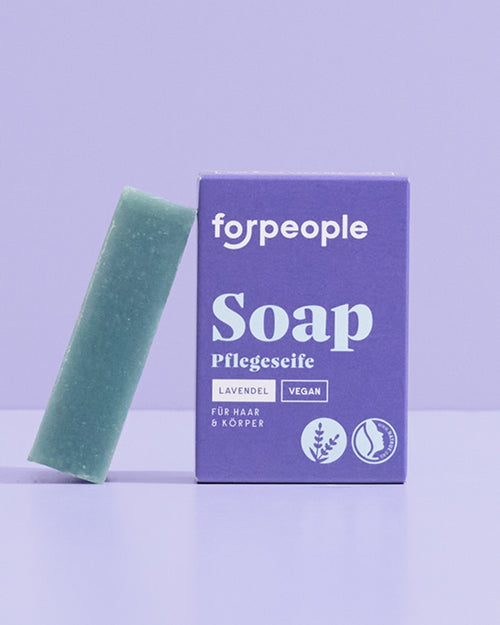
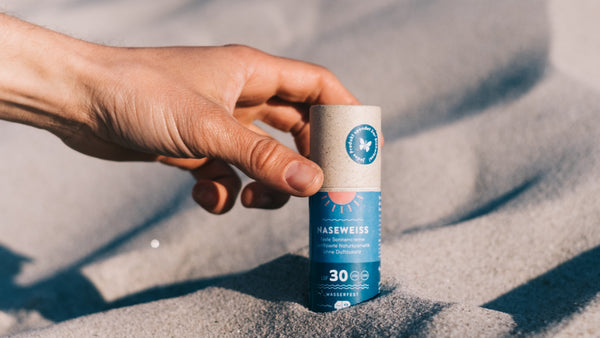
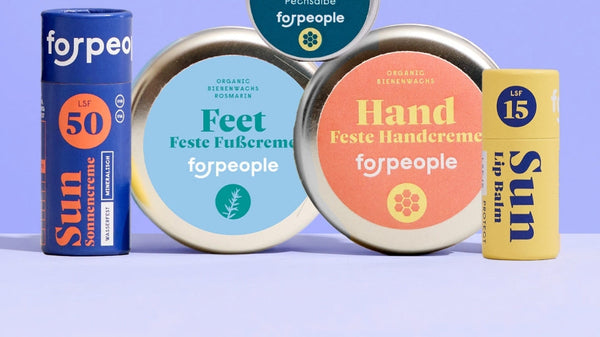
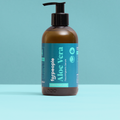
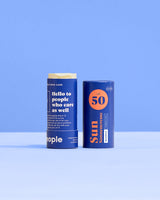
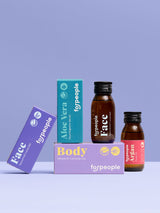
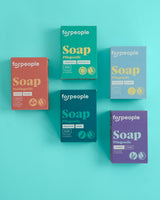
The Solid Sunscreen SPF50 (40 g, €17.90) is mineral, has sun protection factor 50 and is tested as water-resistant. According to the ingredient list it contains shea butter, a plant-based triglyceride, zinc oxide and titanium dioxide (non-nano), beeswax and silica, but no water. This film of butter, oil and wax is why it comes off more easily with oil than with water alone. It comes in a paper tube without a plastic coating. For the first step, a pure oil such as the Almond Oil - pure (100 ml, €14.90) is suitable; the ingredient list names only almond oil. For washing afterwards there is the Aloe Vera Soap – Lavender (75 g, €8.90), a natural soap made from saponified plant oils with lavender essential oil. For care afterwards, the Solid Body Butter - Beeswax & Aloe Vera (40 g, €9.90) is intended. If your skin reacts, stop using it.
More on this: How much solid sunscreen do I need? · SPF, UVA and water resistance: what the labels mean · Does deodorant cream stain? Prevent and remove · Can I use bar soap on my face?
From the blog: Why does sunscreen leave a white cast? · Skincare for days in the snow: hands, lips, face
Sources
- Chen W, He M, Xie L, Li L (2020): The optimal cleansing method for the removal of sunscreen: Water, cleanser or cleansing oil? J Cosmet Dermatol 19(1): 180–184. https://doi.org/10.1111/jocd.12995
- Cosmetics Europe (2023): Recommendation N° 16: Water Resistance Labelling, revised June 2023. https://cosmeticseurope.eu/wp-content/uploads/2024/10/CR_16_Water_Revised_June_2023.pdf
- Bundesamt für Strahlenschutz (BfS): UV-Schutz durch Sonnencreme (Stand 04.08.2026). https://www.bfs.de/DE/themen/opt/uv/schutz/sonnencreme/sonnencreme_node.html
- Filipe P, Silva JN, Silva R, Cirne de Castro JL, Marques Gomes M, Alves LC et al. (2009): Stratum corneum is an effective barrier to TiO2 and ZnO nanoparticle percutaneous absorption. Skin Pharmacol Physiol 22(5): 266–275. https://doi.org/10.1159/000235554
- Mijaljica D, Spada F, Harrison IP (2022): Skin Cleansing without or with Compromise: Soaps and Syndets. Molecules 27(6): 2010. https://doi.org/10.3390/molecules27062010
- Ananthapadmanabhan KP, Moore DJ, Subramanyan K, Misra M, Meyer F (2004): Cleansing without compromise: the impact of cleansers on the skin barrier and the technology of mild cleansing. Dermatol Ther 17 Suppl 1: 16–25. https://doi.org/10.1111/j.1396-0296.2004.04s1002.x
- Sethi A, Kaur T, Malhotra SK, Gambhir ML (2016): Moisturizers: The Slippery Road. Indian J Dermatol 61(3): 279–287. https://doi.org/10.4103/0019-5154.182427