






Mineral and chemical filters
UV filters come in two groups. Mineral filters (zinc oxide, titanium dioxide) are fine pigments that sit on the skin surface and reflect and scatter UV radiation. Chemical, also called organic, filters absorb UV radiation and convert it. Both types are approved in the EU and protect reliably if the SPF is right and enough cream is applied. Mineral filters work straight after application and often leave a light film on the skin.
"Non-nano" means the pigments are not used in nano size.
SPF and UVA protection
The sun protection factor (SPF) describes protection against UVB radiation, which is mainly responsible for the skin reddening. For children, a high to very high SPF is generally recommended, i.e. 30 or 50. UVA radiation penetrates deeper into the skin; a good sunscreen protects against both. So look for "UVA" on the packaging.
The SPF only applies to the amount used to measure it in the lab: 2 mg of cream per square centimetre of skin. In everyday use, people usually apply much less, and then the protection is lower too.
Amount, reapplying and water
- Apply generously: Better too much than too little. Remember ears, neck, bridge of the nose, tops of the feet and shoulders.
- Before going out: Apply before your child goes into the sun, not once you are at the beach.
- Reapply: Regularly throughout the day, and after swimming, towelling off and heavy sweating. Reapplying maintains the protection but does not extend the possible time in the sun.
- Water-resistant does not mean permanent: The term means that part of the protection remains after a standardised water bath. Towels, sand and play rub cream off. So reapply after every swim.
White cast and tinted versions
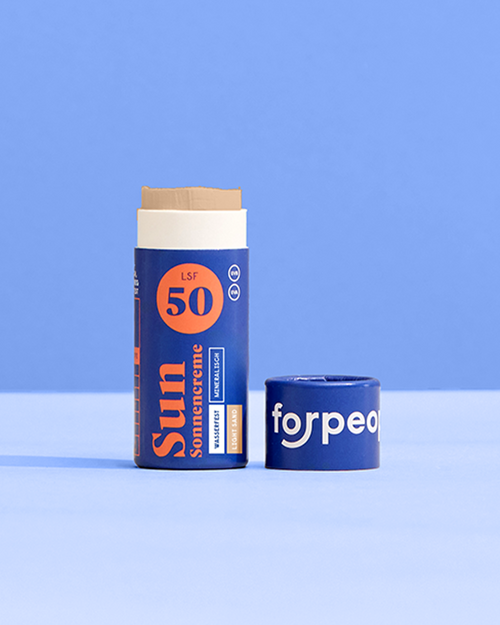
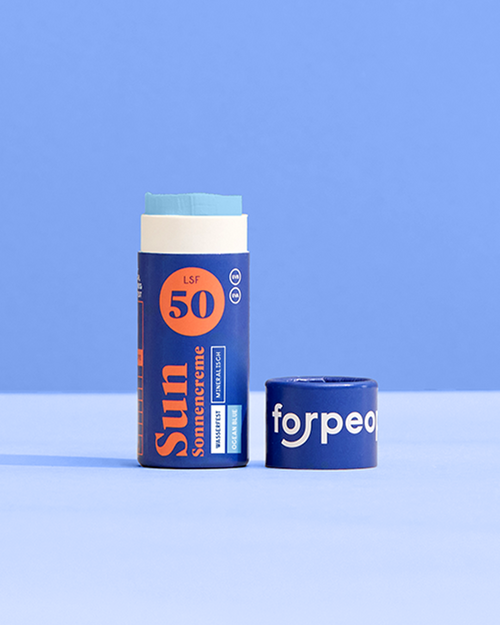
Mineral filters are white. The thicker the layer, the more visible a light film remains. With children, that is often even practical: you can see where cream has already gone. If you do not like the film, you can choose a tinted version. Iron oxides give a beige tone, and a blue pigment turns the white into a colour that looks intentional. About one in six reviews of our solid sunscreen mentions the white cast.
Shade and clothing first
Sunscreen is the last layer of protection, not the first. Paediatricians and professional societies advise not exposing babies in their first year to direct sunlight at all. For all children:
- Spend the midday hours in the shade.
- Sun hat with neck protection, T-shirt, a UV shirt in the water.
- Sunglasses for the eyes.
- Sunscreen on everything that remains uncovered.
Frequently asked questions
How do I apply a solid sunscreen?
Glide the sunscreen directly over the skin or rub it into your hand first and then spread it. Apply several strips side by side, then spread well.
Is SPF 50 enough for the whole day?
No. No sun protection factor protects you all day. Reapplying, shade and clothing are always part of it.
Why is the skin white after applying?
Because zinc oxide and titanium dioxide are white pigments. The film becomes thinner if you spread the cream well; tinted versions are less noticeable.
The four sunscreens from forpeople
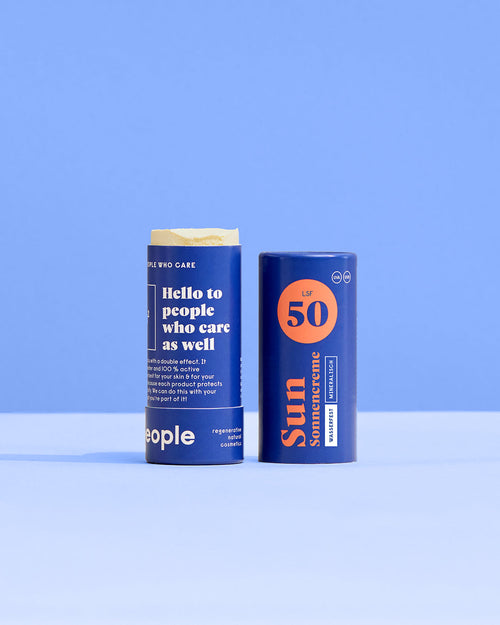
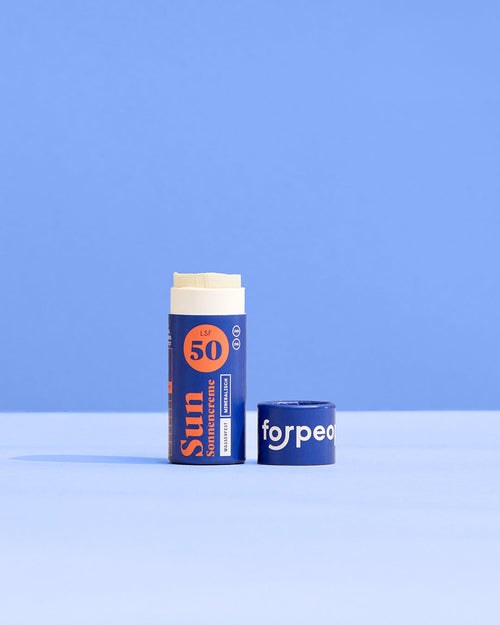
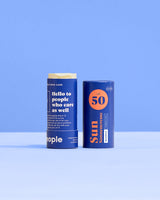
All four are solid sunscreens with SPF 50, mineral filters (zinc oxide and titanium dioxide, non-nano), water-resistant and packed in a paper tube without plastic coating.
| Product | Size | Tint | Price |
|---|---|---|---|
| Solid Sunscreen SPF50 | 40 g | untinted (natural) | €17.90 |
| Solid Sunscreen SPF50 Mini | 20 g | untinted (natural) | €9.90 |
| Solid Sunscreen SPF50 Mini - Shade LIGHT SAND | 20 g | beige, with iron oxides | €9.90 |
| Solid Sunscreen SPF50 Mini - OCEAN BLUE | 20 g | blue, with ultramarine | €9.90 |
Read more: White cast from sunscreen · Sunscreen without chemical filters · Storing solid cosmetics in summer · Natural cosmetics standards explained · Without fragrance and essential oils