







What “nano” means in cosmetics
The EU Cosmetics Regulation defines a nanomaterial as an insoluble or biopersistent and intentionally manufactured material with one or more external dimensions, or an internal structure, on the scale from 1 to 100 nanometres (Regulation (EC) No 1223/2009, Article 2). A nanometre is a millionth of a millimetre. Three points in this definition matter:
- Insoluble or persistent: It covers particles that stay particles. Substances that dissolve in the cream are not included.
- Intentionally manufactured: It is about raw materials that are deliberately produced at this size.
- One dimension is enough: A particle that is under 100 nanometres in one direction already counts.
Nanomaterials come with extra obligations. Cosmetics containing nanomaterials generally have to be notified to the European Commission six months before they go on sale (Article 16). Nano forms of UV filters, colourants and preservatives may only be used if they are explicitly listed in the annexes to the regulation – with precisely described properties.
How to spot nano on the pack
Article 19 of the Cosmetics Regulation requires all ingredients present in the form of nanomaterials to be clearly indicated in the ingredient list, with the word “nano” in brackets after the name. That is why the list of approved UV filters names the nano form, for example, “Titanium Dioxide (nano)” or “Zinc Oxide (nano)” (Regulation (EU) 2016/621; Regulation (EU) 2016/1143).
If there is no such addition after Zinc Oxide or Titanium Dioxide, the substance is not a nanomaterial within the meaning of this definition. How to read an INCI list in general is explained on How to read an INCI list. Mineral pigments are also used as colourants: titanium dioxide and zinc oxide then colour a product white and appear with their colour index numbers (CI 77891 and CI 77947).
What the EU scientists say about zinc oxide and titanium dioxide
The SCCS has assessed both nano forms specifically. For zinc oxide in nano form, it concluded in 2012 that use at up to 25 % as a UV filter in sunscreens poses no risk of adverse effects on health after application to the skin; absorption through the skin could not be shown (SCCS 2012, summarised in Regulation (EU) 2016/621). For titanium dioxide in nano form, it reached a corresponding assessment in 2013 (revised 2014) for healthy, intact or sunburnt skin (SCCS 2014).
Both assessments have a clear limit: sprays in which the particles could be inhaled and reach the lungs. The SCCS did not consider the nano forms safe for this. For zinc oxide, the restriction also applies to the non-nano form, because it has a similar effect on the lungs when inhaled. The EU turned this into the following rules:
| UV filter | Name in the INCI list | Maximum | Restriction |
|---|---|---|---|
| Zinc oxide | Zinc Oxide | 25 % | not in applications that may lead to exposure of the lungs by inhalation |
| Zinc oxide (nano) | Zinc Oxide (nano) | 25 % (combined with non-nano) | as above; only particles with defined purity, size and coating |
| Titanium dioxide | Titanium Dioxide | 25 % | no additional condition under the 2016 amendment |
| Titanium dioxide (nano) | Titanium Dioxide (nano) | 25 % (combined with non-nano) | not in applications with inhalation into the lungs; only particles with defined properties, including low photocatalytic activity |
Status: amending regulations 2016/621 and 2016/1143. The annexes are updated regularly; the current consolidated version on eur-lex.europa.eu always applies.
A review summarises the research: zinc oxide and titanium dioxide nanoparticles are taken up into the outermost horny layer; cell and laboratory studies observed undesirable effects, and the particles were found only sporadically in deeper, living skin layers (Smijs & Pavel 2011). The authors recommend further research on stability and long-term use. That is why some people prefer non-nano – not because approved nano filters are banned or classified as dangerous.
Why non-nano leaves more of a white cast
Zinc oxide and titanium dioxide are white pigments. They protect against UV radiation by absorbing and scattering it. Large particles also scatter visible light, though – which is why a mineral sunscreen with larger particles looks whitish on the skin. Nanoparticles were meant to solve exactly this cosmetic drawback: with them, the white film largely disappears, but the balance between UVA and UVB protection can shift (Smijs & Pavel 2011). The same review describes titanium dioxide as more effective in the UVB range and zinc oxide more in the UVA range; combined, they cover a broad spectrum.
How white a cream looks also depends on the amount, your skin tone and the base. Tinted versions with iron oxides or a blue pigment make the film less noticeable. More on sun protection factor, UVA protection and “water resistant” is on SPF, UVA and water resistance explained.
Nano, non-nano and the product format
It is not only particle size that matters, but also how a product is applied. The EU restrictions concern sprays and other applications where particles can reach the airways. Creams, lotions and solid sticks are spread onto the skin. A solid sunscreen is water-free: it consists of plant butter, oil and wax with the pigments dispersed in them. Why water-free formulas work without an emulsifier is explained on Water-free cosmetics and Emulsifiers in cosmetics; what to look out for with children is on Mineral sunscreen for children.
Frequently asked questions
Is nano zinc oxide banned in sunscreen?
No. Zinc oxide in nano form is approved in the EU as a UV filter at up to 25 % if the particles have the specified properties. It is not allowed in applications where it could be inhaled into the lungs.
How can I tell whether a sunscreen contains nanoparticles?
From the ingredient list. Nanomaterials must be listed with “nano” in brackets, for example “Zinc Oxide (nano)”.
Does non-nano protect less?
Not in principle. A sunscreen’s protection comes from the whole formula and is measured with standardised tests. Particle size mainly affects how white the cream looks and how UVA and UVB protection are balanced.
Why does my mineral sunscreen leave a white cast?
Because larger pigment particles scatter visible light. Spreading it thinly and evenly helps with the look, but don’t skimp on the amount – your protection depends on it.
At forpeople
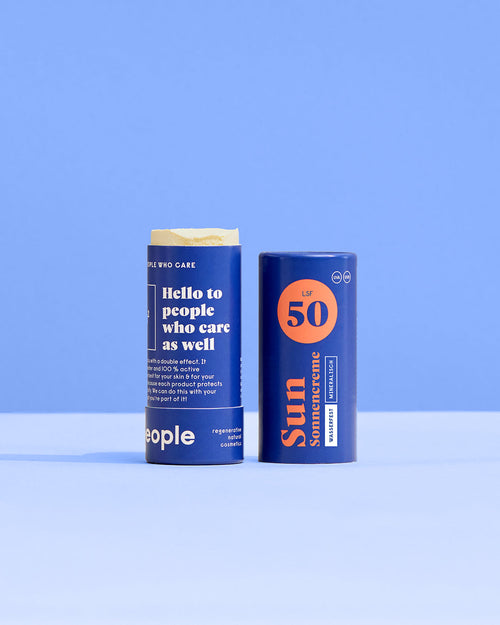
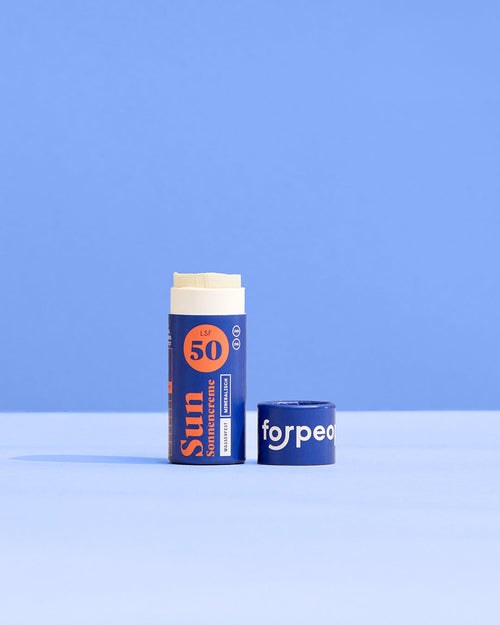
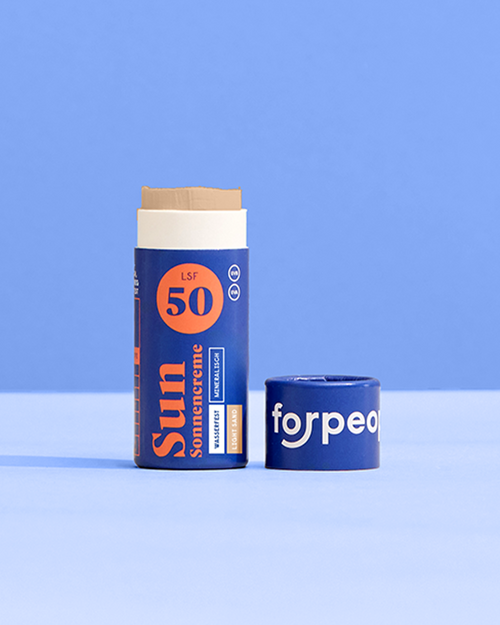
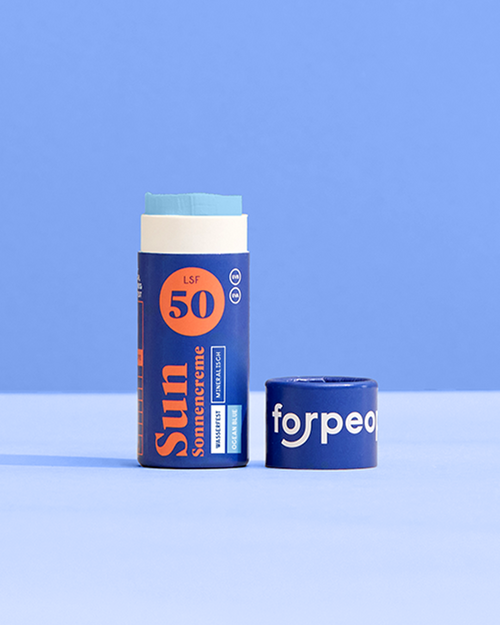
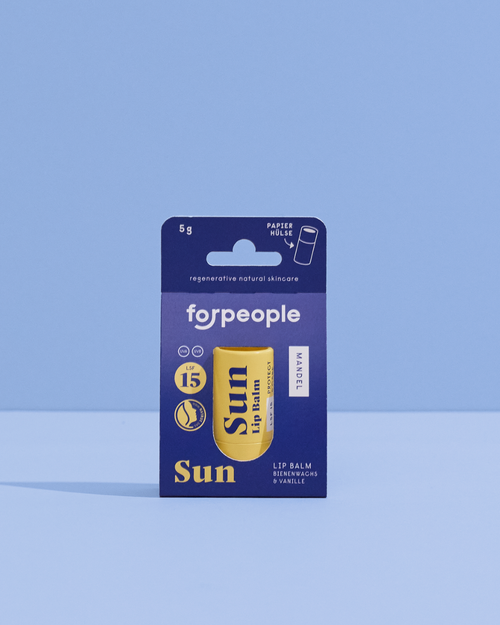
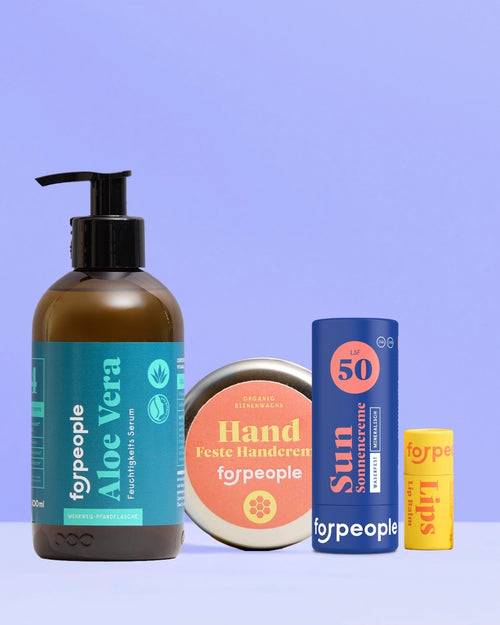
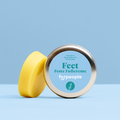
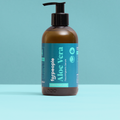
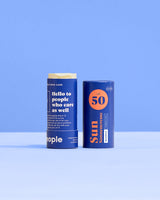
Our Solid Sunscreen SPF50 (40 g, €17.90) contains zinc oxide and titanium dioxide as mineral UV filters according to its ingredient list, both labelled non-nano, plus shea butter, a plant-based fatty acid blend, beeswax and silica. It has been tested as water resistant and comes in a paper tube without plastic coating. The same formula is available as Solid Sunscreen SPF50 Mini (20 g, €9.90). If you prefer a less visible white film, there are tinted minis: the Solid Sunscreen SPF50 Mini - Shade LIGHT SAND with iron oxides (20 g, €9.90) and the Solid Sunscreen SPF50 Mini - OCEAN BLUE with ultramarine blue (20 g, €9.90). For your lips, there is the Lip Balm - SPF15 Almond & Vanilla (5 g, €7.90) with mineral UV filters, also stated as non-nano. The Family Sun Set – SPF 50, After-Sun & Lip Protection (from €39.90) combines the sunscreen with Aloe Vera Serum 99.6% and a lip balm. Read more: Why lips dry out so quickly and Storing solid cosmetics in summer.
Sources
- Europäisches Parlament und Rat (2009): Verordnung (EG) Nr. 1223/2009 über kosmetische Mittel, Artikel 2, 16 und 19. ABl. L 342: 59. https://eur-lex.europa.eu/eli/reg/2009/1223/oj
- Europäische Kommission (2016): Verordnung (EU) 2016/621 zur Änderung des Anhangs VI der Verordnung (EG) Nr. 1223/2009 (Zinkoxid, Zinkoxid [Nano]). ABl. L 106: 4. https://eur-lex.europa.eu/eli/reg/2016/621/oj
- Europäische Kommission (2016): Verordnung (EU) 2016/1143 zur Änderung von Anhang VI der Verordnung (EG) Nr. 1223/2009 (Titandioxid, Titandioxid [Nano]). ABl. L 189: 40. https://eur-lex.europa.eu/eli/reg/2016/1143/oj
- Scientific Committee on Consumer Safety (2012): Opinion on Zinc oxide (nano form). SCCS/1489/12, Revision vom 11. Dezember 2012. https://ec.europa.eu/health/scientific_committees/consumer_safety/docs/sccs_o_103.pdf
- Scientific Committee on Consumer Safety (2014): Opinion on Titanium Dioxide (nano form). SCCS/1516/13, Revision vom 22. April 2014. https://ec.europa.eu/health/scientific_committees/consumer_safety/docs/sccs_o_136.pdf
- Smijs TG, Pavel S (2011): Titanium dioxide and zinc oxide nanoparticles in sunscreens: focus on their safety and effectiveness. Nanotechnology, Science and Applications 4: 95–112. https://doi.org/10.2147/NSA.S19419