





Your child comes back from the beach — with red blotches on their skin. The first thought: too much sun. So next time, more protection, a higher SPF. But what if the problem wasn't the sun — but the sunscreen?
That's exactly what many people told us in conversations with over 30 customers. As soon as they switched to a sunscreen without chemical filters, the reactions disappeared. Not for everyone. But for an alarming number.
This article explains what makes the difference — without scaremongering, without easy answers. Because the topic is nuanced.
Children's skin needs extra protection — from ten months.
Children aren't simply small adults — and that goes for their skin too. Children's skin is thinner, its protective barrier not yet fully developed. What adult skin tolerates can build up in children or trigger reactions.
„Children's skin is thinner than adults' skin and has less self-protection" — chemical substances can enter the body more easily, especially with large-area and regular application.
Source: Guide to UV filters in children's sunscreen, annisbuntewissenschaft.deOn top of that: children get creamed more often and over larger areas than adults. What sounds negligible for a single application adds up over many summer seasons.
- No systemic absorption: non-nano titanium dioxide stays on the skin — it doesn't enter the bloodstream.
- Fragrance-free and without organic UV filters: dermatologically tested, suitable from ten months.
- No spray format: nano particles can be inhaled. For children, the BfR explicitly recommends cream or stick instead of spray.
- Visible protection: the light white cast shows exactly which spots have already been creamed — a real plus with children.
What Kristina experienced is no exception. This pattern keeps coming up in our conversations: skin reactions that were taken for sun-induced redness disappeared once people switched products.
„I'm in a group that talks a lot about children's skin and gut health. In summer the skin is worse — I have the feeling that sun and sunscreen are a problem."
Carolin, 35 — mother, Allgäu, customer
Mineral sun protection: especially suitable for children with sensitive skin.

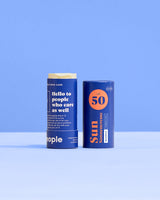
Suitable from ten months — non-nano titanium dioxide · NATRUE certified · dermatologically tested · 40 g
Chemical vs. mineral filters — the honest comparison
Chemical filters — like oxybenzone, octinoxate or octocrylene — are absorbed by the skin. They convert UV radiation into heat. Efficient, yes. But they penetrate the tissue.
Mineral filters — titanium dioxide and zinc oxide — work differently. They sit on the skin like a physical protective film and reflect UV radiation before it can penetrate. They aren't absorbed.

The decisive term: non-nano. Titanium dioxide comes in nano particle size (which could reach the skin, or the lungs with sprays) and in larger non-nano particles that reliably stay on the surface. France has banned nano titanium dioxide as a food additive. In sprays and powders it is restricted across the EU.
„No health risks are to be expected from nano titanium dioxide as a UV filter in sunscreens" — provided these are creams or sticks, not sprays or powders.
Source: German Federal Institute for Risk Assessment (BfR)Yes, non-nano titanium dioxide leaves a white cast. That isn't a weakness — it's physics. Larger particles reflect more light. As you rub it in and with body warmth, the white fades noticeably. A tinted UV stick largely gets around the issue.
We say this openly, because we believe: if someone names the downsides honestly, you can trust them on the upsides too.
Six ingredients. No more.
The forpeople SUN solid sunscreen gets by with exactly six ingredients. No filler, no compromise. Here's what's inside and why:

-
Titanium dioxide (non-nano)The UV filter. Physically reflects UVA and UVB radiation at the skin's surface — without penetrating, without entering the blood.
-
Cera Alba — beeswaxGives the stick its shape. Allows a smooth, even application without residue.
-
Cocos Nucifera Oil — coconut oilCares for the skin and helps distribute the mineral filter evenly.
-
Butyrospermum Parkii — shea butterNourishes intensively, soothes irritated skin and supports the natural protective barrier — especially valuable for sensitive skin.
-
Copernicia Cerifera Cera — carnauba waxNatural plant wax for texture and water resistance. Keeps the protection in place even when sweating and in the water.
-
Tocopherol — vitamin ENatural antioxidant. Protects the ingredients from oxidation and supports skin regeneration after UV exposure.
Food and cosmetics — taking a closer look
More and more people are changing their diet. They read ingredient lists, avoid additives, cut back on processed products. At some point something logical happens: you start to look more closely at your cosmetics too.
Comparison: mineral vs. conventional
An honest overview — so you can decide what suits you.
| Criterion | forpeople sunscreen |
Natural cosmetics without TiO₂ |
Conventional chem. filters |
|---|---|---|---|
| UV filter | ✓ Mineral (non-nano TiO₂) | ~ Mineral (zinc oxide) | ~ Chemical (oxybenzone etc.) |
| Non-nano certified | ✓ Yes | ~ Not always declared | – Not relevant |
| UVA + UVB protection | ✓ Full (SPF 50) | ~ UVA often weaker | ✓ Usually yes |
| NATRUE certified | ✓ Yes | ~ Varies | ✗ No |
| Suitable for children | ✓ Yes — from 10 months | ~ Mostly yes | ~ Recommended with limits |
| Without chemical UV filters | ✓ Yes | ✓ Yes | ✗ No |
| White cast | ~ Light, fades in | ~ Stronger (zinc oxide) | ✓ No white cast |
| Spray-free | ✓ Cream & stick | ~ Sometimes as spray | ✗ Often as spray |
Sun protection and the sea
Hawaii officially bans certain sunscreens. Mexico protects its cenotes, Palau its coral reef. The reason: chemical filters like oxybenzone dissolve in the water, build up in corals and disrupt their reproduction. Mineral sun protection stays on the skin — no guilty conscience while snorkelling.
„We make sure the sun protection is safe for the sea — it's a sunscreen you can use anywhere without a guilty conscience."
Sonja, 36 — lives between Germany and Tuscany
Mineral protection without a guilty conscience — in the sea, on holiday, for children and adults.
The summer care routine: protection & recovery
Good sun protection is one thing — but what happens afterwards? Heat, UV radiation and salt water stress the skin barrier and draw out moisture. This is where the second half of the routine comes in.
In the morning: mineral sunscreen as a protective film — reflects UV radiation, doesn't penetrate, protects the skin barrier.
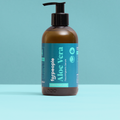
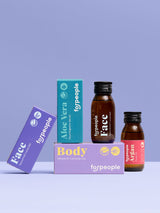
In the evening: the Aloe Vera Serum soothes, cools and adds moisture. The high aloe vera content supports the skin as it regenerates — without silicones, without fillers. Noticeable right away on sun-stressed skin.
Two products that work perfectly together — especially for sensitive skin, children and after outdoor sport or a seaside holiday.


Everything the skin needs after sun, sea and heat — matched to each other, without fillers.
Three versions — one for every occasion
Mineral sun protection doesn't have to feel like a compromise. We've developed three versions that adapt to real situations — not the other way round. All three share the same base formula — sensitive, without chemical filters, approved from ten months.

How it all began: Naseweiß and the power of community
Before there was forpeople, there was an idea — and a choir. In 2020 we launched a campaign on StartNext: with real music, real people and the promise to develop a mineral sun protection that gets by with what's truly needed.
The campaign was a full success. Together with our community we were able to fund the first sun protection with only six ingredients — our Naseweiß. Not one filler too many. Only what the skin truly needs.
The video for the StartNext campaign shows what happened back then — and why we still hold on to this approach today:
What to look for when buying
Non-nano — not just „mineral"
„Mineral" alone isn't enough. What matters is whether the titanium dioxide is in non-nano particle size. No note on the packaging? Ask the manufacturer.
„Mineral UV filters such as titanium dioxide or zinc oxide are generally stable for longer than organic-chemical filters" — and are considered the better-tolerated choice for sensitive skin and children.
Source: Verbraucherzentrale NRW, guide to sunscreensUVA and UVB — both must be covered
UVB causes sunburn, UVA penetrates deeper and is linked to skin ageing. A product without UVA protection is not a full sun protection.
Certification vs. „natural" on the packaging
A „natural" on the pack is no promise. NATRUE and COSMOS guarantee independently verified standards.
No spray for children
Sprays are convenient, but nano particles can be inhaled. The BfR explicitly recommends cream or stick — not spray — especially for children.
Non-nano titanium dioxide · NATRUE certified · UVA + UVB · without chemical filters · 40 g
What our customers ask
Answers to the most common questions about mineral sunscreen, titanium dioxide and non-nano filters.
Is titanium dioxide in sunscreen harmful?
Definitely not — that's also what the German Federal Institute for Risk Assessment (BfR) says. Titanium dioxide is not absorbed dermally through the skin. We go one step further and avoid titanium dioxide in nano particle size, as these can be taken in through the breath (e.g. in sunscreen sprays).
The North Rhine-Westphalia Consumer Advice Centre explicitly recommends sunscreen with titanium dioxide and zinc oxide:
„If you have to use sunscreen, we advise choosing sunscreen with natural-cosmetics seals such as NATRUE or BDIH/COSMOS. These products only allow mineral filters such as Titanium dioxide or Zinc Oxide. These are chemically stable. If you want to avoid deliberately manufactured nano particles, make sure the word „Nano" does not appear in the ingredient list."
Verbraucherzentrale NRW, guide to sunscreens.
Why does forpeople combine zinc oxide and titanium dioxide?
We rely on the combination of zinc oxide and titanium dioxide because it lets us achieve the highest UVA and UVB protection. Zinc oxide works more efficiently in the UVA range, titanium dioxide in the UVB range. By combining both, we reach a high SPF while protecting efficiently against both types of radiation.
What does „non-nano" mean for titanium dioxide?
Titanium dioxide comes in two particle sizes: nano and non-nano. Nano particles are so small that they could be inhaled with sprays or absorbed by sensitive skin. Non-nano particles are larger and reliably stay on the skin's surface.
The mineral non-nano UV filters we use comply with Regulation (EC) No. 1223/2009 of the European Parliament and of the Council of 30/11/2009 on cosmetic products — they are therefore in the non-nano particle range.
Is the sunscreen suitable for children and babies?
Yes. All forpeople sunscreens are approved from ten months and dermatologically tested for sensitive skin. They contain no organic UV filters and no fragrances. All three versions (blue, white, beige) share the same sensitive base formula.
What is the difference between the three versions?
All three versions share the same base formula — mineral, non-nano, sensitive, without chemical filters. What differs:
Bio Sun Blau: maximum water resistance — for surfing, swimming and outdoor sport.
Bio Sun Weiß: the classic for the whole family. Especially gentle, recommended for children and sensitive skin.
Bio Sun Beige: light tint for a natural look. Ideal as daily sun protection for everyday wear.
Does mineral sunscreen leave a white cast?
A light white cast is physically unavoidable with non-nano titanium dioxide — larger particles reflect more light. As you rub it in and with body warmth, the white fades noticeably, though. If you want to avoid the white cast entirely, reach for the beige version with a light tint.
For children the white is even an advantage: you can see exactly which spots have already been creamed.
What does the sunscreen mean for the sea?
Chemical UV filters like oxybenzone dissolve in the water and demonstrably damage coral reefs. Mineral protection stays on the skin — it isn't released into the water. That's why Hawaii and Mexico have officially banned certain chemical sunscreens. Our sunscreens work exclusively with mineral non-nano filters.
What is NATRUE certification and why does it matter?
NATRUE is one of the strictest independent certification seals for natural cosmetics. It guarantees that only natural and nature-derived ingredients are used — no synthetic fragrances, no silicones, no chemical UV filters. A „natural" on the packaging without a seal, by contrast, is not legally protected.


