








At a glance
Titanium dioxide and zinc oxide are our mineral UV filters – for good reason.
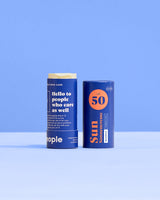
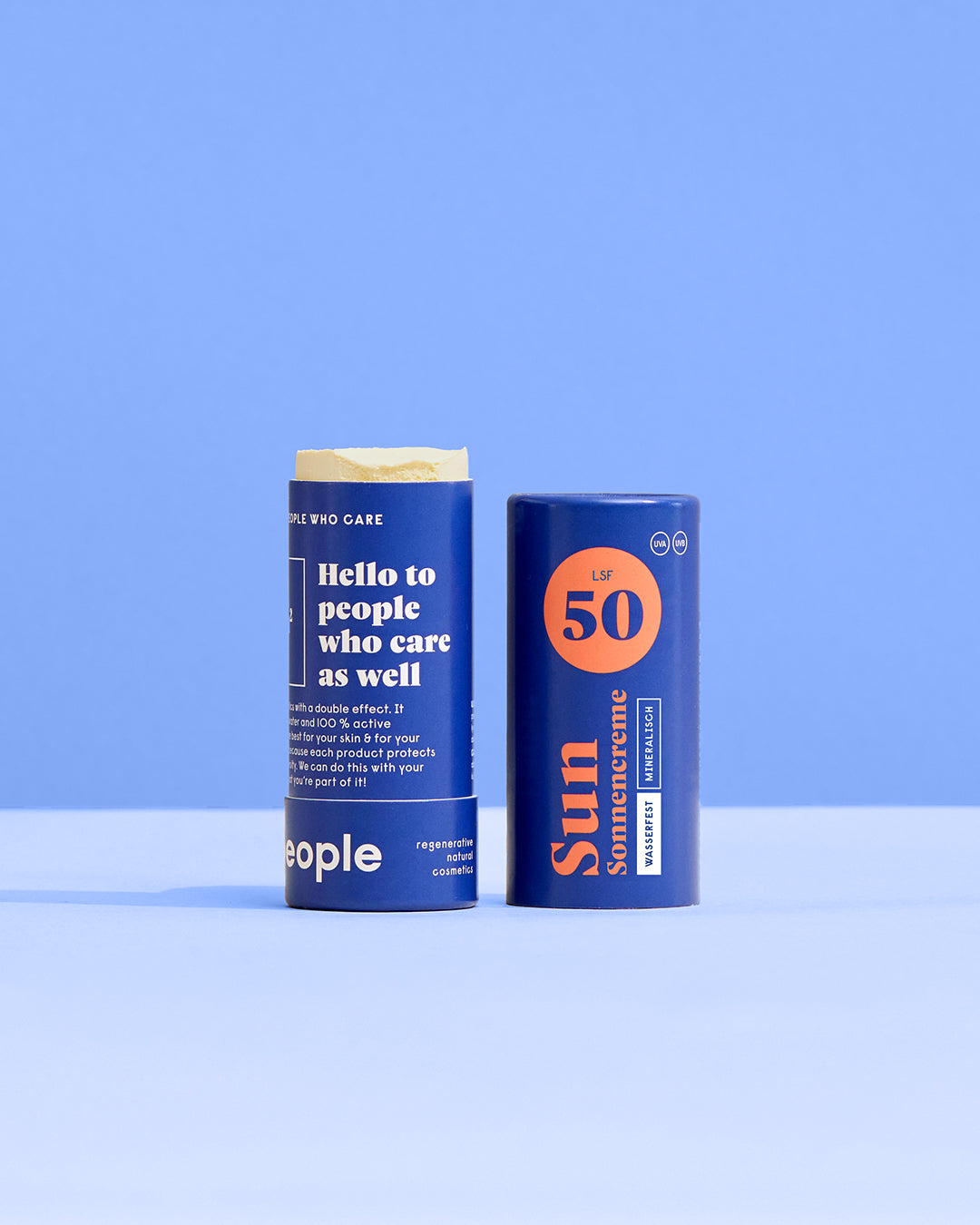
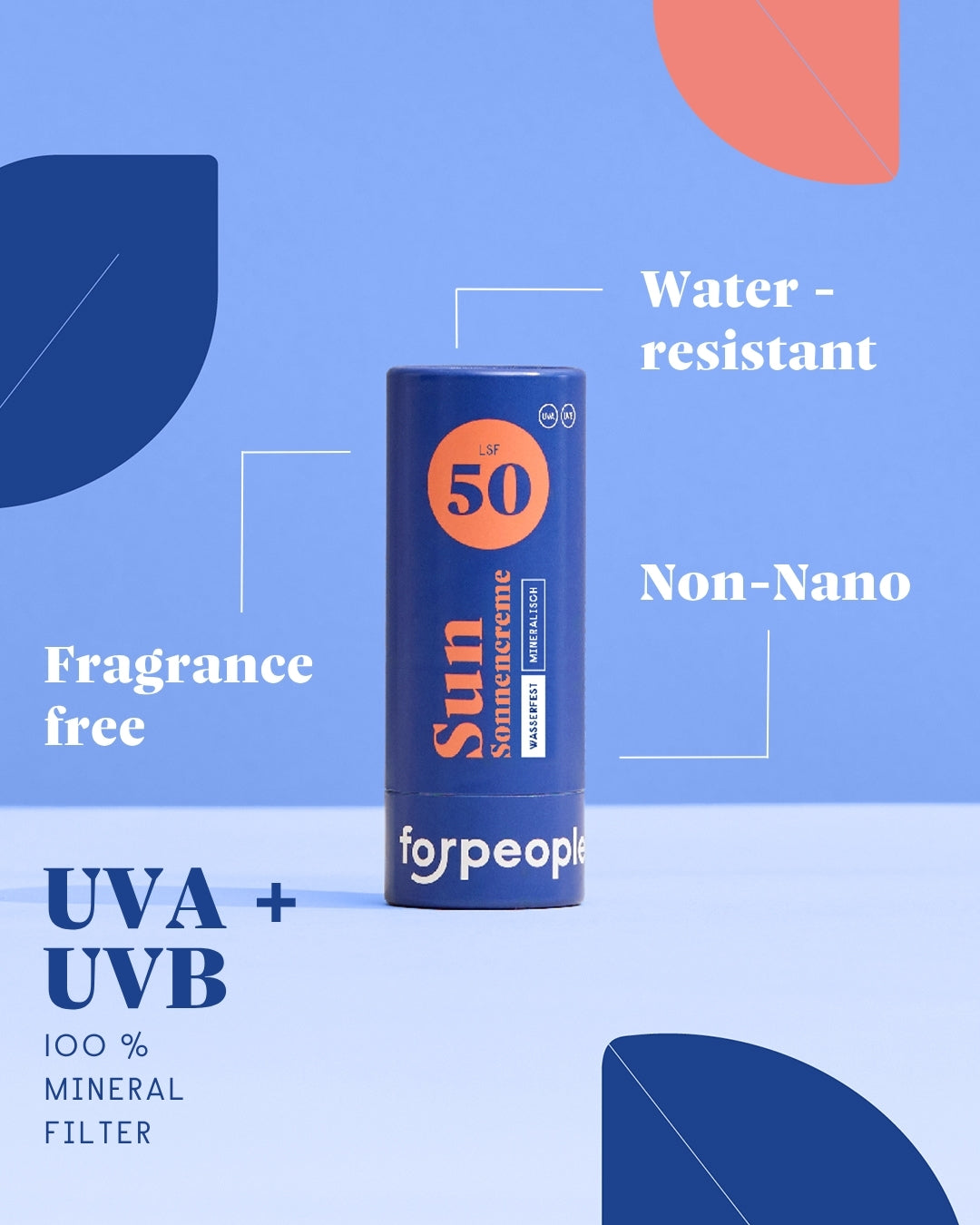
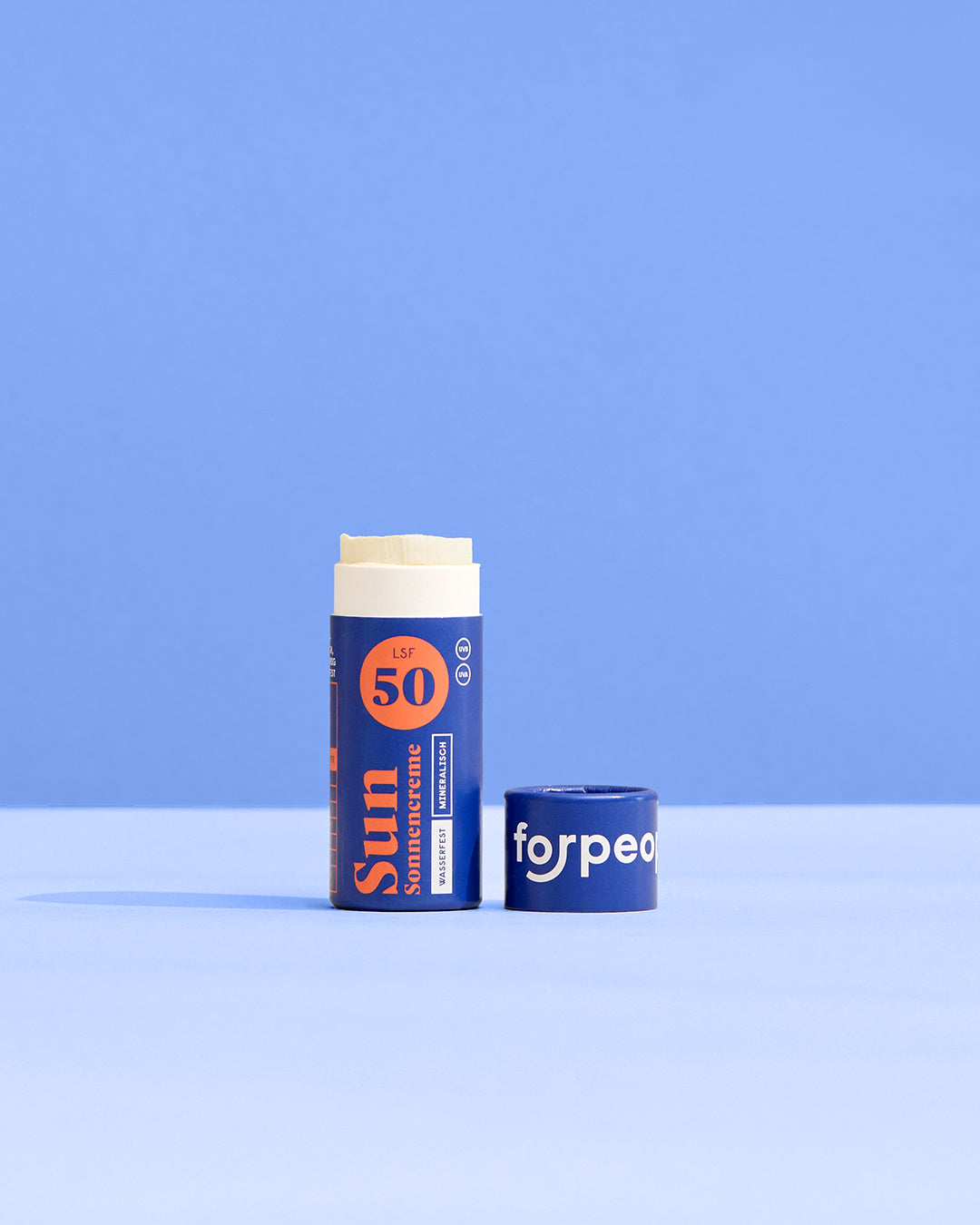
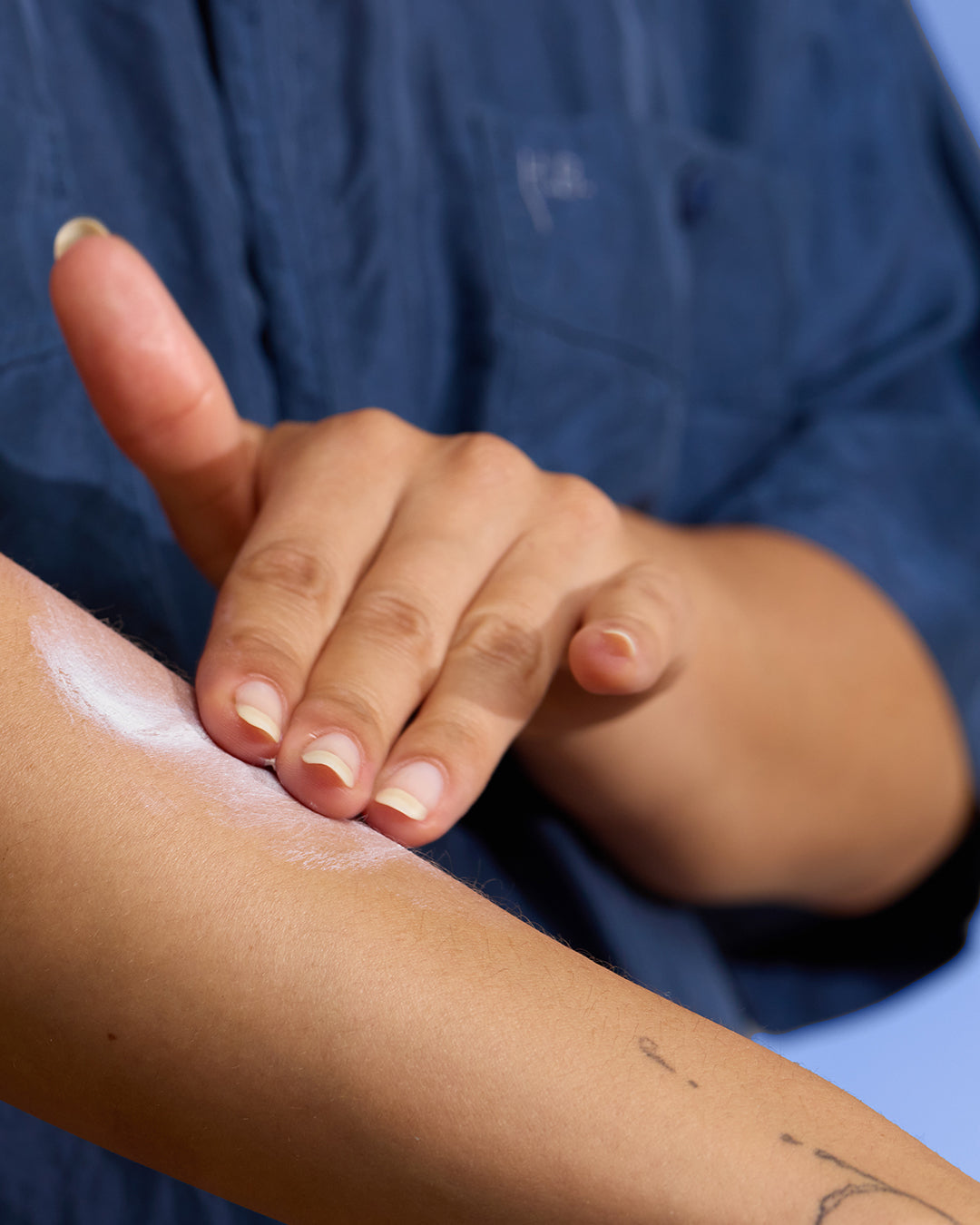
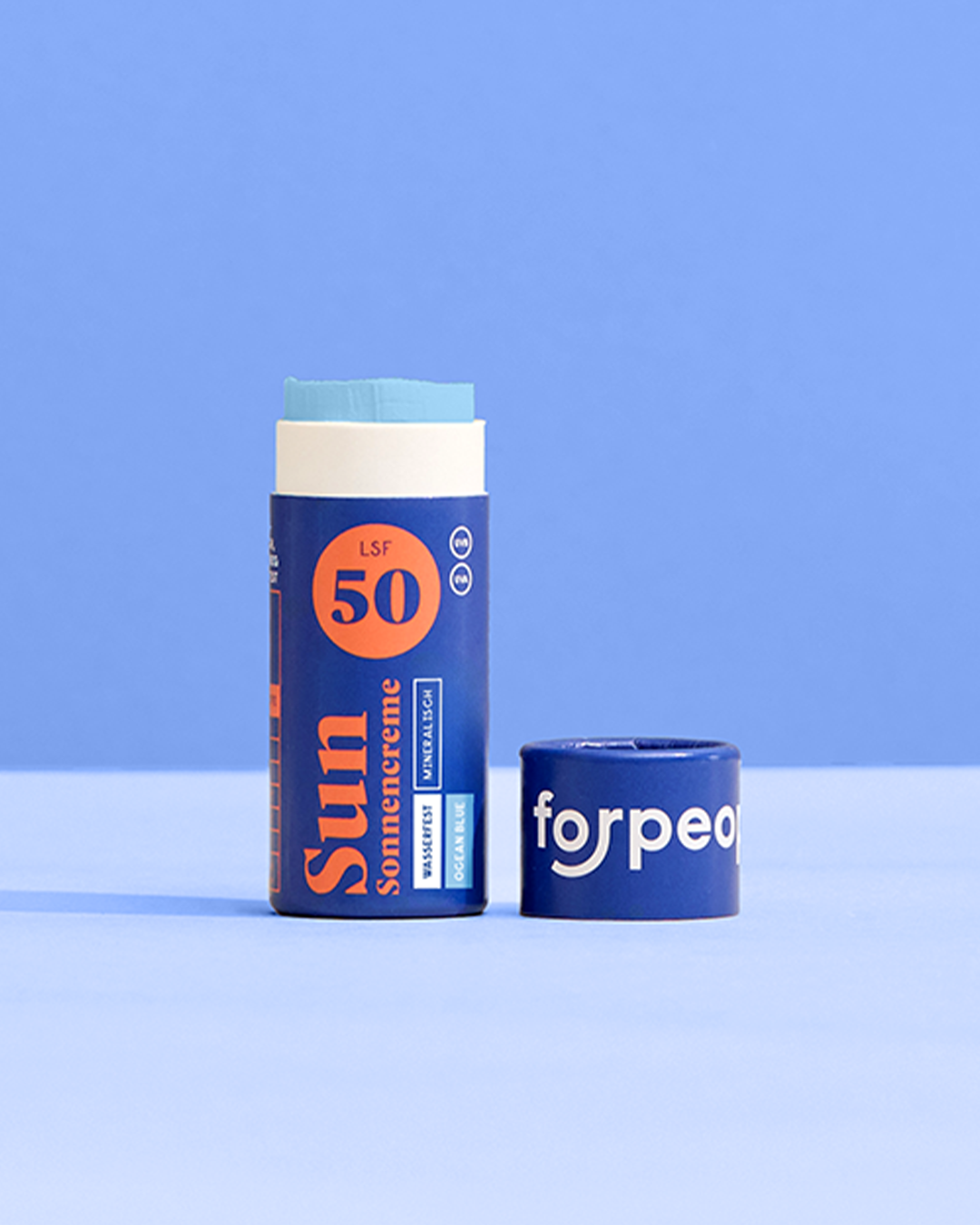
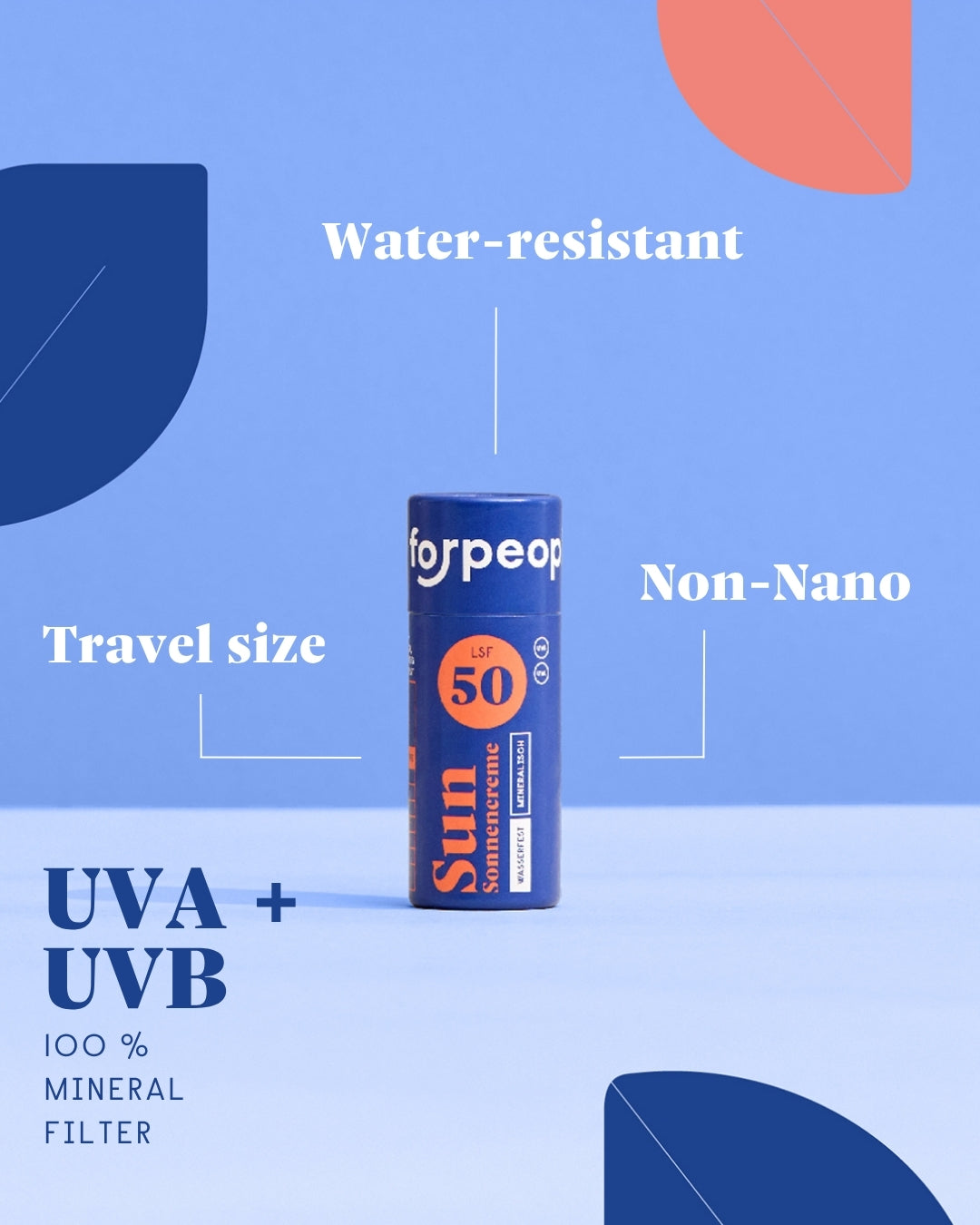
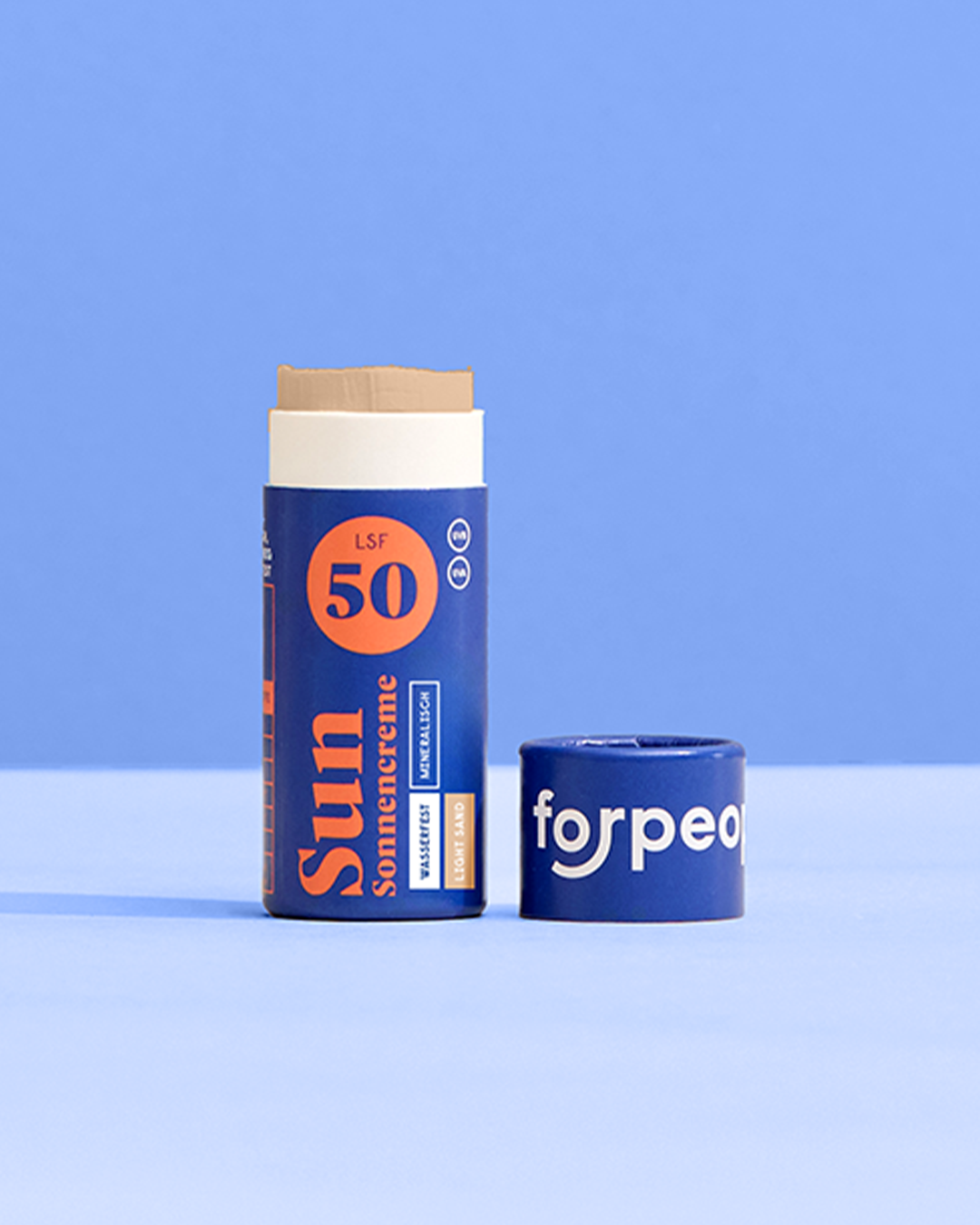
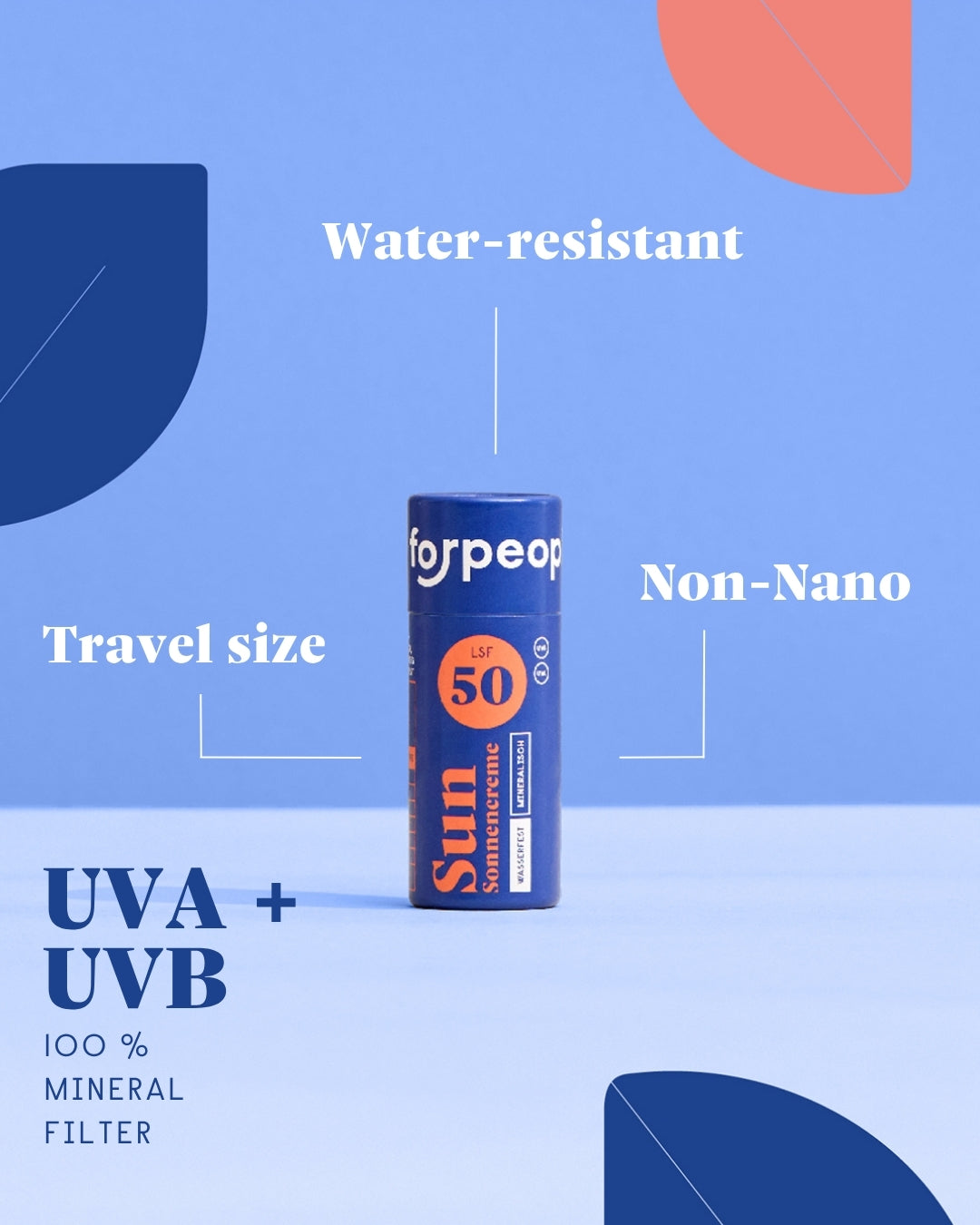
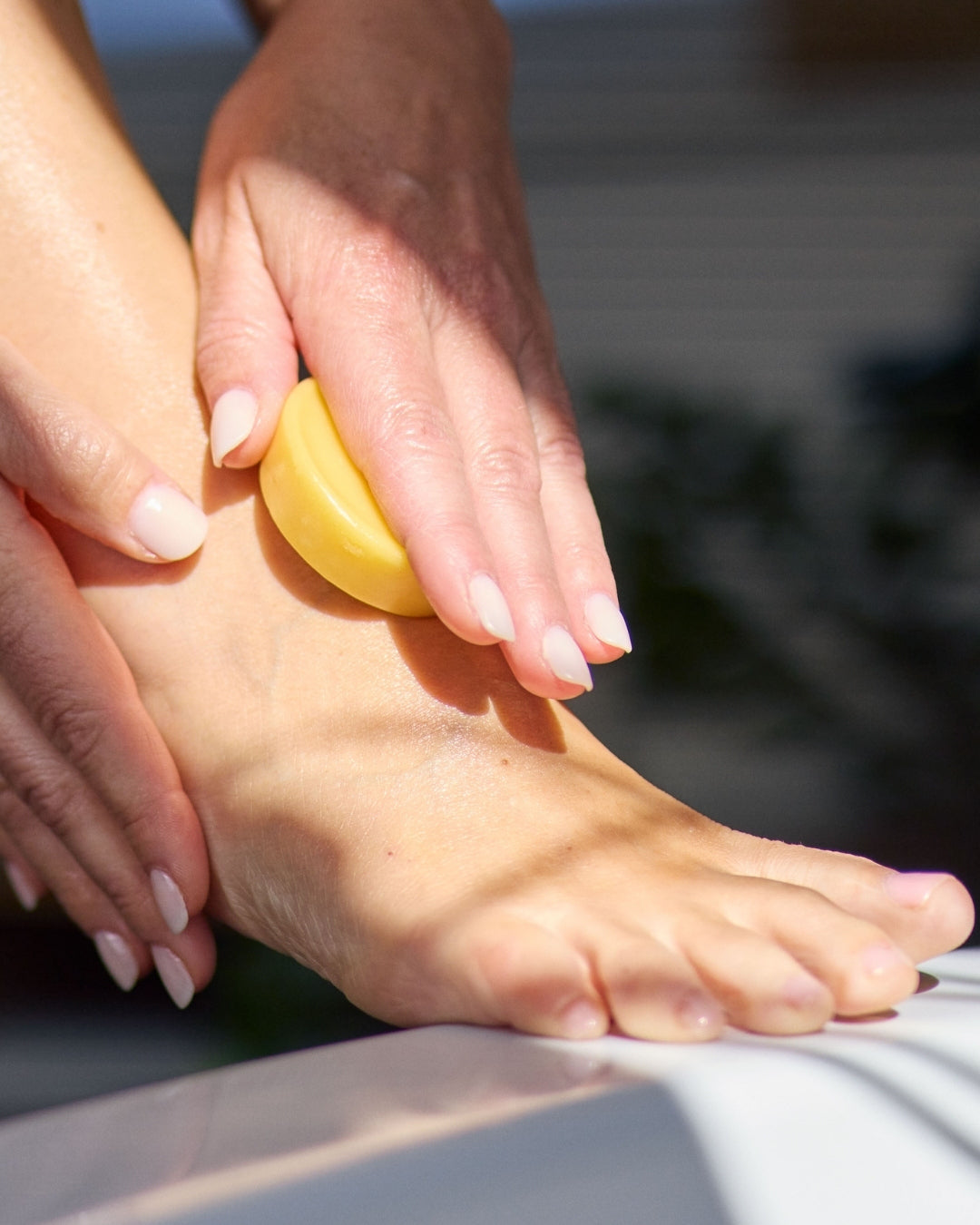
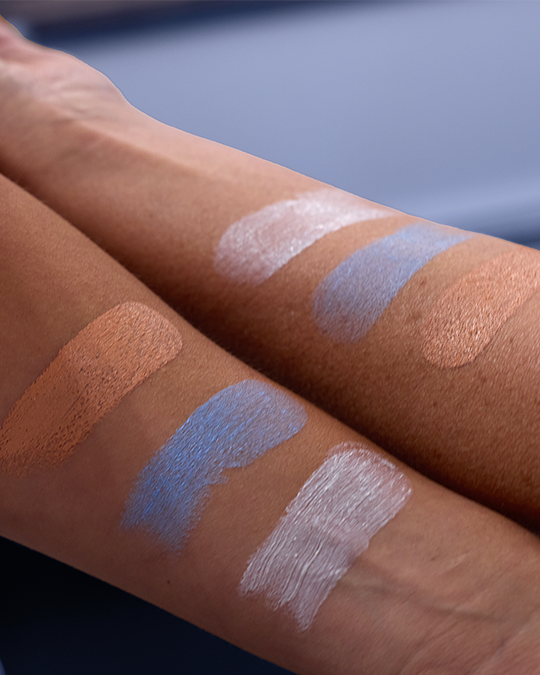
Both reflect UV radiation physically, don't penetrate the skin and are reef-friendly. We use them in every one of our solid sunscreens. For on the go there's the compact mini version, and for beach days the tinted Ocean Blue edition. Sun protection without second thoughts.
Mineral UV filter with a focus on UV-B
Titanium dioxide is a mineral UV filter that, like zinc oxide, has been used in dermatological skincare for decades. It physically reflects UV radiation away from the skin – especially well in the UV-B range, the main cause of sunburn. Combined with zinc oxide, you get full broad-spectrum protection.
Titanium dioxide in our sun protection
Which skin is titanium dioxide right for?
Like zinc oxide: the highest possible tolerability – the first choice for sensitive, reactive skin and children's skin.
How does titanium dioxide work on the skin?
Three mechanisms that put titanium dioxide and zinc oxide on many sun-protection recommendations.
Reflection instead of absorption
Titanium dioxide physically reflects UV rays away from the skin – no chemical conversion process, no heat.
UV-B specialist
Especially strong in the UV-B range (290–320 nm) – the part that causes sunburn.
Stable under UV exposure
Unlike some chemical filters, titanium dioxide isn't broken down by UV radiation – steady, consistent effect.
What can you use titanium dioxide for?
High sun protection on the face for your daily routine
Recommended for babies and toddlers
Water-resistant solid sunscreen for climbing, hiking, surfing
UV protection is the most important anti-aging active
Very well tolerated after peels, microdermabrasion, laser
For rosacea, sun allergy and couperose
Safe when snorkelling and diving (non-nano)
For skin irritations and in the post-op phase
Titanium dioxide pairs especially well with …
Mineral filters and care components add up to complete protection.
The ideal sister – the two filters together give broad-spectrum UV-A + UV-B protection.
Learn moreA nourishing base, makes sunscreen creamier and richer.
Mehr erfahrenWater-resistant consistency for long-lasting protection while swimming.
Learn moreAn anti-aging addition – important: always use retinol with UV protection.
Learn moreWhat do studies say?
„Non-nano titanium dioxide offers effective UV-B protection without penetrating the skin."
„A combination of titanium dioxide and zinc oxide gives broad-spectrum UV protection comparable to chemical filters."
„Unlike chemical filters, mineral filters such as titanium dioxide aren't detected in blood plasma."
Glossary
Magazine

Sun allergy in children? Often the sunscreen is the problem – not the sun
Red patches, itching or little bumps after a day in the sun are quickly written off as a sun allergy. But in conversations with more than 30 customers we kept hearing something different: the skin ...
