











Profile
Sage – "He who has sage in his garden needs no doctor."
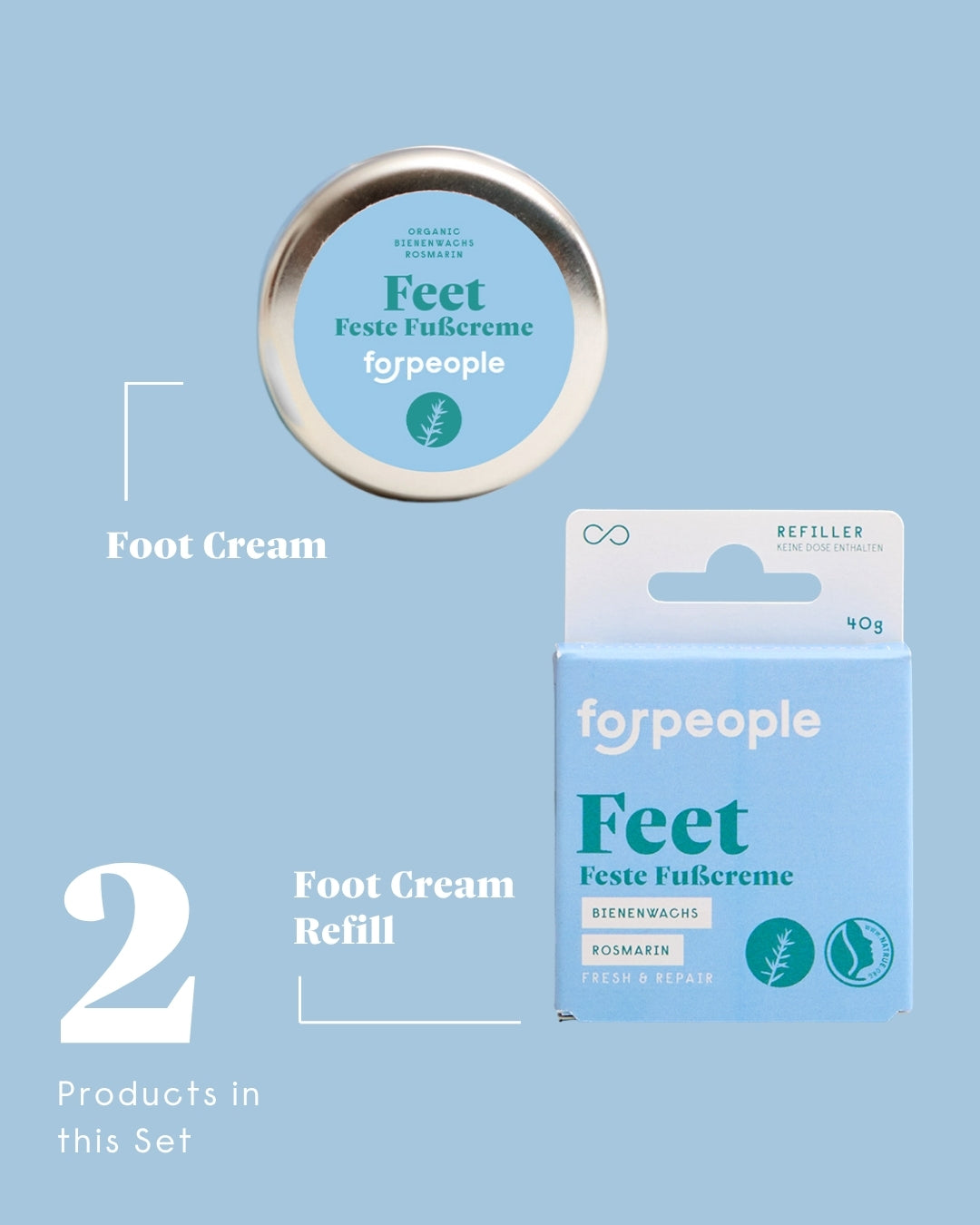
The old saying from monastic medicine tells you a lot: sage is one of the most versatile medicinal plants there is. In our solid foot cream rosemary & sage we use its sweat-regulating effect – ideal for damp feet and in sports shoes.
Monastic medicine with a long history
Sage (Salvia officinalis) has been grown in monastery gardens and used in medicine since the Middle Ages. The name comes from 'salvare' (to heal). The essential oil contains thujone, cineole and camphor and works as an antibacterial, sweat-inhibiting and soothing agent.
Sage in our foot care







Which skin is sage good for?
Sage is a versatile active – especially strong for sweat-prone and blemished skin.
How does sage work on the skin?
Three mechanisms from monastic medicine.
Antibacterial
Thujone and cineole inhibit the growth of skin-relevant bacteria – proven in wound salves.
Sweat-regulating
Plant compounds reduce sweat production – especially on the feet.
Astringent
Tightens the skin's surface slightly – clarifying and cleansing.
What can you use sage for?
For sweaty, tired feet
For excessive underarm or foot sweating
Antibacterial for pimples and blackheads
Classic active in healing salves
In toothpastes and mouthwashes
For sweaty hands
Sage pairs especially well with …
The classic herbal partners for healing and foot care.
What do studies say?
„Sage oil shows antimicrobial activity against S. aureus and Candida."
„Sage reduces sweating in a placebo-controlled study."
„The traditional use of sage in wound healing is supported by antibacterial effects."
Glossary
Magazine

Sun allergy in children? Often the sunscreen is the problem – not the sun
Red patches, itching or little bumps after a day in the sun are quickly written off as a sun allergy. But in conversations with more than 30 customers we kept hearing something different: the skin ...
