











Profile
Natron neutralises odour right where it forms.
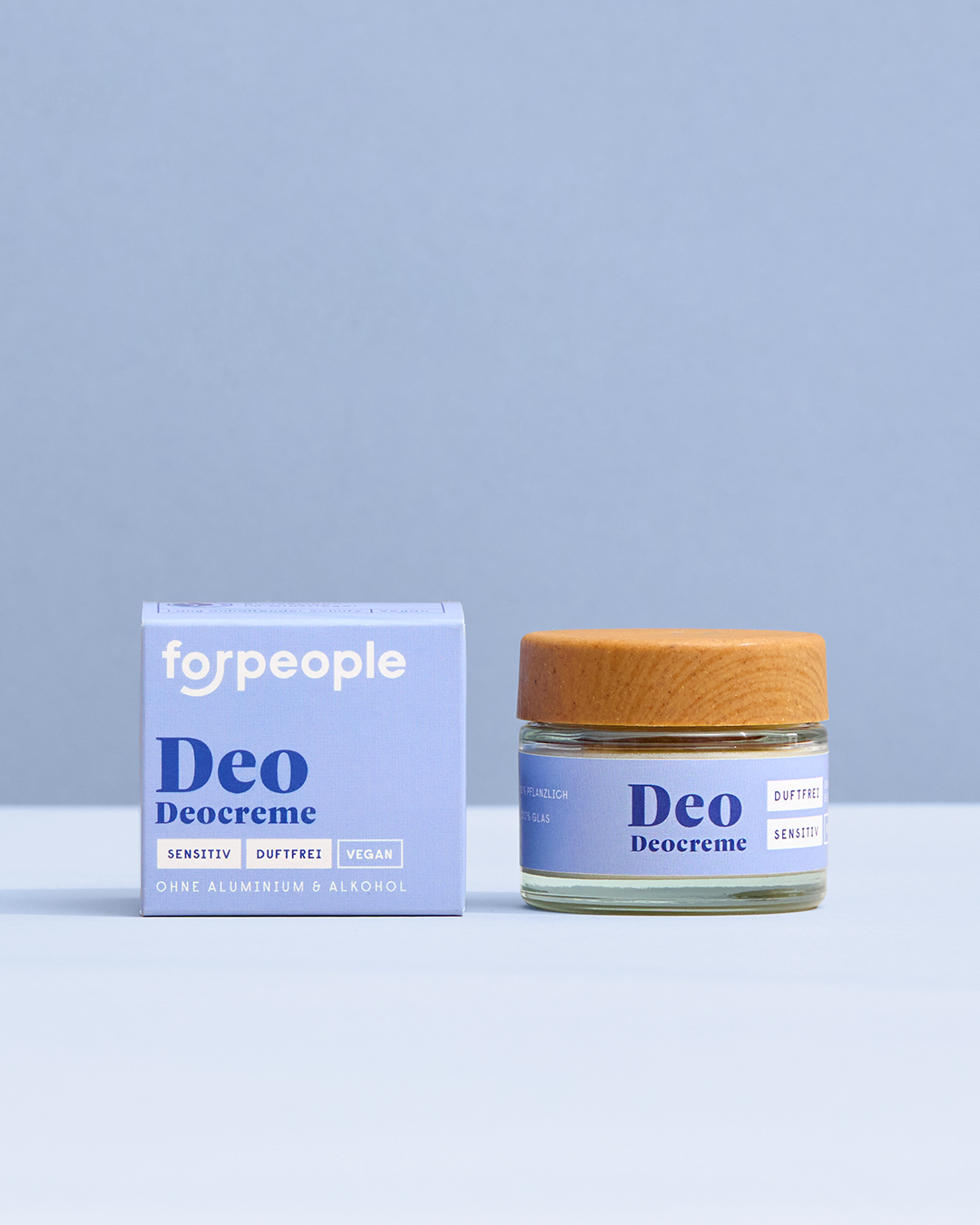
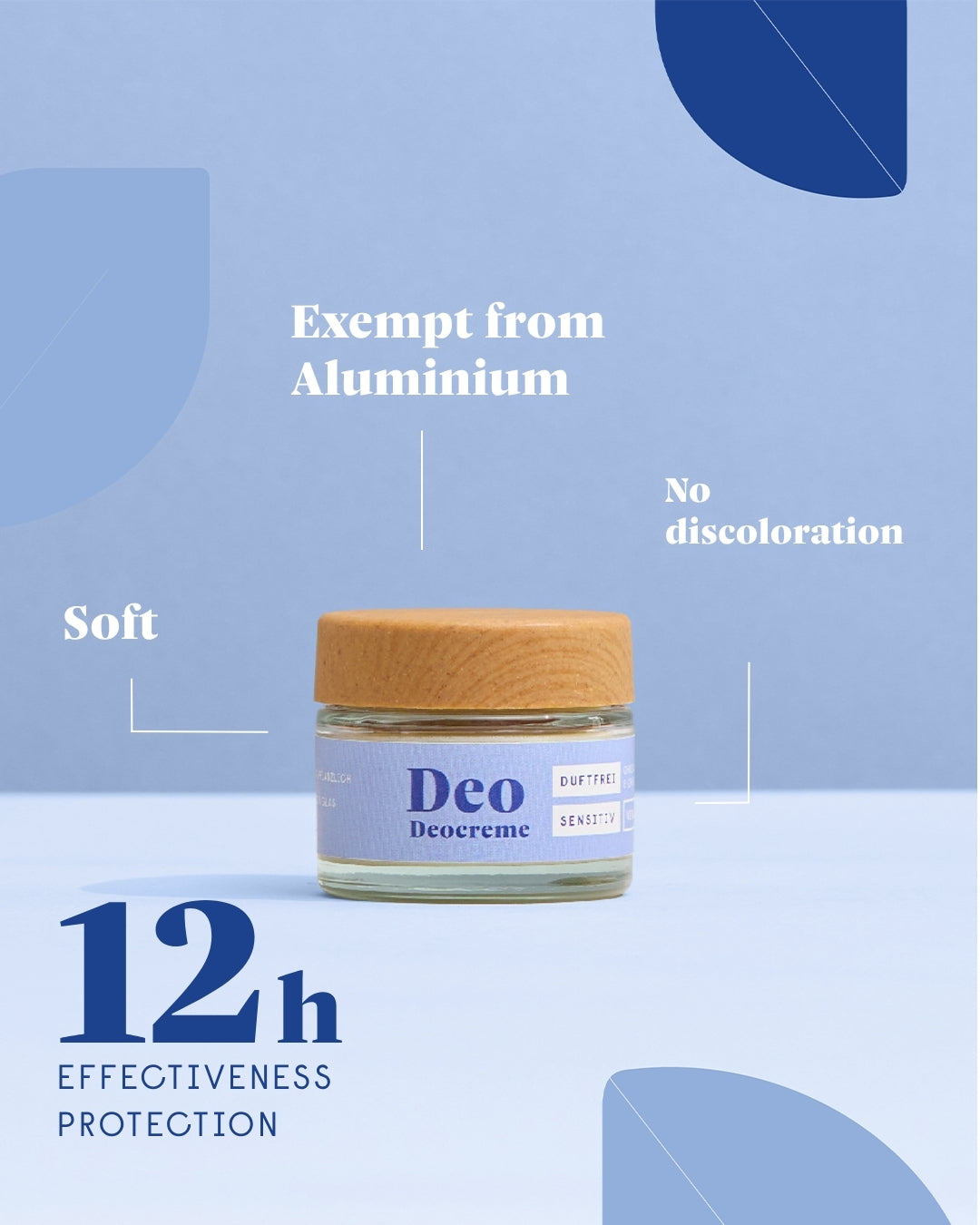
Sweat itself is odourless — it's only the bacteria on your skin that break it down and produce the typical odour compounds. Natron neutralises these chemically, without blocking your sweat pores. In our Deocreme Sensitiv it pairs perfectly with potato and corn starch.
A mineral home remedy with a long tradition
Natron (sodium bicarbonate, NaHCO₃) is one of the oldest home remedies we know — used in the kitchen, for cleaning and in natural cosmetics. Its alkaline nature neutralises the acidic compounds that form when skin bacteria break down sweat.
Natron in our deodorant cream



Which skin is Natron right for?
Natron is gentle but alkaline — with very sensitive skin, ease into it slowly.
How does Natron work on the skin?
Three mechanisms that make Natron a natural home remedy.
pH neutralisation
Acting as an alkaline, it balances out the acidic odour compounds from the sweat-and-bacteria breakdown.
Mildly antibacterial
An alkaline environment slows the growth of odour-forming bacteria.
Mildly abrasive
A very fine powder — it can gently clean by mechanical action (e.g. in exfoliants).
What can you use Natron for?
Neutralises odour without blocking sweat
For foot odour and tired feet
Mildly abrasive for blemished skin
After contact with garlic or fish
For itchy skin irritations
A versatile cleaner around the house
Natron goes especially well with …
The natural partners in our deodorant concept.
Starch + Natron = moisture absorption + odour neutralisation.
Learn moreFine-grained starch + Natron = the perfect deodorant trio.
Learn moreMakes the mineral powder skin-friendly and creamy.
Learn moreSoothes after shaving, harmonises with the Natron base.
Learn moreWhat do studies say?
„Natron effectively neutralises sweat odour without aluminium compounds."
„Sodium Bicarbonate shows mild antimicrobial behaviour at pH 8.3."
„Natron in a normal concentration is well tolerated by the skin."
Glossary
Magazine
Sun allergy in children? Often the sunscreen is the problem – not the sun
Red patches, itching or little bumps after a day in the sun are quickly written off as a sun allergy. But in conversations with more than 30 customers we kept hearing something different: the skin ...
