







Fact sheet
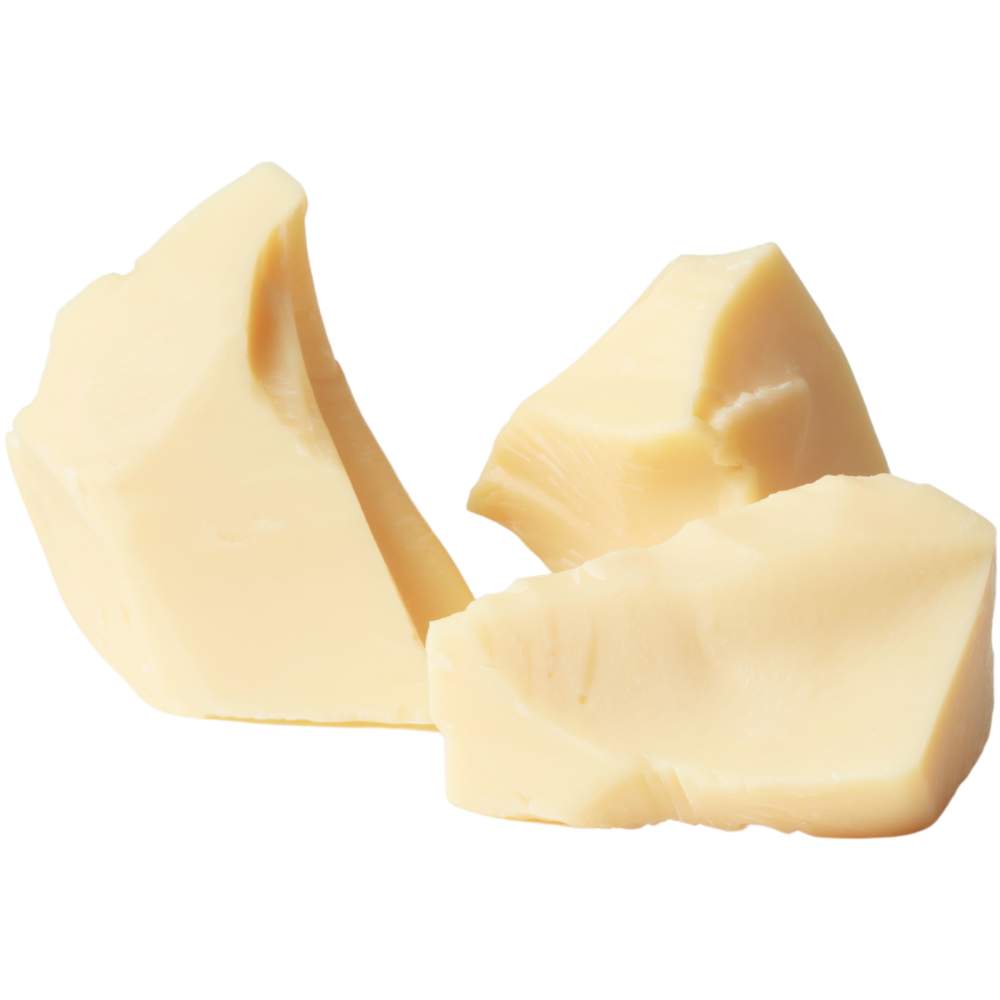
Cocoa butter is the richest plant butter we know.
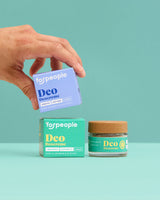
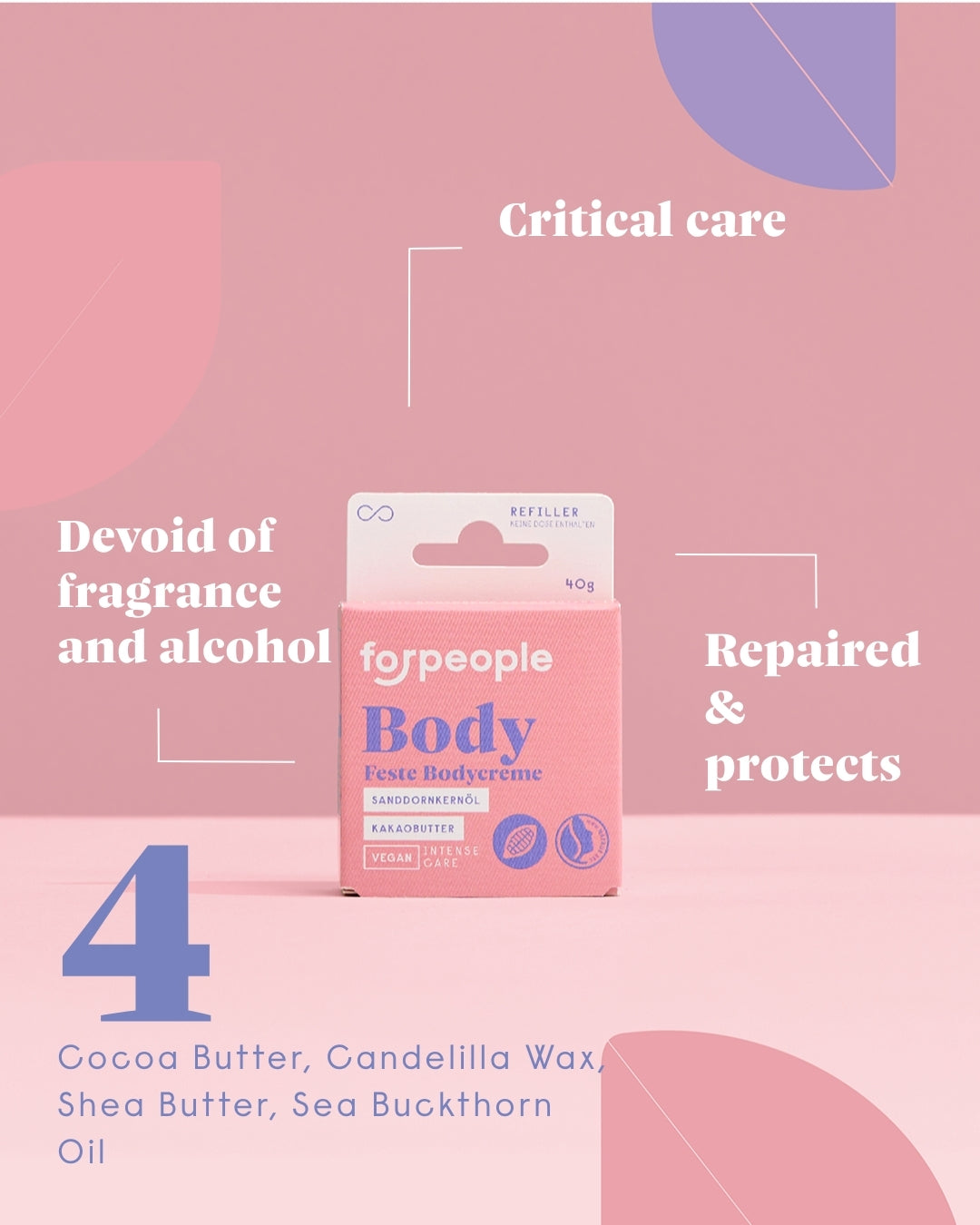
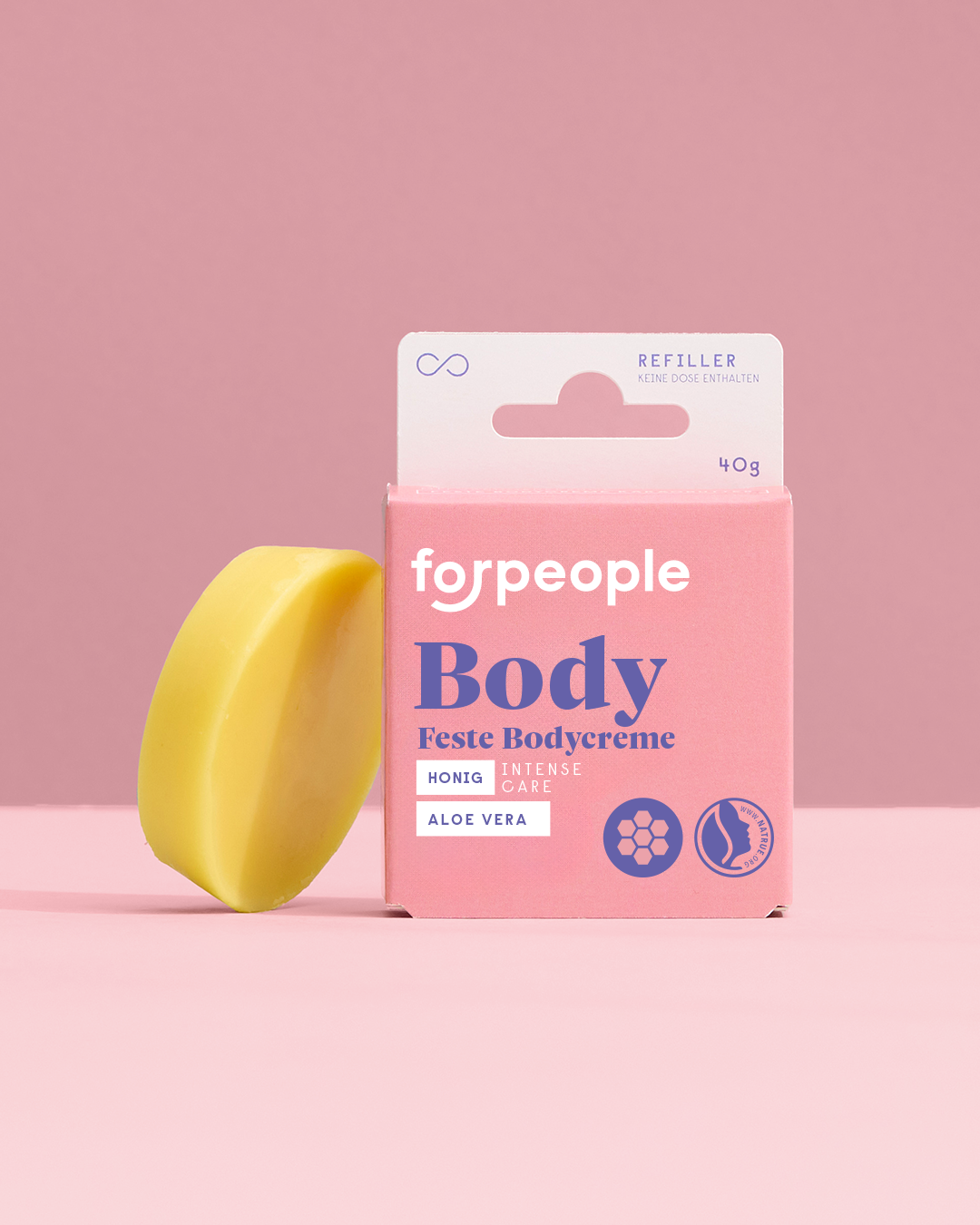
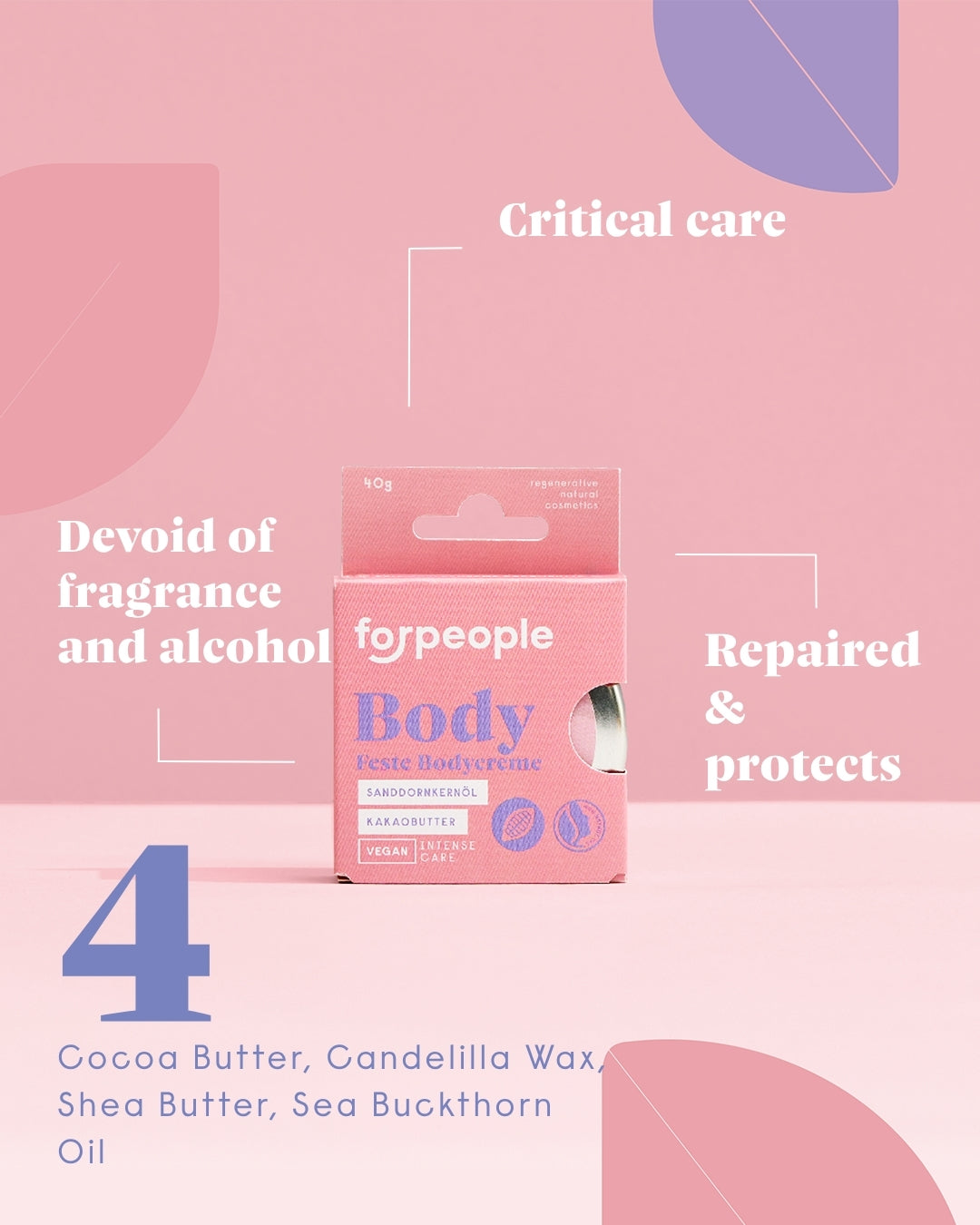
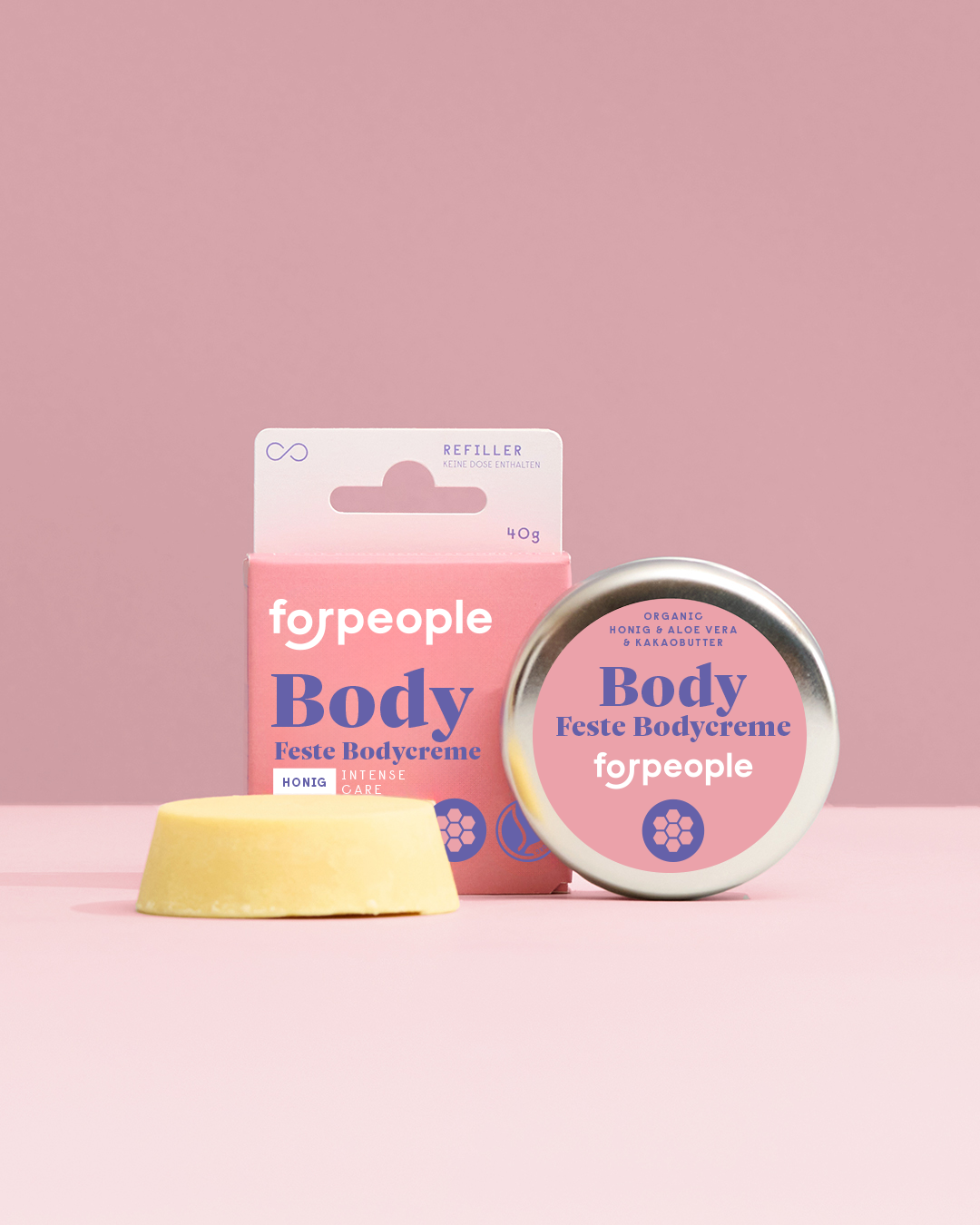
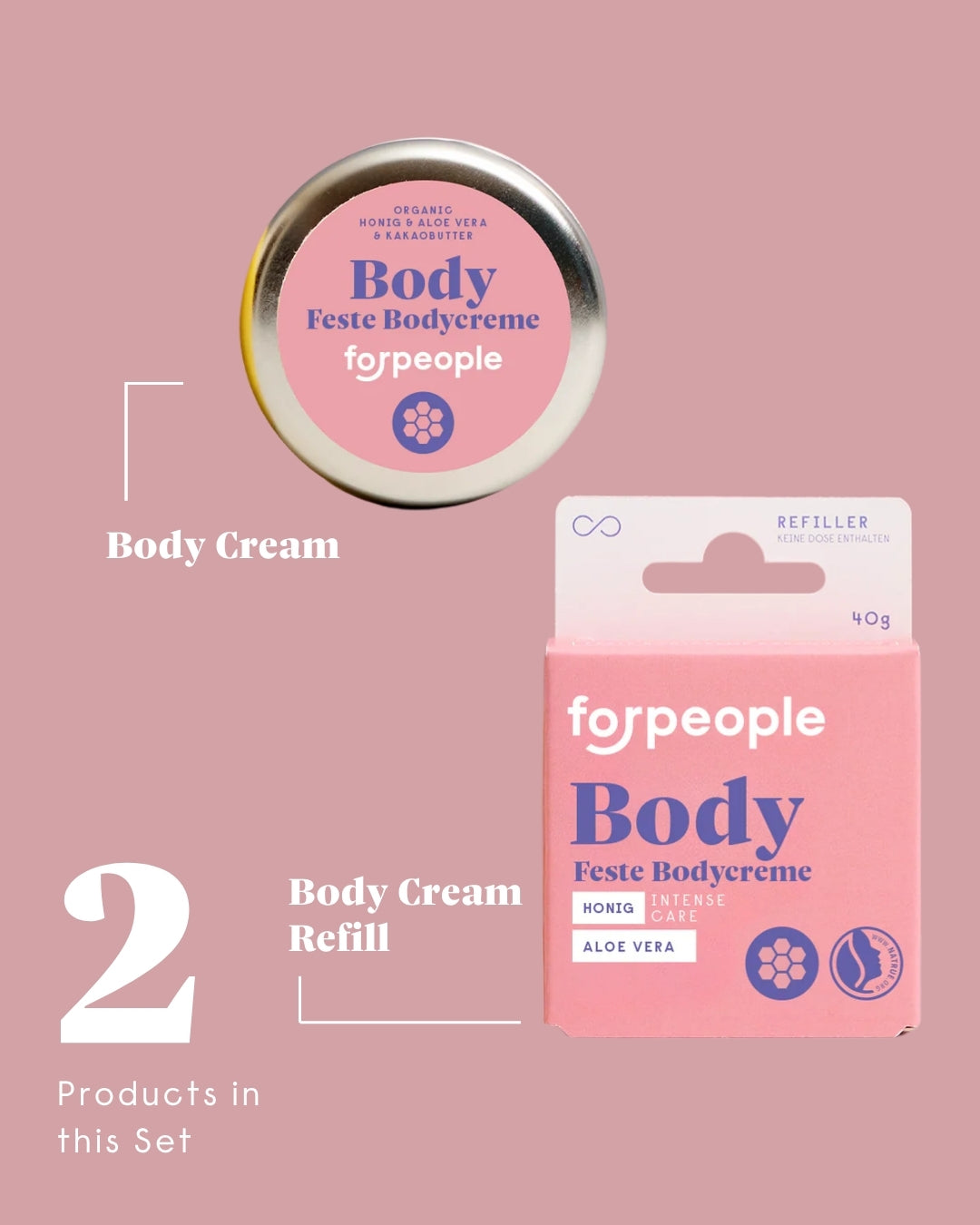
It melts on contact with the skin and lays down a dense protective film – ideal for very dry areas of the body. We use it in our solid body butter and in the body care set. The refill version is part of our reusable concept too.
Rich body butter from cocoa beans
Cocoa butter is the valuable plant fat from the beans of the cocoa tree – the same plant that chocolate is made from. It is characterised by its solid texture at room temperature and the way it melts at body warmth. It contains about 35 % oleic acid, 35 % stearic acid and 25 % palmitic acid – plus polyphenols and vitamin E with an antioxidant effect.
Cocoa butter in our body care

Which skin type is cocoa butter suited for?
Cocoa butter is very rich – ideal for dry areas of the body, less suited for blemish-prone faces.
How does cocoa butter work on the skin?
Three effects that make cocoa butter a rich care ingredient.
Protective film
Stearic and palmitic acid form a dense, long-lasting protective film – ideal for dry areas of the body.
Antioxidant cell protection
Polyphenols and vitamin E neutralise free radicals – protecting the skin structure from premature ageing.
Moisture retention
Its occlusive effect prevents moisture loss and supports the skin's natural regeneration.
What can you use cocoa butter for?
Rich care for arms, legs and décolleté
For rough heels and hard calluses
Protection for hard-working hands in winter
To help prevent stretch marks on the belly
Rich care in lip balms
For very dry, flaky patches
Massage into at-risk areas of skin
Plumping and protective
Cocoa butter pairs especially well with …
Rich butters work best when combined with light oils and protective waxes.
The ideal sister butter – shea butter is lighter, cocoa butter richer.
Learn moreStabilises the texture and seals in the care.
Learn moreA light carrier oil that makes cocoa butter more supple.
Learn moreLayering principle: aloe for moisture, cocoa butter to seal.
Learn moreWhat do studies say?
„Cocoa butter forms a measurable protective film that reduces TEWL by an average of 30 %."
„Cocoa polyphenols show strong antioxidant activity – comparable to vitamin E."
„Pregnancy-related stretch marks are less pronounced with rich plant butters like cocoa butter."
Glossary
Magazine
Sun allergy in children? Often the sunscreen is the problem – not the sun
Red patches, itching or little bumps after a day in the sun are quickly written off as a sun allergy. But in conversations with more than 30 customers we kept hearing something different: the skin ...
