What does castor oil do on the skin?
Castor oil is pressed from the seeds of the castor plant. Up to 90 % of its fatty acids are ricinoleic acid, which makes it much thicker than most plant oils. On the skin it therefore stays as a glossy film that slows down water evaporation and keeps rough, dry areas supple. It brings no water of its own and is slow to absorb, which is why skincare usually blends it with other oils, butter and wax. Profile, origin and use: Castor oil
Which forpeople products contain castor oil?
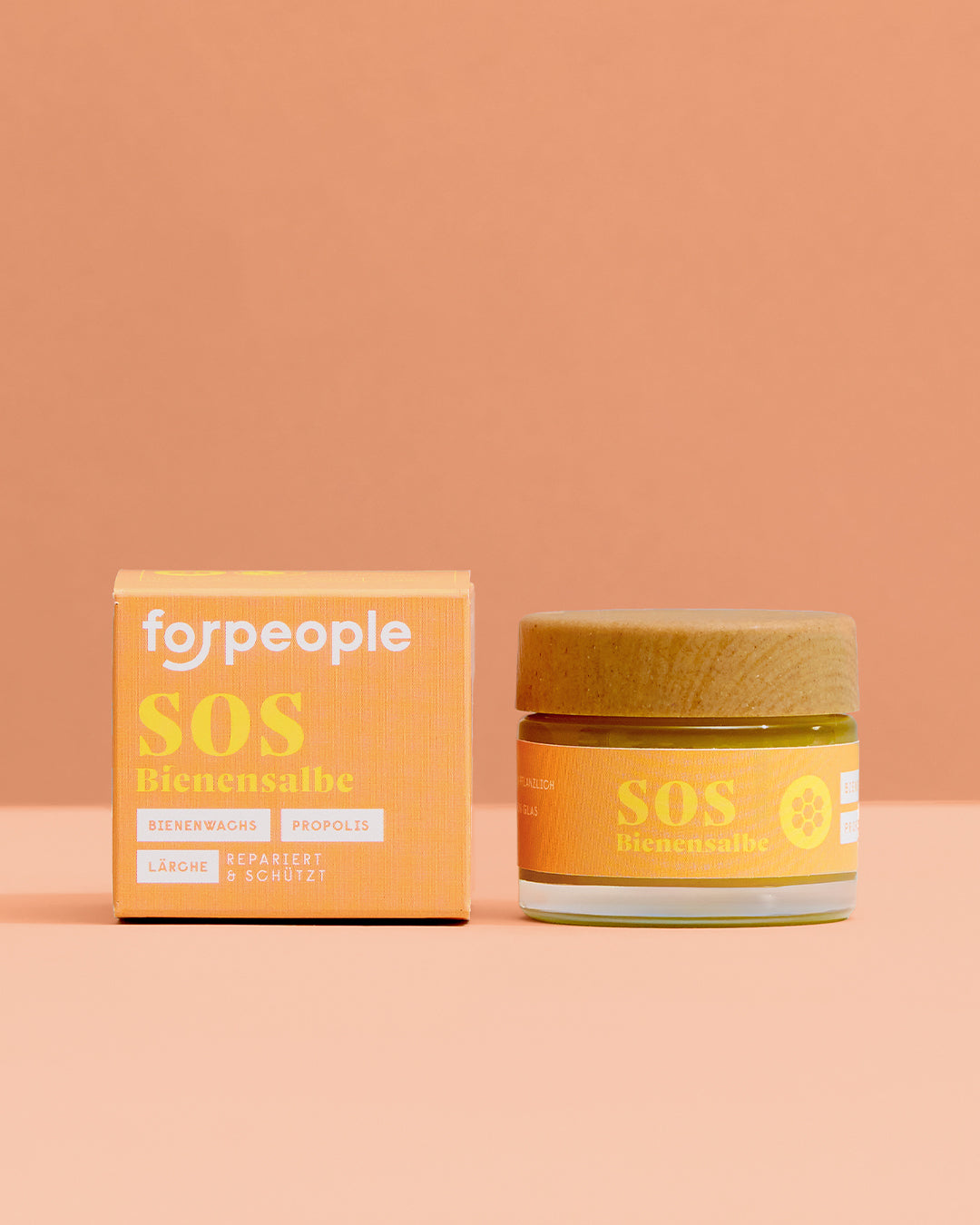
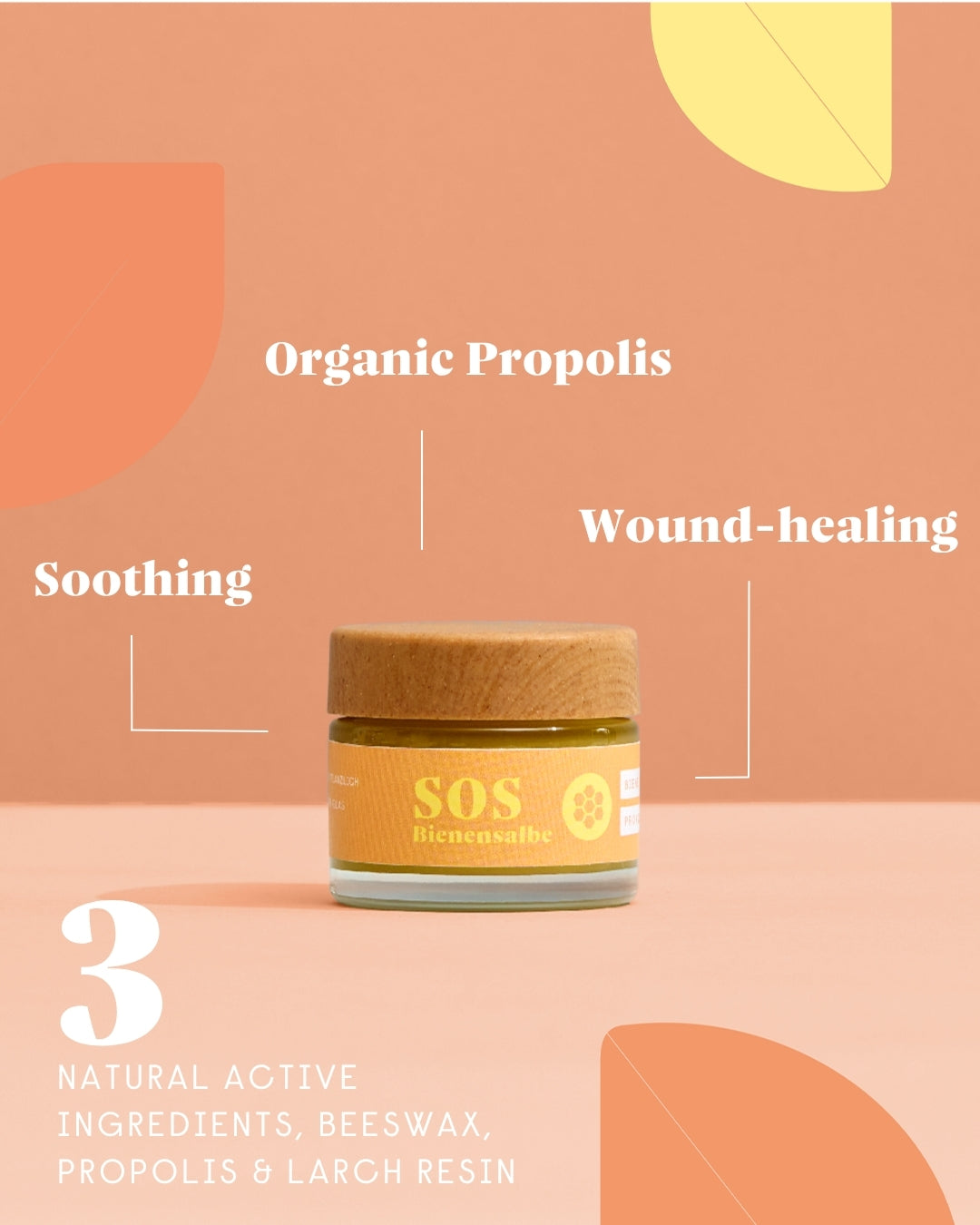
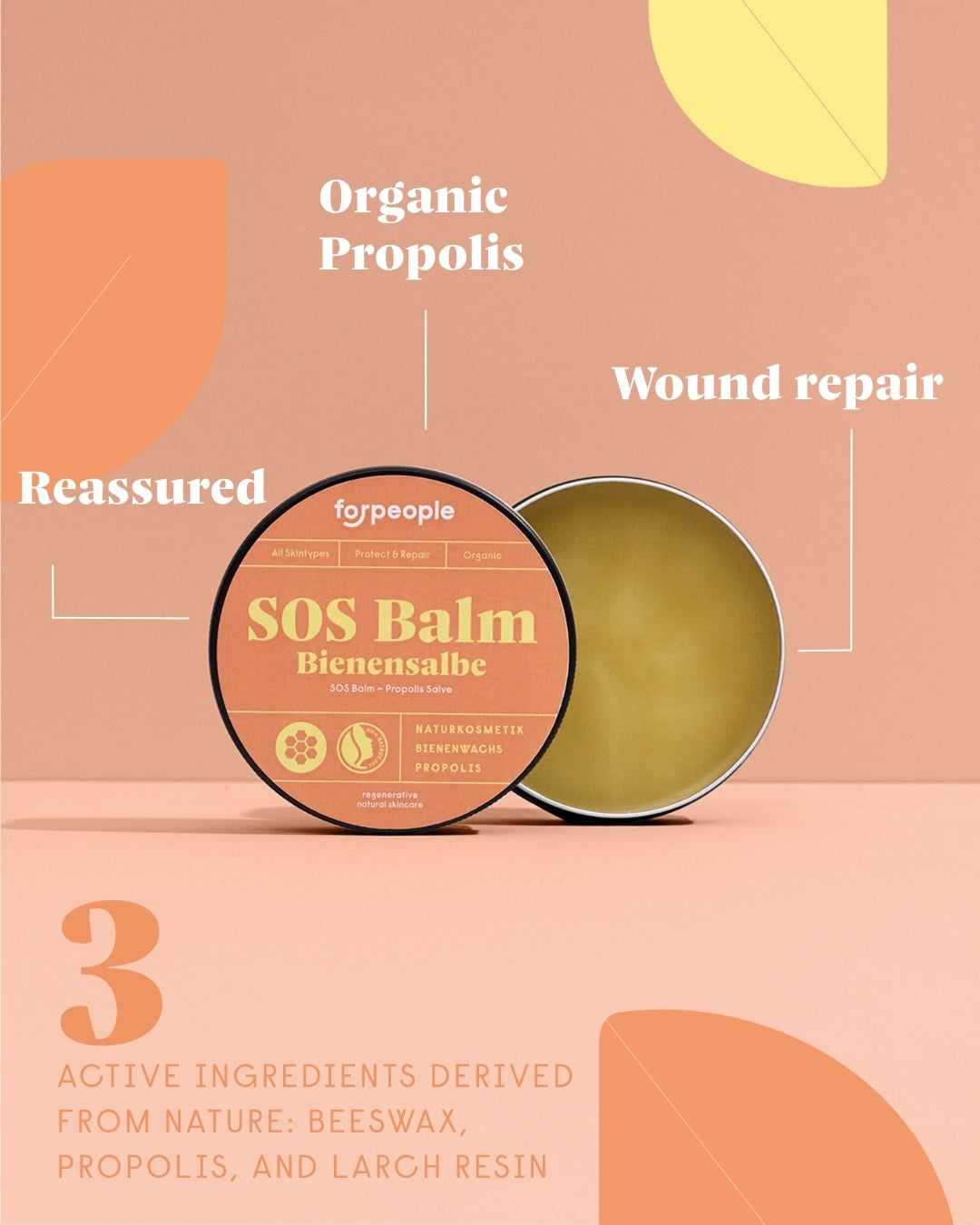
- Bee salve: in the 50 g glass jar or the 150 g tin. Olive, almond and castor oil with beeswax, larch resin and propolis, without water. Made for dry, rough and cracked areas on hands, heels and elbows; the jar lasts for about 80–100 applications.
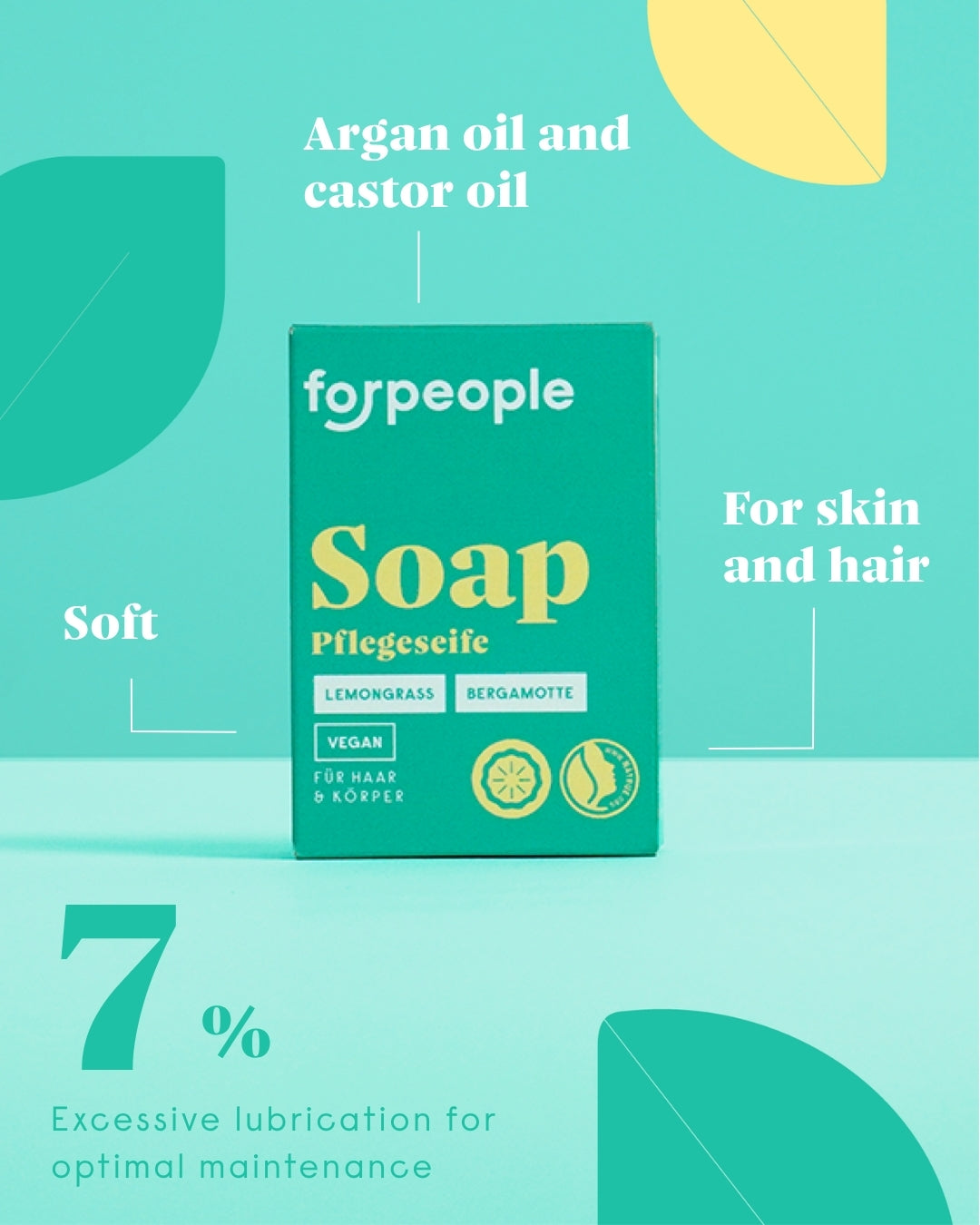
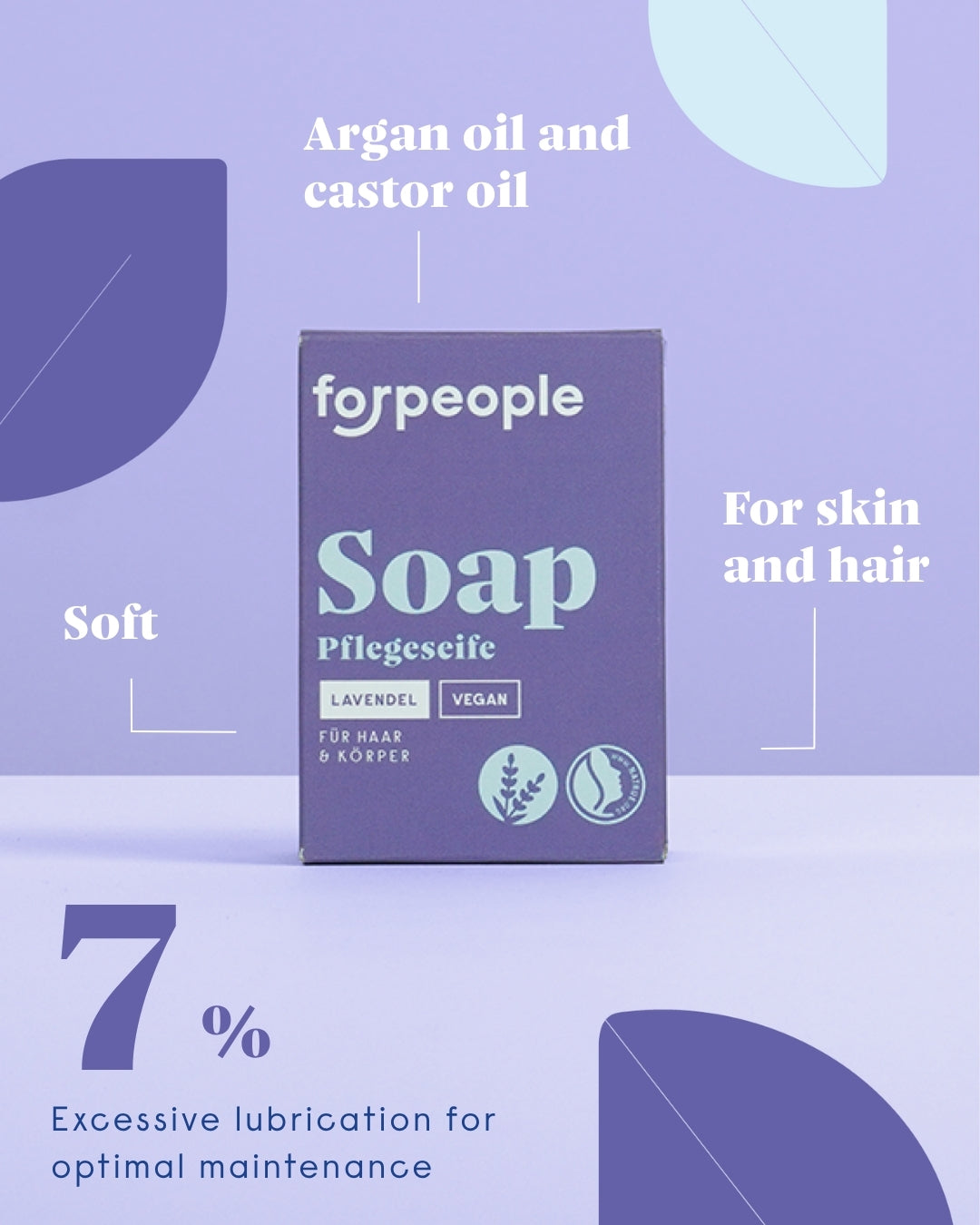
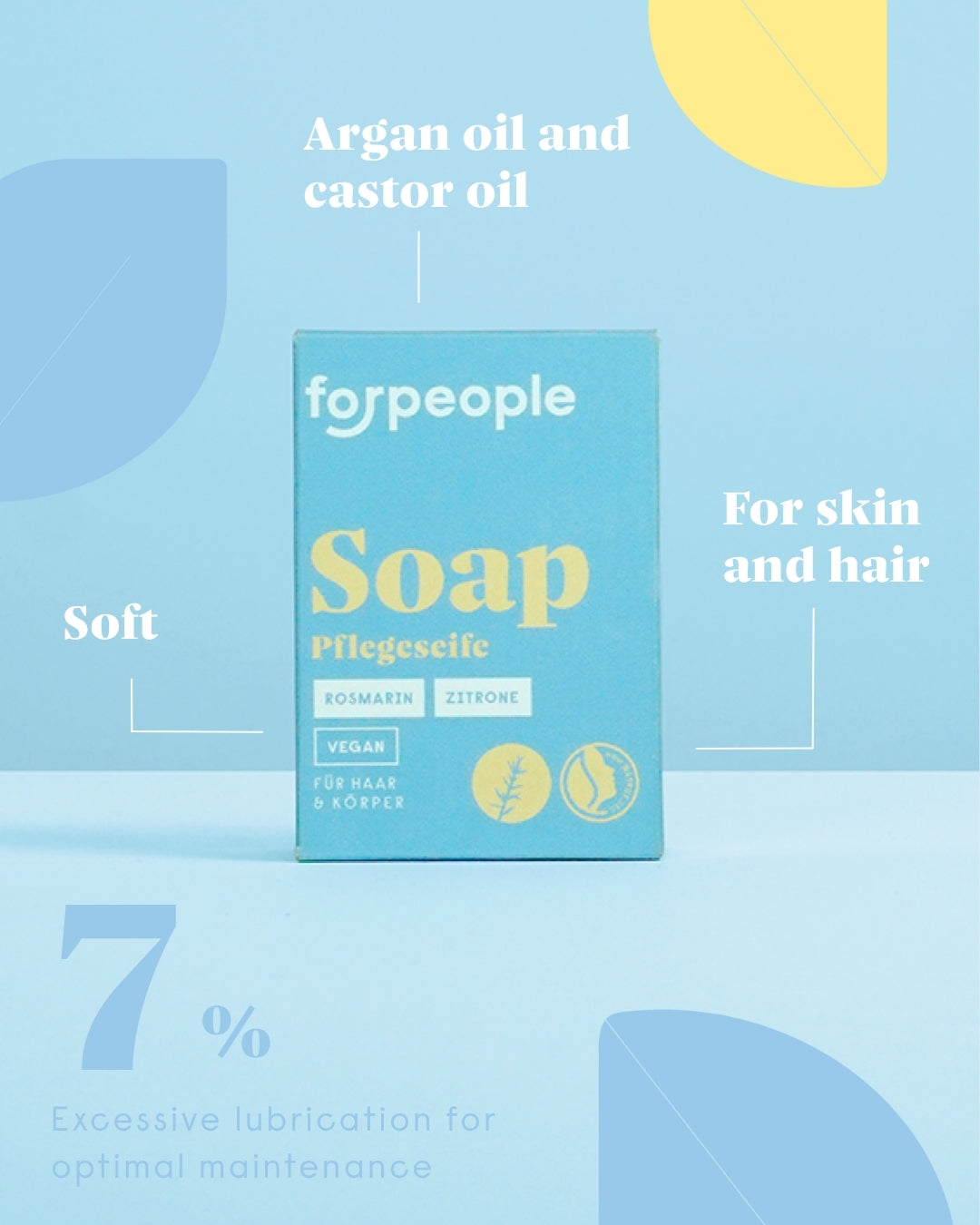
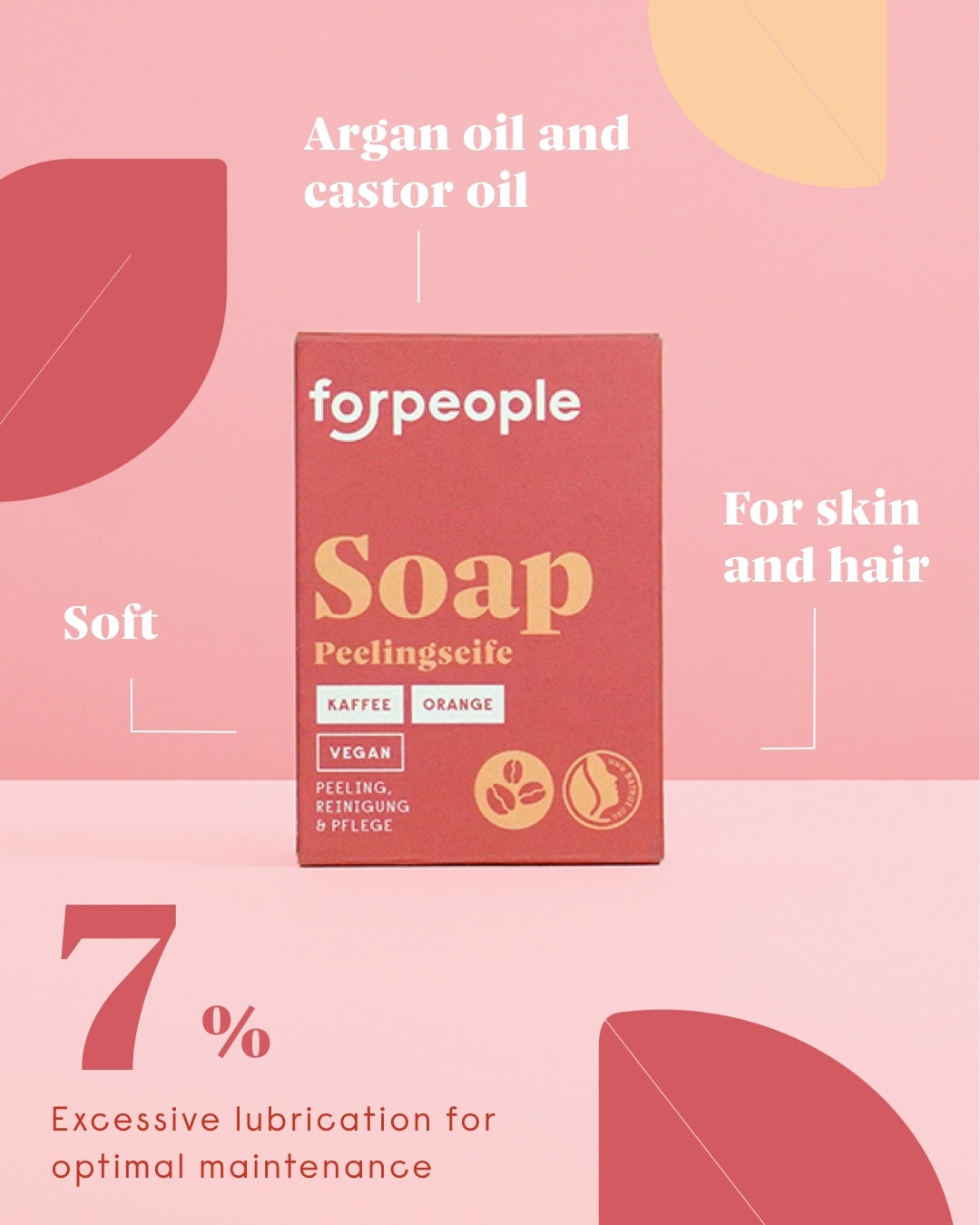
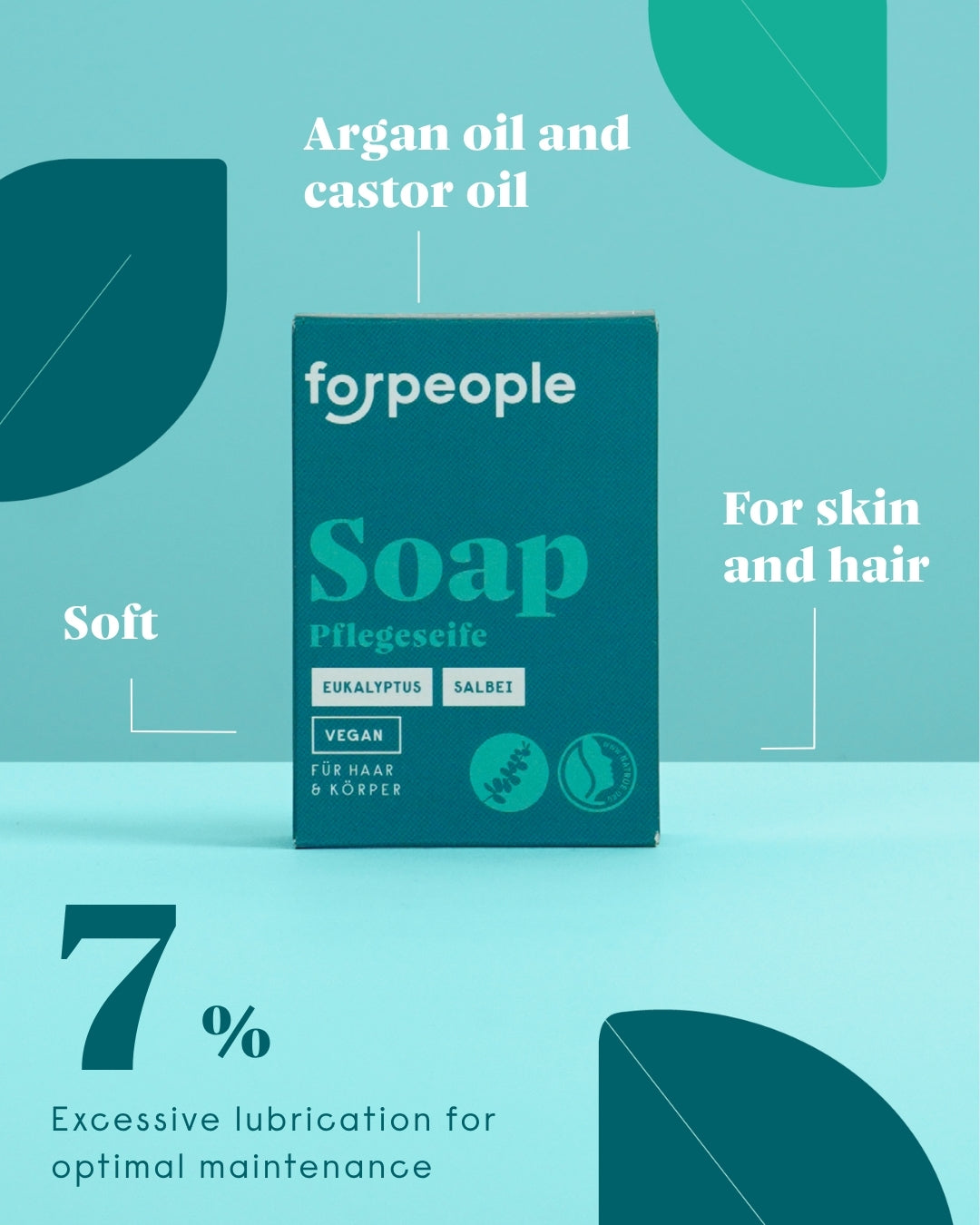
- Solid soaps: Lavender, Rosemary & Lemon, Lemongrass, Eucalyptus & Sage and the exfoliating soap Coffee & Orange. During saponification the oil itself becomes soap. Like any soap, they also remove some fat from the skin when you wash, so applying cream afterwards is part of the routine.
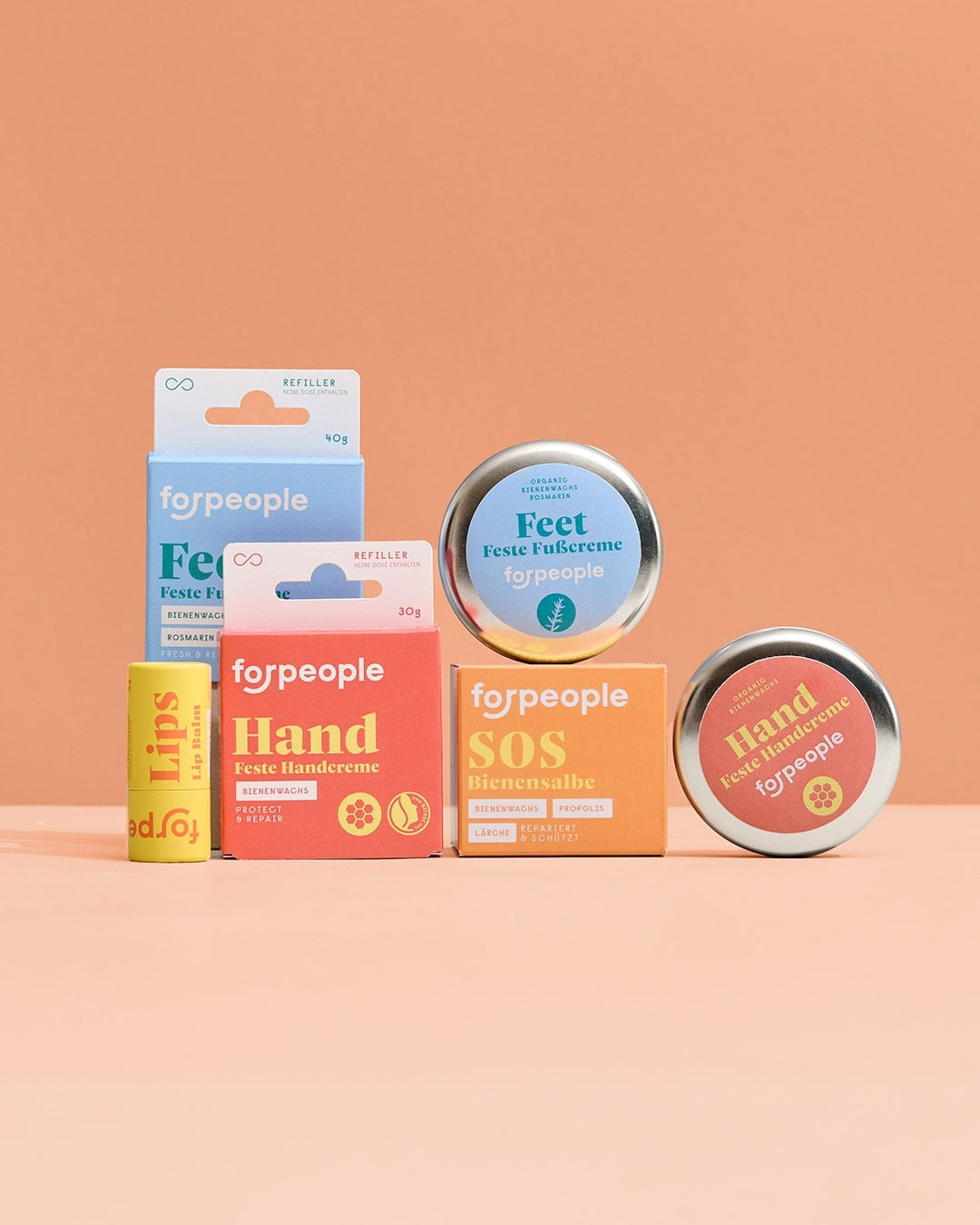
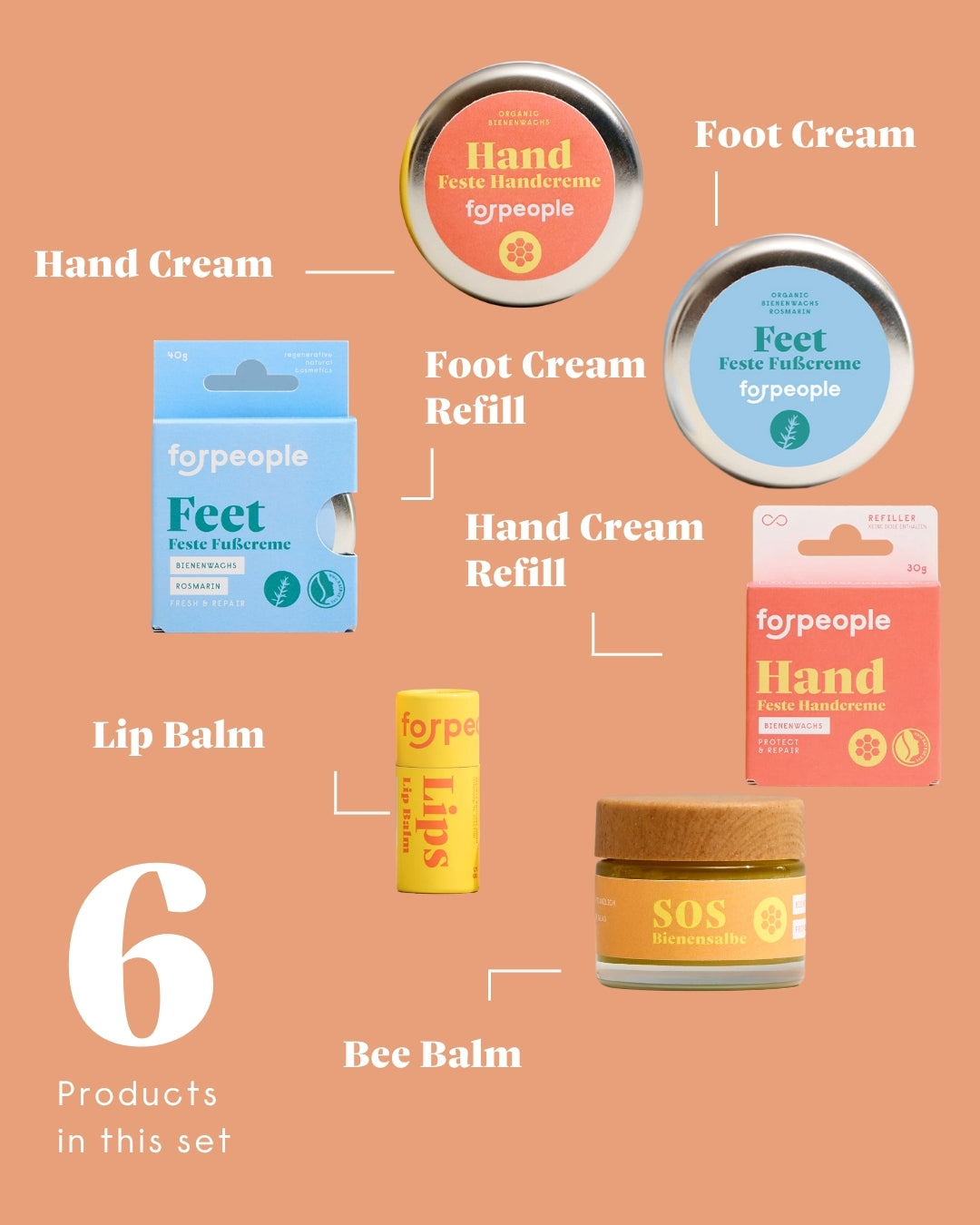
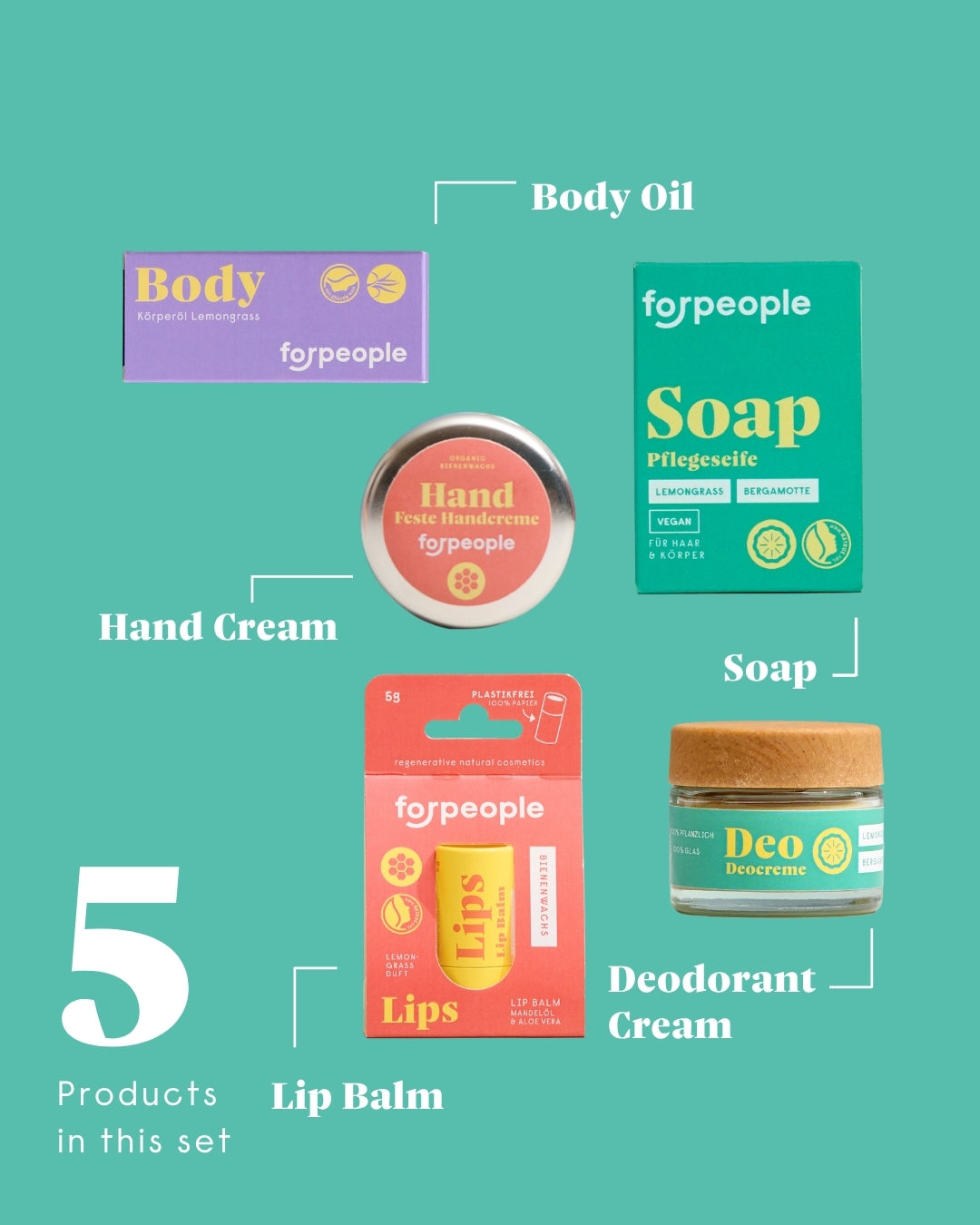
- In a set: the protection set for dry hands, feet & lips, which includes the bee salve.
Castor oil for the lips
In lipsticks and lip balms, castor oil adds shine and glide. Our lip balms do not contain it: Lemongrass and Almond & Vanilla SPF 15 contain beeswax, shea butter and oils such as sunflower, almond and hemp oil. If you are looking for something with castor oil for your lips, you can apply the bee salve as a thin layer in the evening; it does, however, contain resin, propolis and essential oils, see below. Why the night matters: Lip balm overnight
Castor oil and allergies
Contact allergies to castor oil are rare but have been described, mostly from lipsticks. So try a new product on a small area for a few days first: Testing new skincare on a small area. The bee salve also contains larch resin, propolis and essential oils of mandarin, rosemary and fir, and the soaps contain essential oils too. Their fragrance components, such as limonene and linalool, are listed individually in the ingredients. If you react to colophony, tree resin, propolis or balsam of Peru, check with a skin specialist or an allergist before using the salve. More: Allergy notes on resin and propolis · Essential oils and fragrance allergens
Do you sell pure castor oil?
We do not sell pure castor oil. If you use it neat, take only a little because it is so thick, preferably in the evening, and keep it away from your eyes. Thinner pure oils such as jojoba and almond oil are in Pure oils & organic serums.
More on the topic
Balm, salve, cream, butter: the difference · Water-free cosmetics · Bar soap or liquid soap? · All solid soaps · Salves & creams with beeswax
Bee salve or soap: which do I use for what?
The bee salve is meant for dry, rough areas on hands, heels and elbows and, applied thinly, also for the lips overnight. It comes in a 50 g glass jar for €12.90 (about 80–100 applications) and in a 150 g tin for €34.90 (about 240–300 applications). The solid soaps, such as Lavender or Lemongrass, are for washing: 75 g for €8.90, €24.90 for a three-pack. After washing, apply cream.
Does castor oil make hair or eyelashes grow?
This is often claimed, but there is no reliable evidence for it. We do not sell a castor oil product for hair or eyelashes, and neither the salve nor the soaps belong near the eyes. What oils can do for hair: Hair oil: which oil suits your hair.
How do I spot castor oil in the ingredient list?
In the INCI list it is called Ricinus Communis Seed Oil. In the bee salve it comes third after olive and almond oil; in the solid soaps it comes after olive oil, coconut oil and shea butter. The asterisk after it means: from certified organic farming. Other names are translated in INCI names in plain language.
Are the soaps with castor oil also available as a set?
Yes, all five scents at 75 g each come together: in the organic soap set for €39.90 or individually wrapped in the aloe soap set for €42.90. A single soap costs €8.90.