

















Profile
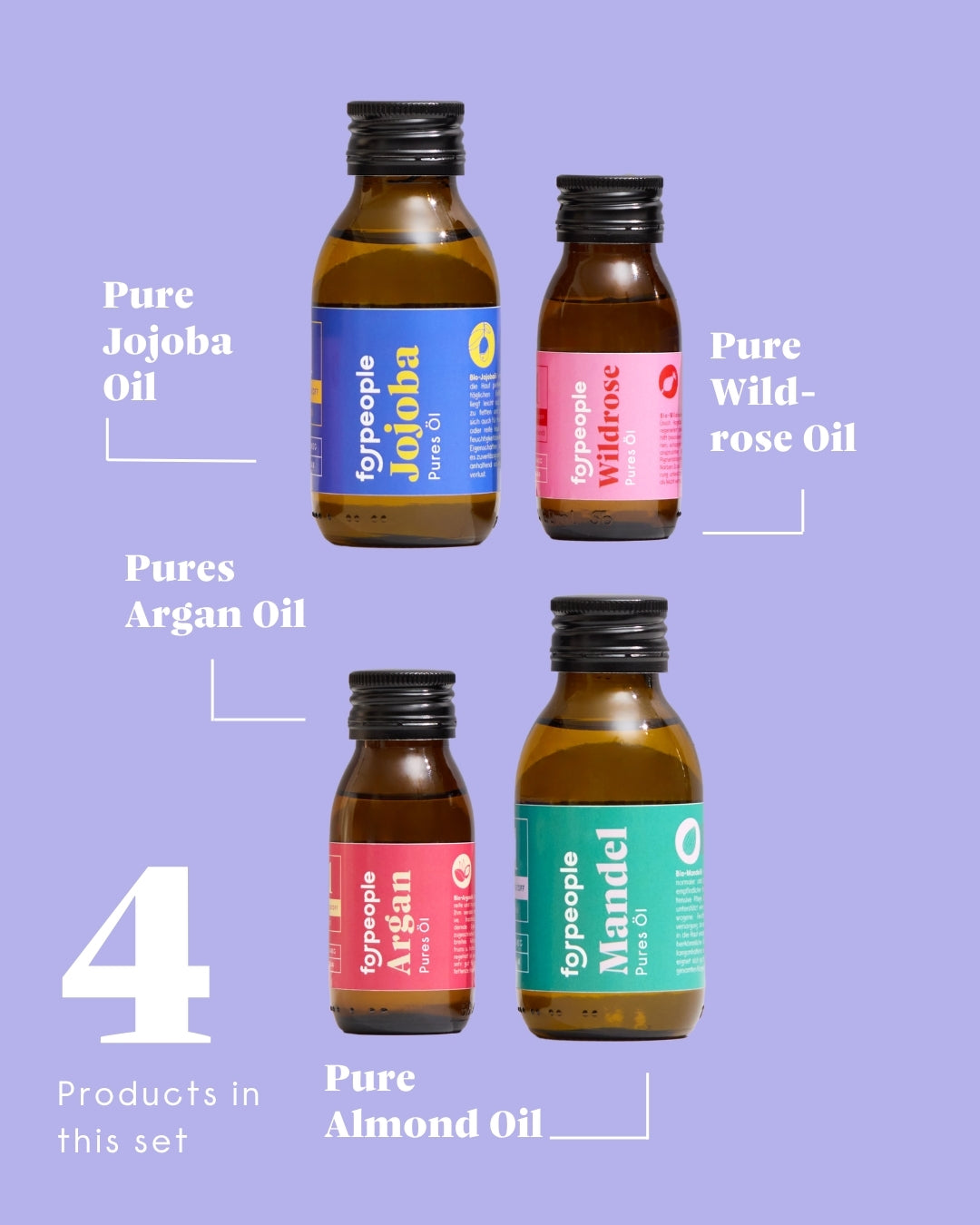
Discover products with rosehip seed oil:

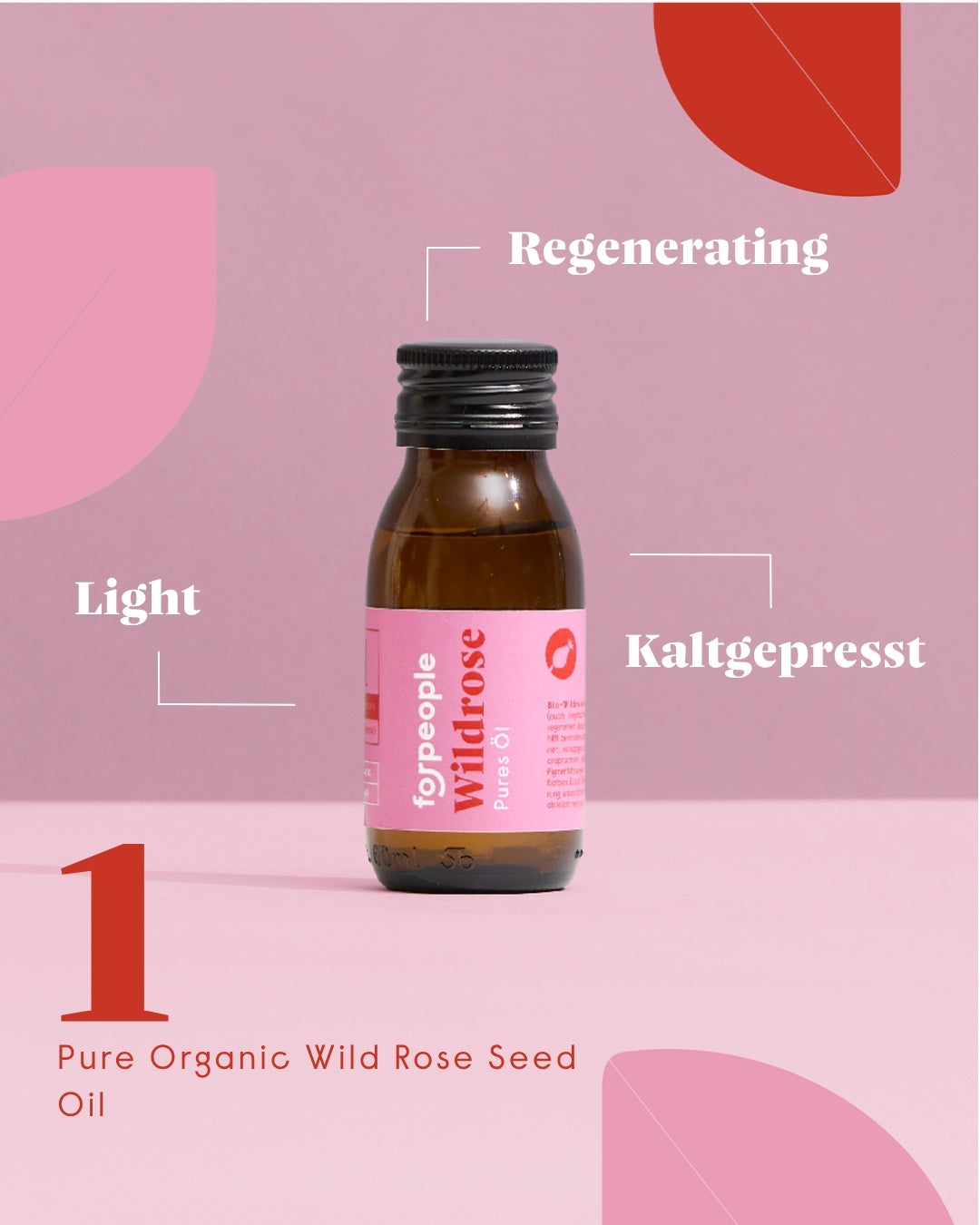

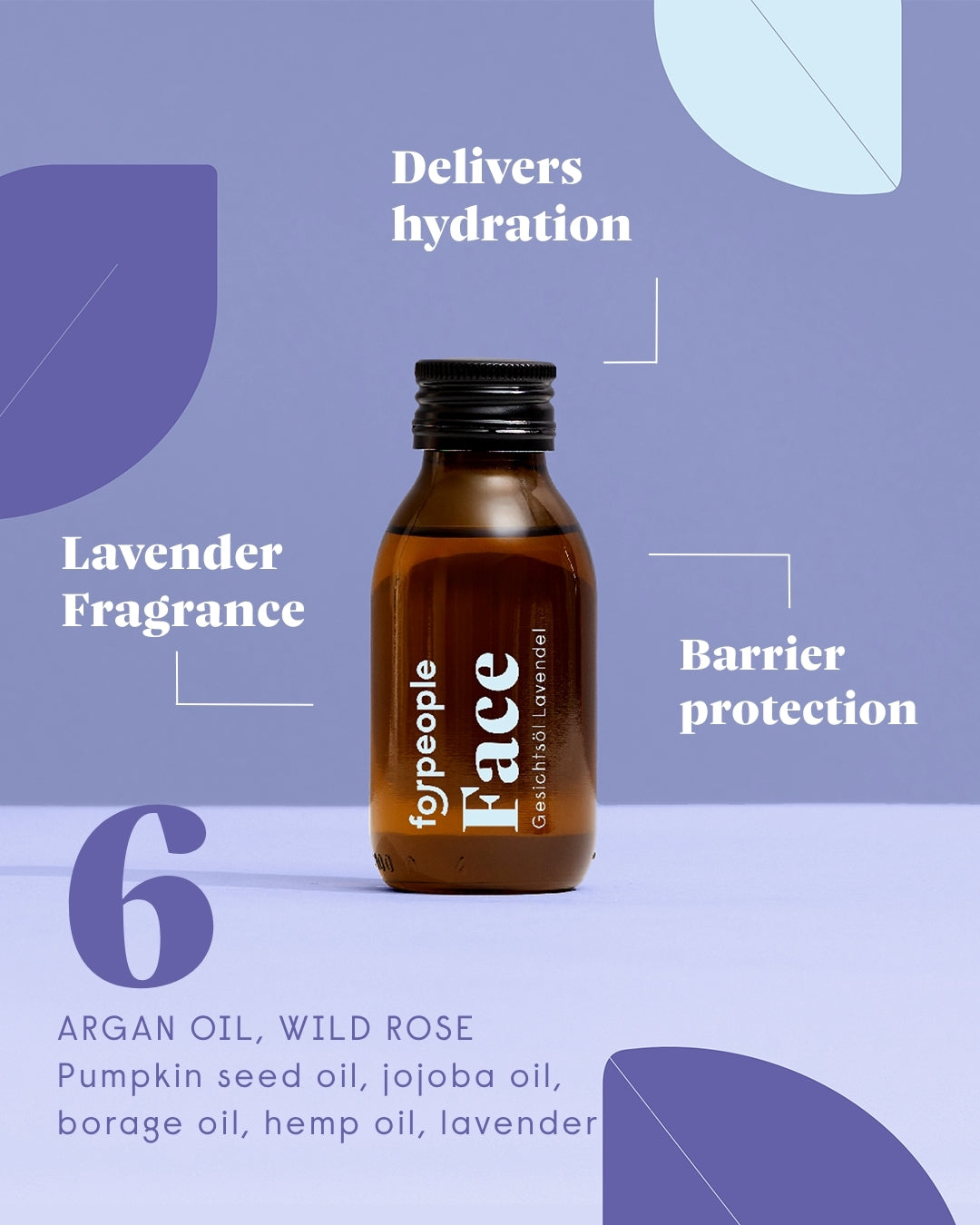

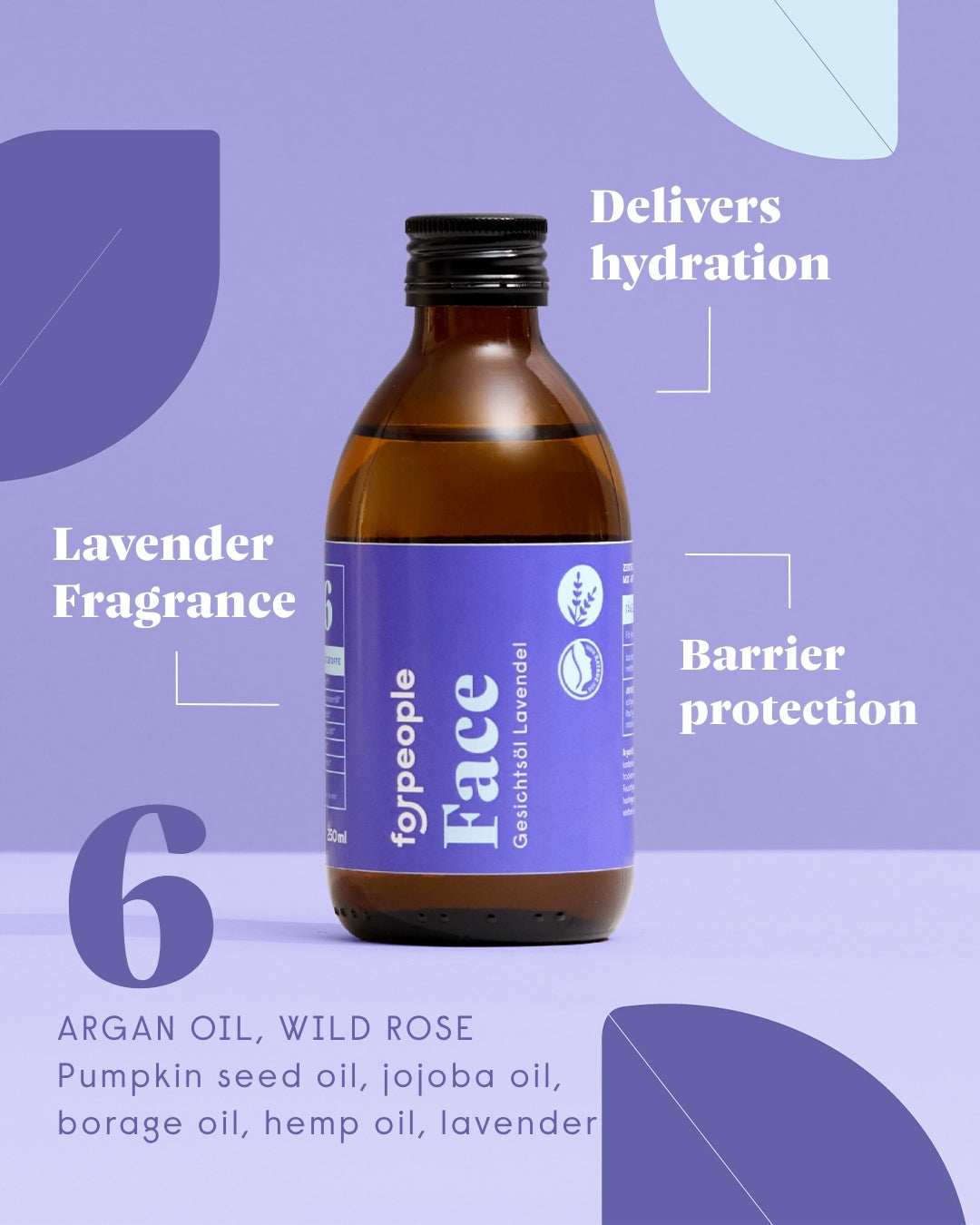
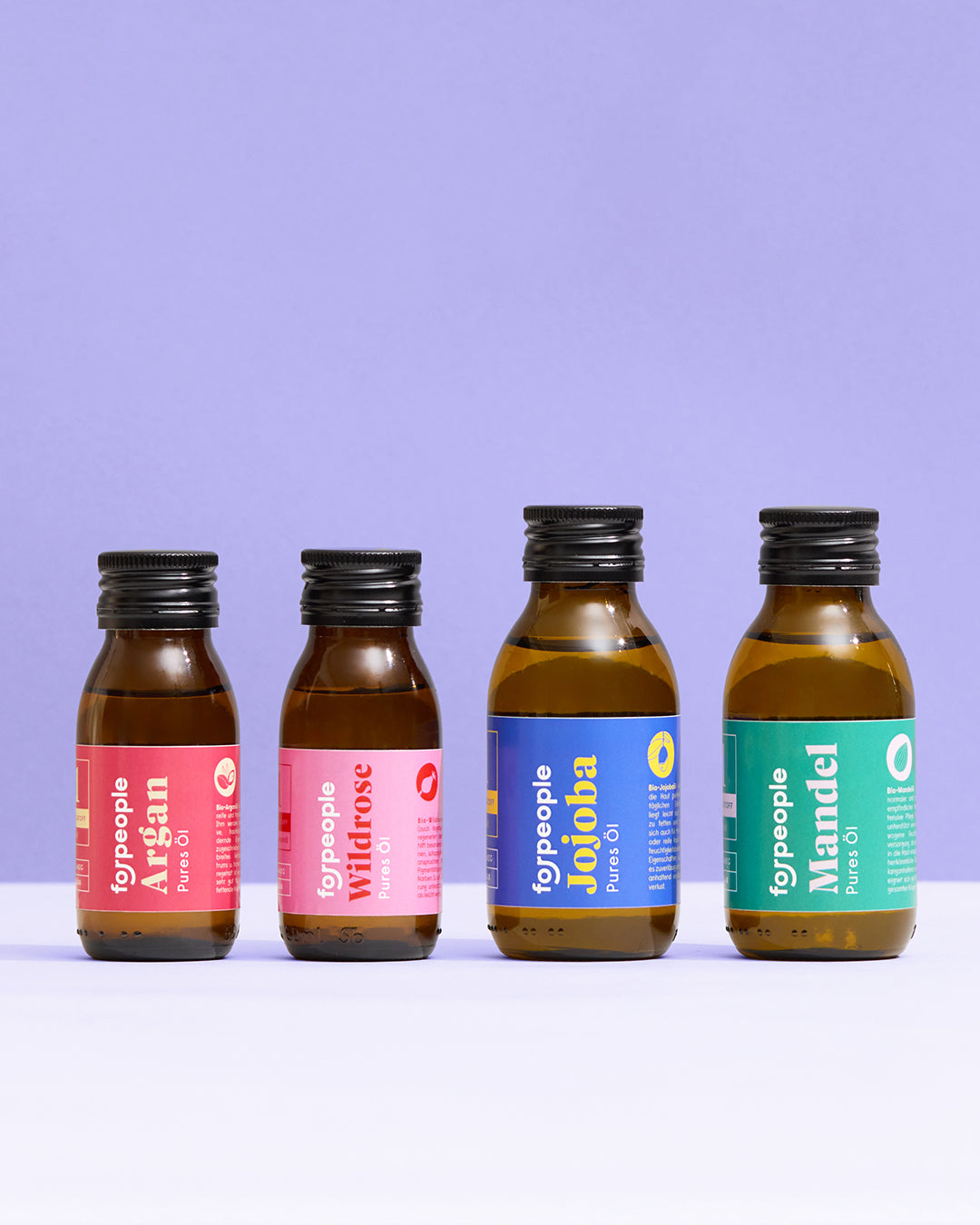
Rosehip seed oil on different skin types
How this light oil feels on different skin types and what it does there.
What does rosehip seed oil do on the skin?
Three properties that define the oil, on the skin and in the bottle.
Polyunsaturated
Linoleic acid (36–55%) and alpha-linolenic acid (17–27%) define the oil (Lin et al. 2018). It is light and absorbs quickly.
Its own antioxidants
Cold-pressed oil contains tocopherols and carotenoids, which slow down rancidity (Grajzer et al. 2015).
Supple skin
The light film of oil helps protect against drying out and keeps the skin supple.
What can you use rosehip seed oil for?
A few drops in your evening routine
One drop per nail, massaged in at night
Found in the Face Oil Lavender, blended with argan and jojoba oil
A few drops on neck and décolletage
One drop, spread over the backs of your hands and fingers
In the evening, on skin exposed to wind and cold
Rosehip seed oil pairs especially well with …
Oils and ingredients that combine well with rosehip seed oil.
Closely related to skin sebum – an ideal carrier base.
Learn moreLocks in actives and seals the care.
Learn moreCombined with rosehip seed oil in the Face Oil Lavender; contains fragrance allergens such as linalool.
Learn moreRosehip seed oil is not a sunscreen; for that, you need UV filters such as zinc oxide.
Learn moreGlossary
Magazine
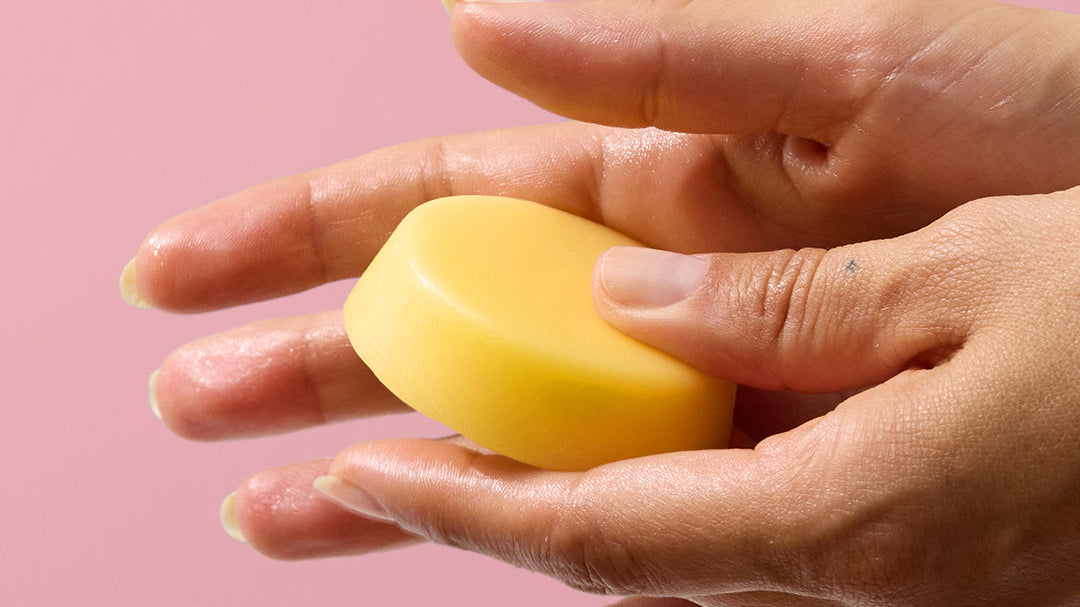
What is in the solid body butter – and why
The solid body butter is made from six raw materials. What each does in the formula, why there is no water in it, where the scent comes from and how tin, refill and travel size belong together.

Preparing a massage at home: oil, warmth, towels
A warm room, a firm surface, two towels and an oil within reach: this is how you prepare a massage at home. With notes on warming the oil and on skin, floor and laundry afterwards.
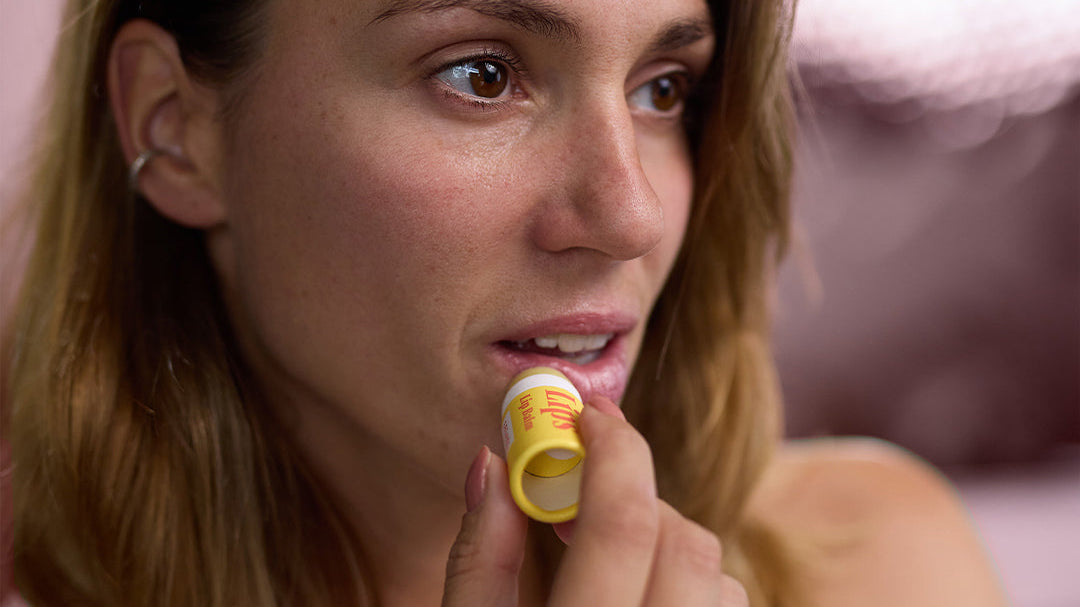
Face and lips through winter: a routine for every day
Cold air outside, dry heated air inside: a short routine for face and lips in the morning, on the go and in the evening, plus the mistakes that happen most often in winter.
