A typical situation in January: the heating has been on for weeks, and after the cold walk home the shower was long and hot. Later, in bed, your shins and lower back start to itch. Often this is skin that lacks water and fat, but sometimes it is something else. In general: Dry skin in winter: what helps with cold and indoor heating.
Why dry skin itches more in winter
Cold air holds little water vapour. When it is heated indoors, its relative humidity drops: outdoor air at 0 °C and 80 percent has only around 20 percent once warmed to 21 °C. A review concludes that low humidity and low temperatures reduce the skin's barrier function; it describes dry, itchy skin in winter as a known phenomenon in northern countries (Engebretsen et al. 2016).
The main cause of itching in dry skin is thought to be a weakened barrier in the stratum corneum, the outermost layer of skin. According to a review, fine nerve fibres in dried-out skin grow up to just beneath the stratum corneum, and the skin becomes oversensitive to stimuli; much of this comes from animal studies (Moniaga et al. 2020). Scratching damages the stratum corneum further, and the itching returns. Experts call this the itch-scratch cycle.
Winter itch has a name of its own: pruritus hiemalis, from the Latin hiems, winter. As early as 1966 a paper described it as a frequent complaint among older people (Stern 1966). The current European guideline on chronic pruritus links itch in winter above all to very dry skin in older age and to certain skin diseases (Weisshaar et al. 2025). So itching in winter is often a side effect of dry skin, but not always.
Showering in winter: temperature, length, frequency
Warm water and soap wash fats and water-binding substances out of the stratum corneum; more on this in Why does skin feel tight after a shower?
Temperature: In one study, 50 healthy volunteers held one hand in water at about 41 °C and the other in water at about 11 °C for ten minutes. Water loss through the palms rose from 25.75 to 58.58 grams per square metre per hour after the warm water and to 34.96 after the cold (Herrero-Fernandez et al. 2022). So lukewarm means: well below what counted as hot there.
Length and frequency: As general measures, the European guideline on chronic pruritus lists lukewarm water, baths of no more than 20 minutes, patting the skin dry and moisturising every day, especially after showering. It counts frequent washing and bathing among the things that dry the skin, along with sauna and a dry climate (Weisshaar et al. 2025). In winter, not every day has to be a shower day with soap.
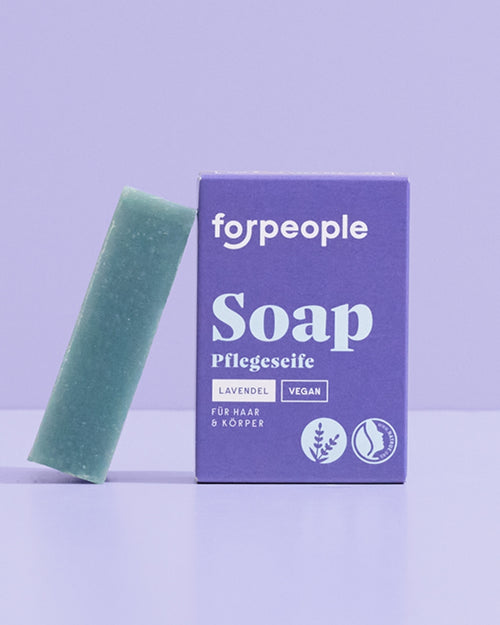
Soap: Armpits, groin and feet need soap; on legs, arms and back, water is usually enough. Our bar soaps, such as the Aloe Vera Soap – Lavender, are classic soaps made by saponifying plant oils: alkaline and with essential oils. For people with persistent itching, the guideline lists non-alkaline cleansers without fragrance, known as syndets, as well as shower and bath oils. Our soaps do not fall into that group. More in Curd soap, olive oil soap, Aleppo, glycerin soap: types of soap compared and Shower oil or body oil: what is the difference?
A shower routine for winter, as common practice:
- Shower lukewarm for a few minutes, with soap only on armpits, groin and feet.
- If you like, turn off the water at the end and spread a few drops of body oil over your wet skin. This makes the floor slippery.
- Pat dry instead of rubbing; the skin may stay slightly damp.
- Moisturise straight away, wait a moment, then get dressed.
On timing: How soon should you moisturise after a shower? The 3-minute rule.
Care with fat: oil on wet skin, butter for dry patches
Oils, butters and waxes contain no water. They leave a film on the skin that slows evaporation. A review advises applying such oils after bathing to skin that has been patted dry but is still damp (Sethi et al. 2016); the film then holds the water that entered the stratum corneum in the shower.
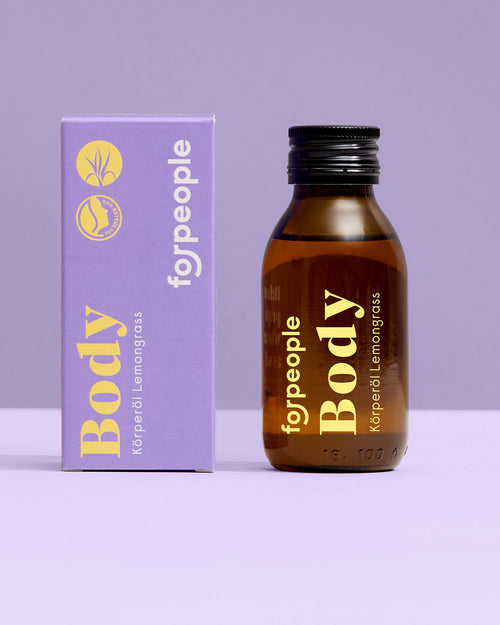
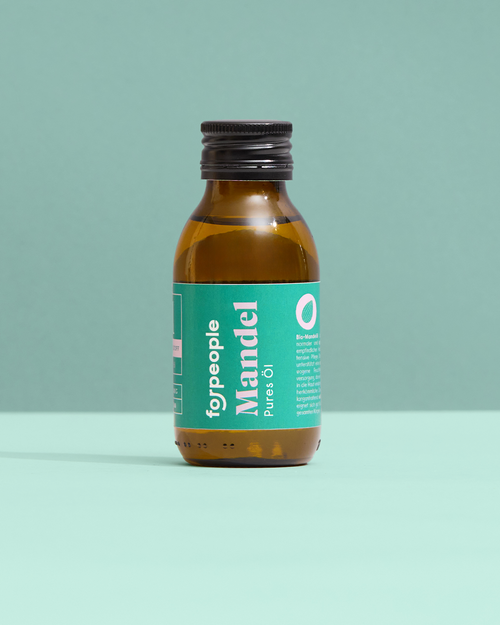
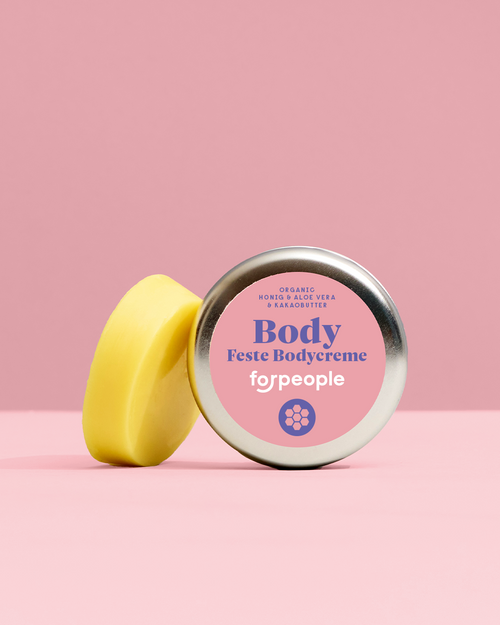
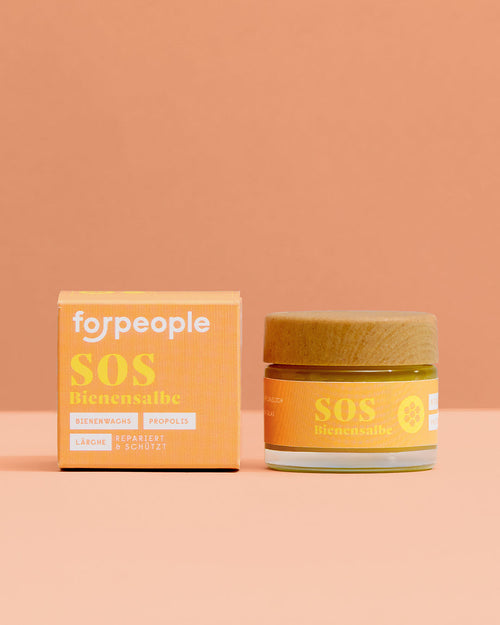
For legs, arms and back, a thin oil works well, such as the Body Oil - Lemongrass made from four plant oils with lemongrass essential oil. Without added fragrance there is the Almond Oil - pure, which according to its ingredient list is almond oil only. For shins, knees and elbows there is the Solid Body Butter - Beeswax & Aloe Vera made from cocoa butter, olive oil, beeswax, sunflower oil, shea butter and aloe vera leaf extract, without essential oils. It leaves a more noticeable film, see What is in the solid body butter – and why. For small rough patches there is the Beeswax Salve – Larch & Mandarin in a Glass Jar with larch resin, propolis and essential oils; read Colophony allergy, propolis, beeswax: symptoms and advice first.
Care protects dry skin from drying out further and keeps it supple. Whether the itching stays depends on whether dryness really was the cause; according to the guideline, controlled studies on care products for normal-looking, itchy skin are lacking.
| Type of care | Composition | Form | Use in winter |
|---|---|---|---|
| Body oil, e.g. Body Oil - Lemongrass or Almond Oil - pure | plant oils without water; lemongrass with essential oil, almond oil without | liquid, thin film | on wet or damp skin, large areas |
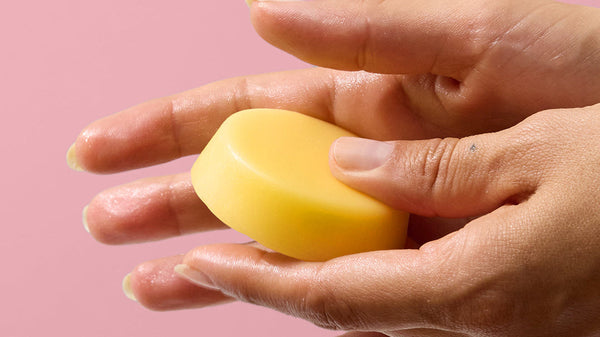
| Solid Body Butter - Beeswax & Aloe Vera | plant butters, oils, beeswax, without water or emulsifier | solid, melts on warm skin | dry patches such as shins, knees |
| Salve, e.g. Beeswax Salve – Larch & Mandarin | oils, beeswax, larch resin, propolis, essential oils | soft to tacky, clear film | small rough patches, thinly |
| Body lotion | water, oil, emulsifier, usually humectants, preserved | creamy to liquid, absorbs faster | after showering or in between |
| Cream with urea | emulsion with urea as a humectant | cream or lotion | binds water in the stratum corneum |
We do not sell body lotion, urea cream or shower oil. When fat and when moisture is needed is explained in Rich cream or moisturiser? What dry skin needs and Urea or water-free cream? Rough heels and dry hands.
Legs, back, clothing and indoor air
Typical areas: On the shins the skin has little fat of its own, trousers and tights rub, and many people shave there; background in Why are shins dry and flaky in winter? The back is hard to reach and often skipped when moisturising; oil on wet skin is easiest to spread there with a flat hand. On hips and waist, waistbands and elastic rub. This is practical experience, not a measured rule.
Clothing: The guideline lists soft, breathable clothing such as cotton and advises dressing in layers to avoid sweating. Whether a jumper feels scratchy depends, according to a review, mainly on fibre diameter: coarse fibres from about 30 micrometres stimulate nerve endings in the skin, whatever the material; very fine merino wool hardly does (Zallmann et al. 2017). So a thin layer of cotton belongs under coarse knitwear.
Indoor air and night: Do not heat more than necessary, and air rooms briefly with the window wide open rather than for a long time with it tilted. For the night, the guideline lists a low room temperature. That itching is often worse at night may be due to daily rhythms of messenger substances, skin temperature and barrier function (Patel et al. 2007).
Children: The same applies to children: bathe briefly and lukewarm, then moisturise. For children under three, use products that are expressly labelled for that age; according to the product page, the beeswax salve is not intended for them. More in Dry children's hands in winter: what helps.
When to seek medical advice?
Itching is a symptom with many possible causes, and dry skin is only one of them. Cosmetics care for the skin; they do not treat diseases. See a doctor if any of these points applies:
- The itching persists. From six weeks on, experts speak of chronic pruritus, whose cause should be investigated thoroughly (Weisshaar et al. 2025). Go sooner if nothing changes after two to three weeks with an adjusted routine.
- It itches at night so badly that you wake up.
- It itches without any visible change to the skin. According to the guideline, internal causes then come into question too, such as diseases of the kidneys, liver or thyroid, diabetes or iron deficiency, as well as medication, pregnancy or disorders of the nerves.
- A rash appears: redness, blisters, hives, bumps, weeping or crusted areas, heavy scaling, net-like cracks. According to the guideline, winter itch in older people often occurs with asteatotic eczema, and frequently also with atopic dermatitis or psoriasis.
- General symptoms appear: fever, night sweats, unintended weight loss or severe tiredness, especially together with itching all over the body at night. The guideline names this as a sign of more serious disease; have it checked promptly.
- It itches badly after every shower. According to the guideline, itching as the skin cools after a warm shower can come from dry skin, but can also be a sign of rare diseases, for example of the blood.
- You are taking a new medication. Do not stop it on your own; talk to your doctor.
- The skin is scratched open, bleeding or weeping.
- A child has been scratching for weeks, especially at night. According to the guideline, in children it is usually a skin disease, most often atopic dermatitis.
Until your appointment: care only on unbroken skin, keep fingernails short, do not try new products. Later, test anything new on a small area first: Trying a new product: how do I test it on a small area?
Frequently asked questions
Why does my skin itch after showering in winter?
Warm water and soap wash fat out of the stratum corneum, and afterwards the water evaporates quickly in heated indoor air. If it itches badly after every shower, even without dry skin, have it checked.
How warm, how long and how often should I shower in winter?
Lukewarm, a few minutes and no more often than necessary. The guideline gives no temperature in degrees; in the study cited, water at about 41 °C counted as hot. For baths it gives a maximum of 20 minutes.
Is a cold rinse a good idea?
Many people find cold water pleasant on itchy skin; according to the guideline there are no studies on this. In the study cited, cold water also increased water loss through the skin, just less than warm water. You still moisturise afterwards.
Oil on wet skin or body butter afterwards?
Both work, and together too: oil for large areas, butter for individual dry patches. If you apply oil in the shower, the floor becomes slippery. The comparison is in Body Oil or Body Butter – Which One When?
Can I moisturise itchy areas?
Yes, if the skin is just dry and unbroken. If it is red, scratched or open, do not apply anything; according to their safety notes, our products are not meant for injured or irritated skin.
I want no fragrance on itchy skin. What fits?
According to their ingredient lists, the Almond Oil - pure and the Solid Body Butter contain no essential oils; the Body Oil - Lemongrass, the beeswax salve and the soaps do. Overview: Without fragrance and essential oils: ingredients at a glance.
At forpeople
Our oil, butter and salve are water-free; the soaps contain water.
- Solid Body Butter - Beeswax & Aloe Vera, 40 g, €9.90: six ingredients, without essential oils; refillable with the refill (40 g, €7.90).
- Body Oil - Lemongrass, 100 ml, €16.90: four plant oils with turmeric extract and lemongrass essential oil.
- Beeswax Salve – Larch & Mandarin in a Glass Jar, 50 g, €12.90: oils, beeswax, larch resin, propolis and essential oils, for small rough patches.
- Aloe Vera Soap – Lavender, 75 g, €8.90: made from olive and coconut oil with shea butter, without added glycerin, alkaline; the same base formula comes in five scents.
According to the product pages, the following applies to all four: avoid contact with the eyes, do not use on injured or irritated skin, and stop using it if your skin becomes irritated.
More: Dry skin in winter: what helps with cold and indoor heating
Sources
- Engebretsen KA, Johansen JD, Kezic S, Linneberg A, Thyssen JP (2016): The effect of environmental humidity and temperature on skin barrier function and dermatitis. Journal of the European Academy of Dermatology and Venereology 30(2): 223–249. https://doi.org/10.1111/jdv.13301
- Moniaga CS, Tominaga M, Takamori K (2020): Mechanisms and Management of Itch in Dry Skin. Acta Dermato-Venereologica 100(2): adv00024. https://doi.org/10.2340/00015555-3344
- Stern FH (1966): Pruritus hiemalis: a frequent disturbance among the elderly. Psychosomatics 7(4): 248–250. https://doi.org/10.1016/S0033-3182(66)72122-7
- Weisshaar E, Müller S, Szepietowski JC, Dalgard F, Garcovich S, Kupfer J, Gimenez-Arnau A, Lambert J, Mettang T, Misery L, Savk E, Tschachler E, Wallengren J, Ständer S (2025): European S2k Guideline on Chronic Pruritus. Acta Dermato-Venereologica 105: adv44220. https://doi.org/10.2340/actadv.v105.44220
- Herrero-Fernandez M, Montero-Vilchez T, Diaz-Calvillo P, Romera-Vilchez M, Buendia-Eisman A, Arias-Santiago S (2022): Impact of Water Exposure and Temperature Changes on Skin Barrier Function. Journal of Clinical Medicine 11(2): 298. https://doi.org/10.3390/jcm11020298
- Sethi A, Kaur T, Malhotra SK, Gambhir ML (2016): Moisturizers: The Slippery Road. Indian Journal of Dermatology 61(3): 279–287. https://doi.org/10.4103/0019-5154.182427
- Zallmann M, Smith PK, Tang MLK, Spelman LJ, Cahill JL, Wortmann G, Katelaris CH, Allen KJ, Su JC (2017): Debunking the Myth of Wool Allergy: Reviewing the Evidence for Immune and Non-immune Cutaneous Reactions. Acta Dermato-Venereologica 97(8): 906–915. https://doi.org/10.2340/00015555-2655
- Patel T, Ishiuji Y, Yosipovitch G (2007): Nocturnal itch: why do we itch at night? Acta Dermato-Venereologica 87(4): 295–298. https://doi.org/10.2340/00015555-0280