In the shop they often sit side by side: a green cube from Aleppo, a block of Marseille soap, curd soap in paper, a transparent bar and a “cleansing bar”. What sets them apart usually only shows in the ingredient list.
What all soaps have in common
Soap is made by saponification: animal or plant fats such as tallow, olive, palm or coconut oil react with a strong lye. Sodium hydroxide gives solid soaps, potassium hydroxide soft to liquid ones (Mijaljica et al. 2022). Glycerin forms as a second product. Whether it stays in the bar depends on the method. The reaction is explained step by step in Is there still lye in natural soap? Saponification explained.
All soaps are alkaline. A review gives pH values of 8.5 to 11 for soap and 5.5 to 7 for syndets (Mijaljica et al. 2022). In one series of measurements, 53 of 64 commercial soaps were between pH 9 and 10 (Tarun et al. 2014). The skin surface is slightly acidic, around pH 4.7 on average; even tap water raises the value for up to six hours (Lambers et al. 2006).
The INCI list tells you which fats were saponified. It names either the starting materials, for example “Olea Europaea Fruit Oil, Aqua, Sodium Hydroxide”, or the finished soap salts: Sodium Tallowate stands for soap made from tallow, Sodium Palmate for palm oil, Sodium Cocoate for coconut oil, Sodium Olivate for olive oil. Potassium soaps carry “Potassium” in the name. The plain-English names are in INCI names explained, and how the order works is in How to Read an INCI List.
Curd soap, soft soap, ox gall soap: soaps for the household and laundry
Curd soap (German “Kernseife”) is a solid sodium soap. Its name comes from the method: fats are boiled with lye into a thick soap paste. When salt is added, the soap separates out as the “curd”, and the glycerin is removed with the remaining lye (Altmeyer 2024). Curd soap therefore contains only a little glycerin. In the household it has long been used to pre-treat stains. Many toilet soaps are based on odour-neutral curd soap with added fragrance, colour and superfatting agents (Altmeyer 2024).
Soft soap (German “Schmierseife”) is a potassium soap: it is made with potassium hydroxide, stays semi-solid to liquid and is mainly used for cleaning in the home (Altmeyer 2024).
Ox gall soap (German “Gallseife”) is a stain remover made from curd soap and ox bile, whose enzymes boost the action of the soap. The Hamburg consumer advice centre lists it for fatty, protein and dye stains such as oil, blood or fruit: dampen, rub in, leave for a few minutes, rinse with warm water (Verbraucherzentrale Hamburg). Ox gall soap is not meant for body care, and because of the ox bile it is not vegan.
Olive oil soap, Marseille soap and Aleppo soap: soaps made with olive oil
Olive oil soap is a sodium soap whose fat is entirely or mainly olive oil. Olive oil contains mostly unsaturated fatty acids. Soaps made from them dissolve more easily in water; saturated fatty acids make a bar firmer, and the shorter ones from coconut oil make it lather more (Prieto Vidal et al. 2018). Pure olive oil soap is therefore rather soft and lathers less, which is why coconut oil is often added.
Marseille soap traditionally means a soap from the Marseille region that is boiled in a large cauldron. The local makers have described their method in a specification filed with the French intellectual property office INPI: the oils are boiled with sodium hydroxide for at least six hours, sea salt separates off the glycerin-rich lye, and washing the soap paste rinses out glycerin, impurities and unsaponified fatty acids. Only plant oils are allowed, no perfume, no colourant (UPSM 2022). So Marseille soap is not automatically olive oil soap: the green kind contains olive and coconut oil, sometimes palm oil, the light beige kind mainly coconut and palm oil.
Aleppo soap comes from Syria and is made from olive oil, laurel oil and lye. UNESCO recognised the craft as intangible cultural heritage in 2024: in autumn, wild laurel berries are boiled and the oil is skimmed off. In winter it is cooked with olive oil and lye, poured out, cut into cubes, stamped and dried for six to nine months (UNESCO 2024).
Glycerin soap, syndet and handmade natural soap
Glycerin soap, also called transparent soap, contains a lot of free glycerin. Added glycerin, sugar or ethanol stop the setting soap from crystallising, so it stays clear (Altmeyer 2024). In the INCI list, glycerin then appears near the top, often with Sucrose or Alcohol. Whether synthetic surfactants are added as well also only shows in the list. Glycerin binds water and is therefore used as a humectant in creams (Does glycerin dry out the skin?). In a damp bathroom, this also means a soap rich in glycerin goes soft more quickly.
A syndet (short for “synthetic detergent”) is not a soap. Its surfactants are not made by saponification; typical ones are isethionates and sulfosuccinates, in the INCI list for example Sodium Cocoyl Isethionate. This allows a pH of 5.5 to 7, and 5.0 to 5.5 in newer syndets (Mijaljica et al. 2022). Syndets come as liquids and as solid cleansing bars, so the solid form alone does not tell you whether a bar is soap. For a comparison when washing your hands, see Bar soap or liquid soap: which is better for your hands?
Handmade natural soap is no more a protected term than natural cosmetics (Natural cosmetics explained). It usually means a soap made from plant oils in small batches by the cold or hot process. In the cold process, saponification takes 18 to 24 hours, and the soap then matures for three to four weeks (Prieto Vidal et al. 2018). No salt is used to separate the soap, so the glycerin stays in the bar. It is often superfatted: less lye is used than all the oils would need, so part of the oil stays unsaponified (Altmeyer 2024); in one study this was 6 percent (Prieto Vidal et al. 2018). “Superfatted” or “re-fatting” claims usually refer to this. The amount is not on the label, and the soap stays alkaline anyway.
Types of soap compared and what each is good for
| Type of soap | Fats and lye | How it is made | Glycerin in the bar | pH | Typical use |
|---|---|---|---|---|---|
| Curd soap | various fats, sodium hydroxide | boiled, salted out | little | alkaline | household, hands |
| Soft soap | fats or oils, potassium hydroxide | boiled | usually retained | alkaline | household |
| Ox gall soap | curd soap, ox bile | as curd soap | little | alkaline | stains |
| Olive oil soap | mainly olive oil, sodium hydroxide | depends on the maker | depends on the method | alkaline | hands, body |
| Marseille soap | plant oils only, sodium hydroxide | cauldron, salted out, washed | largely washed out | alkaline | body, laundry |
| Aleppo soap | olive and laurel oil, lye | boiled, dried for 6 to 9 months | no uniform information | alkaline | hands, body |
| Glycerin soap | soap with glycerin, sugar or ethanol | sets clear | a lot, added | alkaline if pure soap | hands, body |
| Syndet | synthetic surfactants | without saponification | only if added | 5.0 to 7 | hands, body, face |
| Handmade natural soap | mostly plant oils, sodium hydroxide | cold or hot, often superfatted | stays in the bar | alkaline | hands, body |
| forpeople bar soaps | olive, coconut, castor, sunflower, argan oil, shea butter; sodium hydroxide | according to the product page saponified and made by hand | according to the manufacturer no added glycerin | alkaline | hands, body |
| What for | Obvious choice | What to watch |
|---|---|---|
| Pre-treating stains | ox gall soap, curd soap | rub in, leave briefly, rinse |
| Washing hands, showering | bar soap or syndet | lukewarm water, rinse well; if your skin feels tight, apply care afterwards (Why does skin feel tight after a shower?) |
| Face | soap or syndet, depending on your skin | no scrub soap (Can I use bar soap on my face?) |
| Hair | soap only with a transition | hard water and acid rinse (Washing hair with soap) |
| Skin feels tight after any soap | syndet with a lower pH | wash less often and for shorter, then moisturise |
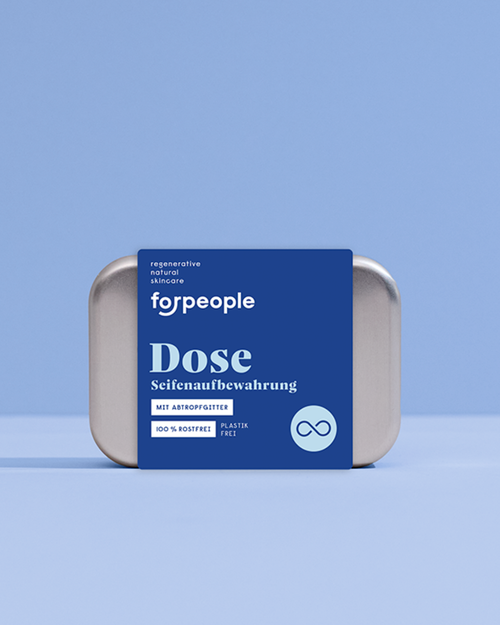
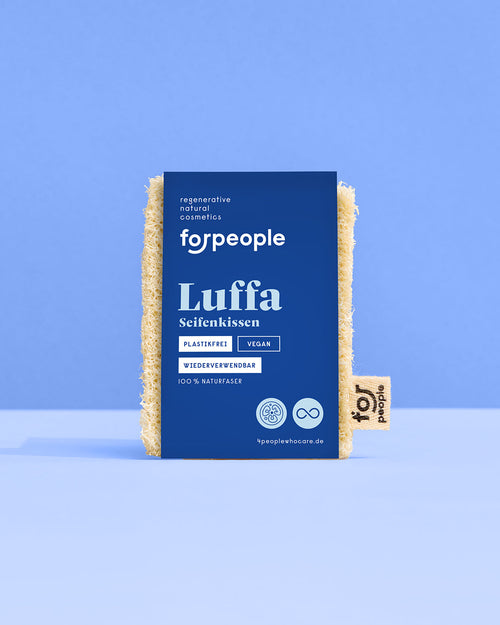
Soft bars such as olive oil, glycerin and superfatted soaps need a rest where they can dry, for example the Aluminium Soap Tin with Drainage Grid or the Luffa Soap Dish – Natural (more in Mushy bar soap: causes and proper storage). If your skin stays red, cracked or flaky for weeks despite care, or keeps itching, see a doctor. On showering in the cold season: Itchy skin in winter: showering, care and when to see a doctor.
Where our bar soaps fit in
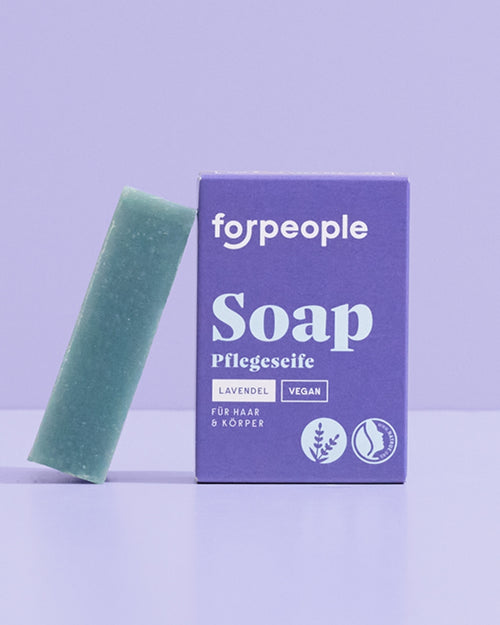
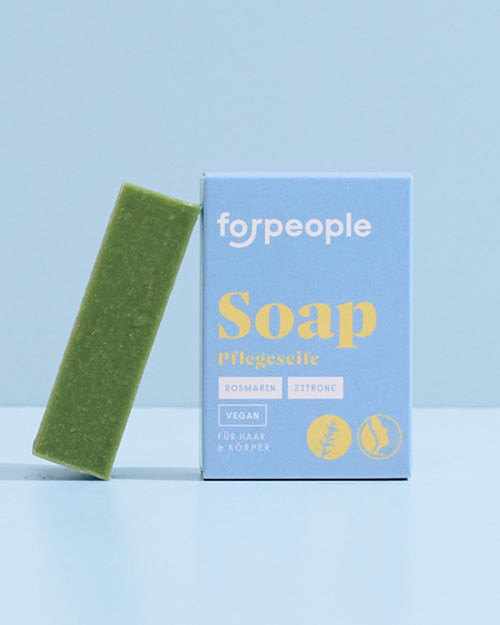
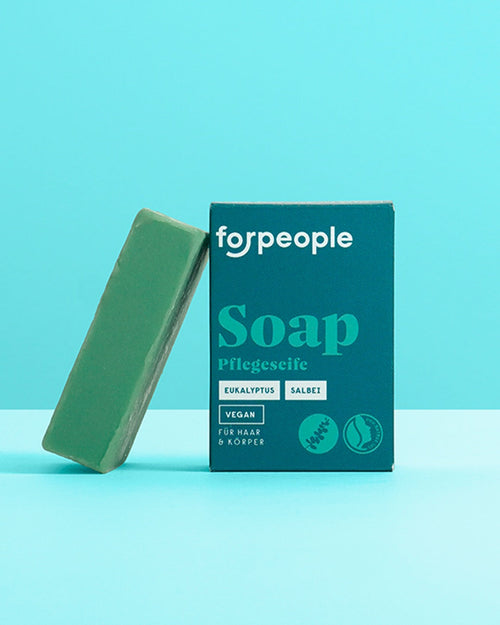
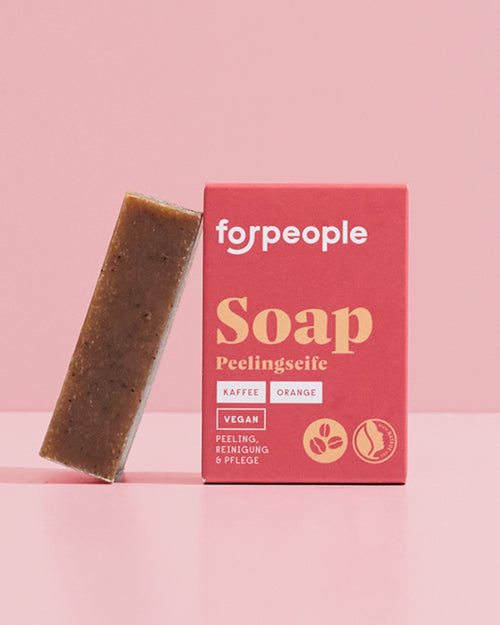
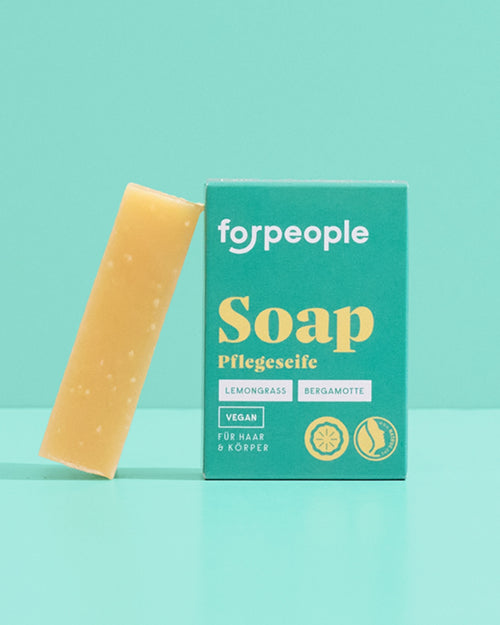
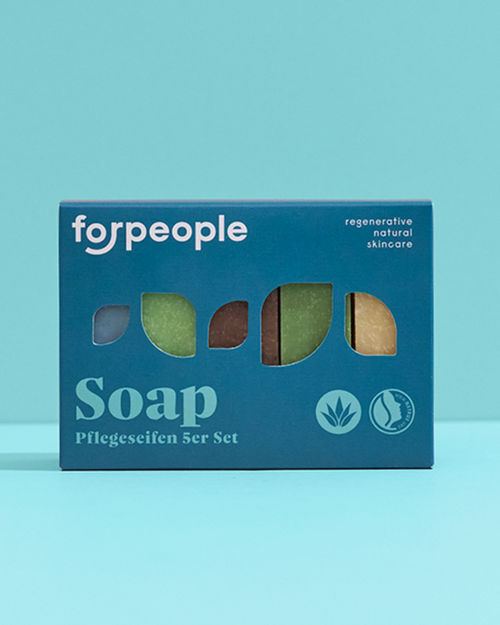
According to their ingredient lists, the five forpeople bar soaps (75 g each) are sodium soaps made from plant oils, with olive oil in first and coconut oil in second place. In the Aloe Vera Soap – Lavender, the Aloe Vera Soap – Rosemary & Lemon, the Aloe Vera Soap – Eucalyptus & Sage and the Aloe Vera Soap with Scrub - Coffee & Orange, water and sodium hydroxide follow, then among other things shea butter, castor, sunflower and argan oil, calendula flowers, essential oils and aloe vera extract. In the Aloe Vera Soap - Lemongrass, aloe juice is in third place and replaces part of the water (Aloe Vera Instead of Water: What It Means).
So they are not pure olive oil soaps, because coconut oil is added, and not Aleppo soaps, as they contain no laurel oil. Nor are they potassium soaps, glycerin soaps or syndets: the INCI list names sodium hydroxide, neither alcohol nor sugar, and no synthetic surfactants. According to the manufacturer, the soaps contain no added glycerin. According to the product pages, they are saponified from organic plant oils and sodium hydroxide and made by hand in Germany; they are vegan, and their scent comes from essential oils. Lavender and Eucalyptus & Sage also contain a colour pigment (CI 77007 and CI 77288), Coffee & Orange ground coffee and cocoa. Fragrance components such as Linalool or Limonene are listed individually (Essential Oils and Fragrance Allergens).
What is not stated is whether they are made by the cold or hot process, how long they mature and how much they are superfatted. Like every soap, they are alkaline. They are meant for hands and body, the scrub soap not for the face; according to the product page, they should not be used on broken or irritated skin.
Frequently asked questions
What is the difference between curd soap and natural soap?
Curd soap is salted out, which removes the glycerin. In handmade natural soap it stays in the bar, and the soap is often superfatted. “Natural soap” is not a protected term.
Is Marseille soap always made from olive oil?
No. According to the Marseille makers’ specification, the green kind contains olive and coconut oil, sometimes palm oil, the light beige kind mainly coconut and palm oil. Both share the cauldron method without perfume or colourant.
Can I use ox gall soap on my skin?
Ox gall soap is a stain remover for textiles, not for body care. Soaps and syndets sold as cosmetics are meant for hands and body.
Is glycerin soap better for dry skin?
Not as a general rule. Without synthetic surfactants, glycerin soap is alkaline too, and it is rinsed off. With dry skin, what counts is the care afterwards, see Rich cream or moisturiser? What dry skin needs.
Is a syndet a soap?
No. A syndet cleanses with synthetic surfactants instead of soap salts and can be set to a pH of around 5.5. Solid syndets are often called “cleansing bars”.
How can I tell the type of soap from the INCI list?
Oils with Sodium Hydroxide or names like Sodium Olivate mean a sodium soap, “Potassium” a potassium soap. Glycerin near the top with Sucrose or Alcohol points to glycerin soap, isethionates or sulfosuccinates to a syndet.
Do forpeople soaps contain glycerin?
According to the manufacturer, our bar soaps contain no added glycerin. Glycerin forms in every saponification; our INCI lists name the starting materials, that is oils, water and sodium hydroxide.
At forpeople
Our bar soaps are alkaline soaps made from plant oils with essential oils; there is no unscented variety. Each one is also available in packs of 3, 5 and 10 (€24.90, €37.90, €69.90).
- Aloe Vera Soap - Lemongrass, 75 g, €8.90: with aloe juice, lemongrass and bergamot oil.
- Aloe Vera Soap – Lavender, 75 g, €8.90: with lavandin and lavender oil.
- Organic Soap Set – 5 Scents in a Value Pack, 5 soaps, €39.90: all five varieties.
- Aluminium Soap Tin with Drainage Grid, €8.90: with a removable grid.
More on this: Is there still lye in natural soap? · Bar soap or liquid soap · Mushy bar soap · INCI names explained
Sources
- Mijaljica D, Spada F, Harrison IP (2022): Skin Cleansing without or with Compromise: Soaps and Syndets. Molecules 27(6): 2010. https://doi.org/10.3390/molecules27062010
- Prieto Vidal N, Adeseun Adigun O, Pham TH, Mumtaz A, Manful C, Callahan G, Stewart P, Keough D, Thomas RH (2018): The Effects of Cold Saponification on the Unsaponified Fatty Acid Composition and Sensory Perception of Commercial Natural Herbal Soaps. Molecules 23(9): 2356. https://doi.org/10.3390/molecules23092356
- Tarun J, Susan J, Suria J, Susan VJ, Criton S (2014): Evaluation of pH of Bathing Soaps and Shampoos for Skin and Hair Care. Indian J Dermatol 59(5): 442–444. https://doi.org/10.4103/0019-5154.139861
- Lambers H, Piessens S, Bloem A, Pronk H, Finkel P (2006): Natural skin surface pH is on average below 5, which is beneficial for its resident flora. Int J Cosmet Sci 28(5): 359–370. https://doi.org/10.1111/j.1467-2494.2006.00344.x
- Altmeyer P (2024): Seife. Altmeyers Enzyklopädie, Fachbereich Kosmetologie, Stand 21.08.2024. https://www.altmeyers.org/de/kosmetologie/seife-109709
- Verbraucherzentrale Hamburg: Wie geht der Fleck raus? Abschnitt „Die gute alte Gallseife“. https://www.vzhh.de/themen/umwelt-nachhaltigkeit/wasch-reinigungsmittel/wie-geht-der-fleck-raus
- Union des Professionnels du Savon de Marseille (UPSM) (2015, revised 2022): Indication géographique « Savon de Marseille », Cahier des charges. INPI database of geographical indications. https://base-indications-geographiques.inpi.fr/sites/default/files/Cdc_UPSM%20%2B%20statuts.pdf
- UNESCO (2024): Craftsmanship of Aleppo Ghar soap. Representative List of the Intangible Cultural Heritage of Humanity, 19.COM. https://ich.unesco.org/en/RL/craftsmanship-of-aleppo-ghar-soap-02132