


What happens in the stratum corneum when you shower
The stratum corneum is the top layer of the skin. It consists of flat, dead cells with ordered lipids between them. The cells carry water-soluble substances that bind water; together they are called the natural moisturising factor. The structure is shown on the page The skin barrier explained simply. In the shower, two things act on this layer.
- Water: The stratum corneum takes up water, and the water dissolves water-binding substances out of it. In one study, eleven healthy volunteers soaked an area of the forearm for ten minutes. A measure of how the stratum corneum accumulates moisture was clearly lower afterwards, and stayed so for five hours. The researchers explain this by water-binding substances having been washed out (Visscher et al. 2003).
- Surfactants: They do not only remove dirt, they also interact with the lipids and proteins of the stratum corneum. The result can be tightness and dryness after washing. How strongly depends on the individual surfactant and on pH: in experiments, alkaline solutions at pH 10 made the stratum corneum swell more and changed its lipids, even without surfactants (Ananthapadmanabhan et al. 2004).
Where the feeling of tightness comes from
How a dry stratum corneum turns into a sensation is explained by a 2023 paper from Stanford University, with researchers from a cosmetics manufacturer among the authors (Bennett-Kennett et al. 2023):
- When the stratum corneum loses water and lipids, it contracts and becomes stiffer.
- It is firmly attached to the layers beneath and cannot shrink freely. Tensile stress builds up in it.
- That stress deforms the tissue beneath slightly, down to the touch receptors at the boundary between epidermis and dermis, the Merkel cells.
- The touch receptors and their nerve fibres report the deformation to the brain. You perceive it as tightness.
The team measured on isolated stratum corneum how much stress builds up during drying after six cleansers and nine moisturisers, and calculated nerve activity from that. The calculation matched closely with surveys of around 160 women each in France and 120 women each in China. The harshest cleanser raised the stress by about 60 per cent; the most effective moisturisers lowered it by about 40 per cent. The products tested were for the face, not a shower, and part of the work is a computer model.
Causes and what you can change
| Cause | What is behind it | What you can change |
|---|---|---|
| Hot water | increases water loss through the skin more than cold water | shower lukewarm |
| Long showers and full baths | water dissolves water-binding substances out of the stratum corneum | shorter showers, fewer baths |
| Soap or shower gel all over the body | surfactants also act on the lipids and proteins of the stratum corneum | only soap where it is needed |
| Hard water | more surfactant stays on the skin | less cleanser, rinse thoroughly |
| No film afterwards | the water taken up evaporates unchecked | oil or butter on skin that is still damp |
Temperature and duration: In one study, 50 healthy adults immersed one hand in water at about 41 °C and the other in water at about 11 °C for ten minutes. After the cold water, water loss through the skin was a good third higher than before; after the warm water it was more than twice as high (from 25.75 to 34.96 and to 58.58 grams per square metre per hour). Measurements were taken on the palms, not under a shower (Herrero-Fernandez et al. 2022).
Soap and shower gel: Traditional soap made from saponified oils is alkaline; that also applies to the forpeople bar soaps. Shower gels and cleansing bars made from synthetic surfactants can be adjusted to a pH closer to that of the skin. Whether a product is mild, however, depends on the individual surfactant and not on the form. The comparison is drawn in Bar soap or liquid soap: which is better for your hands?
Water hardness: In a study with 80 people, skin was washed with a surfactant in water of varying hardness. After hard water, clearly more surfactant remained on the skin despite rinsing, and the residues increased water loss (Danby et al. 2018). Alongside a healthy comparison group, people with a skin condition also took part; the surfactant tested was sodium lauryl sulfate, not soap. What limescale does to traditional soap is covered in Hard or soft water: what does it change about soap?
A shower routine in five steps
- Shower lukewarm and briefly.
- Soap only where it is needed. Armpits, groin and feet need soap. On arms, legs and back, water is enough on most days. This is common practice, not a measured rule; more in Do I need to soap my whole body in the shower?
- Rinse thoroughly, especially in hard water.
- Pat dry instead of rubbing dry. The skin may stay slightly damp.
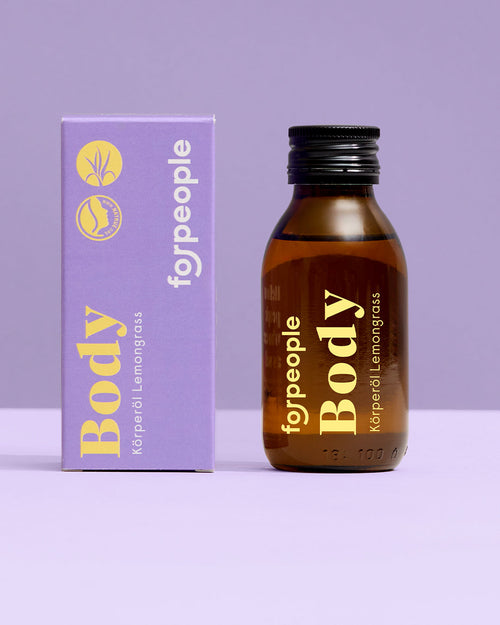
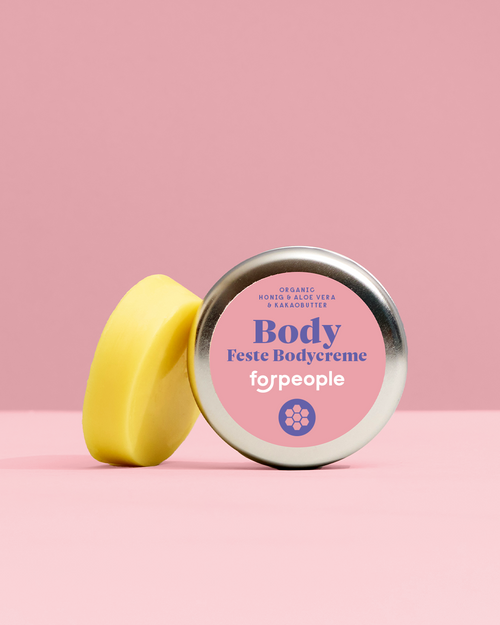
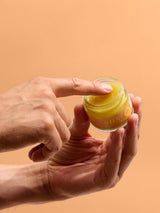
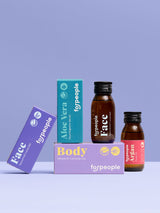
- Apply a film. Oil and butter contain no water. They form a barrier between the stratum corneum and the dry air (Bennett-Kennett et al. 2023). For large areas an oil is suitable, for example Body Oil - Lemongrass. For areas that feel especially tight, the Solid Body Butter - Beeswax & Aloe Vera fits; it spreads most easily on warm skin that is still slightly damp.
How much time you have for the last step is covered on the page How soon should you moisturise after a shower? The 3-minute rule. If you apply the oil while still in the shower, the floor becomes slippery.
If it feels tight despite moisturising
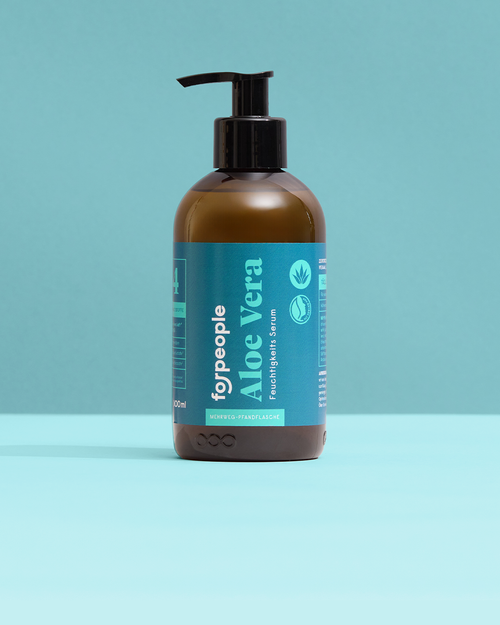
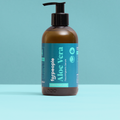
- The skin was already dry. Oil and butter only hold on to water that is there. Wet your hands, or put a water-based layer underneath, for example the Aloe Vera Serum 99.6% - Pump Bottle. Order and amounts are described in Combining aloe vera serum with oil or solid cream.
- The film is too thin. If it only feels tight in certain areas, use butter there instead of oil.
These points come from experience, not from study results.
When to seek medical advice?
Tightness that eases after moisturising is a matter of skincare. Have your skin looked at by a doctor if
- it itches severely, burns or develops hives after showering,
- redness, heavy flaking or cracks persist, or areas weep or bleed,
- the dryness appears suddenly all over the body or started with a new medication,
- nothing changes after a few weeks with an adjusted routine.
Cosmetics care for the skin; they do not treat medical conditions. Do not apply skincare products to injured or irritated skin.
Frequently asked questions
Why does skin feel tighter after a shower in winter?
Cold outdoor air and heated indoor air hold little water vapour, so the stratum corneum dries faster.
Is a cold shower better for the skin?
In the study mentioned above, water loss also rose after cold water, only much less than after hot water. Lukewarm and brief is enough.
Does a water softener help against the tightness?
In the water hardness study, softened water reduced the effects of hard water. Whether a filter on the shower head does the same was not tested there.
Oil or butter: which suits after a shower?
Oil spreads quickly over large areas; butter leaves the more noticeable film. The comparison is shown in Body Oil or Body Butter – Which One When?
I do not want any scent on my skin. What suits then?
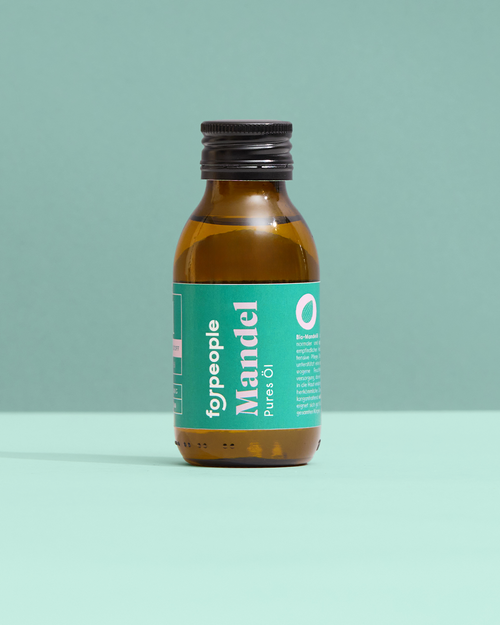
Body Oil - Lemongrass contains lemongrass essential oil. According to its ingredient list, the solid body butter contains no added essential oils; it smells of beeswax. A single oil with no added scent is Almond Oil - pure.
At forpeople
We do not carry a body lotion. Soap, water-based serum and water-free care are separate products with us.
- Body Oil - Lemongrass, 100 ml, €16.90: sesame, safflower, sea buckthorn seed and sunflower oil, turmeric extract and lemongrass essential oil.
- Solid Body Butter - Beeswax & Aloe Vera, 40 g, €9.90: according to the ingredient list, cocoa butter, olive oil, beeswax, sunflower oil, shea butter and aloe vera leaf extract.
- Aloe Vera Serum 99.6% - Pump Bottle, 300 ml, €27.90: aloe juice, citric acid, potassium sorbate and sodium benzoate; contains water and is preserved.
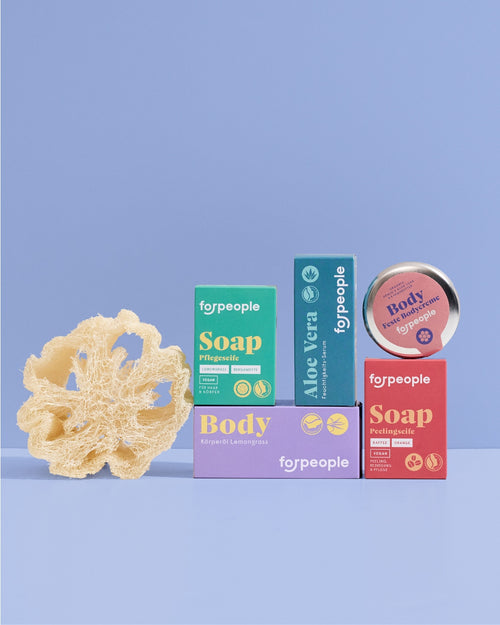
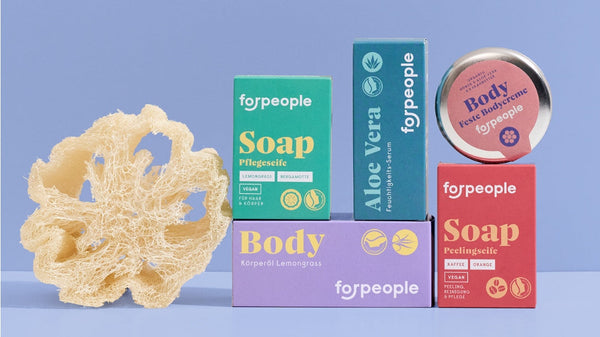
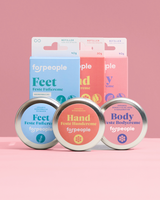
- Shower Care Set – Cleansing Without Drying Out, €49.90: six products, namely luffa shower sponge, Aloe Vera Soap - Lemongrass, Aloe Vera Soap with Scrub - Coffee & Orange, Body Oil Lemongrass, Aloe Vera Serum and solid body butter.
For all four, the product pages say: avoid contact with the eyes and do not use on injured or irritated skin. If you notice a skin reaction, stop using the product.
More on this: Dry skin in winter: what helps with cold and indoor heating · Why are shins dry and flaky in winter? · Occlusion and TEWL: how a wax film protects your skin
From the blog: Less in the bathroom: a skincare routine with three products
Sources
- Visscher MO, Tolia GT, Wickett RR, Hoath SB (2003): Effect of soaking and natural moisturizing factor on stratum corneum water-handling properties. Journal of Cosmetic Science 54(3): 289–300. https://pubmed.ncbi.nlm.nih.gov/12858228/
- Ananthapadmanabhan KP, Moore DJ, Subramanyan K, Misra M, Meyer F (2004): Cleansing without compromise: the impact of cleansers on the skin barrier and the technology of mild cleansing. Dermatologic Therapy 17 Suppl 1: 16–25. https://doi.org/10.1111/j.1396-0296.2004.04s1002.x
- Bennett-Kennett R, Pace J, Lynch B, Domanov Y, Luengo GS, Potter A, Dauskardt RH (2023): Sensory neuron activation from topical treatments modulates the sensorial perception of human skin. PNAS Nexus 2(9): pgad292. https://doi.org/10.1093/pnasnexus/pgad292
- Herrero-Fernandez M, Montero-Vilchez T, Diaz-Calvillo P, Romera-Vilchez M, Buendia-Eisman A, Arias-Santiago S (2022): Impact of Water Exposure and Temperature Changes on Skin Barrier Function. Journal of Clinical Medicine 11(2): 298. https://doi.org/10.3390/jcm11020298
- Danby SG, Brown K, Wigley AM, Chittock J, Pyae PK, Flohr C, Cork MJ (2018): The Effect of Water Hardness on Surfactant Deposition after Washing and Subsequent Skin Irritation in Atopic Dermatitis Patients and Healthy Control Subjects. Journal of Investigative Dermatology 138(1): 68–77. https://doi.org/10.1016/j.jid.2017.08.037