


Why the shins in particular?
Sebum is the skin's own oil. How much of it there is depends heavily on the body site. In a series of measurements on 50 healthy people, eight sites were compared, from the face to the leg. The sebum value averaged 95.65 micrograms per square centimetre on the forehead, 18.45 on the forearm and 2.88 on the leg. The leg thus had the lowest value of all eight sites, and the hydration of the stratum corneum was also lowest there (Firooz et al. 2012).
On the shin the skin also lies taut over the bone, and trouser legs, tights and boot shafts rub over it all day. How the skin's protective layer is built is explained in The skin barrier explained simply. Elbows and knees have similarly little oil and a lot of friction, see Why are elbows and knees so dry?
What winter adds
Cold air holds little water vapour. When it is heated indoors, its relative humidity drops further, and the skin gives off more water. According to a review article, low humidity and low temperatures lead to a general decrease in the skin's barrier function and make it more susceptible to mechanical stress (Engebretsen et al. 2016).
Then there is the season itself. In a study of women of different age groups, the lipids of the stratum corneum were determined on the face, hand and leg. At all three sites the stratum corneum contained markedly fewer lipids in winter than in spring and summer (Rogers et al. 1996). What winter air does to the whole body is covered in Dry skin in winter: what helps with cold and indoor heating.
Showering, soap and shaving
Hot water: In one study, 50 healthy volunteers immersed one hand in water at about 41 °C and the other in water at about 11 °C for ten minutes. Water loss through the skin rose from 25.75 to 34.96 grams per square metre per hour after the cold water, and to 58.58 after the hot water (Herrero-Fernandez et al. 2022). The measurements were taken on the palms, not the leg; the direction is clear nonetheless.
Soap and shower gel: Surfactants do not only dissolve dirt, they also interact with the lipids and proteins of the stratum corneum. The result can be a feeling of tightness and dryness after washing (Ananthapadmanabhan et al. 2004). There is rarely anything to wash off the shins.
Shaving: The blade rubs over skin that is already dry. We did not find a measurement specifically for the lower legs; that shaving without water and foam puts extra strain on the skin is practical experience.
What the flakes are
The skin renews its stratum corneum constantly. In well-hydrated skin, the uppermost horny cells come off one by one or in small groups, invisibly. For that, enzymes have to break down the attachment points between the cells, and these enzymes need water. If the stratum corneum is dry, the breakdown stays incomplete. The cells then come off in larger clusters, producing the visible, powdery flakes (Harding et al. 2000).
From a cosmetic point of view, the flakes are therefore not dirt and not a sign of poor hygiene. They show that the stratum corneum lacks water. The fine white dust left in your tights in the evening is also made of rubbed-off horny cells.
Causes at a glance
| Cause | What is behind it | What you can do |
|---|---|---|
| Little sebum on the leg | Hardly any oil film of its own on the skin | Apply oil or cream after showering |
| Cold outdoor air, heated indoor air | Low humidity reduces the barrier function; the stratum corneum contains fewer lipids in winter | Do not overheat rooms; use a richer product in winter |
| Long, hot showers or baths | Hot water increases the skin's water loss more than cold water | Short and lukewarm |
| Soap all over the leg | Surfactants also act on the lipids of the stratum corneum | Soap only where it is needed |
| Shaving | Friction on dry skin | Never shave dry; sharp blade, foam or oil, then apply care |
| Tight jeans, tights, thermal underwear | Friction with every step on skin with little padding | Soft fabrics, looser clothing at home; a thin layer of cotton under wool |
A routine for winter
- Shower for a shorter time and lukewarm. A few minutes are enough; leave out long, hot baths for the time being.
- Soap only where it is needed. Armpits, groin and feet need soap. On shins and forearms, water is enough on most days. That is common practice, not a measured rule.
- Pat dry, then apply oil or cream straight away. Oils, butters and waxes lay a water-repellent film on the skin and slow evaporation. Why that works best on slightly damp skin is explained in Occlusion and TEWL: how a wax film protects your skin. If your skin feels tight in the evening, apply again before bed.
Oil spreads quickly over large areas such as the legs, a solid butter leaves the more noticeable film; the comparison is in Body Oil or Body Butter – Which One When? How both can be combined with a water-based product underneath is covered in Combining aloe vera serum with oil or solid cream.
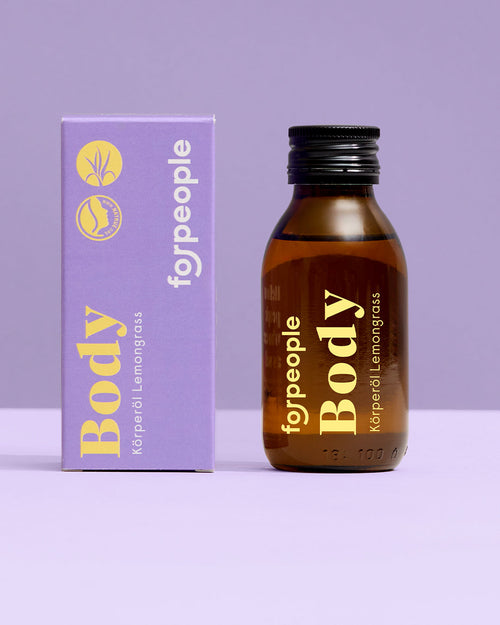
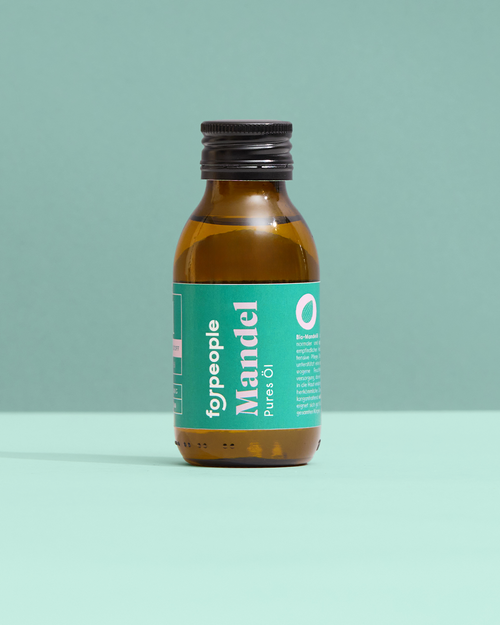
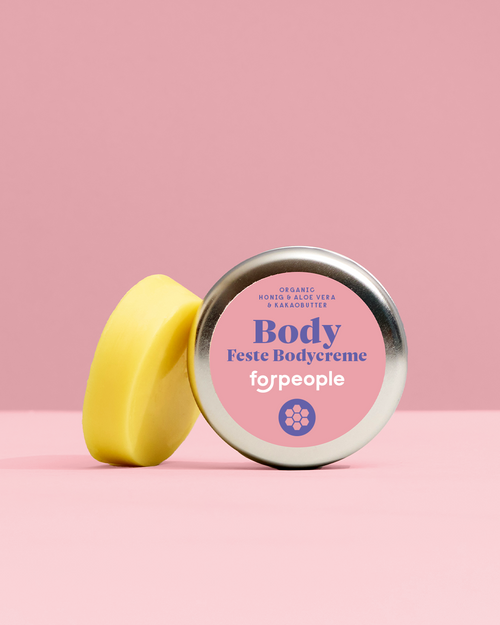
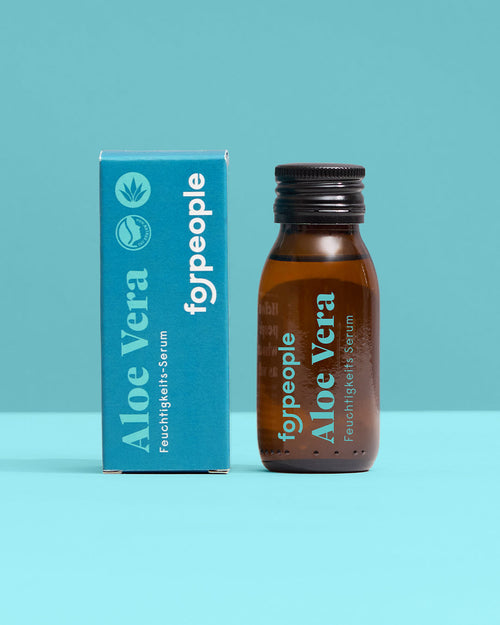
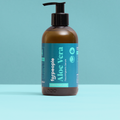
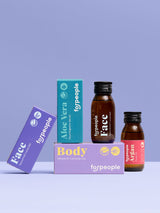
For the legs, the Body Oil - Lemongrass is one option. It contains lemongrass essential oil, so it is not without fragrance. The Almond Oil - pure has no added fragrance; according to its INCI it consists of almond oil only. The Solid Body Butter - Beeswax & Aloe Vera suits particularly dry spots. As a water-based layer underneath, the Aloe Vera Serum 99.6% is an option.
When to seek medical advice?
Dry, slightly flaky shins are common in winter. Cosmetics care for the skin; they do not treat diseases. Have your lower legs checked by a doctor if
- the skin cracks in a net-like pattern, is red or itches a lot; doctors then often speak of asteatotic eczema (eczema craquelé),
- spots weep, bleed or hurt,
- a leg swells, turns brownish or open sores develop,
- the dryness appears suddenly and all over the body or began with new medication,
- nothing changes despite a few weeks of regular care.
Do not apply care products to open or irritated skin.
What customers say
A selection of verified reviews from our shop (collected via Judge.me), translated from German and partly shortened.
“I have been using the body oil for quite a while. It is easy to use and cares for my skin very well. I find the smell pleasant.”
Customer review of Body Oil - Lemongrass, 5 out of 5 stars, December 2025, verified purchase
Frequently asked questions
Should I rub off the flakes or exfoliate?
Rubbing them off dry does little: the loose cells are gone, the dryness stays. On the shins the stratum corneum is not thickened but dry; exfoliating there tends to be extra friction. Better: pat dry after showering and apply oil or cream straight away.
Does the oil go on wet or dry skin?
On skin that is still slightly damp, straight after showering; several reviews describe it that way too. The oil film then holds the water that is already in the stratum corneum.
Does the body oil sink in before I get dressed?
In the reviews of the Body Oil Lemongrass, the voices praising how it sinks in clearly predominate. Use a little and wait a few minutes. If the skin still shines after that, it was too much.
What do the body oils smell of?
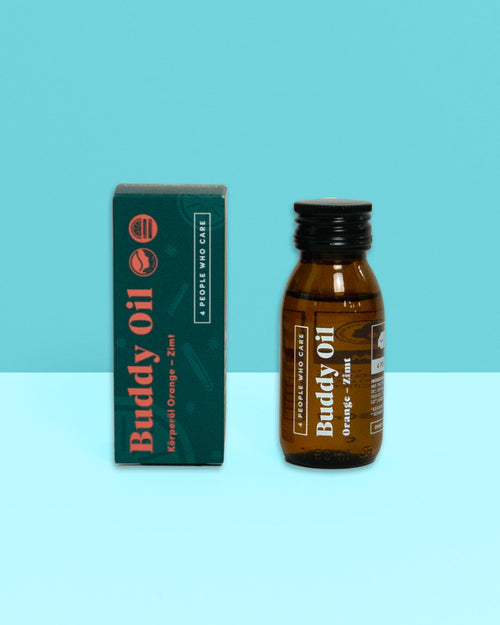
Scent is mentioned particularly often in the reviews. The Body Oil Lemongrass contains lemongrass essential oil; the Body Oil Cinnamon & Cloves, according to its INCI, essential oils from cinnamon leaves and orange peel. If you want to avoid fragrances, you will find alternatives in Without fragrance and essential oils: ingredients at a glance.
Is oil alone enough, or does the skin need extra moisture?
Oil brings no water with it; it slows evaporation. On damp skin that is often enough. Humectants such as glycerin or urea additionally bind water in the stratum corneum; more on this in Humectants, occlusives, emollients and Does glycerin dry out the skin?
At forpeople
- Body Oil - Lemongrass, 100 ml, €16.90: sesame, safflower, sea buckthorn seed and sunflower oil with turmeric extract and lemongrass essential oil.
- Body Oil - Cinnamon & Cloves, 100 ml, €14.90: sesame, safflower and sea buckthorn seed oil with curcuma oil and essential oils from cinnamon leaves and orange peel.
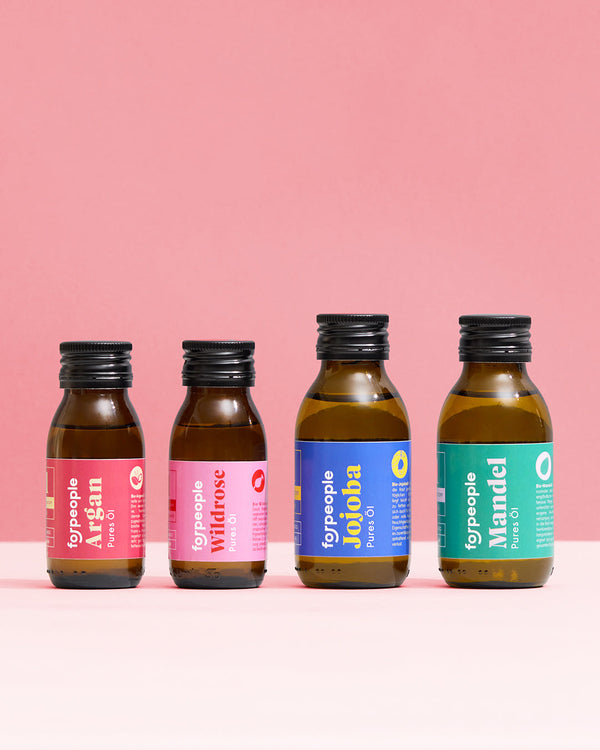
- Almond Oil - pure, 100 ml, €14.90: a single oil with no added fragrance.
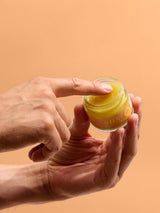
- Solid Body Butter - Beeswax & Aloe Vera, 40 g, €9.90: water-free, with cocoa butter, beeswax and shea butter, no added fragrance.
Do not use the products on injured or irritated skin. After oiling your skin, the shower floor is slippery.
More on this: Dry feet in winter: what causes it, what helps? · Moisturise before or after the sauna? · Dry skin after the pool: what does chlorinated water do?
From the blog: Face & Body Oils: Which Oil Suits Which Skin Type?
Sources
- Firooz A, Sadr B, Babakoohi S, Sarraf-Yazdy M, Fanian F, Kazerouni-Timsar A et al. (2012): Variation of biophysical parameters of the skin with age, gender, and body region. ScientificWorldJournal 2012: 386936. https://doi.org/10.1100/2012/386936
- Engebretsen KA, Johansen JD, Kezic S, Linneberg A, Thyssen JP (2016): The effect of environmental humidity and temperature on skin barrier function and dermatitis. J Eur Acad Dermatol Venereol 30(2): 223–249. https://doi.org/10.1111/jdv.13301
- Rogers J, Harding C, Mayo A, Banks J, Rawlings A (1996): Stratum corneum lipids: the effect of ageing and the seasons. Arch Dermatol Res 288(12): 765–770. https://doi.org/10.1007/BF02505294
- Herrero-Fernandez M, Montero-Vilchez T, Diaz-Calvillo P, Romera-Vilchez M, Buendia-Eisman A, Arias-Santiago S (2022): Impact of Water Exposure and Temperature Changes on Skin Barrier Function. J Clin Med 11(2): 298. https://doi.org/10.3390/jcm11020298
- Ananthapadmanabhan KP, Moore DJ, Subramanyan K, Misra M, Meyer F (2004): Cleansing without compromise: the impact of cleansers on the skin barrier and the technology of mild cleansing. Dermatol Ther 17 Suppl 1: 16–25. https://doi.org/10.1111/j.1396-0296.2004.04s1002.x
- Harding CR, Watkinson A, Rawlings AV, Scott IR (2000): Dry skin, moisturization and corneodesmolysis. Int J Cosmet Sci 22(1): 21–52. https://doi.org/10.1046/j.1467-2494.2000.00001.x