



What glycerin is and what it does in the skin
Glycerin, known in chemistry as glycerol, is an alcohol with three hydroxyl groups. It is the building block to which three fatty acids are attached in fats and oils. On the INCI list it appears as "Glycerin".
A water channel of the skin cells (aquaporin-3) and the fat metabolism of the sebaceous glands are regarded as the routes by which the body's own glycerin reaches the epidermis. There it contributes to hydration and elasticity (Fluhr et al. 2008).
Applied from outside, glycerin improves the hydration of the stratum corneum, its barrier function and its mechanical properties, according to the same review (Fluhr et al. 2008). In an older series of measurements it penetrated into the stratum corneum and formed a reservoir there; the skin surface stayed smoother for at least 24 hours (Batt & Fairhurst 1986). Like urea and hyaluronic acid, glycerin is one of the humectants. The three building blocks of a cream are explained on the page Humectants, occlusives, emollients.
Where the myth comes from
Humectants are hygroscopic: they attract water. A review describes two sources: water from the deeper layers of the skin and, when the air is humid, water from the surroundings. The same paper calls humectants double-edged: the water they draw into the epidermis can easily be lost to the surroundings from there. That is why they are mostly combined with film-forming fats (Sethi et al. 2016).
This became the shortened claim: when the air is dry, glycerin takes its water from the skin and dries it out. A laboratory experiment shows how strongly glycerin attracts water. Glycerin solutions stood in small vials at 30 °C and 70 per cent relative humidity. Up to 60 per cent glycerin, less and less water evaporated. Between 60 and 70 per cent the weight stayed the same. Above that, the solution took up water from the air (Chen et al. 2022).
The experiment took place in a vial, not on skin, and in humid air. It does not show whether glycerin draws water out of the skin when the air is dry. In a cream, moreover, glycerin is diluted with water and usually combined with fats.
What measurements on skin show
Measurements on skin do not support the myth. The table summarises the papers we checked.
| Paper | What was studied | Result |
|---|---|---|
| Batt & Fairhurst 1986 | Glycerin on skin, measurement of water flux | Water flux from the skin surface went down; the skin stayed smoother for at least 24 hours. |
| Lodén & Wessman 2001 | Cream with 20 per cent glycerin against the same cream without glycerin, 17 people, 10 days, double-blind | Hydration of the stratum corneum rose. Water loss through the skin and its sensitivity to a surfactant did not change. |
| Fluhr et al. 2008 | Review of the literature | Glycerin increases the hydration of the stratum corneum; the authors stress this especially for cold, dry surroundings. |
What remains open: we did not find a study that compares an ordinary cream with and without glycerin on skin specifically in very dry air, nor a measurement with undiluted glycerin. Laboratory tests on model lipids of the stratum corneum rather speak against the myth: there, glycerin prevented the lipids from crystallising at low humidity (cited in Lodén & Wessman 2001).
Why glycerin is usually missing from water-free creams
Glycerin is miscible with water but insoluble in fatty oils (PubChem). A water-free cream consists of waxes, butters and oils. It has no water phase in which glycerin could dissolve. Anyone who wants to combine the two normally needs water and an emulsifier, in other words an emulsion; more on this under Emulsifiers in Cosmetics: What They Do. That glycerin is missing from a solid cream follows from how the cream is built and is not a verdict on the substance.
The two types work differently:
- Cream with water and glycerin: brings water and a humectant with it and spreads easily. It normally needs an emulsifier and a preservative system.
- Water-free cream: brings neither water nor a humectant. Its film of wax and oil reduces the evaporation of the water that is already in the skin. The mechanism is described on the page Occlusion and TEWL.
Film-forming fats work best on slightly damp skin (Sethi et al. 2016). This gives a simple routine:
- Wash your hands and only pat them dry, so that they still feel slightly damp.
- If you wish, apply a water-based product, with or without glycerin.
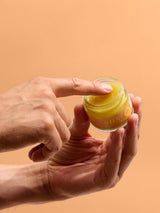
- Rub a small amount of solid cream over it, including the backs of the hands and the knuckles.
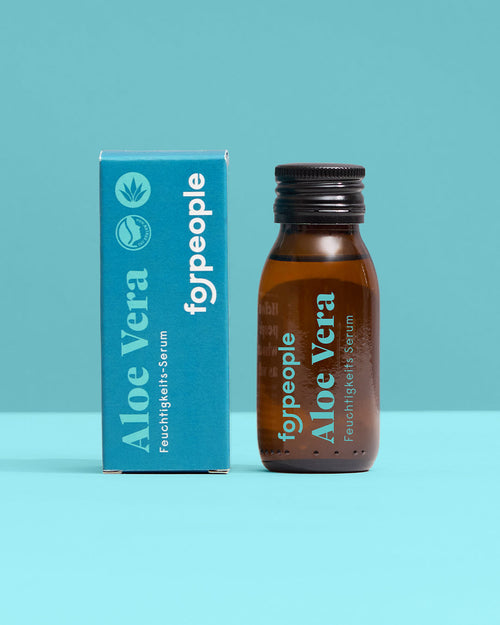
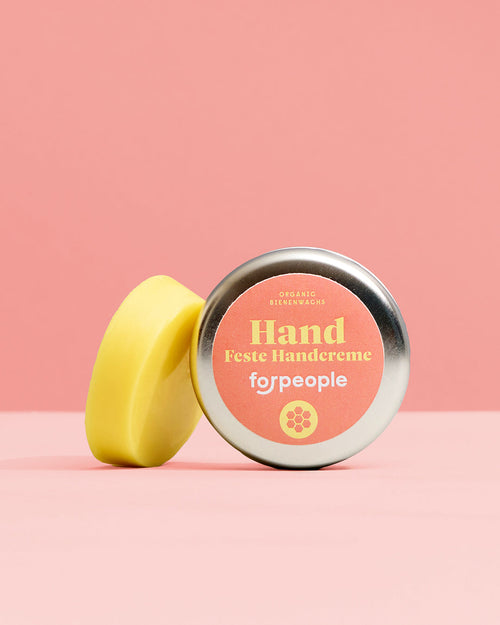
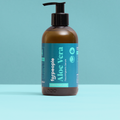
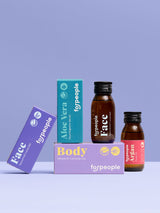
One example for step 2 is the Aloe Vera Serum 99.6%; according to its INCI list it contains no glycerin. The Solid Hand Cream - Beeswax, for example, goes over it. The order is explained on the page Combining aloe vera serum with oil or solid cream.
Glycerin in soap
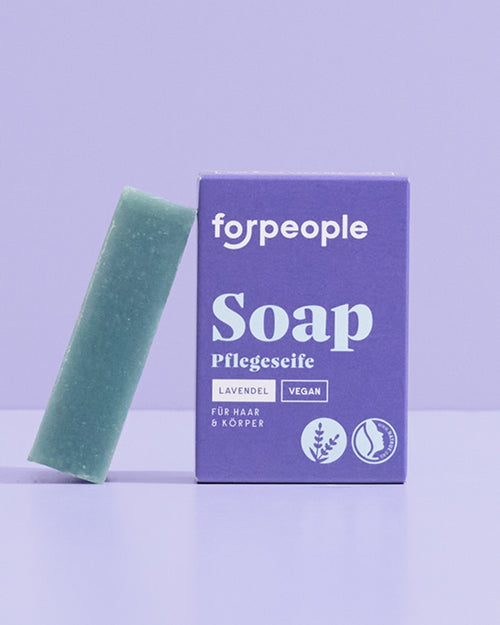
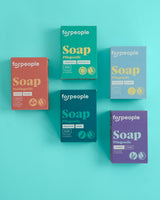
In saponification, fats and oils react with a lye. This produces soap, that is, the salts of the fatty acids, and glycerin (Prieto Vidal et al. 2018). In handmade soap the glycerin is usually not separated off and stays in the bar. All the same, it often does not appear on the label: many soaps list the starting materials on the INCI list, that is, oils, water and sodium hydroxide. According to the manufacturer, the forpeople bar soaps are free from glycerin. More on this under Is there still lye in natural soap? Saponification explained.
When to seek medical advice?
If your skin stays very dry for two to three weeks despite regular care, if it cracks, is reddened, weeps or stings again and again after you apply cream, have it looked at by a doctor. A skin condition or an intolerance to an ingredient may be behind it. Which substance it is can be clarified by a test at a skin specialist's practice. Take the ingredient lists of your products with you.
What customers say
A selection of verified reviews from our shop (collected via Judge.me), translated from German and partly shortened.
"The solid hand cream leaves a pleasant, relaxed feeling on the skin. […]"
Customer review of Solid Hand Cream, 5 out of 5 stars, June 2026, verified purchase
Frequently asked questions
Does glycerin dry out the hands in heated indoor air?
We found no evidence for this. In a study with a cream containing 20 per cent glycerin, the water loss of the skin did not rise (Lodén & Wessman 2001). A film of fat or wax on top that holds the bound water makes sense. Other reasons for dry hands are listed on the page Dry hands despite moisturising: why?
Why is there no glycerin in a solid hand cream?
Because it contains no water. Glycerin dissolves in water, not in oils and waxes.
Do I have to reapply a water-free hand cream more often?
That depends less on glycerin than on how often you wash your hands. Every wash takes part of the film with it. So apply a small amount after washing, ideally while the skin is still slightly damp.
Is a cream without water greasier?
It contains no water that evaporates as you rub it in. That is why very little is enough; too much leaves a noticeable film. Warm a small amount between your fingers and rub it in thoroughly.
Does soap contain glycerin even if it is not on the label?
Glycerin forms during saponification. If the INCI list names the starting materials, it does not appear there. Whether it has stayed in the bar depends on how the soap was made. According to the manufacturer, the forpeople bar soaps are free from glycerin.
At forpeople
In the ingredient lists published in our shop (as of 3 October 2026), glycerin is not named as an ingredient in any of our products. That is a statement of fact, not a judgement on glycerin. Where a list says "Triglyceride", a fat is meant: in it, glycerin is firmly bound to three fatty acids and does not act as a humectant.
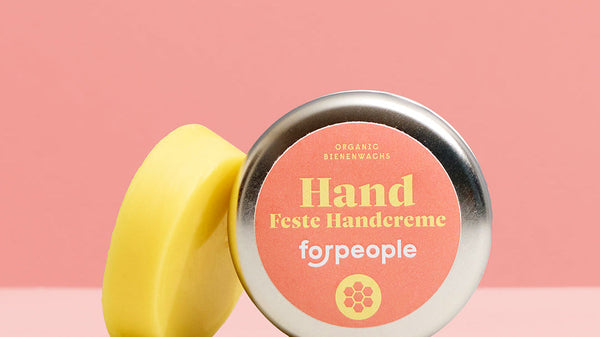
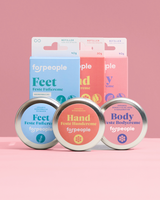
- Solid Hand Cream - Beeswax, 30 g, €9.90: water-free, with beeswax, olive oil and sunflower oil.
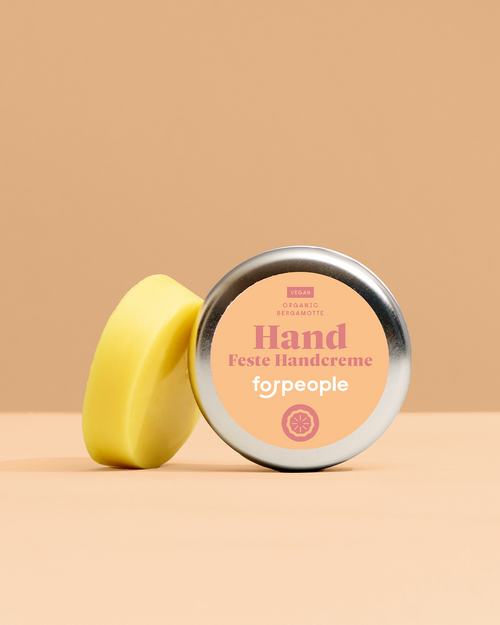
- Solid Vegan Hand Cream - Bergamot, 30 g, €9.90: water-free and vegan, with candelilla wax, jojoba oil and shea butter; contains lemon and bergamot oil.
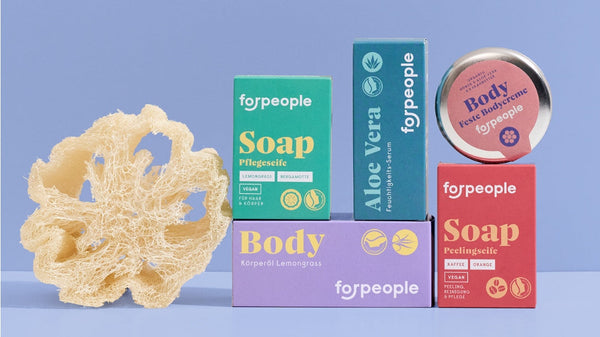
- Aloe Vera Serum 99.6%, 50 ml, €9.90: water-based, with aloe juice, citric acid, potassium sorbate and sodium benzoate.
- Aloe Vera Soap – Lavender, 75 g, €8.90: made from plant oils and sodium hydroxide. The INCI list names the starting materials; glycerin is not listed there as an ingredient. According to the manufacturer, the soap is free from glycerin.
More on this: Humectants, occlusives, emollients · Dry hands despite moisturising: why? · Lanolin or beeswax: what is the difference? · Cream with few ingredients: what does a short list give you?
From the blog: Switching to solid skincare: what is different in the first weeks · Less in the bathroom: a skincare routine with three products
Sources
- Fluhr JW, Darlenski R, Surber C (2008): Glycerol and the skin: holistic approach to its origin and functions. Br J Dermatol 159(1): 23–34. https://doi.org/10.1111/j.1365-2133.2008.08643.x
- Sethi A, Kaur T, Malhotra SK, Gambhir ML (2016): Moisturizers: The Slippery Road. Indian J Dermatol 61(3): 279–287. https://doi.org/10.4103/0019-5154.182427
- Lodén M, Wessman W (2001): The influence of a cream containing 20% glycerin and its vehicle on skin barrier properties. Int J Cosmet Sci 23(2): 115–119. https://doi.org/10.1046/j.1467-2494.2001.00060.x
- Batt MD, Fairhurst E (1986): Hydration of the stratum corneum. Int J Cosmet Sci 8(6): 253–264. https://doi.org/10.1111/j.1467-2494.1986.tb00583.x
- Chen HJ, Lee PY, Chen CY, Huang SL, Huang BW, Dai FJ et al. (2022): Moisture retention of glycerin solutions with various concentrations: a comparative study. Sci Rep 12: 10232. https://doi.org/10.1038/s41598-022-13452-2
- Prieto Vidal N, Adeseun Adigun O, Pham TH, Mumtaz A, Manful C, Callahan G et al. (2018): The Effects of Cold Saponification on the Unsaponified Fatty Acid Composition and Sensory Perception of Commercial Natural Herbal Soaps. Molecules 23(9): 2356. https://doi.org/10.3390/molecules23092356
- National Center for Biotechnology Information: PubChem Compound Summary for CID 753, Glycerol, section "Solubility", accessed 3 October 2026. https://pubchem.ncbi.nlm.nih.gov/compound/753