


What soap does differently in hair than shampoo
Soap consists of the salts of fatty acids and is alkaline by nature; how it is made is explained in Is there still lye in natural soap? Saponification explained. In a study of 64 soaps, 53 had a pH between 9 and 10. Of 38 shampoos, 24 were between 6 and 7 (Tarun et al. 2014). A pH of 5.5 is given for the scalp and 3.67 for the hair shaft (Gavazzoni Dias et al. 2014).
An alkaline pH can increase the negative electrical charge on the hair surface. The hairs then rub against each other more and are more likely to stick out (Gavazzoni Dias et al. 2014).
Shampoos contain synthetic surfactants, usually substances that bind lime, and conditioning additives that leave the hair smooth and soft after washing (Draelos 2010). A soap does not have these additives; that is why hair feels different afterwards.
Lime soap: what hard water has to do with it
Hard water contains a lot of dissolved calcium and magnesium. Soap can form insoluble lime soaps with them (Verbraucherzentrale NRW 2026). They build up in the hair and leave it looking matt and tangled (Gavazzoni Dias et al. 2014). The deposit is hard to rinse out; a review article on hair cleansing therefore advises against bar soap for washing hair (Draelos 2010). This deposit does not form with synthetic surfactants (Gavazzoni Dias et al. 2014).
In Germany, water suppliers must state the hardness range of their drinking water at least once a year (WRMG § 9).
| Hardness range | Calcium carbonate per litre (WRMG § 9) | Converted to German degrees of hardness | Washing with soap (based on experience) |
|---|---|---|---|
| soft | less than 1.5 millimoles | below about 8.4 °dH | good conditions; an acid rinse still makes sense |
| medium | 1.5 to 2.5 millimoles | about 8.4 to 14 °dH | usually only works with an acid rinse |
| hard | more than 2.5 millimoles | above about 14 °dH | lime soap is likely; a shampoo is usually easier |
The hardness ranges are set out in the law. The degree values are converted (1 millimole per litre corresponds to about 5.6 °dH); the last column is based on experience.
Acid rinse: what for, and how
An acid rinse is a rinse with heavily diluted acid after washing. It is recommended after hair soaps to smooth the hair structure again (Verbraucherzentrale NRW 2026). Whether it also removes lime soap from the hair has, to our knowledge, not been measured.
On the mixing ratio: the German consumer advice centre (Verbraucherzentrale) reports one to two tablespoons of vinegar per litre of water as a widespread recommendation, or alternatively heavily diluted citric acid without stating an amount (Verbraucherzentrale NRW 2026). That is common practice, not a tested dosage.
- Mix: Mix one litre of cool to lukewarm water with one tablespoon of household vinegar or apple cider vinegar. Do not use undiluted vinegar essence.
- Pour over: After rinsing out the soap, pour it slowly over the lengths and ends and spread it with your fingers. Keep your eyes closed.
- Rinse out or leave in: Rinse with clear water or leave the rinse in the hair. Both are common.
- Adjust: If the hair still feels coated, use two tablespoons next time, not more.
Citric acid powder is far more concentrated than vinegar; a very small, completely dissolved amount is enough. The rinse does not belong on an irritated or broken scalp.
Washing step by step, and the switch
- Lather in your hands: Wet the hair thoroughly, lather the soap in your wet hands and spread the lather on the scalp. That is less harsh than soaping the scalp directly with the bar. This is enough even for long hair; the lengths are cleaned as you rinse (Verbraucherzentrale NRW 2026).
- Rinse: Very thoroughly, and for longer than you are used to with shampoo.
- Acid rinse and drying: Rinse as described above, then squeeze the hair in a towel rather than rubbing it.
- Let the soap dry: Put the bar somewhere airy; see Mushy bar soap: causes and proper storage.
Many people report a transition period: in the first weeks the hair feels grippier, less smooth or waxy. Plausible explanations: the smoothing additives from shampoo are gone, and lime soap may build up. To our knowledge this transition has not been studied; that it takes a few weeks is based on experience. There is no evidence that the scalp “adjusts” and becomes less oily.
During this time it helps to use less soap, rinse for longer and not skip the acid rinse. If the hair is still dull or coated after several weeks, the water is usually the reason. A shampoo is then the better fit.
Who it suits and who it does not
| Starting point | Assessment |
|---|---|
| Hard water | Lime soap is likely; see the table above. |
| Bleached or coloured hair | Chemically damaged hair can take up notable amounts of calcium and magnesium even from soft water (Evans et al. 2011). We therefore consider soap the more demanding choice here. Whether it washes out hair colour faster has, to our knowledge, not been studied. |
| Fine hair that gets greasy quickly | Re-fatting body soaps generally contain more free fat than soaps made specifically for hair (Verbraucherzentrale NRW 2026). The hair can look heavier afterwards. |
Are the forpeople soaps intended for hair?
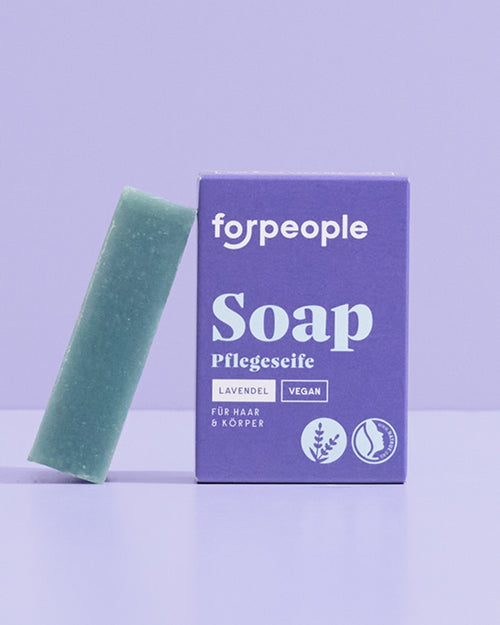
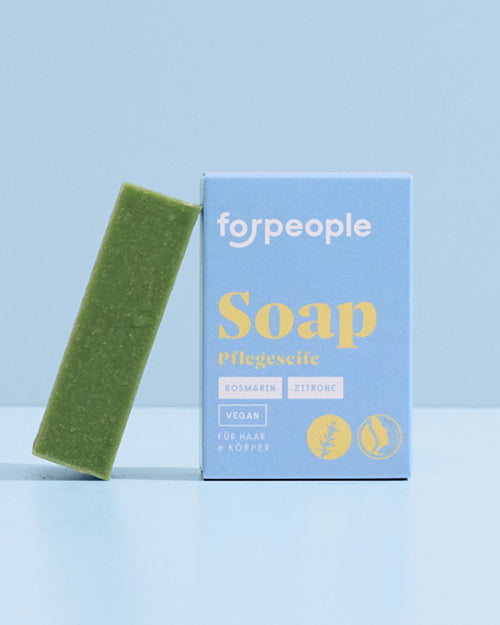
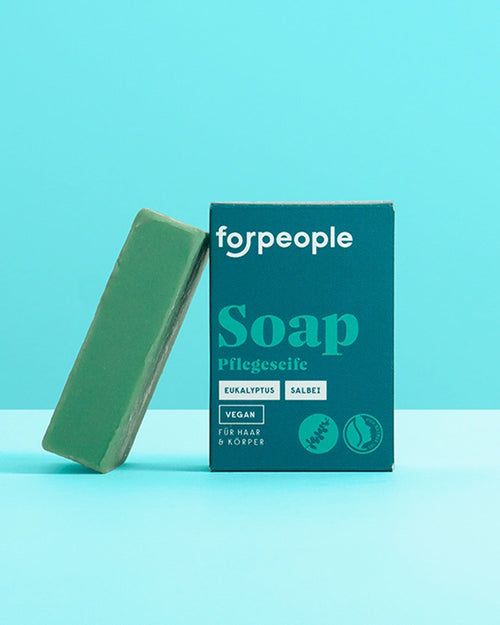
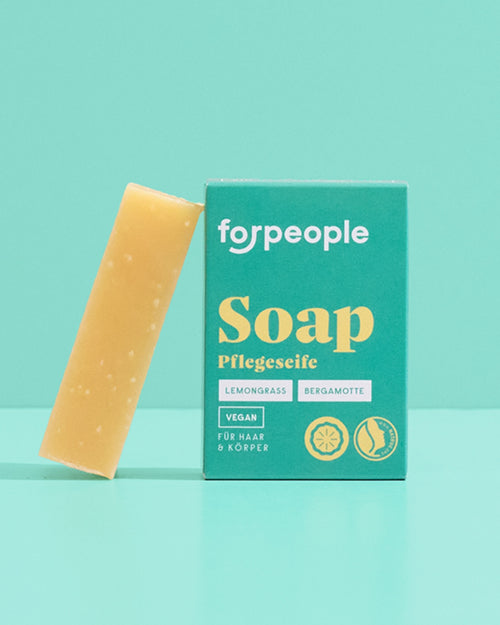
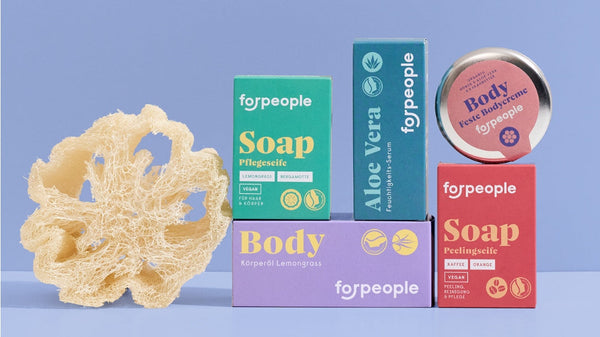
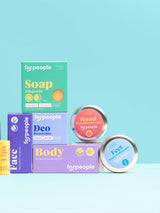
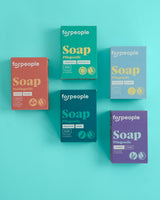
forpeople does not sell a soap labelled as a hair soap, and no shampoo. However, the product pages of the five bar soaps explicitly mention hair (as of 3 October 2026): under how to use, all five say that you can apply the soap directly to the body or hair, and the question whether the soap can also be used for hair care is answered with yes. What is said above applies to them as well: they are classic soaps made from saponified plant oils, mainly olive and coconut oil, so they are alkaline and form lime soap in hard water.
- Aloe Vera Soap – Lavender, Aloe Vera Soap – Rosemary & Lemon, Aloe Vera Soap – Eucalyptus & Sage and Aloe Vera Soap - Lemongrass: described on the product pages as re-fatting. All four contain essential oils.
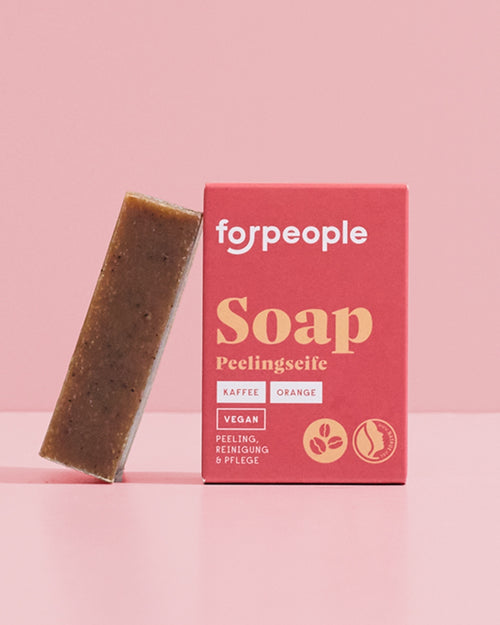
- Aloe Vera Soap with Scrub - Coffee & Orange: contains ground coffee as scrub particles, plus cocoa powder and essential oils. The particles have to be rinsed out of the hair again; for washing hair it is therefore less practical than the other four.
The product pages do not state how strongly the soaps are superfatted. If the ends are dry after washing, one to two drops of oil are enough; more on this in Oil for hair ends: which one, how much?
When to seek medical advice
An unfamiliar feel to your hair is no cause for concern. Seek medical advice if your scalp persistently itches, burns, flakes heavily, weeps or is red after washing, if you are losing noticeably more hair, or if you suspect you are reacting to a fragrance; more on this in Essential Oils and Fragrance Allergens. Stop using the soap in that case. If soap or rinse gets into your eye, rinse immediately and thoroughly with water. If the burning persists, have the eye examined by a doctor.
Frequently asked questions
Do I need an acid rinse after every wash with soap?
With soft water, some people manage without. With medium-hard and hard water, common experience is that it belongs to every wash.
Will my hair smell of vinegar afterwards?
While it is wet, yes. In common experience the smell fades as the hair dries. If you do not like it, rinse with clear water afterwards.
My hair feels sticky or dull after the soap. Why is that?
Usually lime soap or soap residue. Use less soap, rinse for longer and follow with an acid rinse. If nothing changes, your water is probably too hard for this.
How do I find out how hard my water is?
In Germany, your water supplier has to state the hardness range: soft, medium or hard.
Is a solid shampoo the same as hair soap?
No. A solid shampoo contains surfactants similar to those in bottled shampoo and is not a soap; hair soap consists of the salts of fatty acids (Verbraucherzentrale NRW 2026). We do not have a solid shampoo in our range. The difference between soap and syndet is explained in Bar soap or liquid soap: which is better for your hands?
At forpeople
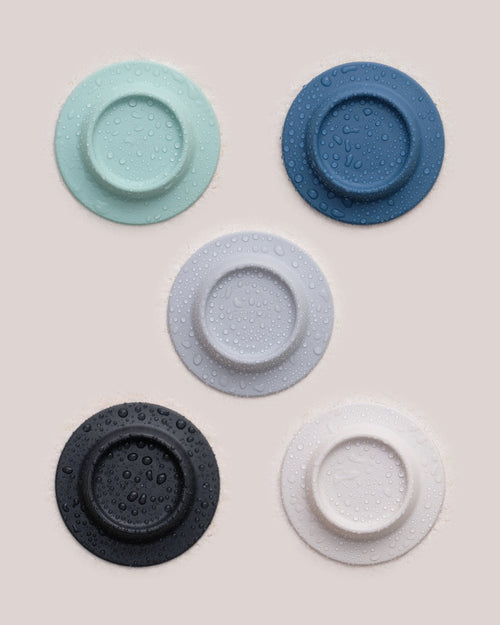
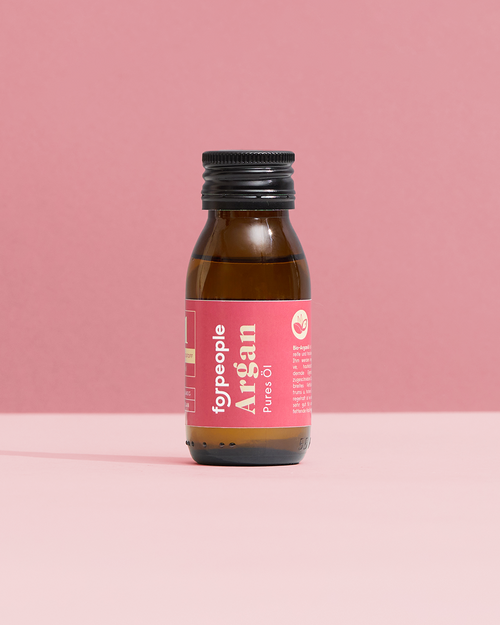
The bar soaps weigh 75 g each and cost €8.90 each, for example Aloe Vera Soap – Lavender and Aloe Vera Soap - Lemongrass. For drying between washes there is the Soapi Magnetic Soap Holder for Bar Soap (€12.95). For the ends after washing: Argan Oil - pure (50 ml, €19.90).
More on this: Is there still lye in natural soap? Saponification explained · Oil for hair ends: which one, how much? · Can I use bar soap on my face? · Mushy bar soap: causes and proper storage
From the blog: Less in the bathroom: a skincare routine with three products
Sources
- Tarun J, Susan J, Suria J, Susan VJ, Criton S (2014): Evaluation of pH of Bathing Soaps and Shampoos for Skin and Hair Care. Indian J Dermatol 59(5): 442–444. https://doi.org/10.4103/0019-5154.139861
- Gavazzoni Dias MF, de Almeida AM, Cecato PM, Adriano AR, Pichler J (2014): The Shampoo pH can Affect the Hair: Myth or Reality? Int J Trichology 6(3): 95–99. https://doi.org/10.4103/0974-7753.139078
- Draelos ZD (2010): Essentials of Hair Care often Neglected: Hair Cleansing. Int J Trichology 2(1): 24–29. https://doi.org/10.4103/0974-7753.66909
- Evans AO, Marsh JM, Wickett RR (2011): The structural implications of water hardness metal uptake by human hair. Int J Cosmet Sci 33(5): 477–482. https://doi.org/10.1111/j.1468-2494.2011.00659.x
- Gesetz über die Umweltverträglichkeit von Wasch- und Reinigungsmitteln (Wasch- und Reinigungsmittelgesetz – WRMG), § 9 Angabe der Wasserhärtebereiche. https://www.gesetze-im-internet.de/wrmg/__9.html
- Verbraucherzentrale NRW (Stand 31. August 2026): Shampoo: Was unterscheidet Shampoo-Seifen und Shampoo-Bars? https://www.verbraucherzentrale.nrw/schadstoffe/kosmetik/shampoo-was-unterscheidet-shampooseifen-und-shampoobars-43315