





Two products, two jobs
The EU Cosmetics Regulation distinguishes two groups: products that are removed from the skin again after use, and products that are intended to stay on the skin for a prolonged time (Regulation (EC) No 1223/2009). A shower oil belongs to the first group, a body oil to the second.
Shower oil: It consists of a lot of oil and of surfactants. Surfactants are wash-active substances: one part of their molecule bonds with fat, the other with water. That is why a shower oil turns milky as soon as water is added. It loosens sweat, sebum and dirt and can be rinsed off.
Body oil: It consists of plant oils, sometimes with essential oil for scent. It contains no surfactants. So it does not mix with water; the water beads off. It does not cleanse but stays on your skin as a thin film, makes it supple and slows evaporation.
Bath oil: This is an additive for bath water. Some bath oils contain an emulsifier and disperse in the water as a milky liquid, others float on top as a film. Whether a body oil is suitable for this is covered in Body oil as bath oil: does it work without an emulsifier?
Shower oil, body oil and bath oil compared
| Feature | Shower oil | Body oil | Bath oil |
|---|---|---|---|
| Purpose | cleansing | care: making skin supple, slowing evaporation | additive for bath water |
| Surfactants or emulsifiers | yes | no | with or without, depending on the type |
| Behaviour with water | turns milky | does not mix, beads off | disperses as a milky liquid or floats on top |
| Rinsing off | yes | no, stays on the skin | after the bath, usually just pat dry |
| When | while showering, instead of shower gel or soap | at the end of the shower or afterwards, on damp skin | in the bath water |
The table describes the product types in general. In the ingredient list, both shower oil and body oil start with names ending in “Oil”. In a shower oil, surfactants follow, with name parts such as “Sulfate”, “Glucoside” or “Laureth”; in a body oil they are absent. More on this: How to Read an INCI List and Emulsifiers in Cosmetics: What They Do.
What “replenishing” means for a shower oil
Surfactants do not only loosen dirt during washing. They also take some of the skin’s own fats with them, and a remainder of the surfactants can stay in the stratum corneum after rinsing (Walters et al. 2012). How much depends on the surfactants: mild surfactants interact less with the proteins and fats of the skin; the tight feeling after washing is linked mainly to less mild ones (Ananthapadmanabhan et al. 2004).
“Replenishing” (in German “rückfettend”) means: the product is meant to leave fats on the skin during washing. Cleansing products can contain oils, other film-forming substances and humectants that are deposited on the skin during washing and replace part of the fats that were washed out (Ananthapadmanabhan et al. 2004).
In a comparison of eight shower and bath oils on healthy volunteers, the differences were large: some products irritated the skin no more than water, others considerably more. The study also showed that residues can remain on the skin after rinsing and put a strain on its barrier (Lodén et al. 2004). So the name “shower oil” alone says little; what matters is the formula. This is no argument against surfactants: without them, no product cleanses. What the term means for soap is explained in Superfatted soap: what does it mean, and what stays on the skin?
Applying body oil in the shower: step by step
- Cleanse first: Shower as usual and rinse off soap or shower product completely.
- Turn off the water: Your skin stays wet. Stand firmly, ideally on a non-slip mat.
- Take a little oil: Rub a few drops in your palm. On wet skin you need less than on dry skin.
- Spread: Spread the oil over your arms, legs and torso. Leave out the soles of your feet.
- Only pat dry: Do not rinse again, and pat yourself dry instead of rubbing. That way the film stays on your skin.
- Clean the floor: Rinse the shower or bath with warm water. If the floor still feels slick afterwards, wipe it with a little soap.
Why on wet skin? An oil contains no water; it holds the water that is there at that moment. Film-forming oils work best on slightly dampened skin, as after patting dry following a bath (Sethi et al. 2016). More on this: Body oil or body lotion: what is the difference? and How soon should you moisturise after a shower? The 3-minute rule.
Risk of slipping: Even a few drops of oil make wet tiles, shower trays and baths slick. If you are unsteady on your feet, it is better to oil your skin outside the shower on a bath mat while it is still damp. Think of the next person who uses the shower, too. The steps are common practice, not measured values.
What to cleanse with if the oil does not cleanse?
A body oil replaces neither shower gel nor shower oil nor soap. You cleanse beforehand, with water and a product that contains surfactants. Soap, too, is chemically a surfactant: a salt of fatty acids, alkaline by nature. More on this: Is there still lye in natural soap? Saponification explained and Bar soap or liquid soap: which is better for your hands?
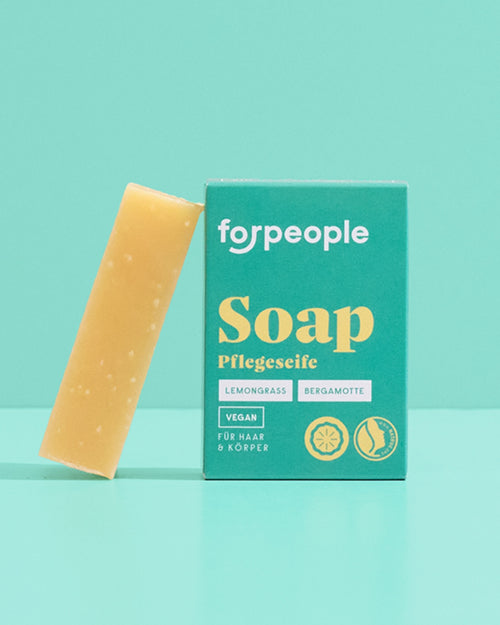
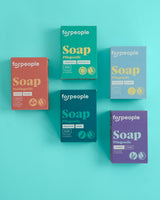
How much cleansing is needed depends on the part of the body. If you like, soap only the areas where sweat and sebum collect, such as armpits and feet, and let water do for arms and legs. That is practice, not a fixed rule; details are in Do I need to soap my whole body in the shower? The order stays the same: cleanse first, then the oil. A bar soap such as the Aloe Vera Soap - Lemongrass and a body oil are two separate steps.
When to seek medical advice?
Seek medical advice if your skin regularly burns, reddens, flakes heavily or cracks after showering, or if it reacts to a new product. In that case stop using the product and take it or its ingredient list with you. If you are being treated for a skin condition, discuss your choice of cleansing and care with your doctor’s practice. No body oil belongs on broken or irritated skin.
Frequently asked questions
Can I wash myself with body oil?
No. A body oil contains no surfactants. It does not loosen sweat and dirt in a way that lets them be rinsed off, and it stays on the skin as a film itself. You cleanse beforehand.
Can I leave a shower oil on my skin like a body oil?
No. A shower oil is meant to be rinsed off; its surfactants are not supposed to stay on the skin. If you want an oil film after showering, use a body oil for that.
Do I still need to moisturise after using a shower oil?
That depends on the product and on your skin. Part of the oil can remain after rinsing. If your skin still feels tight, apply a body oil, a lotion or a body butter afterwards.
Do I apply body oil to wet or to dry skin?
To wet or still damp skin. The oil brings no water; it holds what is there. On dry skin only the film remains, and you need more oil.
Can I put body oil in my bath water?
Without an emulsifier, oil does not mix with water. It floats on top and makes the bath slick. The product page of our Body Oil Lemongrass mentions use as a bath oil; what to watch out for is covered in Body oil as bath oil: does it work without an emulsifier?
At forpeople
We do not carry a shower oil. With us, cleansing and care are two steps: bar soap for washing, then an oil without surfactants that stays on the skin.
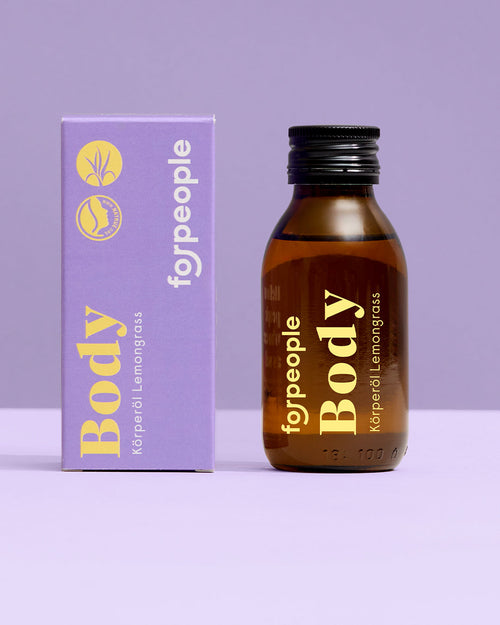
- Body Oil - Lemongrass, 100 ml, €16.90: sesame oil, safflower oil, sea buckthorn seed oil, sunflower oil, turmeric extract and lemongrass essential oil. According to the product page, you apply it after showering to skin that is still damp.
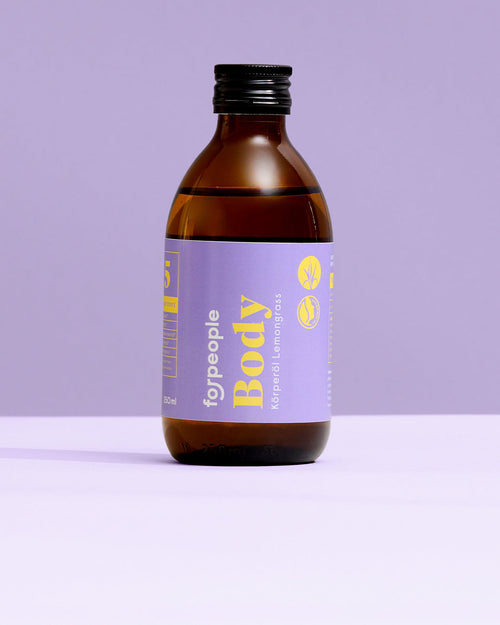
- Body Oil - Lemongrass large, 250 ml, €34.90: the same oil in the large bottle.
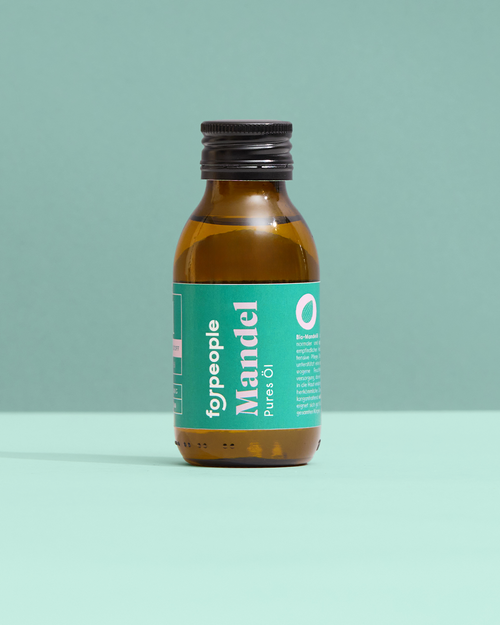
- Almond Oil - pure, 100 ml, €14.90: a single plant oil, without added scent according to the ingredient list.
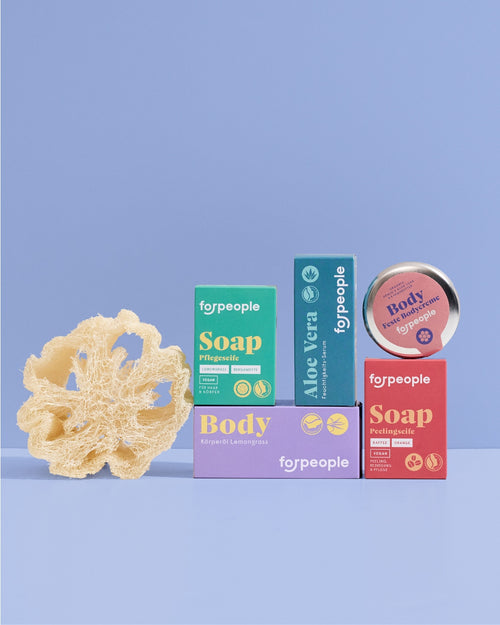
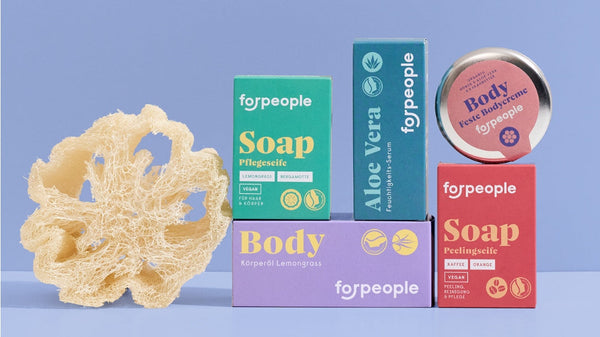
- Shower Care Set – Cleansing Without Drying Out, €49.90: six products for both steps – loofah shower sponge, Aloe Vera Soap - Lemongrass, Aloe Vera Soap with Scrub - Coffee & Orange, Body Oil Lemongrass, Aloe Vera Serum and solid body butter.
For the oils: do not use on broken or irritated skin and avoid contact with the eyes. If you notice a skin reaction, stop using the product.
More on this: Body oil or body lotion: what is the difference? · Body Oil or Body Butter – Which One When? · Bar soap or liquid soap: which is better for your hands?
From the blog: Less in the bathroom: a skincare routine with three products
Sources
- Verordnung (EG) Nr. 1223/2009 des Europäischen Parlaments und des Rates vom 30. November 2009 über kosmetische Mittel, Präambel der Anhänge II bis VI Nr. 1 Buchst. a und b. ABl. L 342 vom 22.12.2009, S. 59; konsolidierte Fassung vom 01.09.2025. https://eur-lex.europa.eu/eli/reg/2009/1223/oj
- Walters RM, Mao G, Gunn ET, Hornby S (2012): Cleansing formulations that respect skin barrier integrity. Dermatology Research and Practice 2012: 495917. https://doi.org/10.1155/2012/495917
- Ananthapadmanabhan KP, Moore DJ, Subramanyan K, Misra M, Meyer F (2004): Cleansing without compromise: the impact of cleansers on the skin barrier and the technology of mild cleansing. Dermatologic Therapy 17 Suppl 1: 16–25. https://doi.org/10.1111/j.1396-0296.2004.04s1002.x
- Lodén M, Buraczewska I, Edlund F (2004): Irritation potential of bath and shower oils before and after use: a double-blind randomized study. British Journal of Dermatology 150(6): 1142–1147. https://doi.org/10.1111/j.0007-0963.2004.05923.x
- Sethi A, Kaur T, Malhotra SK, Gambhir ML (2016): Moisturizers: The Slippery Road. Indian Journal of Dermatology 61(3): 279–287. https://doi.org/10.4103/0019-5154.182427