


Why oil and water do not mix
Oil is lighter than water and does not dissolve in it. In the tub it spreads across the surface. A bath of this kind is therefore called a spreading or floating oil bath. Some of the oil collects at the edge of the tub, some settles on your skin as you move and get out.
An emulsifier changes that. Its molecules have a water-loving and a fat-loving side and keep oil droplets suspended in the water. The water turns milky; this kind of bath is called an emulsion bath. Bath oils from the shops come in both types. More on this: Emulsifiers in Cosmetics: What They Do.
A body oil made of plant oils contains no emulsifier. In bath water it therefore gives you a floating oil bath.
Three options compared
| Option | What happens in the water | What stays on your skin | What to watch |
|---|---|---|---|
| Oil straight into the water (floating oil bath) | The oil floats as a film on the surface. | An oil film, mostly from getting out. How much cannot be controlled. | Tub and skin are slippery; oil stays at the edge. |
| Oil with an emulsifier (emulsion bath) | The oil disperses in fine droplets and the water turns milky. | Finely dispersed oil; residues of the emulsifier may stay as well. | Emulsifiers are surfactants; products turn out differently. |
| Oil only after the bath | Nothing, the water stays clear. | The whole film, where you apply it. | Just pat your skin, then oil on skin that is still damp. |
The table is our assessment, not a measurement.
What measurements on oil baths show
The few studies there are deal with ready-made bath oils, not body oils.
- The film stays, the moisture does not. In a trial on healthy skin, the horny layer was more hydrated for about 20 minutes after a bath with bath oil and after a bath in tap water; at the skin surface there was no clear difference. The lipids on the skin, by contrast, were raised for at least three hours after the oil bath, much as after a lotion. Whether the bath lasted 5 or 20 minutes made no difference (Stender et al. 1990).
- Used regularly, measurable. For four weeks, 60 volunteers with mildly to moderately dry skin used either a commercially available bath oil every other day or carried on with their usual cleansing product without oil. At the end, water loss through the skin was lower in the bath oil group and the horny layer more hydrated; roughness and pH did not differ (Kottner et al. 2017).
- Not every bath oil is mild. In a comparison of eight bath and shower oils, some irritated the skin of healthy volunteers no more than water did, others clearly more. The study looked for surfactant residues; after rinsing, residues were found that impaired the skin barrier (Lodén et al. 2004). A pure plant oil contains no surfactants.
For a body oil in bath water this means: a film on the skin is plausible, but nobody has measured it for this use. The water itself makes skin more hydrated only briefly. Why it can even feel tight afterwards is explained in Why does skin feel tight after a shower?
Cream or milk as an emulsifier
Many recipes stir the oil into a cup of cream or milk first. There is chemistry behind this: milk is itself an emulsion of fat droplets in water. Its proteins, casein and whey proteins, settle at the boundary between oil and water and can stabilise oil-in-water emulsions (Dickinson 2001). Stirred vigorously with cream, some of the oil disperses more finely in the water than it would on its own.
How well this works in a full tub, nobody has measured. Expect oil to float on top all the same. Dairy products spoil quickly: mix only the portion for one bath and rinse the tub afterwards.
How to go about it
- Run the water: comfortably warm, not hot. In a trial with 50 people, water loss through the skin rose far more after ten minutes in hot water of around 41 °C than in cold water (Herrero-Fernandez et al. 2022). The measurements were taken on the hands, not in a bathtub.
- Add the oil: one to two tablespoons for a full bath, into the water at the end. The amount is common practice, not a measured value.
- Bathe: ten to fifteen minutes are usual. Soap and shower gel remove the oil film again, so wash beforehand.
- Get out: slowly, with a firm grip, onto a non-slip mat.
- Pat dry instead of rubbing: that way the film stays on your skin.
- Clean the tub straight away: pick up the oil ring with kitchen paper instead of rinsing it down the drain, then wipe with warm water and a little washing-up liquid. Otherwise the next person will slip.
Without the slipping it works like this: bathe in clear water, pat dry and spread the oil on skin that is still damp. According to a review, occlusive substances have their most pronounced effect on slightly damp skin (Sethi et al. 2016). More on this: How soon should you moisturise after a shower? The 3-minute rule.
Essential oils in the bath
Essential oils dissolve in water no better than fatty oils do. Dripped neat into the tub, they float undiluted on the surface and meet your skin that way. The practical rule is therefore: never neat into the bath water, but diluted in a fatty oil first. Usual amounts are given in Mixing your own massage oil: how much essential oil per 100 ml?
In a ready-made body oil the essential oils are already diluted. Even so, a full bath is not the same as oiling your skin: the whole body is in contact for longer, including areas you would otherwise leave out. So try a scented oil with a small amount first and keep your face and eyes out of the water. If you react to a fragrance ingredient, use an oil without added fragrance. Background: Essential Oils and Fragrance Allergens.
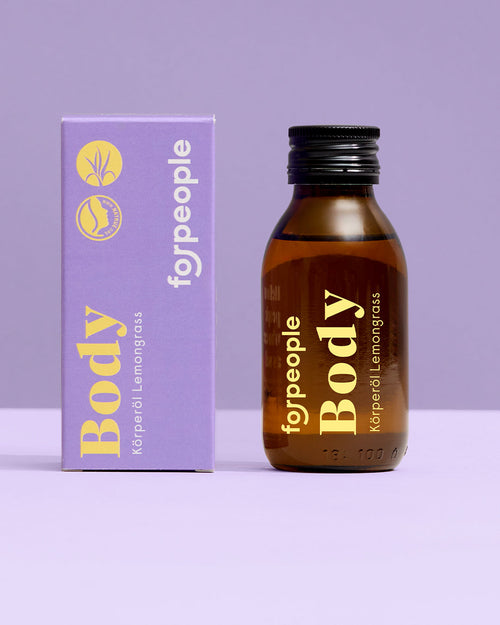
For Body Oil - Lemongrass, the product page names use as a bath oil. For Body Oil - Cinnamon & Cloves, it does not name any use in the bath.
When to seek medical advice?
Seek medical advice if your skin repeatedly burns, reddens or develops hives after bathing, if a reaction has not subsided after one to two days, or if your skin stays dry and cracked for weeks despite care. With a known skin condition or broken skin, ask before taking an oil bath. If you are unsteady on your feet, do without oil in the bath water and oil your skin afterwards while sitting down.
Frequently asked questions
Do I need an emulsifier for an oil bath?
No. Without an emulsifier the oil floats on top and settles on your skin as you get out. With an emulsifier it disperses in the water.
How much body oil do I add to the bath water?
One to two tablespoons for a full bath are usual. That is practice, not a measured value. More oil mainly makes the tub more slippery.
Do I have to shower after an oil bath?
No. Shower gel or soap would take the film off again. Just pat yourself dry.
Does the oil stain towels?
It can. Some oils are also naturally coloured, for example by sea buckthorn seed oil or turmeric. On light textiles, try it in an inconspicuous spot first: Does body oil stain? Clothes, bed linen, towels
Is a shower oil the same as a body oil in water?
No. A shower oil is a cleansing product with surfactants and is rinsed off. The difference is explained in Shower oil or body oil: what is the difference?
At forpeople
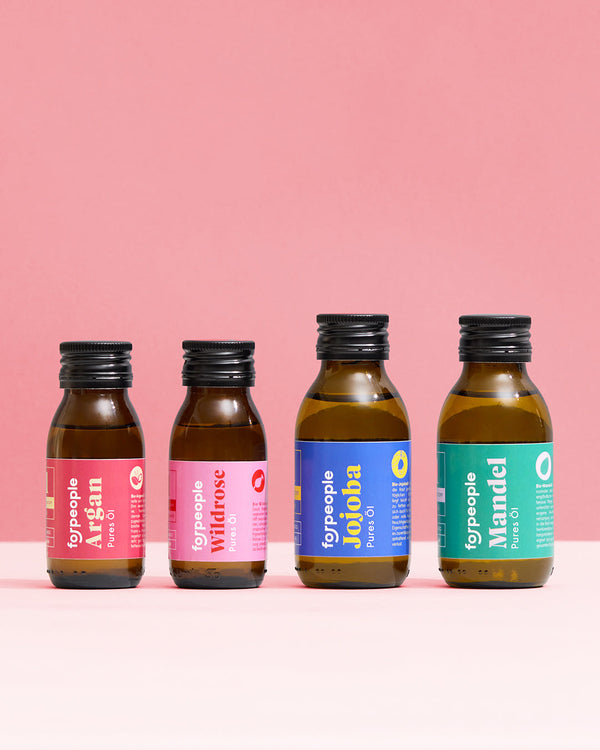
We do not carry a dedicated bath oil. These four products fit the topic; the ingredient list and safety notes are on the product page.
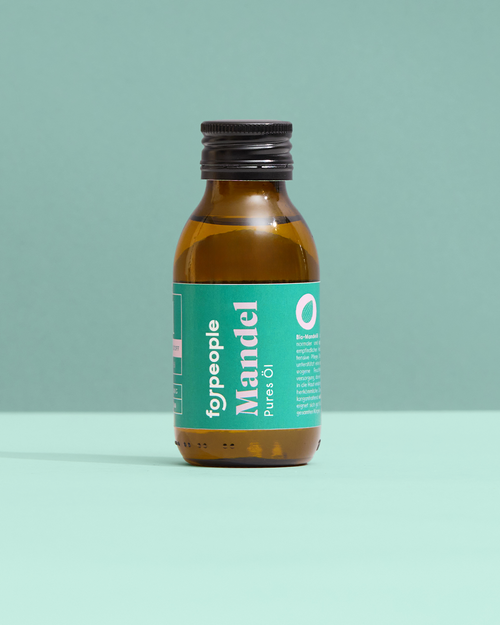
- Almond Oil - pure, 100 ml, €14.90: pure almond oil according to the ingredient list, without added fragrance. For the tub or for afterwards.
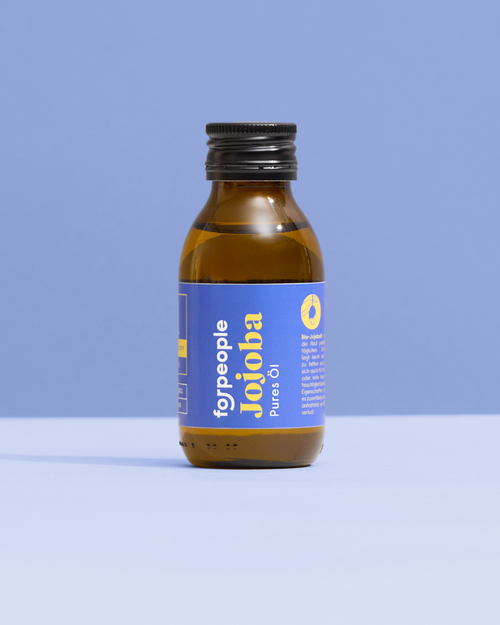
- Jojoba Oil - pure, 100 ml, €16.90: also without added fragrance.
- Body Oil - Lemongrass, 100 ml, €16.90: sesame, safflower, sea buckthorn seed and sunflower oil with turmeric extract and essential lemongrass oil; the list names citral, geraniol and citronellol. The oil is naturally coloured.
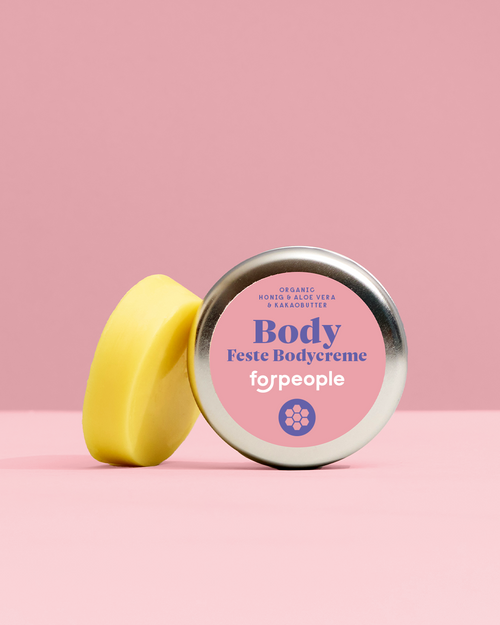
- Solid Body Butter - Beeswax & Aloe Vera, 40 g, €9.90: for care after the bath instead of oil in the water. According to the ingredient list: cocoa butter, olive oil, beeswax, sunflower oil, shea butter and aloe vera leaf extract. It is easiest to spread on warm skin that is still slightly damp.
For all of them: do not use on injured or irritated skin. If you notice a skin reaction, stop using the product.
More on this: Body Oil or Body Butter – Which One When? · Jojoba oil: why it is a liquid wax · Making a body scrub from oil and sugar
From the blog: Face & Body Oils: Which Oil Suits Which Skin Type?
Sources
- Stender IM, Blichmann C, Serup J (1990): Effects of oil and water baths on the hydration state of the epidermis. Clinical and Experimental Dermatology 15(3): 206–209. https://doi.org/10.1111/j.1365-2230.1990.tb02073.x
- Kottner J, Kanti V, Dobos G, Hahnel E, Lichterfeld-Kottner A, Richter C et al. (2017): The effectiveness of using a bath oil to reduce signs of dry skin: A randomized controlled pragmatic study. International Journal of Nursing Studies 65: 17–24. https://doi.org/10.1016/j.ijnurstu.2016.10.010
- Lodén M, Buraczewska I, Edlund F (2004): Irritation potential of bath and shower oils before and after use: a double-blind randomized study. British Journal of Dermatology 150(6): 1142–1147. https://doi.org/10.1111/j.0007-0963.2004.05923.x
- Dickinson E (2001): Milk protein interfacial layers and the relationship to emulsion stability and rheology. Colloids and Surfaces B: Biointerfaces 20(3): 197–210. https://doi.org/10.1016/s0927-7765(00)00204-6
- Herrero-Fernandez M, Montero-Vilchez T, Diaz-Calvillo P, Romera-Vilchez M, Buendia-Eisman A, Arias-Santiago S (2022): Impact of Water Exposure and Temperature Changes on Skin Barrier Function. Journal of Clinical Medicine 11(2): 298. https://doi.org/10.3390/jcm11020298
- Sethi A, Kaur T, Malhotra SK, Gambhir ML (2016): Moisturizers: The Slippery Road. Indian Journal of Dermatology 61(3): 279–287. https://doi.org/10.4103/0019-5154.182427