


What the scrub does and does not do
A mechanical scrub rubs loose cells off the surface of the horny layer. Your skin feels smoother afterwards. Part of that feeling comes from the oil that stays behind as a film. The grains do not make skin drier or less dry; you should not expect more than a smoother surface.
The American association of skin doctors (AAD) notes that exfoliating does not suit every skin and, done wrongly, can do more harm than good; for dry skin, a mechanical scrub may be too irritating (AAD 2026). How much horny layer a scrub may remove before the barrier suffers is explained in Hand scrub for dry hands: a good idea or not?
Basic recipe and steps
For arms and legs, two tablespoons of fine sugar and one tablespoon of oil are enough, stirred together in a small bowl. If you like it softer, use a little more oil. The ratio is common practice and has not been measured. Any fresh plant oil will do. The technique follows the AAD's guidance (AAD 2026).
- Wash first: soap and shower gel come before the scrub. Afterwards they would take the oil film off again.
- Turn off the water: your skin stays wet. Stand on a non-slip mat or sit on the edge of the tub.
- Rub in: in small circles and with light pressure, about 30 seconds per area of the body.
- Rinse: lukewarm, not hot, and without soap. The sugar dissolves as you do.
- Pat dry: do not rub. Your skin is now lightly oiled.
- Moisturise: exfoliating can dry the skin; the AAD advises moisturising straight afterwards. Often the oil film is enough. Dry areas get some extra oil or a solid butter.
- Clean the floor: oil makes the shower and tub slippery. Rinse with warm water and wipe with a little washing-up liquid.
Sugar, salt or coffee grounds?
Nobody has compared these home remedies on the body. For wash products with abrasive grains there is one measurement: after 18 washes in five days, water loss and redness on the forearm were raised and the horny layer was drier, to a different degree depending on the type, surface and amount of the grains (Wigger-Alberti et al. 1999). Those were frequent washes with surfactant, not an occasional scrub with oil. The direction still holds: shape and size of the grains, pressure and frequency decide. The table reflects experience.
| Grain | Dissolves in water? | How it feels | What to watch |
|---|---|---|---|
| Fine household sugar | yes, quickly | mild; the crystals gradually dissolve on wet skin | the usual place to start |
| Coarse or brown sugar | yes, more slowly | stronger | only with very light pressure; not needed for most areas |
| Salt | yes | coarse salt has sharp edges | stings on freshly shaved skin and in small cracks |
| Coffee grounds | no | irregular grains | they are moist and spoil quickly, so use them fresh only; do not rinse them down the drain, catch them in a strainer |
How long does the mixture keep?
Recipes online give two weeks to two months, mostly without a reason. The answer depends on one question: does water get in?
Without water, the oil limits the shelf life. Bacteria, yeasts and moulds need water; a review on preservation calls it an ideal growth factor for microorganisms (Halla et al. 2018). Sugar and oil contain none. What remains is oxidation: oxygen, light and warmth turn oils rancid (Choe & Min 2006). A mixture that is kept dry therefore lasts about as long as the oil it is made of. Unrefined jojoba oil has high oxidative stability (Gad et al. 2021). How to recognise an oil that has turned is covered in How to tell if a skin oil is rancid.
With water, that changes. Wet fingers carry shower water, skin flakes and germs into the jar. Cosmetics can be contaminated not only during manufacture but also during use, and jars are more prone to this than closed dispensers (Halla et al. 2018). Sugar does bind water; that is how foods are preserved. But very sugary environments in particular are home to specialised yeasts and moulds, some of which get by with very little available water (Grant 2004). When a jar with water in it will turn, nobody can predict at home.
- Safest: mix it fresh every time.
- In advance: only water-free, in a screw-top jar outside the shower; take it out with a dry spoon and note the date.
- Coffee grounds, fresh lemon peel or herbs bring water with them. Such mixtures are not for keeping.
- Throw it away if the mixture smells rancid or musty, changes colour or shows spots.
Why water makes the difference is explained in How long does homemade cream last?
How often, and where not
The AAD does not give a fixed number. Its principle: the more vigorous the exfoliation, the less often; exfoliating too often leaves skin red and irritated (AAD 2026). In practice, for the body: once a week at most, less often for dry skin.
- Face: the mixture is too coarse for it.
- Freshly shaved skin: shaving already puts strain on the horny layer. Scrub the day before or leave a day in between. More on this: Moisturising after shaving your legs: what and when?
- Injured skin and skin after too much sun: no scrub (AAD 2026). Leave irritated skin alone as well.
- Intimate area and mucous membranes: leave them out.
- Elbows and knees: light pressure here too. Skin answers vigorous scrubbing with more horny layer; see Why are elbows and knees so dry?
If you would rather not mix anything, use a loofah sponge or a soap with grains. The comparison is in Loofah, sisal or exfoliating soap: which suits the body? Use only one of them on any one day.
When to seek medical advice?
A scrub does not belong on open, weeping or very red areas. Seek medical advice if redness or burning after a scrub has not subsided after one to two days, if pustules keep forming after scrubbing or shaving, if your skin flakes or peels for no apparent reason, or if rough patches persist for weeks despite care. With a known skin condition, ask beforehand.
Frequently asked questions
What is the right ratio of sugar to oil?
Two parts sugar to one part oil are usual. More oil makes the mixture softer and helps it glide, more sugar makes it firmer. This has not been measured.
Which oil is suitable for a sugar scrub?
Any fresh plant oil, including a cooking oil from the kitchen. For a mixture made in advance, an oil that turns rancid slowly makes sense, for example jojoba oil.
How long does a homemade sugar scrub keep?
Water-free and taken out dry, about as long as the oil used. Once there is water in the jar, that can no longer be predicted. If in doubt, mix it fresh.
Can I use the scrub on my face?
No. The mixture is too coarse for the face. Use it only on arms, legs and torso.
Can I use a scrub after shaving?
Preferably not on the same day. Shaving already puts strain on the horny layer, and salt stings on freshly shaved skin. It is better to scrub the day before.
Do I still need to moisturise after the scrub?
Often the oil film that stays after rinsing is enough. If your skin still feels tight, put a little oil or a solid butter on skin that is still damp.
At forpeople
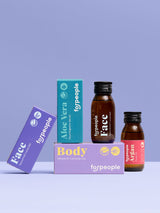
You do not need to buy a sugar scrub. From us come the oil for it and two alternatives that need no mixing. Ingredient lists and safety notes are on each product page.
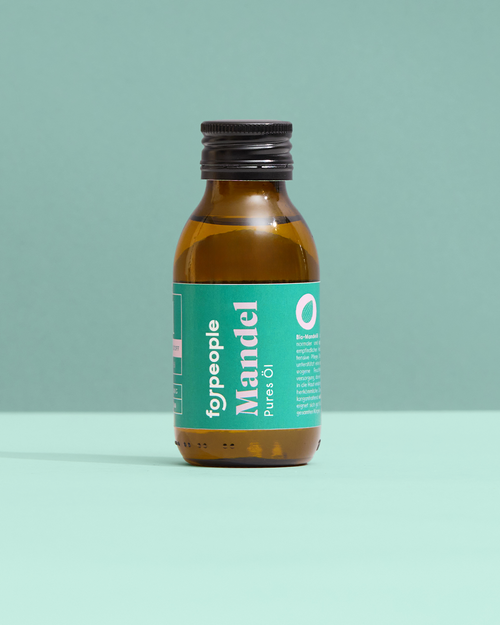
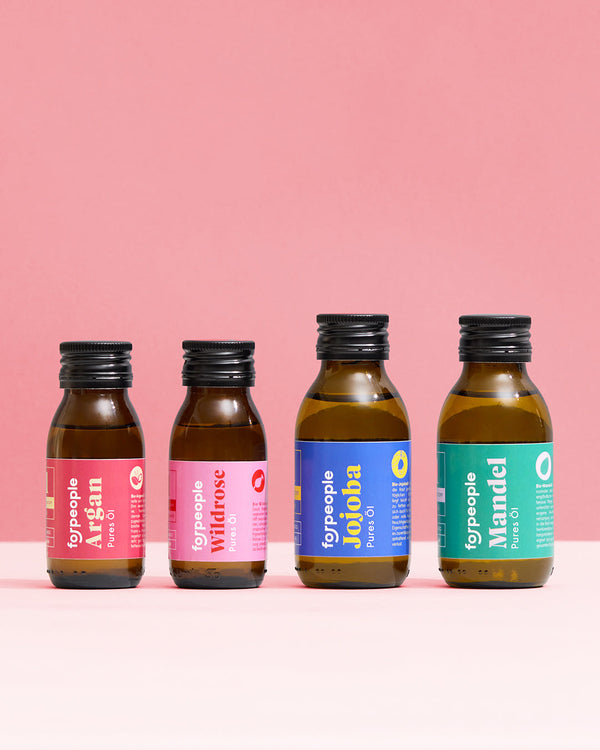
- Almond Oil - pure, 100 ml, €14.90: pure almond oil according to the ingredient list, without added fragrance. As the oil for the scrub or on its own for afterwards.
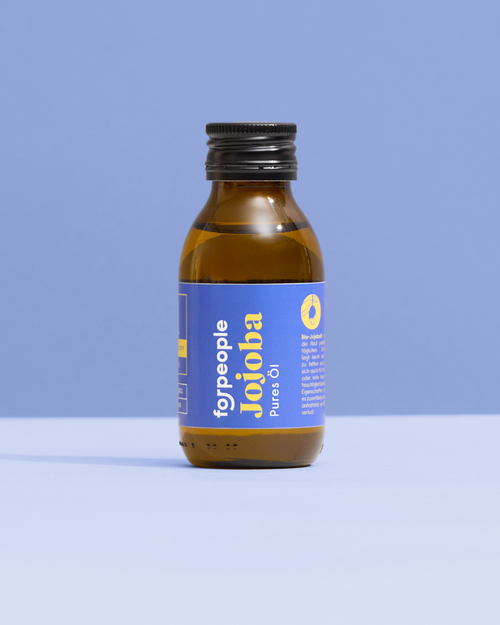
- Jojoba Oil - pure, 100 ml, €16.90: also without added fragrance. Chemically, jojoba oil is a liquid wax and turns rancid slowly.
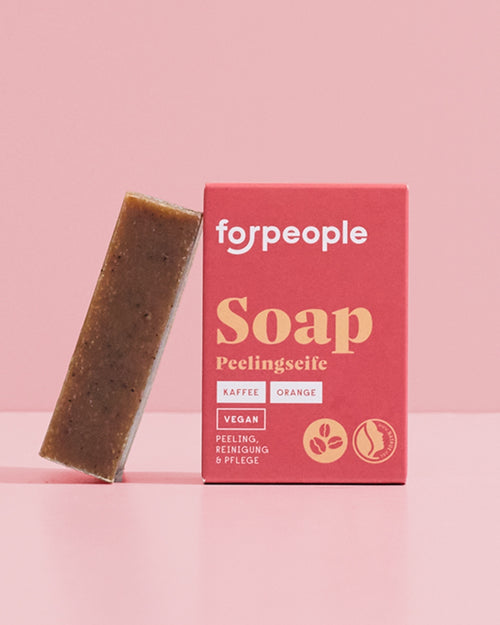
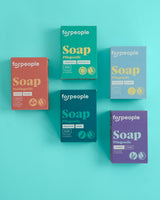
- Aloe Vera Soap with Scrub - Coffee & Orange, 75 g, €8.90: a soap with ground coffee as the exfoliating grain. It contains essential oils of orange and bitter orange; the list names limonene, pinene and linalool.
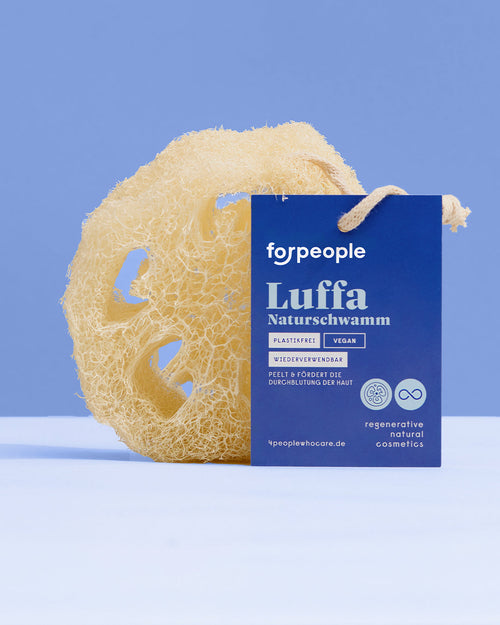
- Luffa Shower Sponge - Cleansing & Exfoliation, €4.90: the dried fibre skeleton of the luffa fruit. How to look after it is covered in Loofah sponge: how to clean it, how often to replace it?
For all of them: do not use on injured or irritated skin. If you notice a skin reaction, stop using the product.
More on this: Body oil as bath oil: does it work without an emulsifier? · Jojoba oil: why it is a liquid wax · Hygiene and Water-Free Cosmetics: What to Watch
From the blog: Face & Body Oils: Which Oil Suits Which Skin Type?
Sources
- American Academy of Dermatology (2026): How to safely exfoliate at home. Zuletzt aktualisiert am 06.02.2026, abgerufen am 08.10.2026. https://www.aad.org/public/everyday-care/skin-care-secrets/routine/safely-exfoliate-at-home
- Wigger-Alberti W, Fischer T, Greif C, Maddern P, Elsner P (1999): Effects of various grit-containing cleansers on skin barrier function. Contact Dermatitis 41(3): 136–140. https://doi.org/10.1111/j.1600-0536.1999.tb06104.x
- Halla N, Fernandes IP, Heleno SA, Costa P, Boucherit-Otmani Z, Boucherit K et al. (2018): Cosmetics Preservation: A Review on Present Strategies. Molecules 23(7): 1571. https://doi.org/10.3390/molecules23071571
- Choe E, Min DB (2006): Mechanisms and factors for edible oil oxidation. Comprehensive Reviews in Food Science and Food Safety 5(4): 169–186. https://doi.org/10.1111/j.1541-4337.2006.00009.x
- Gad HA, Roberts A, Hamzi SH, Gad HA, Touiss I, Altyar AE et al. (2021): Jojoba Oil: An Updated Comprehensive Review on Chemistry, Pharmaceutical Uses, and Toxicity. Polymers (Basel) 13(11): 1711. https://doi.org/10.3390/polym13111711
- Grant WD (2004): Life at low water activity. Philosophical Transactions of the Royal Society of London. Series B, Biological Sciences 359(1448): 1249–1266. https://doi.org/10.1098/rstb.2004.1502