








What the blade does to your skin
This has mainly been measured on the underarm. There, a mean of 36.1 per cent of what the blade removed was skin, more precisely stratum corneum (Turner et al. 2007). After a dry shave, images showed fine pale lines of lifted skin flakes. And the same test products caused more irritation on the forearm when the area had been shaved beforehand (Marti et al. 2003).
With the stratum corneum, a piece of the barrier is missing. In a laboratory experiment on a skin model, water loss rose immediately after a single dry stroke with the razor (Costello et al. 2023). In a study with ten men, it was raised on the cheek and neck 20 minutes after an electric shave and was close to the starting value again after 24 hours (Chaturvedi et al. 2024).
We found no measurement of shaving specific to the legs; we are transferring these findings. On top of that, the skin on the legs has little oil of its own; the figures are under Why are shins dry and flaky in winter?
Why some lotions sting afterwards
Stinging and burning arise when a substance reaches the nerve endings in the skin. An intact stratum corneum keeps most substances away from them. In one series of experiments it was stripped off with adhesive tape. After that, the test solutions stung immediately and intensely in everyone tested, including on the back, where nothing had been felt on intact skin. Where only part of the stratum corneum had been stripped, the stinging was weaker but still noticeable. The solvent of one of the test solutions, 95 per cent alcohol, stung almost as much on its own (Frosch & Kligman 1977). The groups were small, and the tests were done on the face and back.
Two further results help when choosing a product. Acids as a class tended to cause strong stinging. And the same test substance stung most in an alcoholic solution, markedly less in a cream and hardly at all in two ointment bases (Frosch & Kligman 1977). A review article also names lactic acid and urea as examples of unpleasant sensations on the skin (Lodén 2003).
Stinging is a stimulus, not a sign that a product is working particularly well. More on the substance groups is under Why does hand cream sting on cracked hands?
Straight away or later?
| Substance group | How it appears in the ingredient list | After shaving |
|---|---|---|
| Plant oils, plant butters, waxes | for example Prunus Amygdalus Dulcis Oil, Butyrospermum Parkii Butter, Cera Alba | straight away, thinly, if the skin is uninjured |
| Water and plant juice | Aqua, Aloe Barbadensis Leaf Juice | usually straight away; try on a small area first |
| Alcohol | Alcohol, Alcohol denat. | later |
| Acids and urea | Lactic Acid, Glycolic Acid, Salicylic Acid, Urea | later, the next day |
| Fragrances and essential oils | Parfum, names of essential oils, plus for example Limonene, Linalool, Citral | the next day |
| Exfoliation | not a single substance: granules, sugar, salt or a glove | not on the same day |
The right-hand column is a rule of caution. What has been measured is the higher irritability of shaved skin overall; which substance stings on you is individual. For fragrances we found no series of measurements on shaved skin. None of these substances is a bad ingredient for that reason: urea and lactic acid are well-established humectants, see Urea or water-free cream? Rough heels and dry hands.
The steps: what and when
- Rinse: Rinse off foam or oil residue and hair with lukewarm to cool water.
- Pat dry: Press the towel onto the skin instead of rubbing. It can stay slightly damp.
- Look: Is the skin clearly red, does it sting, or have you cut yourself? Then stick to water. Skincare goes back on only once the skin looks normal again.
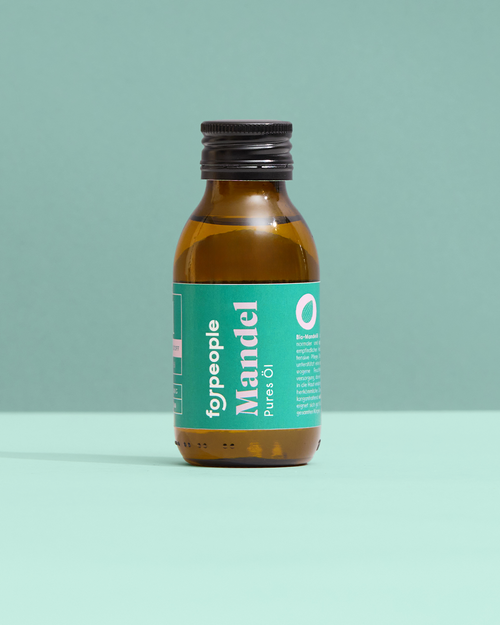
- Keep it plain: Spread a few drops of a pure oil such as Almond Oil - pure or a little solid body butter with flat hands, without rubbing. Both are easiest to spread on warm, still slightly damp skin.
- Let it sink in: Wait a few minutes before putting clothes on over it.
- Everything else later: Scented body lotion, body oil with essential oils, acids and exfoliation come back the next day.
We do not know of a waiting time established in studies. Overnight is the simplest solution: shave in the evening, keep the care plain, and go back to your usual products in the morning. On shaving itself, see Shaving with oil instead of foam: does that work?
Tight clothing, tights, sport
Close-fitting fabric rubs over freshly shaved skin with every step. Then there is sweat: in the experiments, stinging was easier to trigger on sweaty skin, because damp skin lets substances through more readily (Frosch & Kligman 1977).
- Before sport: Shave the evening before, not shortly before training.
- Before tights or tight trousers: Apply the product thinly and let it sink in before you get dressed. Oils and fats can leave marks on fabric.
- After sport: Shower first, then moisturise. More under Moisturising after exercise: straight after the shower or wait?
Chest, arms and back
The same rules apply to other shaved parts of the body: rinse, pat dry, keep the care plain, scent later. For the underarms, the essentials are under Deodorant after shaving: why does it sting, and what helps?, for the face under After shaving: what does facial skin need?
When to seek medical advice?
Slight redness and brief stinging that fade quickly are not unusual after a shave. Seek medical advice if razor burn lasts for days or comes back after every shave, if razor bumps, pustules or painful lumps form, if ingrown hairs or inflammation develop, if a cut does not stop bleeding, swells or produces pus, or if you suspect an allergic reaction to an ingredient. A cream or an oil is not a treatment for any of this. Until then, do not shave over the affected areas and do not apply any skincare there.
Frequently asked questions
How long should I wait to moisturise after shaving?
With a plain, oil-based product without fragrance, not at all, as long as the skin is uninjured. With fragrance, acids or alcohol it is best to wait until the next day. As far as we know, there is no evidence-based minimum time.
Why does my body lotion sting after shaving?
Because part of the stratum corneum is missing and substances reach the nerve endings more easily. Possible triggers are alcohol, acids, urea and fragrances. If it stings, rinse the lotion off with water.
Can I use the solid body butter straight after shaving?
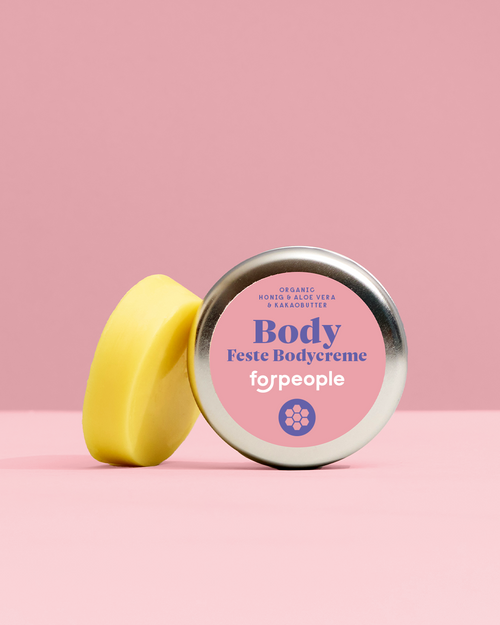
If the skin is uninjured and not irritated, yes. According to its ingredient list, Solid Body Butter - Beeswax & Aloe Vera contains no water, no alcohol and no essential oils. That is not a promise that every skin tolerates it.
And the Aloe Vera Serum?
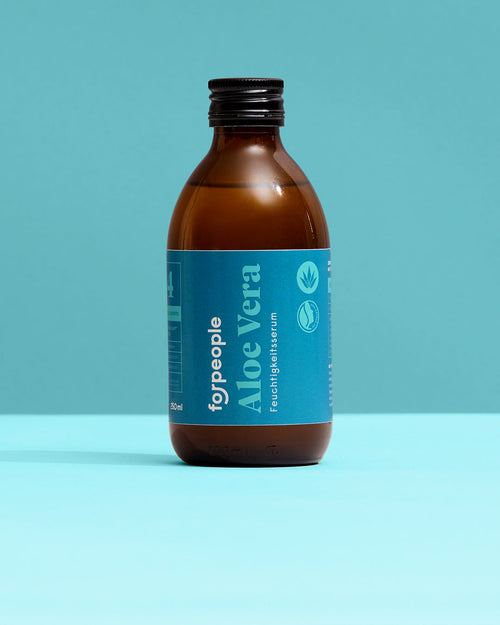
Aloe Vera Serum 99.6% is water-based and contains neither alcohol nor perfume. It is adjusted to a slightly acidic pH with citric acid, and it is preserved. On freshly shaved skin that can sting too; try it on a small area first. More under Aloe vera stings on your skin: what could be the cause?
Can a scented body oil go on my legs straight after shaving?
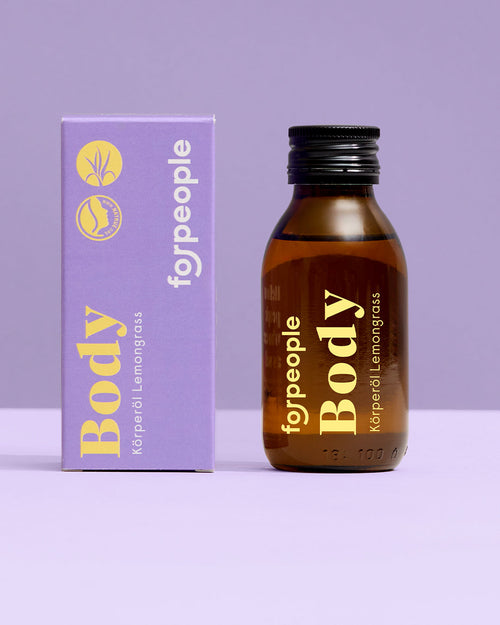
We recommend the next day. Body Oil - Lemongrass contains lemongrass essential oil, and its ingredient list names citral, geraniol and citronellol.
How do I try out a new product after shaving?
Not on the whole leg on the day you shave, but on a small area first: Trying a new product: how do I test it on a small area?
At forpeople
We do not make a body lotion. These products are an option after shaving.
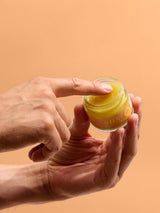
- Solid Body Butter - Beeswax & Aloe Vera, 40 g, €9.90: cocoa butter, olive oil, beeswax, sunflower oil, shea butter and aloe vera leaf extract, without added essential oils. It smells of beeswax.
- Almond Oil - pure, 100 ml, €14.90: a single oil without essential oils. If you are allergic to almonds, do not use it.
- Body Oil - Lemongrass, 100 ml, €16.90: sesame, safflower, sea buckthorn seed and sunflower oil with turmeric extract and lemongrass essential oil. From the day after shaving.
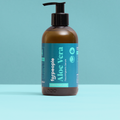
- Aloe Vera Serum 99.6%, 250 ml, €24.90: aloe juice, citric acid, potassium sorbate and sodium benzoate. The product page mentions use after shaving.
According to the product pages, the following applies to all four: avoid contact with the eyes and do not use on injured or irritated skin. If you notice a skin reaction, stop using the product.
More on this: Shaving with oil instead of foam: does that work? · Without fragrance and essential oils: ingredients at a glance · Why are shins dry and flaky in winter?
From the blog: Less in the bathroom: a skincare routine with three products
Sources
- Turner GA, Moore AE, Marti VP, Paterson SE, James AG (2007): Impact of shaving and anti-perspirant use on the axillary vault. International Journal of Cosmetic Science 29(1): 31–38. https://doi.org/10.1111/j.1467-2494.2007.00361.x
- Marti VP, Lee RS, Moore AE, Paterson SE, Watkinson A, Rawlings AV (2003): Effect of shaving on axillary stratum corneum. International Journal of Cosmetic Science 25(4): 193–198. https://doi.org/10.1046/j.1467-2494.2003.00186.x
- Costello L, Goncalves K, Maltman V et al. (2023): Development of a novel in vitro strategy to understand the impact of shaving on skin health: combining tape strip exfoliation and human skin equivalent technology. Frontiers in Medicine 10: 1236790. https://doi.org/10.3389/fmed.2023.1236790
- Chaturvedi P, Kroon W, Zanelli G, Worsley PR (2024): An exploratory study of structural and microvascular changes in the skin following electrical shaving using optical coherence topography. Skin Research and Technology 30(7): e13830. https://doi.org/10.1111/srt.13830
- Frosch PJ, Kligman AM (1977): A method for appraising the stinging capacity of topically applied substances. Journal of the Society of Cosmetic Chemists 28(5): 197–209. https://library.scconline.org/v028n05/1
- Lodén M (2003): Role of topical emollients and moisturizers in the treatment of dry skin barrier disorders. American Journal of Clinical Dermatology 4(11): 771–788. https://doi.org/10.2165/00128071-200304110-00005