





What shaving does to your skin
Beard hair is thick and stiff. According to a review on beard shaving, it has about twice the diameter of scalp hair, so the blade needs correspondingly more force (Maurer et al. 2016). How much skin the blade takes with it has been measured in the armpit: on average, 36.1 per cent of what was removed there was stratum corneum (Turner et al. 2007). For the face, the review describes that the blade can cut off small raised areas of skin around the hair openings.
Afterwards the skin gives off more water. In a study with ten men, water loss through the skin on the cheek and neck rose 20 minutes after an electric shave, on the neck to 2.8 times the starting value. After 24 hours it was close to the starting value again (Chaturvedi et al. 2024). The shave in that study was deliberately done with high pressure.
Shaved skin also reacts more strongly. In a standardised provocation test with histamine, the shaved armpit responded more clearly than the unshaved one (Turner et al. 2007). On the face, some people notice this as redness and stinging shortly after shaving. More pressure and several strokes over the same spot increase how likely and how pronounced this is. It is particularly common on the neck, partly because the hairs there emerge from the skin at a flatter angle (Maurer et al. 2016). The exact causes have not been studied much yet.
Aftershave lotion, balm, serum or oil
Four types of product are an option after shaving.
| Product type | Make-up | Feel on the skin | When it suits |
|---|---|---|---|
| Aftershave lotion | water and alcohol, usually with fragrance | evaporates quickly, cool and dry; can sting | if you like the fresh feel and the scent |
| Aftershave balm | emulsion of water and oil, often with glycerine; with or without alcohol and fragrance | creamy, light film | if your skin feels tight and one step should be enough |
| Water-based serum or gel | mainly water or plant juice, no fat | light, no film | as a first layer; on its own if nothing feels tight afterwards |
| Oil | fat only, no water; pure or with essential oils | smooth, slight sheen | as a second layer, in a small amount |
The table describes product types in general. What an individual product contains is shown in its ingredient list; alcohol appears there as “Alcohol” or “Alcohol denat.”.
Alcohol in an aftershave lotion has a purpose: it evaporates quickly, leaves a cool, dry feel and carries the scent. Many people like exactly that. On freshly shaved skin it can sting. Alcohol is not recommended for abraded and injured skin, partly because of the stinging to be expected (Lachenmeier 2008).
A review on skin care for men stresses that facial skin should get moisture back after shaving. It describes products with glycerine and emollients, that is, fats that make skin supple (Draelos 2012).
The steps after shaving
- Rinse: Rinse off any remaining lather with lukewarm to cool water.
- Pat dry: Press the towel onto your skin instead of rubbing. It can stay slightly damp.
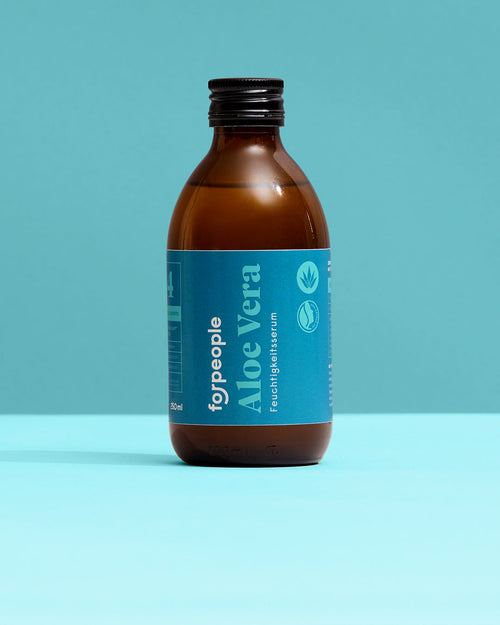
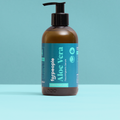
- Something water-based: Put a small amount of serum in your palm and pat it onto the shaved areas. A very liquid serum such as the Aloe Vera Serum 99.6% can also be sprayed on.
- Wait briefly: until nothing runs any more, usually less than a minute.
- A little oil: Rub two to three drops between your palms and press them on without rubbing. In the morning one to two are usually enough, otherwise your skin will shine.
These steps are common practice, not measured values. Two to three drops is what the product page states for the Face Oil; for a pure oil such as jojoba oil the number is a rule of thumb. Why the water-based layer comes first is explained under Combining aloe vera serum with oil or solid cream.
If your skin stings noticeably after shaving or is very red, stick to water that day. Skincare products do not belong on injured or irritated skin.
Scent is better later
Whether a fragrance ingredient stings on freshly shaved skin varies from person to person. The opening of the hair follicle is regarded as a place where substances from outside easily get into the skin (Maurer et al. 2016), and after shaving part of the stratum corneum is missing. So there is a good case for applying scent later in the day or on days without a shave. This is a rule of caution, not a measured result.
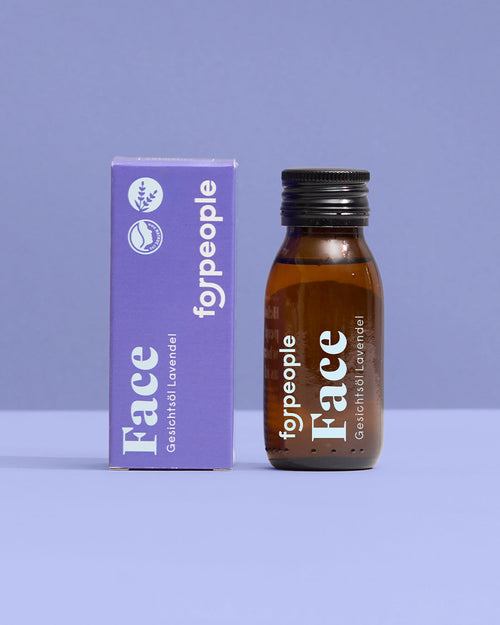
It also applies to a face oil with essential oil. The Face Oil - Lavender contains lavender oil; its ingredient list names linalool and limonene for it. It suits the evening better. More on these names: Essential Oils and Fragrance Allergens.
Does cold water close your pores?
No. A pore is the opening of a hair follicle with its sebaceous gland. It has no closure that opens and shuts. According to a review, how large pores look depends mainly on three things: the amount of sebum, the elasticity of the skin around the pore and the size of the hair follicle (Lee et al. 2016). Cool water feels fresh, and an aftershave lotion leaves a tight feel as it evaporates. In our assessment, both last only briefly and change nothing lasting about the pores.
With a beard: edges and neck
If you wear a beard, you usually shave only the edges: cheek line, neck and nape. The same steps apply there. On the neck it is especially worth shaving with little pressure and, if possible, only once over each spot.
Serum and oil go on the shaved edges. Whatever oil is left on your hands, you can stroke into the beard hair. More on this under Beard balm or beard oil: what is the difference? and Why does a growing beard feel scratchy, and what softens it?
When to seek medical advice?
Slight redness and brief stinging that fade quickly after shaving are not unusual. Seek medical advice if razor burn lasts for days or comes back after every shave, if pustules or painful bumps form, if hairs grow in, if a cut does not stop bleeding, swells or produces pus, or if you suspect you are reacting to an ingredient. A serum or an oil is not a treatment for that. Until then, do not shave over the affected areas and do not put anything scented on them.
Frequently asked questions
Why does aftershave lotion sting on freshly shaved skin?
Because after shaving part of the outermost stratum corneum is missing, and alcohol can sting on skin like that. If the stinging does not fade quickly, rinse the product off with water.
Do I have to give up aftershave lotion with alcohol?
No. If you like it and your skin neither stings nor feels tight afterwards, there is nothing against it. If it is only the stinging you dislike, apply it later in the day.
Is an oil on its own enough after shaving?
Sometimes. An oil contains no water; it makes skin supple and can slow evaporation. If your skin still feels tight, something water-based belongs underneath.
Can a serum without alcohol sting after shaving too?
Yes. The Aloe Vera Serum is adjusted to be slightly acidic with citric acid, and freshly shaved skin reacts more strongly than usual. If it stings, rinse it off with water and, on days when you shave, apply it only in the evening.
Does all this apply to electric shaving too?
In essence, yes. The measurement mentioned above comes from an electric shave. The steps afterwards stay the same; only rinsing off lather no longer applies.
At forpeople
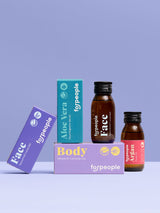
We do not carry an aftershave lotion or an aftershave balm. Our range includes a water-based serum and oils.
- Aloe Vera Serum 99.6%, 250 ml, €24.90: according to the ingredient list, aloe juice, citric acid, potassium sorbate and sodium benzoate. It contains neither alcohol nor perfume or essential oils, and no glycerine either; it contains water and is preserved. The product page mentions use after shaving.
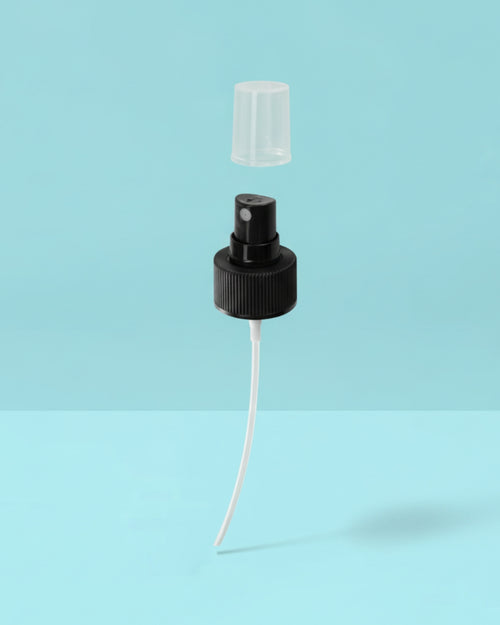
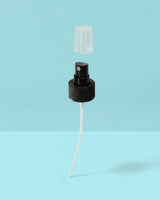
- Atomiser for Your Aloe Vera Serum, €3.90: a screw-on spray top, without contents. The product photo shows it on the serum's 250-ml bottle.
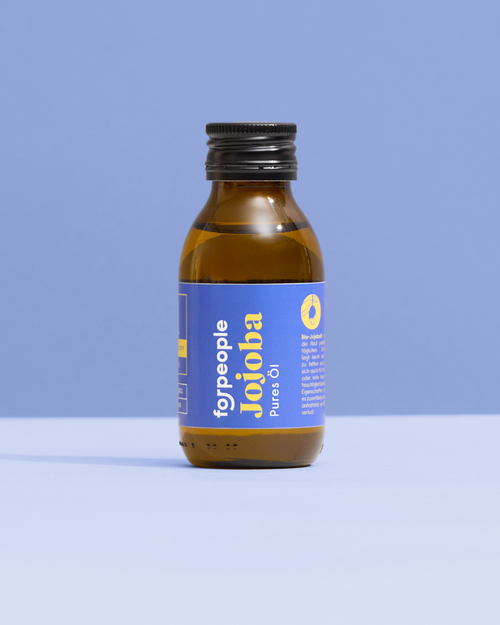
- Jojoba Oil - pure, 100 ml, €16.90: a single oil without essential oils.
- Face Oil - Lavender, 50 ml, €21.90: argan, rosehip, jojoba, borage and hemp oil with essential lavender oil. Better for the evening.
For the serum and the oils, the product pages say: avoid contact with the eyes and do not use on injured or irritated skin. If you notice a skin reaction, stop using the product.
More on this: Shaving with oil instead of foam: does that work? · Face care for men: what does the skin really need? · Caring for a shaved head: what does the scalp need? · Deodorant after shaving: why does it sting, and what helps?
From the blog: Aloe Vera Serum: What It's Really Good For – and What It Can't Do
Sources
- Maurer M, Rietzler M, Burghardt R, Siebenhaar F (2016): The male beard hair and facial skin – challenges for shaving. International Journal of Cosmetic Science 38 Suppl 1: 3–9. https://doi.org/10.1111/ics.12328
- Turner GA, Moore AE, Marti VP, Paterson SE, James AG (2007): Impact of shaving and anti-perspirant use on the axillary vault. International Journal of Cosmetic Science 29(1): 31–38. https://doi.org/10.1111/j.1467-2494.2007.00361.x
- Chaturvedi P, Kroon W, Zanelli G, Worsley PR (2024): An exploratory study of structural and microvascular changes in the skin following electrical shaving using optical coherence topography. Skin Research and Technology 30(7): e13830. https://doi.org/10.1111/srt.13830
- Lachenmeier DW (2008): Safety evaluation of topical applications of ethanol on the skin and inside the oral cavity. Journal of Occupational Medicine and Toxicology 3: 26. https://doi.org/10.1186/1745-6673-3-26
- Draelos ZD (2012): Male skin and ingredients relevant to male skin care. British Journal of Dermatology 166 Suppl 1: 13–16. https://doi.org/10.1111/j.1365-2133.2011.10784.x
- Lee SJ, Seok J, Jeong SY, Park KY, Li K, Seo SJ (2016): Facial Pores: Definition, Causes, and Treatment Options. Dermatologic Surgery 42(3): 277–285. https://doi.org/10.1097/DSS.0000000000000657