





What is different about a shaved scalp
The scalp is one of the areas with particularly many sebaceous glands. A review names the face and scalp as regions where they are numerous, while they are sparse on the back, for example (Smith & Thiboutot 2008). The glands sit in the skin at the hair follicle; the blade does not reach them. It seems likely that sebum which used to spread through the hair now lies as a film on smooth skin, and that this is why a shaved head shines easily. That is our reading, not a measurement.
At the same time, what the hair used to do is missing:
- Sun. Hair is a barrier against UVB and UVA radiation, the more so the denser, thicker and darker it is (de Gálvez et al. 2015). Without hair, the radiation hits the scalp directly.
- Cold and wind. The skin is exposed to the air.
- Friction. Hats, helmets and pillows rest directly on the skin or on short stubble.
Washing: what do you use instead of shampoo?
A shampoo has two jobs. It removes sebum, sweat and dirt from scalp and hair, and it is meant to leave the hair smooth and easy to comb afterwards; that is what its conditioning additives are for (Draelos 2010). The second job no longer applies to a shaved head. For the first, what you use on your face is enough: a mild cleanser or a soap, lukewarm water, a thorough rinse. More on soap under Can I use bar soap on my face?
Once a day is usually enough; after sport, rinse off sweat with water. That is common practice, not a measured value.
Shaving: blade or clippers?
After either, the skin can be temporarily red and sting. The following points come from a review on beard shaving (Maurer et al. 2016); for the head they are a guide.
- Wet shaving with a blade. It gives the smoothest surface, but the blade runs directly over the skin. More pressure and several strokes over the same spot increase the likelihood and extent of skin reactions. On uneven areas around the hair openings, the blade can leave tiny injuries.
- Clippers or an electric shaver. They cut on the scissor principle. Clippers without a guard leave very short stubble; from experience that is the gentler choice if your skin reacts to the blade.
For a wet shave it is worth soaking the stubble first. After one minute in water, the force needed to cut a beard hair drops by about 20 per cent, after four minutes by 40 per cent (Maurer et al. 2016). So shave at the end of your shower, with foam, soap or oil as a lubricating film, with little pressure and, if possible, only once over each spot. For shaving with oil, see Shaving with oil instead of foam: does that work?
Afterwards the same applies as on the face: rinse with cool water, pat dry, and only then apply skin care. More on this under After shaving: what does facial skin need?
Care afterwards: something water-based, very little oil
- After washing or shaving, pat your head only lightly dry.
- Spread a small amount of water-based serum between your palms and stroke it over the scalp.
- Wait briefly until nothing runs any more.
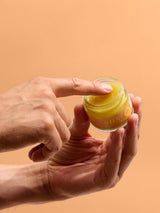
- Rub one to two drops of oil between your palms and stroke them over your head, including the back of your neck and the skin behind your ears.
- In the sun, sun protection follows as the last layer, or headwear.
The water-based product brings water to the skin, and the thin oil film slows evaporation, see Combining aloe vera serum with oil or solid cream. The number of drops is based on experience. If your head still looks clearly shiny after a few minutes, take off the excess with a cloth and use less next time.
Tightness, shine, cold, hats: the overview
The right-hand column sums up common practice.
| Issue | Where it comes from | What you do |
|---|---|---|
| Tightness after shaving | The blade runs over the skin; too much pressure, several strokes, hot water. | Rinse with cool water, pat dry, serum, a little oil. No skin care on red or injured areas. Take a day off or use clippers. |
| Shine | Many sebaceous glands; plus the oil and cream you apply. | Wash in the evening, blot with a cloth during the day. Use oil only in the evening or leave it out. |
| Sun | The barrier of hair is missing. | Headwear, shade at midday, sunscreen on uncovered skin; see below. |
| Cold and wind | The skin is exposed. | A hat. A film of fat does not warm you, see Cold cream: water-free, but no protection from frost. |
| Stubble under a hat or helmet | Short, stiff hairs catch on the fabric; add sweat and friction. | A smooth lining or a thin skull cap, wash helmet pads regularly, rinse your head after sport. |
Sun: headwear first
Germany's Federal Office for Radiation Protection calls clothing and headwear the best and simplest protection. Headwear should also protect the ears and the back of the neck. All uncovered areas are to be covered carefully and generously with sunscreen half an hour before going out, with a sun protection factor of at least 30 (BfS).
So with a cap or hat you only need sunscreen on your face, ears and neck. Without headwear the whole head is included, also the back of the head, the rims of the ears and the skin behind them. Mineral filters are white pigments; on a head without hair a pale sheen is more noticeable. Rubbing the sunscreen in thoroughly helps more than using less.
How much sunscreen is needed and when to reapply is covered in How much solid sunscreen do I need? The head has a page of its own, Parting, bald head, ears: sun protection for your head.
When to seek medical advice?
Redness and tightness shortly after shaving usually fade quickly. Seek medical advice if redness, stinging or pustules remain even after a few days without shaving, if hairs grow inwards or if areas weep and hurt. Also show a skin specialist any spot on your head that is new, changes, stays rough, bleeds or does not go away. You can hardly see the top of your own head; have someone take a look from time to time. Do not apply skin care to injured or irritated skin. If your skin reacts to a product, stop using it.
Frequently asked questions
Do I still need shampoo with a shaved head?
No. Sebum and sweat still need to come off the scalp, and a mild cleanser or a soap is enough for that. What a shampoo does for hair, a shaved head does not need.
How much oil goes on a shaved head?
One to two drops for the whole head, rubbed between your palms. If your scalp produces a lot of sebum, you can leave the oil out during the day.
Why does my head shine, and what can I do?
The scalp has many sebaceous glands, and on smooth skin the film shows straight away. Wash your head in the evening, blot it with a cloth during the day and use very little oil. The shine will not disappear completely.
Can I apply the aloe serum straight after shaving?
Yes, if the skin is uninjured. The product page mentions use after shaving and at the same time gives the advice not to use the serum on injured or irritated skin. With cuts or marked redness, stick to water.
Is sunscreen enough, or do I need a hat?
Headwear comes first. Sunscreen is meant for the skin that then remains uncovered, and for days without headwear.
At forpeople
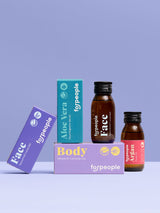
We do not offer a dedicated scalp care product. For the steps above there are:
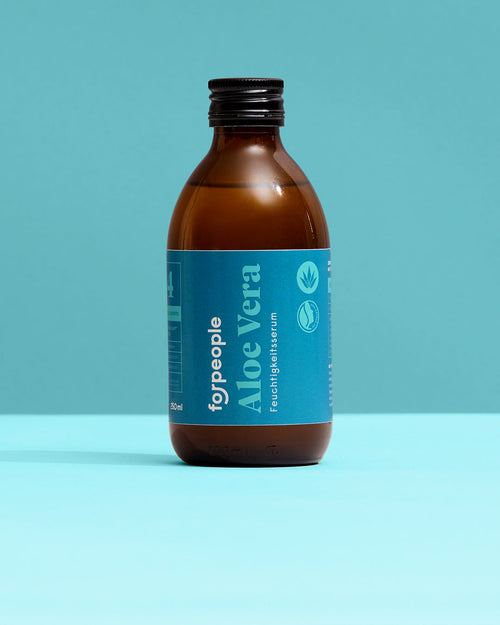
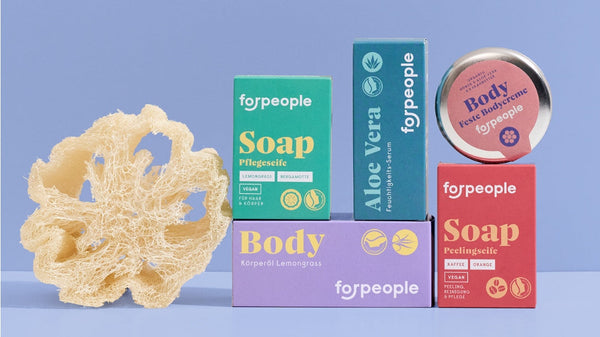
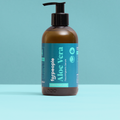
- Aloe Vera Serum 99.6%, 250 ml, €24.90: according to the ingredient list, aloe juice, citric acid, potassium sorbate and sodium benzoate. It contains water and is preserved; alcohol and essential oils are not on the list.
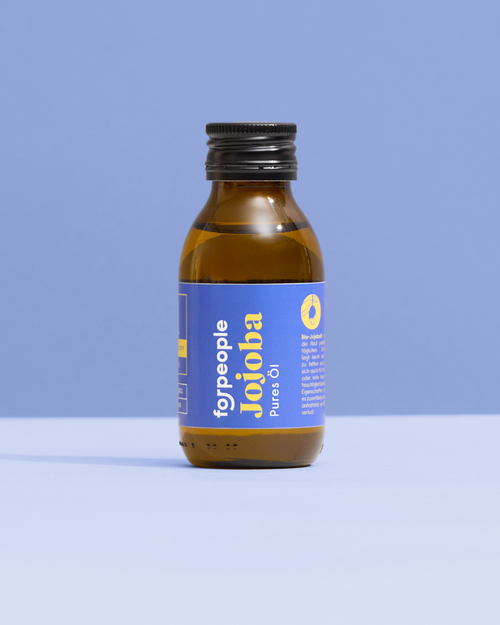
- Jojoba Oil - pure, 100 ml, €16.90: a single, thin oil without essential oils.
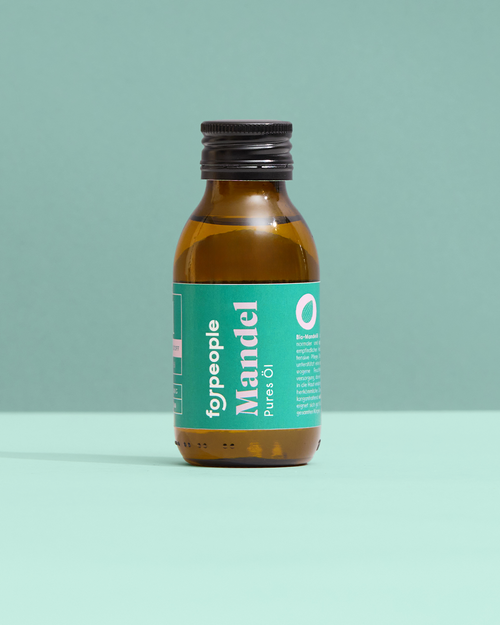
- Almond Oil - pure, 100 ml, €14.90: also a single oil with no added scent, slightly richer and better suited to the evening.
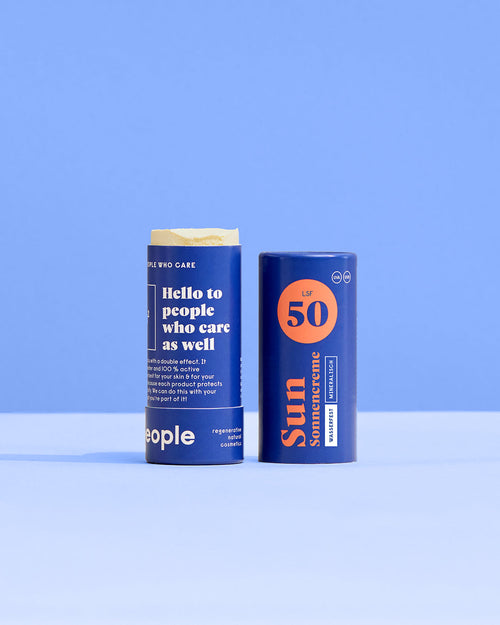
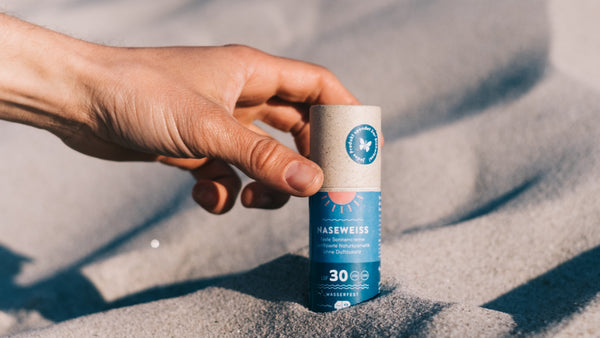
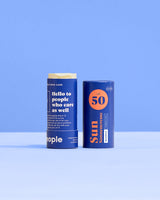
- Solid Sunscreen SPF50, €17.90: sun protection factor 50, tested as water-resistant, with the mineral filters zinc oxide and titanium dioxide, non-nano according to the ingredient list. It comes in a paper tube and has a minimum durability of 30 months from production.
For all four, the product pages say: avoid contact with the eyes and do not use on injured or irritated skin. If you notice a skin reaction, stop using the product.
More on this: Face care for men: what does the skin really need? · After shaving: what does facial skin need? · Why does a growing beard feel scratchy, and what softens it? · SPF, UVA and water resistance: what the labels mean
From the blog: Why does sunscreen leave a white cast? · Less in the bathroom: a skincare routine with three products
Sources
- Smith KR, Thiboutot DM (2008): Thematic review series: Skin Lipids. Sebaceous gland lipids: friend or foe? Journal of Lipid Research 49(2): 271–281. https://doi.org/10.1194/jlr.R700015-JLR200
- de Gálvez MV, Aguilera J, Bernabó JL, Sánchez-Roldán C, Herrera-Ceballos E (2015): Human Hair as a Natural Sun Protection Agent: A Quantitative Study. Photochemistry and Photobiology 91(4): 966–970. https://doi.org/10.1111/php.12433
- Draelos ZD (2010): Essentials of Hair Care often Neglected: Hair Cleansing. International Journal of Trichology 2(1): 24–29. https://doi.org/10.4103/0974-7753.66909
- Maurer M, Rietzler M, Burghardt R, Siebenhaar F (2016): The male beard hair and facial skin – challenges for shaving. International Journal of Cosmetic Science 38 Suppl 1: 3–9. https://doi.org/10.1111/ics.12328
- Bundesamt für Strahlenschutz (BfS): Tipps zum UV-Schutz (as of 4 August 2026). https://www.bfs.de/DE/themen/opt/uv/schutz/tipps/tipps_node.html