







What a shaving product has to do
Soften the hair. Hair takes up water and becomes softer as it does. This has been measured for beard hair: when fully hydrated, it takes about 40 per cent less force to cut (Cowley & Vanoosthuyze 2016). According to a review article, the cutting force already drops by about 20 per cent within the first minute in water and by 40 per cent after four minutes; soaking for longer adds very little (Maurer et al. 2016). Foam, gel and soap lather contain water and keep it on the hair during the shave. Oil contains no water.
Let the blade glide. A lubricating film lowers the friction between razor and skin. The skin is dragged along less, and the film cushions the blade (Cowley & Vanoosthuyze 2016). Oil can do that.
A laboratory experiment on a skin model shows what happens without any lubricant. After a single dry stroke with a disposable razor, the skin model immediately lost measurably more water; with shaving foam, water loss stayed at the level of the unshaved control sample (Costello et al. 2023). The test used foam, not oil.
Almost all measurements come from beard hair or from the underarm. That water and a lubricating film help on the legs too is our own reading.
Foam, oil or both?
| Criterion | Foam, gel or shaving soap | Oil on its own | Oil under the foam |
|---|---|---|---|
| Water on the hair | keeps water on the hair | brings no water with it; soak first | the foam holds the water |
| Glide | cushion between blade and skin | thin, smooth film | film and cushion |
| Visibility | you can see where you have already shaved | transparent: edges stay visible | as with foam |
| Blade | rinses clean with water | clogs more quickly | rinse a little more often |
| Shower | residue runs off with the water | floor gets slippery | less oil, but still wipe down |
| Suits | large areas, dense hair | edges, short hair, travel | dense beard hair |
The table sums up practical experience; only the two basics above have been measured. Shaving foam does both jobs in one step. On shaving with a bar of soap: Shaving with ordinary soap: does it work without shaving foam?
How to do it
- Soak: Let warm water run over the area for two to three minutes.
- Keep it wet: Do not dry the skin.
- A little oil: Rub a few drops between your palms and spread them thinly over the wet skin. If the blade drags, add water first and then more oil.
- Short strokes, light pressure: Try to go over each spot only once. In beard shaving, more pressure and repeated strokes increase the probability and extent of skin irritation (Maurer et al. 2016).
- Rinse the blade: Hold it under hot water after every second or third stroke.
- Rinse and pat dry: Rinse off hair and excess oil with lukewarm water and pat the skin dry.
- Clean the shower: Oil makes the tub and tiles slick. Wipe the floor straight away with a little washing-up liquid.
The lubricating strip on many razors contains water-soluble lubricants that are released during the shave (Cowley & Vanoosthuyze 2016). So it needs water too. On care afterwards: Moisturising after shaving your legs: what and when? For the underarms: Deodorant after shaving: why does it sting, and what helps?
Which oil?
Any liquid plant oil will glide. Two things matter.
- Easy to spread: An oil that spreads thinly goes a long way in small amounts. In our experience, thick oils gum up the blade more quickly.
- No essential oils: The blade does not only take hair with it: in a study on the underarm, a mean of 36.1 per cent of what was removed was stratum corneum, the outermost skin layer (Turner et al. 2007). On freshly shaved skin, things can sting that you would not otherwise notice. An oil made of a single ingredient is therefore the plainer choice: a rule of caution, not a promise.
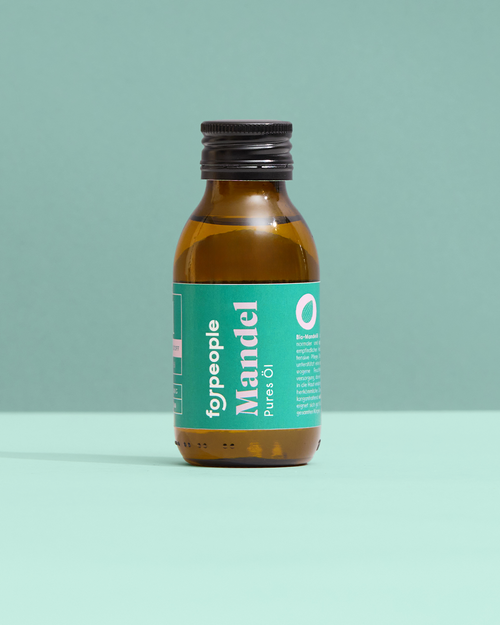
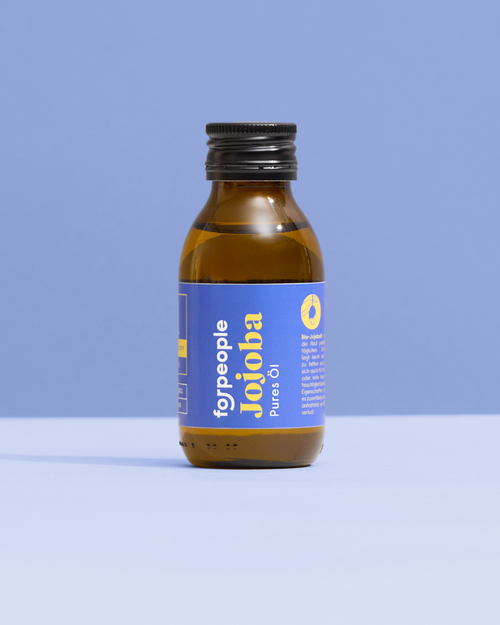
Both apply to Almond Oil - pure and Jojoba Oil - pure. Neither is marketed as a shaving oil; we are describing one possible use. Almond oil comes from almonds. If you are allergic to them, do not use it.
Body Oil - Lemongrass glides as well. But it contains lemongrass essential oil, and its ingredient list names citral, geraniol and citronellol for that reason. For shaving we recommend the pure oils and keep the body oil for the days after. More on this: Essential Oils and Fragrance Allergens.
On the face: beard and edges
Beard hair is thick and stiff. Its diameter is about twice that of scalp hair (Maurer et al. 2016). Soaking matters all the more here: two to three minutes of warm water, in the shower or with a wet, warm flannel.
The advantage of oil on the face is visibility: you can see exactly where the line runs along the cheek, neck and sideburns. Oil on its own therefore suits edges, a short beard and travelling. With a dense beard the shave takes longer, and in our experience the hair dries out again along the way. Foam is then the better fit, on its own or over a few drops of oil.
On the neck, hairs emerge from the skin at a flatter angle, and skin irritation is particularly common there (Maurer et al. 2016). Plant oil does not belong in an electric dry shaver; follow the instructions for the device.
On care afterwards: After shaving: what does facial skin need? On the beard: Beard balm or beard oil: what is the difference? and Why does a growing beard feel scratchy, and what softens it? On the shaved head: Caring for a shaved head: what does the scalp need?
Shave before or after the shower?
At the end of the shower or straight after it, because by then the hair has taken up enough water. On dry skin the lubricating film is there, but the hair is hard. Without a shower, wet the area with warm water for two to three minutes.
When to seek medical advice?
Slight redness that fades quickly after shaving is not unusual. Seek medical advice if razor burn lasts for days or comes back after every shave, if razor bumps, pustules or painful lumps form, if ingrown hairs or inflammation develop, or if a cut does not stop bleeding, swells or produces pus. An oil is not a treatment for any of this and does not protect against it. Until then, do not shave over the affected areas and do not apply any skincare there.
Frequently asked questions
Can I use oil and shaving foam together?
Yes. Put a few drops of oil on wet skin first and the foam on top. The foam keeps the water on the hair, and the oil glides underneath.
Does oil make the blade blunt?
No, but oil and stubble lodge between the blades. Closely spaced blades are generally harder to rinse (Cowley & Vanoosthuyze 2016); in our experience a razor with few blades has the advantage with oil.
Do I have to wash the oil off after shaving?
Rinse off hair and excess oil with lukewarm water. A thin film remains. On the legs it can stay; on the face you can take it off with a damp flannel if you prefer.
Can I shave my underarms with oil too?
Yes, the steps are the same. Raise your arm so that the skin lies flat. It is best to put deodorant back on only the next morning.
How do I store the oil in the bathroom?
Warmth, light and air make plant oils age faster. Close the bottle and do not keep it in the shower. More on this under How to tell if a skin oil is rancid.
At forpeople
We do not make a dedicated shaving oil. Two pure oils are an option; alongside them there is a scented body oil and a water-based serum for afterwards.
- Almond Oil - pure, 100 ml, €14.90: a single oil without essential oils.
- Jojoba Oil - pure, 100 ml, €16.90: likewise a single ingredient, without essential oils.
- Body Oil - Lemongrass, 100 ml, €16.90: sesame, safflower, sea buckthorn seed and sunflower oil with turmeric extract and lemongrass essential oil. Better suited to care on the days after shaving.
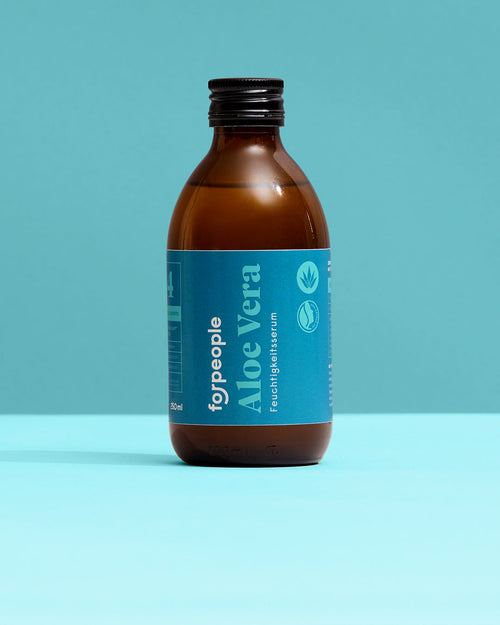
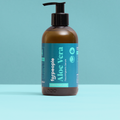
- Aloe Vera Serum 99.6%, 250 ml, €24.90: water-based, without oil and without alcohol, adjusted to a slightly acidic pH with citric acid. The product page mentions use after shaving.
According to the product pages, the following applies to all four: avoid contact with the eyes and do not use on injured or irritated skin. So neither oil nor serum goes on a cut. If you notice a skin reaction, stop using the product.
More on this: Moisturising after shaving your legs: what and when? · After shaving: what does facial skin need? · Argan, jojoba, almond or rosehip oil: how do they differ?
From the blog: Face & Body Oils: Which Oil Suits Which Skin Type?
Sources
- Cowley K, Vanoosthuyze K (2016): The biomechanics of blade shaving. International Journal of Cosmetic Science 38 Suppl 1: 17–23. https://doi.org/10.1111/ics.12330
- Maurer M, Rietzler M, Burghardt R, Siebenhaar F (2016): The male beard hair and facial skin – challenges for shaving. International Journal of Cosmetic Science 38 Suppl 1: 3–9. https://doi.org/10.1111/ics.12328
- Costello L, Goncalves K, Maltman V et al. (2023): Development of a novel in vitro strategy to understand the impact of shaving on skin health: combining tape strip exfoliation and human skin equivalent technology. Frontiers in Medicine 10: 1236790. https://doi.org/10.3389/fmed.2023.1236790
- Turner GA, Moore AE, Marti VP, Paterson SE, James AG (2007): Impact of shaving and anti-perspirant use on the axillary vault. International Journal of Cosmetic Science 29(1): 31–38. https://doi.org/10.1111/j.1467-2494.2007.00361.x