









What is measurably different about men's skin
In a study from Hamburg with 300 healthy women and men aged 20 to 74, water loss, hydration of the stratum corneum, sebum and pH were measured at five sites, including forehead and cheek (Luebberding et al. 2013).
- Sebum: In men the amount of sebum was higher in all age groups and stayed stable with age. In women it decreased over the course of life. On the cheek the mean values were around 84 versus 49 micrograms per square centimetre, with a wide spread (figures as given in Rahrovan et al. 2018).
- pH: In men it was below 5 at all sites, in women mostly above.
- Water loss: Up to about the age of 50, men lost less water through the skin than women of the same age.
- Hydration: Young men had a more hydrated stratum corneum than women. From about the age of 40, hydration in men decreased step by step.
On thickness: a review of 57 studies concludes that sebum and skin thickness are generally higher in men (Rahrovan et al. 2018). It cites an ultrasound study with 88 people in which men's skin on the forehead, cheek, jawline, neck and abdomen was 10 to 20 percent thicker overall. The often-quoted “20 percent” is therefore the upper end of a single series of measurements. For other parameters the review reports conflicting results.
What follows from this is our own reading: on average, men's skin brings more fat of its own. Many men therefore need little extra fat on the face, some none at all. Whether your skin shines or feels tight is not something an average can tell you; a look in the mirror after washing can.
What shaving and a beard change
The bigger difference lies in everyday life. According to a review in the specialist literature, the care needs of men's skin are heavily shaped by the fact that facial hair is removed regularly; after shaving the point is to give the skin back its hydration (Draelos 2012). Beard hair is dense, thick and stiff. That is why men often shave with more pressure and in several strokes, and both make skin irritation from shaving more likely. Common countermeasures include less pressure and skin care before and after shaving (Maurer et al. 2016).
For the routine this means: after shaving, rinse off foam or soap thoroughly, pat the skin dry and apply something water-based first. Oil and anything scented comes later or in the evening. This is a rule from practice, not a measured result. With a beard: care has to reach the skin underneath.
The routine in three steps
- Wash: In the evening, wash your face with lukewarm water and a cleanser your skin tolerates well. In the morning, water is usually enough. Whether soap is suitable is covered under Can I use bar soap on my face?
- Water-based, then very little oil: Apply a water-based serum to skin that is still slightly damp. Then rub one to two drops of oil between your palms and press them on. Why this order works is explained in Combining aloe vera serum with oil or solid cream.
- Sun protection on days outdoors: Germany's Federal Office for Radiation Protection advises seeking shade around midday from a UV index of 3 and calls clothing and a hat the best and simplest protection. Uncovered skin should be covered carefully and generously with sunscreen with a sun protection factor of at least 30 (BfS). Sun protection is the last layer. How much you need is covered under How much solid sunscreen do I need?
What changes depending on the situation
The table sums up practical experience.
| Situation | What is different | What changes in the routine |
|---|---|---|
| Clean-shaven every day | the blade runs over the skin every day | after shaving rinse, pat dry, serum; oil only in the evening |
| Stubble | short, stiff stubble; the skin underneath is easy to reach | spread serum and oil down to the skin with your fingertips |
| Full beard | the skin lies under the hair; the hair needs care too | massage oil in drop by drop down to the skin, then smooth the length |
| Shaved head | more skin without hair, exposed to sun, cold and friction from a hat or helmet | extend the routine over the scalp; outdoors a hat and sun protection |
| Outdoors a lot | UV radiation, wind, cold, sweat | apply sun protection generously and reapply several times a day; wash thoroughly in the evening |
What oil does on beard hair and how to apply it is covered under Beard balm or beard oil: what is the difference?
Avoiding shine: the amount decides
Shine appears when more fat sits on the skin than the stratum corneum takes up. If your skin makes a lot of sebum, every drop of oil comes on top. This keeps the face inconspicuous:
- One to two drops: That is enough for the whole face in the morning. In the evening it can be two to three.
- Spread it in your hands: Rub the oil between your palms and press your hands onto your face rather than rubbing.
- Mind the zones: First cheeks, jawline and neck. Forehead and nose get only what is left on your hands, or nothing.
- Check: If your skin is still clearly shiny after ten minutes, use less next time or skip the oil in the morning.
More on this: Face oil on oily skin: does that work?
What you do not need
- A label saying “for men”: What a product is shows in the ingredient list, not in the colour of the packaging.
- Many steps: Washing, serum, a little oil and protection when it is sunny cover everyday life.
- Scent: It is a matter of taste and not needed for care. If you do not want any, use a pure oil.
- Oil every day: If your skin does not feel tight after the serum, you can leave the oil out.
When to seek medical advice?
Skin care is meant for healthy skin. Seek medical advice if the skin on your face is red for weeks, flakes heavily, burns or weeps, if painful pustules or ingrown hairs keep appearing after shaving, or if a single spot changes, bleeds or does not go away. This applies especially to areas that get a lot of sun: forehead, nose, ears and scalp. Do not apply care products to cuts or irritated skin. If your skin reacts to a product, stop using it.
Frequently asked questions
Do men need a face care range of their own?
No. On average men's skin makes more sebum, but that does not call for a formula of its own. What matters is the amount of fat, whether you want scent and how you shave.
Is men's skin really 20 percent thicker?
A review cites an ultrasound study with 88 people in which men's skin was 10 to 20 percent thicker overall (Rahrovan et al. 2018). Little follows from that for daily care.
Is it enough to wash my face with water only?
In the morning, usually yes. In the evening, water alone removes fat and sunscreen only incompletely; that takes a cleanser.
What do I put on after shaving?
Water first: rinse off the foam thoroughly and pat the skin dry. Then something water-based without alcohol. Oil and scent come later. Care products do not belong on cuts.
How many drops of oil do I need on my face?
One to two in the morning, two to three in the evening. If your skin is still clearly shiny after ten minutes, it was too much.
Can I use the face oil on my beard as well?
Yes. A beard oil is a plant oil or a blend of plant oils. Work a few drops in down to the skin and then smooth the length.
At forpeople
For steps two and three we offer these building blocks.
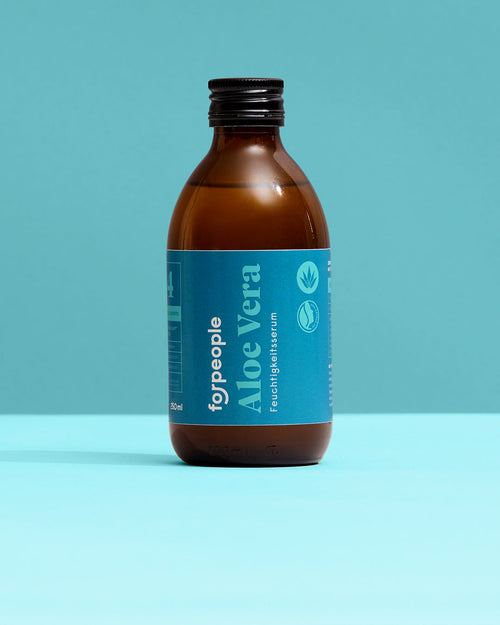
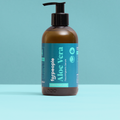
- Aloe Vera Serum 99.6%, 250 ml, €24.90: according to the ingredient list, aloe juice, citric acid, potassium sorbate and sodium benzoate. It contains water and is preserved; alcohol and essential oils are not on the list.
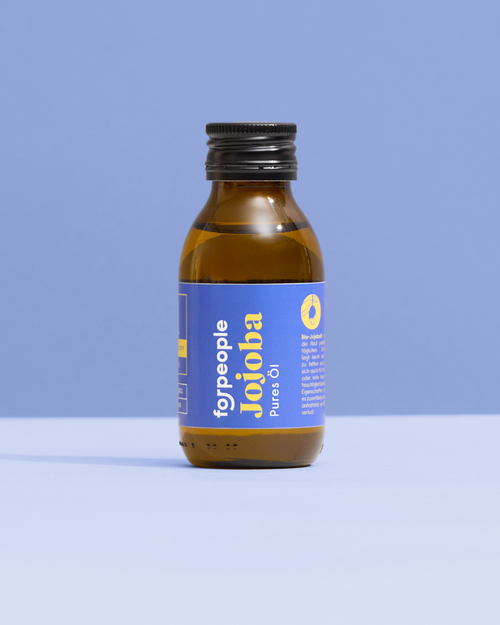
- Jojoba Oil - pure, 100 ml, €16.90: a single oil without essential oils.
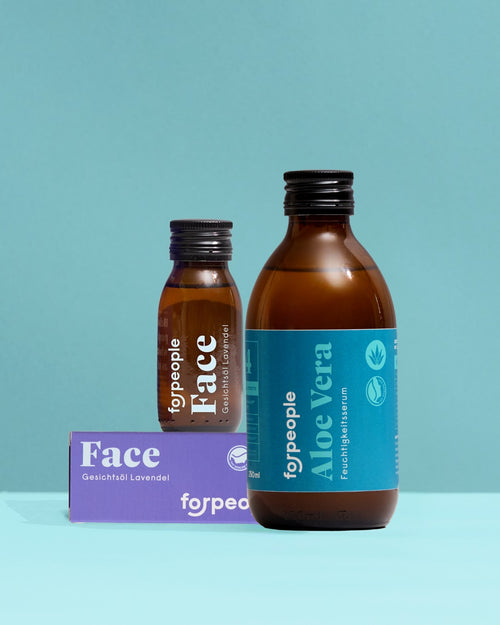
- Facial Care Set for Dry, Sensitive Skin, €44.90: Aloe Vera Serum and Face Oil Lavender together. The face oil contains essential lavender oil and is scented.
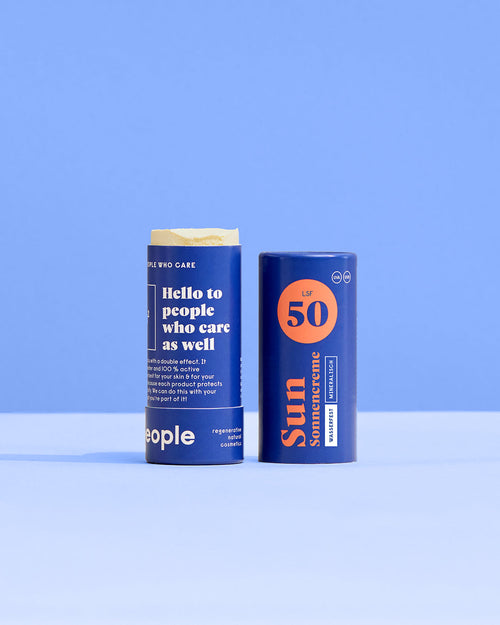
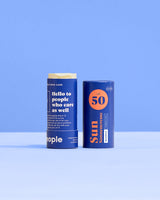
- Solid Sunscreen SPF50, 40 g, €17.90: sun protection factor 50 with the mineral filters zinc oxide and titanium dioxide, non-nano according to the ingredient list, tested as water-resistant, in a paper tube.
For all four, the product pages say: avoid contact with the eyes and do not use on injured or irritated skin. If you notice a skin reaction, stop using the product.
More on this: After shaving: what does facial skin need? · Why does a growing beard feel scratchy, and what softens it? · Caring for a shaved head: what does the scalp need? · Can a face oil replace face cream? · Hand cream for men: what really matters
From the blog: Less in the bathroom: a skincare routine with three products
Sources
- Luebberding S, Krueger N, Kerscher M (2013): Skin physiology in men and women: in vivo evaluation of 300 people including TEWL, SC hydration, sebum content and skin surface pH. International Journal of Cosmetic Science 35(5): 477–483. https://doi.org/10.1111/ics.12068
- Rahrovan S, Fanian F, Mehryan P, Humbert P, Firooz A (2018): Male versus female skin: What dermatologists and cosmeticians should know. International Journal of Women's Dermatology 4(3): 122–130. https://doi.org/10.1016/j.ijwd.2018.03.002
- Draelos ZD (2012): Male skin and ingredients relevant to male skin care. British Journal of Dermatology 166 Suppl 1: 13–16. https://doi.org/10.1111/j.1365-2133.2011.10784.x
- Maurer M, Rietzler M, Burghardt R, Siebenhaar F (2016): The male beard hair and facial skin – challenges for shaving. International Journal of Cosmetic Science 38 Suppl 1: 3–9. https://doi.org/10.1111/ics.12328
- Bundesamt für Strahlenschutz (BfS): Tipps zum UV-Schutz (Stand 04.08.2026). https://www.bfs.de/DE/themen/opt/uv/schutz/tipps/tipps_node.html