


What happens in your skin when it stings
The horny layer is the outermost layer of your skin and its barrier to the outside; more on this under The skin barrier explained simply. When it is dry and brittle, it cracks, and dissolved substances reach the nerve endings underneath.
A series of experiments from 1977 shows how much the barrier matters. Volunteers had test solutions applied to their skin and rated the stinging (Frosch & Kligman 1977):
- Intact skin: Only some of the volunteers felt clear stinging, and only on the face. On the back and arm there was none.
- Horny layer removed: Once the horny layer had been stripped off with adhesive tape, everyone tested felt stinging, on the back as well. Even the solvent on its own, 95 per cent alcohol, then stung almost as much as the test solution.
- Pre-irritated skin: On skin that had previously been irritated by UV light or a chemical, the stinging set in earlier and was considerably stronger.
- Damp skin: On sweaty or moistened skin, stinging was easier to trigger, because damp skin lets substances through more easily.
The authors' conclusion: stinging can be triggered in anyone as soon as a substance has access to the nerve endings. The experiments were carried out on the face and back, however, not on hands.
Which ingredients can sting
This is how you find the groups of substances in the ingredients list (INCI) on the pack.
| Group of substances | How it appears in the INCI | Why it can sting |
|---|---|---|
| Alcohol and glycols | Alcohol, Alcohol Denat., Propylene Glycol. Fatty alcohols such as Cetearyl Alcohol are not meant here. | Ethanol lowers the threshold of a heat and pain receptor, in a laboratory experiment from about 42 to about 34 °C. This is how the authors explain why alcohol burns on injured tissue even at body temperature (Trevisani et al. 2002). Undiluted propylene glycol caused moderate stinging in the test (Frosch & Kligman 1977). |
| Urea and acids | Urea, Lactic Acid, Salicylic Acid, Glycolic Acid, Citric Acid | According to the test results, acids as a class tend to cause strong stinging (Frosch & Kligman 1977). A review names lactic acid and urea as examples of sensory reactions that can make a cream less accepted (Lodén 2003). |
| Fragrances and essential oils | Parfum, names such as Citrus Limon Peel Oil, individually listed components such as Limonene or Linalool | They can sting on cracked skin. Which substance does so for whom varies from person to person; we did not find a series of measurements on this. More under Essential Oils and Fragrance Allergens. |
| Preservatives | Sorbic Acid, Potassium Sorbate, Benzoic Acid, Sodium Benzoate, Phenoxyethanol | As a 5 per cent solution, sorbic acid caused brief stinging in the test (Frosch & Kligman 1977). The INCI does not show how much of a substance your cream contains. |
| Water | Aqua, usually in first place | Water itself is not regarded as a trigger. Some people nevertheless report that even water stings on badly affected skin; we did not find a measurement on this. |
None of this makes any of these substances a bad ingredient. Urea and lactic acid are well-established humectants. When urea is a good fit is covered under Urea or water-free cream? How to read a list is shown in How to Read an INCI List.
What research says about stinging and burning
- It varies from person to person. In the series of experiments, 5 of 30 students reacted clearly to the screening test with lactic acid. In the authors' view they simply have a lower threshold: at a higher concentration, others felt stinging too (Frosch & Kligman 1977).
- It occurs without visible signs. Redness, scaling or swelling did not appear after a single application. An international expert group describes stinging, burning and tingling as a response to stimuli that normally trigger nothing; the skin can look unremarkable (Misery et al. 2017).
- Stinging and irritation are two different things. A strongly irritating surfactant solution did not sting in the test, while barely irritating substances could sting severely (Frosch & Kligman 1977). In a later study, 25 people who are prone to stinging reacted to a patch test with a surfactant in the same way as 25 others (Basketter & Griffiths 1993).
- The base matters. The same test substance stung most in an alcoholic solution, considerably less in a cream and hardly at all in two ointment bases (Frosch & Kligman 1977). That applies to this one substance and is not a promise for any particular product.
A safety evaluation of ethanol advises against putting alcohol on abraded or cracked skin, partly because of the burning sensation to be expected (Lachenmeier 2008). What applies to hand sanitiser at work is covered under Hand sanitiser and hand cream: which comes first?
What you can do
- Rinse it off if it stings badly. Use lukewarm water and pat your hands dry. In the experiment, the stinging only eased a few minutes after rinsing.
- Look at the list. Does the INCI of your cream include Alcohol, Urea, an acid or Parfum? Then change this one thing first, not everything at once.
- Choose a formula with few ingredients, without alcohol, urea or fragrance. It makes it easier to find a trigger; it is not a guarantee. More under Cream with few ingredients: what does a short list give you?
- Try it on a small area first: Trying a new product: how do I test it on a small area?
- Apply thinly, leave out the cracks. The cream goes on the intact skin around the cracks. Open or bleeding areas stay free.
- Pat dry after washing and wait until your skin is no longer wet.
- Moisturise in the evening, when you will not be washing your hands again. Gloves help with wet work; see Dry, cracked hands from frequent washing: what helps?
When to seek medical advice?
Have your hands looked at by a doctor if the stinging remains after rinsing or occurs with every product, if your skin turns red, swells, weeps or forms small blisters, or if cracks are deep, bleed or do not close for weeks. Hand eczema or a contact allergy may be behind it; both can only be clarified in a medical practice. At work, the occupational health service is also responsible. Take along the packs of the products that stung.
Frequently asked questions
Is the stinging a sign that the cream is working?
No. It only shows that a substance is reaching nerve endings through the cracks. In the experiment, stinging was not related to how strongly a substance irritates the skin; still less does it tell you anything about a benefit.
How long is it all right for it to sting?
Brief stinging that passes after seconds to about a minute is typical of alcohol. If it gets stronger or continues, rinse the cream off and stop using it. If your skin stays red, have it looked at by a doctor.
Does a cream without water sting less?
That cannot be promised. What has been studied is that the same substance stung strongly in an alcoholic solution and hardly at all in cream and ointment bases; water-free and water-based creams were not compared. A water-free cream does not belong on open cracks either.
Why does it sting on some days and not on others?
The barrier is not the same every day. After a lot of water, cleaning products or cold, the cracks are deeper, and freshly washed skin lets substances through more easily.
How do I apply a solid cream to cracked hands without rubbing?
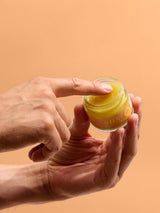
Warm a small amount between your fingertips until it is soft. Then stroke it onto the skin around the cracks with little pressure instead of rubbing it in.
At forpeople
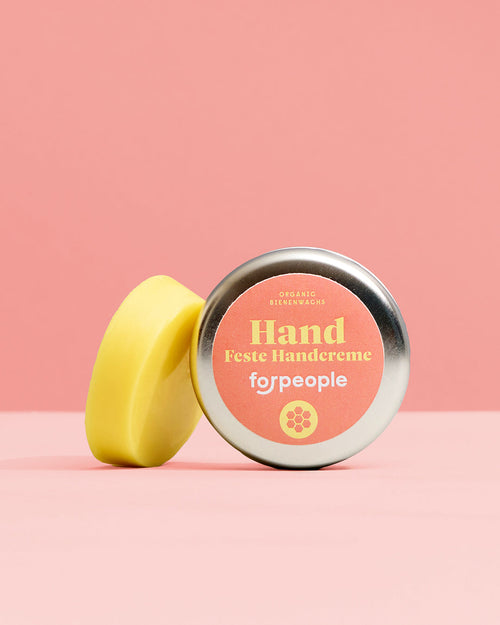
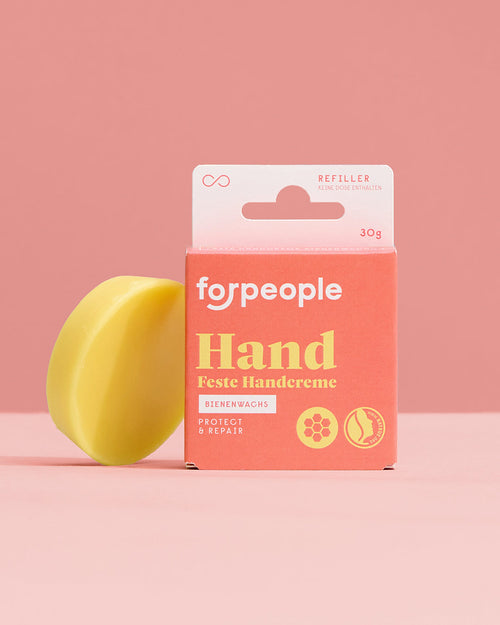
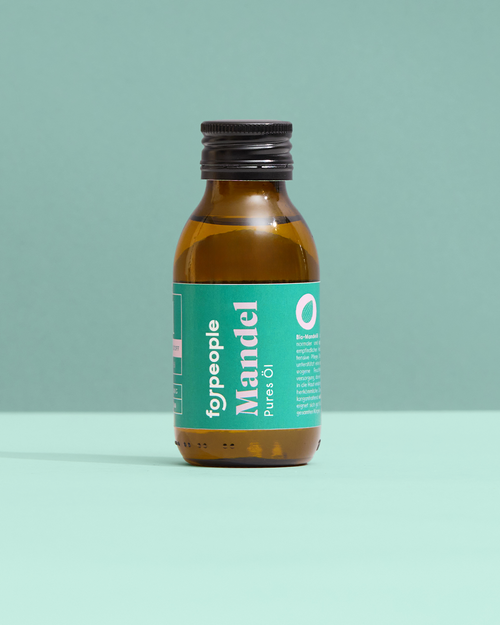
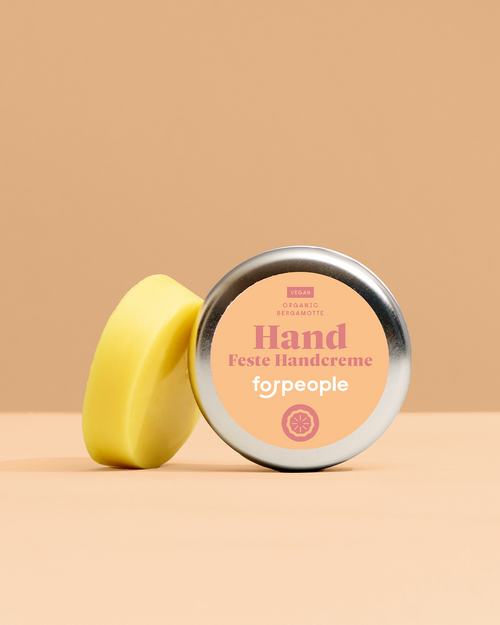
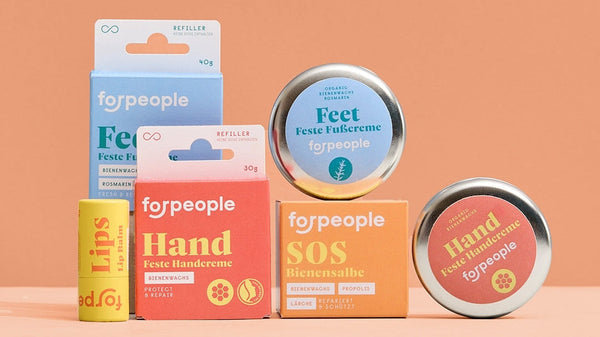
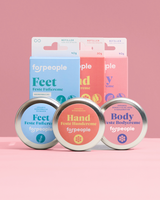
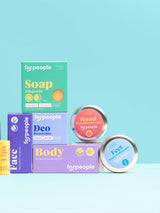
We have not tested whether our creams sting on cracked skin, so we make no promise about it. What we can describe is what they contain according to the ingredients list. The Solid Hand Cream - Beeswax (30 g, €9.90) consists of five ingredients: beeswax, olive oil, sunflower oil, St. John's wort extract and aloe extract. Water, alcohol, urea, preservatives and added fragrance are not on the list; the cream smells faintly of beeswax. Skin can react to any one of these five ingredients, too. You refill the metal tin with the Solid Hand Cream Refill - Beeswax (30 g, €7.90). Almond Oil - pure (100 ml, €14.90) has a single ingredient, almond oil. The Solid Vegan Hand Cream - Bergamot (30 g, €9.90) contains essential oils of lemon and bergamot; its list names Limonene, Geraniol, Citral and Linalool. If you want to avoid fragrances at the moment, leave it out. For all four, the product pages say: do not use on injured or irritated skin, and stop using the product if you notice a skin reaction. More on this: Dry hands despite moisturising: why? · Aloe vera stings on your skin: what could be the cause?
From the blog: Hands and feet through winter: a routine for morning and evening
Sources
- Frosch PJ, Kligman AM (1977): A method for appraising the stinging capacity of topically applied substances. Journal of the Society of Cosmetic Chemists 28(5): 197–209. https://library.scconline.org/v028n05/1
- Basketter DA, Griffiths HA (1993): A study of the relationship between susceptibility to skin stinging and skin irritation. Contact Dermatitis 29(4): 185–188. https://doi.org/10.1111/j.1600-0536.1993.tb03534.x
- Lodén M (2003): Role of topical emollients and moisturizers in the treatment of dry skin barrier disorders. American Journal of Clinical Dermatology 4(11): 771–788. https://doi.org/10.2165/00128071-200304110-00005
- Trevisani M, Smart D, Gunthorpe MJ et al. (2002): Ethanol elicits and potentiates nociceptor responses via the vanilloid receptor-1. Nature Neuroscience 5(6): 546–551. https://doi.org/10.1038/nn0602-852
- Lachenmeier DW (2008): Safety evaluation of topical applications of ethanol on the skin and inside the oral cavity. Journal of Occupational Medicine and Toxicology 3: 26. https://doi.org/10.1186/1745-6673-3-26
- Misery L, Ständer S, Szepietowski JC et al. (2017): Definition of Sensitive Skin: An Expert Position Paper from the Special Interest Group on Sensitive Skin of the International Forum for the Study of Itch. Acta Dermato-Venereologica 97(1): 4–6. https://doi.org/10.2340/00015555-2397