


The order, situation by situation
In healthcare, the facility's hygiene plan defines when hands are sanitised, washed and cared for. It takes precedence over any general advice. The table summarises the German professional recommendations (KRINKO 2016), (Kramer et al. 2023).
| Situation | Order | Gap |
|---|---|---|
| Start of shift | Arrive with clean, dry hands. No care cream right before the first hand rub. | Do any thorough washing at home if you can. |
| Between two contacts | Hand rub only. Hands are washed when soiled and after using the toilet. | Rub in until your hands are dry. Hand care only if the plan provides for it here. |
| Break | Let the last hand rub dry, then apply cream to clean, dry skin. | Apply cream at the start of the break, not at the end. |
| End of shift | Clean your hands if needed, dry them well, apply cream. | No gap needed any more. |
| Evening at home | A thicker layer, under cotton gloves if you like. | The cream stays on your skin overnight. |
| Hand gel on the go in everyday life | Gel on dry hands, rub in, and only then apply cream. | Wait until nothing feels damp or sticky. |
For the break, this gives the following sequence:
- Let the last hand rub dry completely.
- If your hands are visibly soiled, clean them first and dry them thoroughly.
- Spread a little cream over the backs of your hands, your knuckles and between your fingers.
- After that, gloves only go on dry hands without a film of cream; see Hand cream under latex or nitrile gloves?
Why the sanitiser belongs on dry hands
Alcohol-based hand sanitisers only work at a sufficient concentration. Water on the skin dilutes them. The German S2k guideline therefore requires the product to be applied to the dry hand, without adding water (Kramer et al. 2023).
The outer skin layer also holds water for a while after washing. Before surgical hand antisepsis, KRINKO recommends washing the hands about ten minutes beforehand where possible and drying them carefully. With a shorter gap, the residual moisture dilutes the alcohol and efficacy drops (KRINKO 2016). For your shift this means:
- Dry your hands thoroughly after washing.
- Dry very sweaty hands with a paper towel before you sanitise.
- Do not wash first and sanitise afterwards out of habit. The guideline limits washing to soiling and toilet use.
Does hand cream reduce the effect of the sanitiser?
Two studies have examined this using the European test method EN 1500, in which volunteers' hands are deliberately contaminated with test bacteria.
- Heeg 2001: Two hand care products, an oil-in-water and a water-in-oil emulsion, were applied immediately before the hand rub and combined with three alcohol-based products. The effect did not differ significantly from the hand rub alone, not even after repeated application of the care products (Heeg 2001).
- Paula et al. 2017: 20 volunteers applied a hand lotion five minutes or one hour before the hand rub. Efficacy was not significantly changed in any group. Shorter intervals were not tested (Paula et al. 2017).
Both results apply to the products tested. KRINKO points to other laboratory experiments in which care products reduced the effect of alcohol-based products. Its conclusion: whether a time gap is needed has not been studied sufficiently. As long as the influence of a care product has not been tested, it is best used during work breaks and after work (KRINKO 2016).
We have not found any such test for water-free creams made of wax and oil. They leave a more noticeable film than a lotion and therefore do not belong in the minutes before you sanitise.
What KRINKO says about hand care at work
The recommendation calls skin protection and skin care a prerequisite for effective hand antisepsis. The main points (KRINKO 2016):
- Timing: care products at the end of the shift, and additionally during work if needed.
- Clean skin: if hands are visibly soiled, clean first, then apply care.
- Containers: dispensers or tubes. Products should not be taken from ointment pots because of possible microbial contamination.
- Composition: prefer products without added fragrance and without added preservatives.
- Skin protection plan: the employer provides the products and defines which one is used when.
A tin you reach into with your finger is the equivalent of the ointment pot. It is generally not intended for the patient care area. It fits in your locker and at home. On taking product from a tin: Hygiene and water-free cosmetics.
Why sanitising is easier on the skin than washing
Many people feel the sanitiser is the stronger irritant. Measurements show otherwise: in tests with 15 volunteers each, ethanol and propanols did not significantly change the skin barrier; skin hydration did decrease, however. In the wash test, ethanol irritated the skin significantly less than a detergent, and even on previously irritated skin it did not increase irritation (Löffler et al. 2007).
The reason: wash lotions dissolve skin lipids and moisture-binding substances, and the water rinses them away. Alcohol also loosens the lipids, but they stay on the skin as long as you do not rinse (Kramer et al. 2023). More on this under Cracked hands from frequent washing.
Alcohol still stings on small cracks. If you wash instead for that reason, you put additional strain on your skin. What is behind the stinging is explained on the page Why does hand cream sting on cracked hands?
Outside clinical work: hand gel in everyday life
According to the German Federal Institute of Public Health, sanitisers are generally not necessary in private settings; the usual hygiene rules with hand washing are enough. The institute names exceptions for particular situations in the household, ideally after medical advice (BIÖG 2025).
If you use a hand gel on the go, keep to the same order: dry hands, enough gel (the institute says at least 3 ml), rub in, do not wipe off, and only then cream. Gels and foams stay damp for considerably longer than 30 seconds and can leave a sticky feeling (Kramer et al. 2023). Jobs involving food have rules of their own: Hand cream in the kitchen: what applies when you handle food?
When to seek medical or occupational health advice?
If your hands stay red despite care, if they flake, crack or develop small blisters, have them looked at by a doctor. At work, the occupational health service is responsible; KRINKO advises consulting it without delay when skin damage begins. Hand eczema may be behind it and should be assessed as a work-related skin condition. If every hand rub stings, mention that too. Do not apply cosmetics to open or weeping areas.
Frequently asked questions
How long do I have to wait after applying cream before I sanitise again?
There is no fixed figure. In one study a lotion did not interfere when applied five minutes before the hand rub; shorter intervals were not tested, and the result only applies to that product. So apply cream at the start of your break.
Can I apply cream straight after sanitising?
Yes, as soon as your hands are completely dry. At work, the skin protection plan decides whether and with which product.
Hand dryer or paper towel: which is better before sanitising?
The paper towel. According to KRINKO it dries better than a warm-air dryer and takes soap residue with it; KRINKO therefore considers warm-air dryers unsuitable for healthcare facilities. At home, a clean, dry towel is enough.
Why does hand gel feel so unpleasant in the cold?
Alcohol draws heat from the skin as it evaporates, and in cold air the gel dries more slowly. Rub it in until nothing is damp before you put on gloves. On cream in frost: Cold cream: water-free, but no protection from frost.
With or without fragrance: what suits nursing and care work?
KRINKO advises products without added fragrance. Whether a cream contains fragrance is shown in the ingredients list: Without fragrance and essential oils.
At forpeople
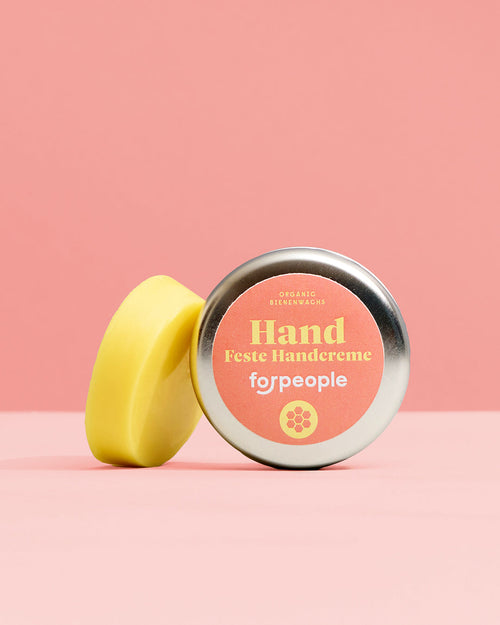
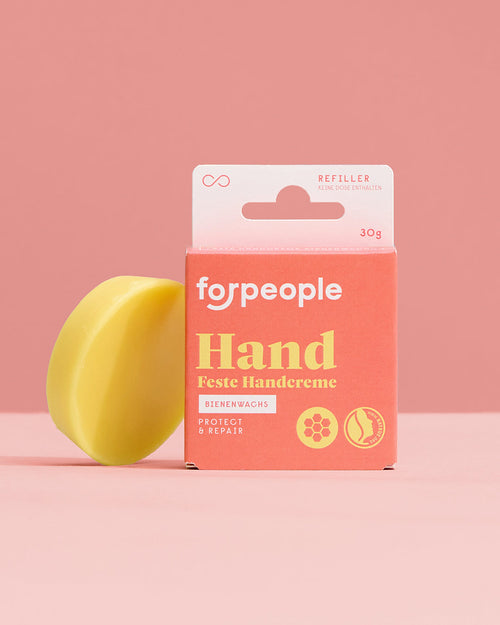
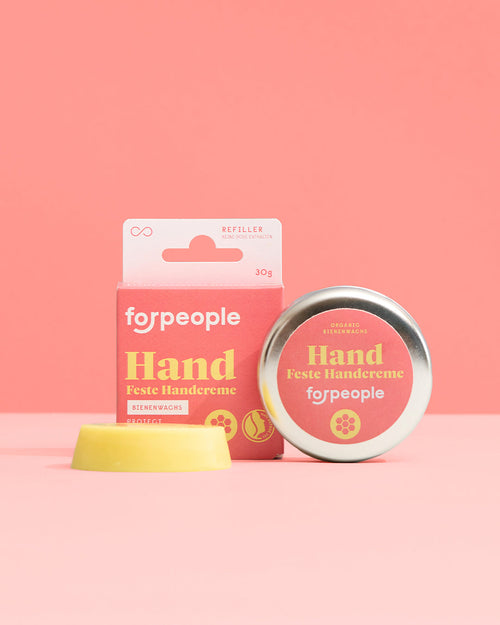
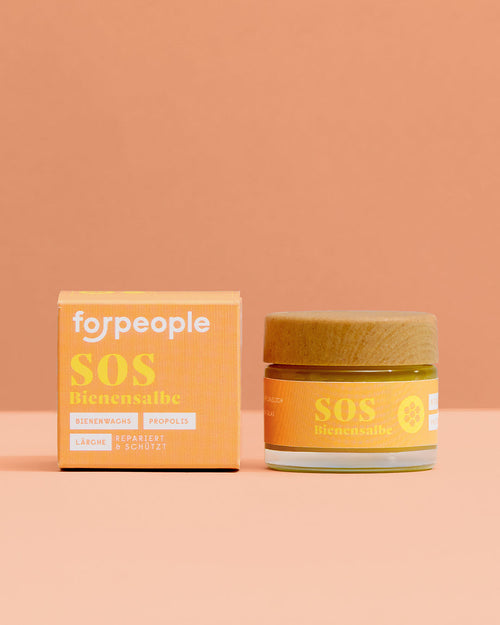
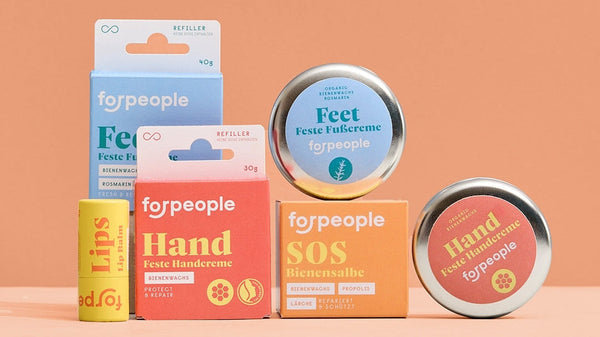
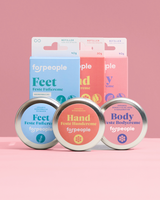
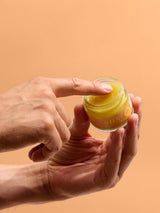
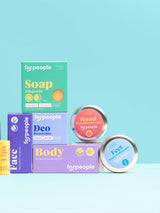
Our solid hand creams are care for the time after work. They are not skin protection products, and we have not tested how they affect hand sanitisers. So do not apply them before sanitising. The Solid Hand Cream - Beeswax (30 g, €9.90) consists of five ingredients according to its ingredients list: beeswax, olive oil, sunflower oil, St. John's wort extract and aloe extract. It contains no water and no added fragrance; it smells faintly of beeswax. You refill the metal tin with the Solid Hand Cream Refill - Beeswax (30 g, €7.90). The Hand Care Set – For Rough, Cracked Hands (2× Solid Hand Cream) (60 g, €16.90) contains one tin and one refill. For the evening there is the softer Beeswax Salve Larch & Mandarin in a Glass Jar (50 g, €12.90); it is scented and contains larch resin, propolis and essential oils. If you notice a skin reaction, stop using the product. More on this: Overnight hand mask · Refillable hand cream · Dry hands despite moisturising
From the blog: Hands and feet through winter: a routine for morning and evening
Sources
- Kommission für Krankenhaushygiene und Infektionsprävention (KRINKO) beim Robert Koch-Institut (2016): Händehygiene in Einrichtungen des Gesundheitswesens. Bundesgesundheitsblatt – Gesundheitsforschung – Gesundheitsschutz 59(9): 1189–1220. https://doi.org/10.1007/s00103-016-2416-6
- Kramer A, Seifert J, Abele-Horn M et al. (2023): S2k-Leitlinie Händedesinfektion und Händehygiene. AWMF-Register Nr. 075-004. Hygiene & Medizin 48(11): 275–310. https://register.awmf.org/de/leitlinien/detail/075-004
- Paula H, Hübner NO, Assadian O, Bransmöller K, Baguhl R, Löffler H, Kramer A (2017): Effect of hand lotion on the effectiveness of hygienic hand antisepsis: Implications for practicing hand hygiene. American Journal of Infection Control 45(8): 835–838. https://doi.org/10.1016/j.ajic.2017.05.020
- Heeg P (2001): Does hand care ruin hand disinfection? Journal of Hospital Infection 48 (Suppl A): S37–S39. https://doi.org/10.1016/S0195-6701(01)90011-8
- Löffler H, Kampf G, Schmermund D, Maibach HI (2007): How irritant is alcohol? British Journal of Dermatology 157(1): 74–81. https://doi.org/10.1111/j.1365-2133.2007.07944.x
- Bundesinstitut für Öffentliche Gesundheit (BIÖG) (2025): Desinfektionsmittel: nur in Ausnahmefällen. infektionsschutz.de, Stand 11.02.2025. https://www.infektionsschutz.de/hygienetipps/desinfektionsmittel/