









What the hygiene rules require
Regulation (EC) No 852/2004 requires everyone working in a food-handling area to maintain "a high degree of personal cleanliness" (Regulation (EC) 852/2004, Annex II Chapter VIII). The German Food Hygiene Ordinance adds that food must not be exposed to the risk of an adverse influence ("nachteilige Beeinflussung"), which it defines to include contamination and odours, among other things (LMHV sections 2 and 3). Neither text says anything about hand cream.
A film of cream on your hands can, however, transfer to dough, salad or fish, and a scent even more so. The German statutory accident insurer for the food and hospitality sector (BGN) therefore assigns the products to different times (BGN 2024):
- Skin protection products go on before the task and after breaks. In the food sector they must not adversely affect the product; there are products specifically designated for this.
- Skin care products go on after work and before longer breaks. Contact with the food is not intended.
- For both, the BGN recommends products without fragrance and, where possible, without preservatives.
- The skin protection and hygiene plan defines which product is used when. The employer provides the products.
The German Technical Rule TRGS 401 likewise places care products after skin cleansing in non-working time, that is, in breaks and at the end of work. They must not be used as protection before work (AGS 2022).
Why kitchen hands get dry
The main reason is water. A review article describes water itself as a skin irritant. As a possible explanation it names the extraction or dilution of natural moisturising factors in the outer skin layer (Tsai & Maibach 1999). TRGS 401 speaks of wet work when hands are regularly in contact with water for more than two hours per working day or are washed at least 15 times (AGS 2022). In kitchens that is quickly reached. According to the BGN, cleaning agents, acidic foods, meat, fish, flour and spices come on top (BGN 2024).
| Task | What strains the skin | What helps |
|---|---|---|
| Washing and cutting vegetables and fruit | Water, fruit acids | Rinse off juice with water; that is often enough. Dry thoroughly. |
| Kneading dough | Flour, dough residue, frequent washing | Rub dough off dry or wipe it off with a soft disposable towel. |
| Fish and meat | Washing with a cleanser, a hand rub where required | Wet your hands first, then apply the cleanser. Use gripping tools such as forks and tongs. |
| Sink | Water, washing-up liquid | Dishwasher instead of washing up by hand where possible. Otherwise gloves as set out in the plan. |
| Cold store | Cold | Gloves; textile liner gloves add warmth. |
| Disposable gloves at the serving counter | Heat and moisture build up | Wear them as briefly as possible and only put them on dry hands. |
The information in the right-hand column comes from the BGN's occupational safety leaflet (BGN 2024). Hands are washed when hygiene requires it, but no more often. More on washing up under Rough hands from washing up and cleaning, and on cream and gloves under Hand cream under latex or nitrile gloves? If you also have to sanitise, you will find the order under Hand sanitiser and hand cream: which comes first?
Where hand care fits into the working day
- Before the shift: no care cream. A skin protection product only if the plan provides for it.
- During work: apply nothing. Dry your hands thoroughly after every wash, including between the fingers.
- Before a longer break: clean your hands, dry them, spread a little cream. After the break, hands are washed again anyway.
- After work: clean, dry, apply cream. Now it can be a rich one.
- In the evening: a thicker layer, under cotton gloves if you like. The page Overnight hand mask describes how.
The BGN advises caring for your skin in your free time as well (BGN 2024). A water-free cream stays on the skin as a film. After the shift that is what you want; during work it is the reason to leave it out. How little is enough is explained under How to apply a solid cream.
Cooking and baking at home
For private households, the Bavarian Health and Food Safety Authority gives simple rules. Before handling food, wash your hands thoroughly with warm water and soap and dry them carefully. After raw meat or unwashed vegetables, wash them again straight away. After cooking comes a final wash and then a caring cream. The authority considers sanitisers superfluous in private households (LGL 2018).
The order follows naturally from this: no cream before kneading and cutting, cream afterwards. If you applied cream in the morning, you wash your hands with soap before cooking anyway. If your hands still smell after work, this page helps: Onion, garlic, fish: how do you get the smell off your hands?
When to seek medical advice?
According to the BGN, the first signs usually appear between the fingers: the skin is dry, red and flaky (BGN 2024). If that persists despite care, or if every hand rub stings, have your hands looked at by a doctor; in a business, the occupational health service is responsible. Hand eczema may be behind it. With open or weeping areas on your hands, separate rules apply in a food business; talk to your supervisor. Cosmetics do not belong on such areas.
Frequently asked questions
Is hand cream banned in the kitchen?
There is no explicit ban in either the EU regulation or the German Food Hygiene Ordinance. Both do require that food is not adversely affected. In businesses, the skin protection and hygiene plan therefore sets out when hand care takes place: before longer breaks and after work.
Can I not simply use a cream made of olive oil and beeswax while I work?
No. Even a cream made from raw materials you know from the kitchen is a cosmetic product and not a food. As a rule it has not been tested for contact with food, and its film can transfer to what you are preparing.
May I apply a skin protection cream before work?
If your business's plan provides for it, yes. Skin protection products are a category of their own with proof of efficacy; for the food sector there are products designated for this. A care cream does not replace them.
With or without fragrance: what suits kitchen jobs?
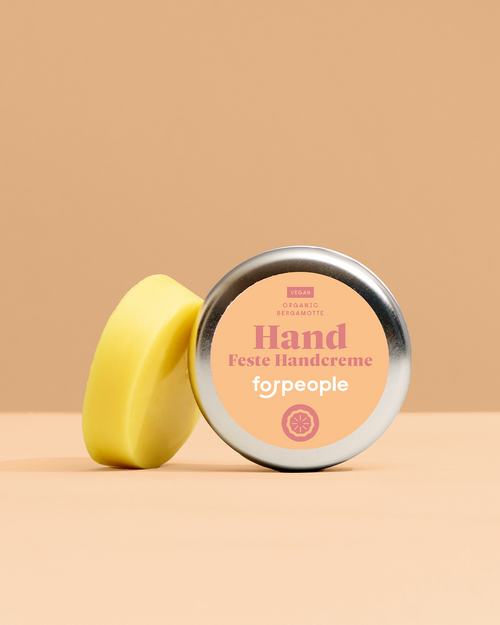
The BGN recommends care without added fragrance. For the solid hand creams this means: the beeswax version contains no added fragrance, while the Solid Vegan Hand Cream - Bergamot smells of lemon and bergamot and is better suited to your free time. You will find the comparison under Solid hand cream: beeswax or bergamot – which one suits you?
How long before cooking should I stop applying cream?
There is no tested figure. At home you wash your hands with soap before cooking, which settles the question in practice. In a business, the plan applies.
Do disposable gloves help against dry kitchen hands?
Only to a limited extent. Under tight gloves, heat and moisture build up and the outer skin layer swells. The BGN advises wearing them as briefly as possible and not using cream underneath.
At forpeople
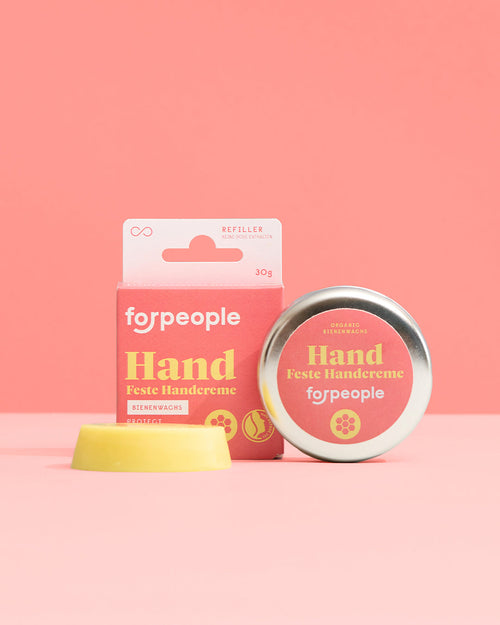
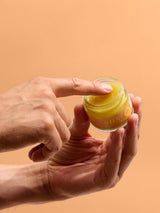
Our solid hand creams are care for the time after work. They are not skin protection products and have not been tested for contact with food. The Solid Hand Cream - Beeswax (30 g, €9.90) consists, according to its ingredients list, of beeswax, olive oil, sunflower oil, St. John's wort extract and aloe extract. It contains no water and no added fragrance; it smells faintly of beeswax. When the metal tin is empty, you refill it with the Solid Hand Cream Refill - Beeswax (30 g, €7.90). The Hand Care Set – For Rough, Cracked Hands (2× Solid Hand Cream) (60 g, €16.90) contains one tin and one refill. The softer Beeswax Salve Larch & Mandarin in a Glass Jar (50 g, €12.90) contains larch resin, propolis and essential oils and has a distinct scent; it is only for the evening at home. If you notice a skin reaction, stop using the product. More on this: Cracked hands from frequent washing · Without fragrance and essential oils · Dry hands despite moisturising
From the blog: Less in the bathroom: a skincare routine with three products
Sources
- Verordnung (EG) Nr. 852/2004 des Europäischen Parlaments und des Rates vom 29. April 2004 über Lebensmittelhygiene, Anhang II Kapitel VIII (Persönliche Hygiene). Konsolidierte Fassung vom 24.03.2021. https://eur-lex.europa.eu/legal-content/DE/TXT/?uri=CELEX:02004R0852-20210324
- Lebensmittelhygiene-Verordnung (LMHV) in der Fassung der Bekanntmachung vom 21. Juni 2016 (BGBl. I S. 1469), zuletzt geändert durch Artikel 3 der Verordnung vom 20. Juni 2023 (BGBl. 2023 I Nr. 159), §§ 2 und 3. https://www.gesetze-im-internet.de/lmhv_2007/
- Berufsgenossenschaft Nahrungsmittel und Gastgewerbe (BGN) (2024): Hautschutz im Betrieb. Arbeitssicherheitsinformation (ASI) 8.60, Ausgabe 11.24. https://vorschriften.bgn-branchenwissen.de/daten/asi/a8_60/titel.htm
- Ausschuss für Gefahrstoffe (2022): TRGS 401 Gefährdung durch Hautkontakt – Ermittlung, Beurteilung, Maßnahmen. Ausgabe Oktober 2022, GMBl 2022 S. 895–926 (Nr. 40), zuletzt geändert GMBl 2024 S. 769 (Nr. 36). https://www.baua.de/DE/Angebote/Regelwerk/TRGS/pdf/TRGS-401.pdf?__blob=publicationFile
- Höller C, Bayerisches Landesamt für Gesundheit und Lebensmittelsicherheit (LGL) (2018): Händehygiene im Lebensmittelbereich. Aktualisiert am 02.11.2018. https://www.lgl.bayern.de/lebensmittel/hygiene/hygienischer_umgang/et_haendehygiene.htm
- Tsai TF, Maibach HI (1999): How irritant is water? An overview. Contact Dermatitis 41(6): 311–314. https://doi.org/10.1111/j.1600-0536.1999.tb06990.x