





Why skin is still damp after a workout
During exercise the body heats up. It gets rid of the heat mainly through sweat that evaporates on the skin. That does not stop abruptly with the last kilometre.
A Canadian research group has measured how quickly it eases off. Eight people cycled for 60 minutes on an ergometer and then rested for 60 minutes in a measuring chamber at 30 °C. After 10 minutes of rest, heat loss through evaporation was still at around 23 percent of the value at the end of the exercise; after 60 minutes it was back at the starting value. Of the heat that had built up in the body, only 53 percent had been given off by then (Kenny et al. 2008).
So sweating drops clearly within the first minutes, but the body stays warm for longer. A waiting time for your own shower cannot be read from this: the measurements come from a few people, moderate exercise and a warm chamber.
Warm water adds to it. In a trial with 50 healthy adults, the palm of the hand was a good two degrees warmer than before after ten minutes in water at about 41 °C, and almost seven degrees cooler after water at about 11 °C (Herrero-Fernandez et al. 2022). It stands to reason that if you take a hot shower, you step out of the cubicle warmed up. Many people know this: barely dried off, the skin is damp again.
What sweat and frequent showers do to the skin
Sweat itself does not dry out the skin. It brings lactate, urea, sodium and potassium into the stratum corneum, the outermost layer of the skin, where these substances bind water. This is shown by a Japanese study of ten people in whom individual areas of skin do not sweat: there, the stratum corneum was clearly drier and contained less of these substances than at the sweating areas next to them (Watabe et al. 2013).
What demands more of the skin is what comes after training: water, soap and towel, daily or twice a day if you exercise a lot.
- Every wash counts. In a trial with 15 healthy volunteers, water loss through the skin of the forearm rose after each wash and rose further with repetition. With soap, pH and redness increased more than with water alone. The author sees this as tentative evidence that the strain adds up with frequency (Voegeli 2008).
- Hot water is harder on the skin. In the trial with the 50 adults, water loss through the skin rose much more after the warm water than after the cold (Herrero-Fernandez et al. 2022). The figures are on Why does skin feel tight after a shower?
- Soap only where it is needed. Armpits, groin and feet need soap after exercise. On arms, legs and back, water is often enough. This is common practice, not a measured rule.
How widespread dry skin is among people who exercise is shown by an online survey of 259 sports students in Germany: at 56.7 percent, dry skin was named as a complaint connected with exercise almost as often as blisters (Drewitz et al. 2024). The figures are self-reported, and a company from the cosmetics and pharmaceuticals sector co-funded the study. Where the dryness comes from was not examined.
The order after training
- Cool down. Wind down at an easy pace, drink something and take off your wet clothes. Experience suggests that if you step into the shower already cooled down a little, you sweat less afterwards.
- Shower lukewarm and briefly. At the end you can turn the water a little cooler.
- Pat dry instead of rubbing. The skin may stay slightly damp.
- Wait until the sweating stops. Comb your hair, pack your bag, get only partly dressed.
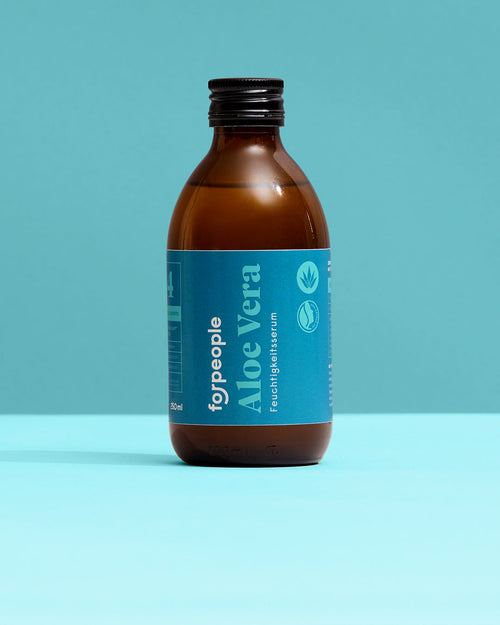
- Moisturise. Oil and butter do not bring any water with them; they hold back what is in the stratum corneum. If the skin has become completely dry in the meantime, dampen it with wet hands or put a water-based serum underneath first, for example the Aloe Vera Serum 99.6%. More on this: Combining aloe vera serum with oil or solid cream.
The five steps are common practice, not a measured rule. Whether minutes matter when moisturising is covered on the page How soon should you moisturise after a shower? The 3-minute rule.
Four situations at a glance
| Situation | What you do | Why |
|---|---|---|
| Shower at the gym, little time | shower lukewarm, pat dry, moisturise only dry areas; the rest at home | On skin that is still sweating, skincare spreads poorly, and under clothing it ends up in the fabric. |
| Shower at home | cool down, shower, pat dry, wait, then moisturise the whole body | You have time until the skin stays cool and dry. |
| Two showers a day | keep one of them short and with water only; moisturise after both | Repeated washing increases water loss through the skin. |
| Swimming training | rinse off thoroughly straight away, pat dry, moisturise | Pool water should not dry on the skin: Dry skin after the pool: what does chlorinated water do? |
What fits in your sports bag
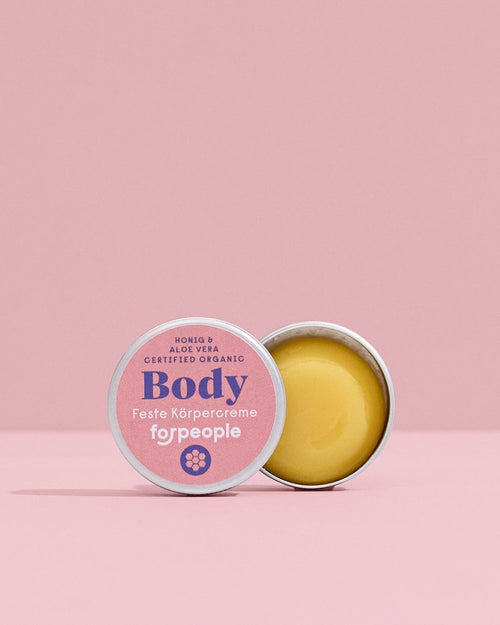
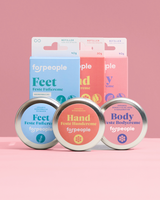
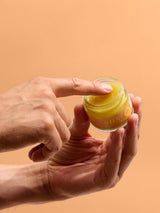
- Solid care: A solid butter in a tin cannot leak. For the bag there is the Solid Body Butter Mini – Beeswax & Aloe Vera with 8 g, intended for individual areas such as shins, elbows and hands.
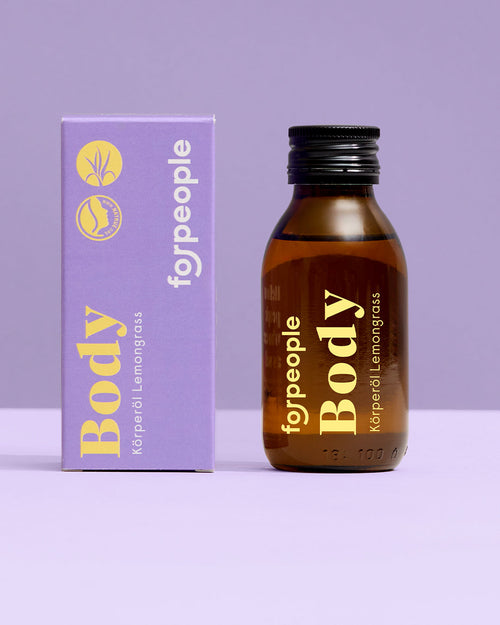
- Oil: On large areas, an oil such as the Body Oil - Lemongrass is quicker to spread. The glass bottle is best left at home, or travels tightly closed and wrapped in the towel.
- Heat: Do not leave the bag in a warm car. Cocoa butter and shea butter turn soft in the heat; more on this in Storing solid cosmetics: heat, summer and winter.
- Dry change of clothes: Wet fabric rubs more on the skin than dry fabric, see Preventing chafing when running and cycling.
- Hands: After dumbbells, bar or climbing wall: Gym calluses: care for them or remove them? and Moisturise before or after climbing?
When to seek medical advice?
Moisturising is skincare, not treatment. Have it checked by a doctor if your skin regularly develops hives after exercise, itches or burns severely, if redness persists, areas weep, or the skin stays cracked for weeks despite regular care. No skincare product belongs on injured, chafed-open or irritated skin. If your skin reacts to a product with redness or burning, stop using it.
Frequently asked questions
Should I moisturise straight after exercise?
Only after showering, once your skin has stopped sweating. Before the shower the product would be washed off again at once, and on skin that is still sweating it spreads poorly.
How long should I wait after the shower?
There is no fixed time. In a measurement after 60 minutes of cycling, heat loss through sweat had dropped to around 23 percent after 10 minutes of rest. Go by your skin.
Does sweat dry out the skin?
No. Sweat brings substances such as lactate and urea into the stratum corneum, where they bind water. Frequent hot showers and a lot of soap demand more of the skin.
Can I moisturise before exercise?
Sparingly and selectively. A fresh film makes hands and grips slippery and gets into your clothes. Beforehand it only makes sense where skin rubs on skin or fabric, and outdoors as sun protection.
What do I use if oil or butter is too much for me after training?
A water-based serum. It brings water onto the skin but no greasy film. Oil or butter then go on top in the evening, or only on dry areas.
At forpeople
We do not carry a body lotion. Butter and oil are water-free; the serum is water-based.
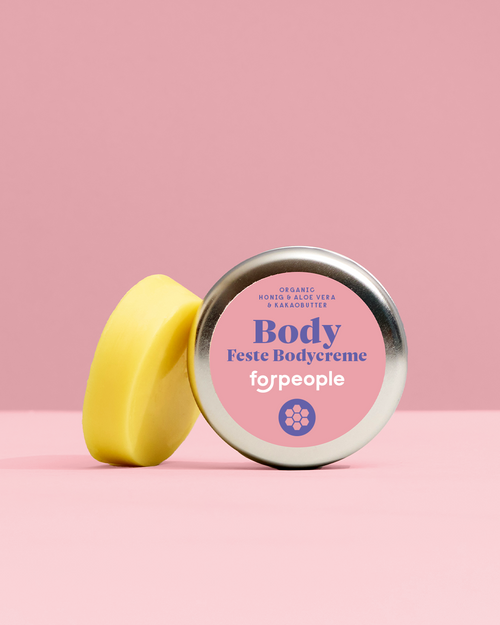
- Solid Body Butter - Beeswax & Aloe Vera, 40 g, €9.90: according to the ingredient list, cocoa butter, olive oil, beeswax, sunflower oil, shea butter and aloe vera leaf extract, with no added essential oils.
- Solid Body Butter Mini – Beeswax & Aloe Vera, 8 g, €5.90: the same ingredient list in the small metal tin, according to the product page for gym bag, handbag or holiday.
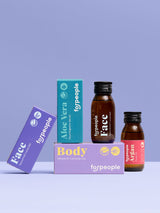
- Body Oil - Lemongrass, 100 ml, €16.90: sesame, safflower, sea buckthorn seed and sunflower oil, turmeric extract and lemongrass essential oil; the list also names citral, geraniol and citronellol. For large areas at home.
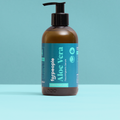
- Aloe Vera Serum 99.6%, 250 ml, €24.90: aloe juice, citric acid, potassium sorbate and sodium benzoate; contains water and is preserved. The water-based layer when grease is too much straight after training.
For all four, the product pages say: avoid contact with the eyes and do not use on injured or irritated skin.
More on this: Body Oil or Body Butter – Which One When? · Moisturise before or after the sauna? · Preventing chafing when running and cycling
From the blog: Less in the bathroom: a skincare routine with three products
Sources
- Kenny GP, Webb P, Ducharme MB, Reardon FD, Jay O (2008): Calorimetric measurement of postexercise net heat loss and residual body heat storage. Medicine and Science in Sports and Exercise 40(9): 1629–1636. https://doi.org/10.1249/MSS.0b013e31817751cb
- Herrero-Fernandez M, Montero-Vilchez T, Diaz-Calvillo P, Romera-Vilchez M, Buendia-Eisman A, Arias-Santiago S (2022): Impact of Water Exposure and Temperature Changes on Skin Barrier Function. Journal of Clinical Medicine 11(2): 298. https://doi.org/10.3390/jcm11020298
- Watabe A, Sugawara T, Kikuchi K, Yamasaki K, Sakai S, Aiba S (2013): Sweat constitutes several natural moisturizing factors, lactate, urea, sodium, and potassium. Journal of Dermatological Science 72(2): 177–182. https://doi.org/10.1016/j.jdermsci.2013.06.005
- Voegeli D (2008): The effect of washing and drying practices on skin barrier function. Journal of Wound, Ostomy and Continence Nursing 35(1): 84–90. https://doi.org/10.1097/01.WON.0000308623.68582.d7
- Drewitz KP, Hasenpusch C, Kreuzpointner F, Schwirtz A, Klenk A, Apfelbacher CJ (2024): Cross-sectional study on exercise-related skin complaints among sports students at two German universities. Scientific Reports 14(1): 11829. https://doi.org/10.1038/s41598-024-62357-9