








What a scrub does to the horny layer
The horny layer renews itself all the time. New cells follow from below, and at the top the oldest ones come off one by one, unnoticed. This last step depends on the water content of the horny layer. When it is disturbed by environmental influences, the cells no longer come off singly, and the skin becomes dry and flaky (Rawlings & Harding 2004).
A mechanical scrub rubs these loose flakes off with small grains. The surface feels smoother afterwards. That does not change the cause: the flakes are a result of the dryness, not the reason for it.
How much horny layer goes in the process makes the difference. In one experiment, the horny layer of volunteers was removed layer by layer with adhesive tape while water loss was measured. As long as only the outer layers were missing, it changed little; once 6 to 8 micrometres had been removed, it rose sharply (Kalia et al. 1996). Adhesive tape is not a sugar scrub, but the principle is the same: the loose top layers contribute little to the barrier, the layers beneath a great deal. More on the structure in The skin barrier explained simply.
For grains, there are measurements from occupational safety. In a forearm wash test with 16 people and 18 washes in five days, cleansers containing grit raised water loss and redness and left the horny layer drier, to differing degrees depending on the type, surface and amount of grit (Wigger-Alberti et al. 1999). The German Social Accident Insurance notes that skin cleansers containing grit can promote disturbances of the skin barrier (DGUV 2026). Those were repeated washes with surfactant and grit, not an occasional scrub with oil; we found no measurement for sugar-and-oil scrubs on the hands. The direction is clear all the same: frequency, pressure and the type of grain decide.
The American professional association of skin doctors (AAD) writes in its advice on exfoliating at home that it is not for everyone and, if done improperly, can do more harm than good. For dry or easily irritated skin, a mechanical scrub may irritate too much (AAD 2026). The advice is general, not specific to the hands.
Scrub or not? A decision guide
| Condition of your hands | Scrub? | What to do instead or afterwards |
|---|---|---|
| Rough, slightly flaky, skin intact | yes, rarely and gently | apply cream straight afterwards |
| Dry and tight, but smooth | does little | apply cream more often, especially after washing |
| Skin coming off in shreds | no | do not rub, trim loose edges, apply care; see Peeling skin on your fingers: the causes |
| Cracked, red, stinging | no | wash less often, use rich, fat-based care; have open areas looked at by a doctor |
| After too much sun | no | wait until the skin has recovered |
| Dirt in the skin lines after gardening or workshop jobs | grains only if needed | oil first, then soap; see Oil and grease on your hands: how do you wash them off gently? |
The rows on cracked skin and on sun follow the AAD (AAD 2026); the others are based on practice.
Sugar and oil: how to do a mild hand scrub
The usual home recipe: one teaspoon of fine sugar to one teaspoon of plant oil, mixed fresh in the palm of your hand. The quantities are common practice and have not been measured. Almond oil or a cooking oil from the kitchen will do. The steps follow the AAD advice (AAD 2026).
- Wet your hands with lukewarm water.
- Rub the mixture in with small, circular motions and little pressure, for about 30 seconds. Only brush lightly over cuticles and knuckles.
- Rinse with lukewarm water, not hot. The sugar dissolves as you rinse.
- Pat your hands dry instead of rubbing.
- Apply cream straight away, because scrubbing can dry the skin out.
That your hands feel soft afterwards is partly down to the oil, which stays behind as a thin film. Do not mix a batch in advance: wet fingers carry water into the jar, and a mixture without preservation can then spoil. More in How long does homemade cream last? The recipe for the body is in Making a body scrub from oil and sugar.
Salt, coffee grounds, lemon juice: how they compare
Nobody has compared these home remedies; this assessment is based on experience. Honey and quark are covered on the page Overnight hand mask: what it does and how to do it.
- Salt: dissolves in water like sugar, but stings in small cracks. Coarse salt is not a good choice for the hands.
- Coffee grounds: consist of irregular grains that do not dissolve. Wipe them off with paper instead of rinsing them down the sink.
- Lemon juice: is acidic and stings on skin that is already stressed. A scrub with grains does not need it.
- Brush and pumice stone: are too coarse for the backs of the hands. The accident insurance counts cleaning with brushes as “aggressive” skin cleansing (DGUV 2026).
How often, and what comes afterwards
The AAD does not give a fixed number. Its principle: the more vigorous the exfoliation, the less often it should be done; over-exfoliating leads to red, irritated skin (AAD 2026). For dry hands this means in practice: once a week at most, less often in winter, and not at all while the skin is stressed.
A soap with exfoliating grains is the everyday version: washing and grains in one. Because soap and friction come together here, it is not for every hand wash. It suits the times when dirt sits in the skin lines after gardening or workshop jobs.
Every scrub is followed by care that forms a film: a cream or salve made of wax and oil on skin that is still slightly damp. That is where occlusive substances, which slow water loss, work best (Sethi et al. 2016).
When to seek medical advice
Neither a scrub nor cosmetics belong on open, bleeding or weeping areas. Have your hands looked at by a doctor if cracks do not close, if the skin is red or swollen, forms blisters or peels for no apparent reason, and if stinging or redness after a scrub has not subsided after one to two days. Why care products can sting on stressed skin is explained on the page Why does hand cream sting on cracked hands?
Frequently asked questions
How often can I scrub my hands?
There is no figure backed by evidence. In practice: once a week at most, and only on intact skin. The coarser the grains and the firmer the pressure, the less often.
Does a scrub help with dry hands?
It smooths the surface because it lifts loose flakes. It does not make the skin drier or less dry; that is decided by the care afterwards and by how often you wash your hands.
Can I use a scrub when my hands are cracked?
No. The horny layer is already stressed then, and grains remove more of it. Leave the skin alone and use rich, fat-based care. No cosmetics belong on open areas.
Can I mix the scrub in advance?
Better not. Taking it out with wet fingers brings water into the mixture, and it contains no preservation. Mix the small amount fresh in the palm of your hand each time.
Can I use an exfoliating soap on my hands every day?
It is not for every hand wash. Grains and frequent washing together put a strain on the horny layer. Use it when dirt is stuck, and otherwise a soap without grains.
At forpeople
You do not need to buy a hand scrub. What we offer is the oil, a soap with grains and the care for afterwards. According to the product information, our products are not to be used on injured or irritated skin.
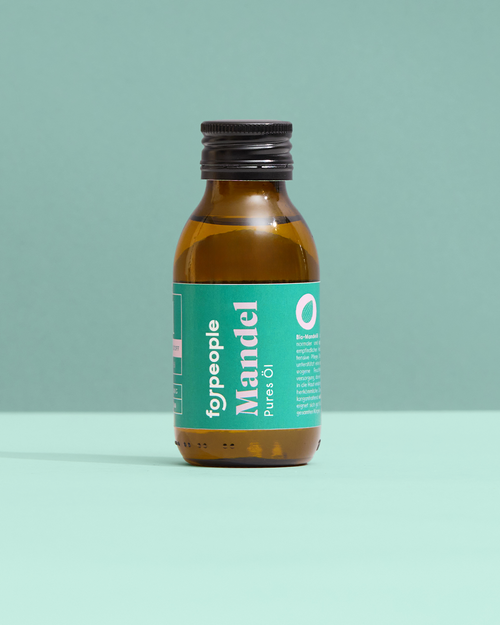
- Almond Oil - pure, 100 ml, €14.90: according to the ingredient list, pure almond oil. As the oil for the sugar scrub or on its own on the skin.
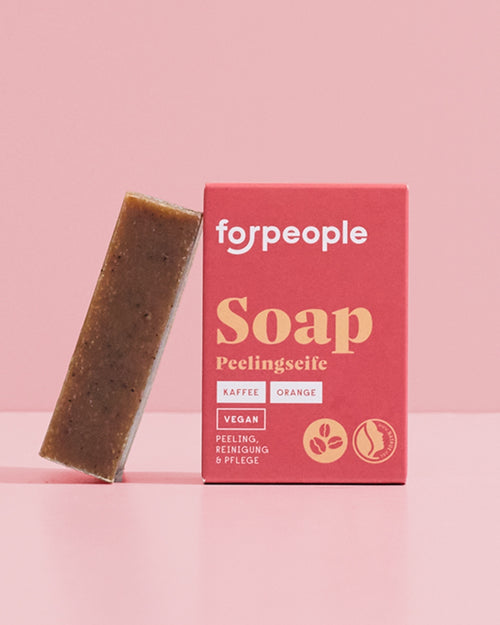
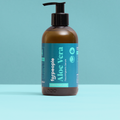
- Aloe Vera Soap with Scrub - Coffee & Orange, 75 g, €8.90: soap made of olive, coconut and other plant oils with ground coffee as the exfoliating grains. It contains essential oils of orange and bitter orange; what that means is explained in Essential Oils and Fragrance Allergens.
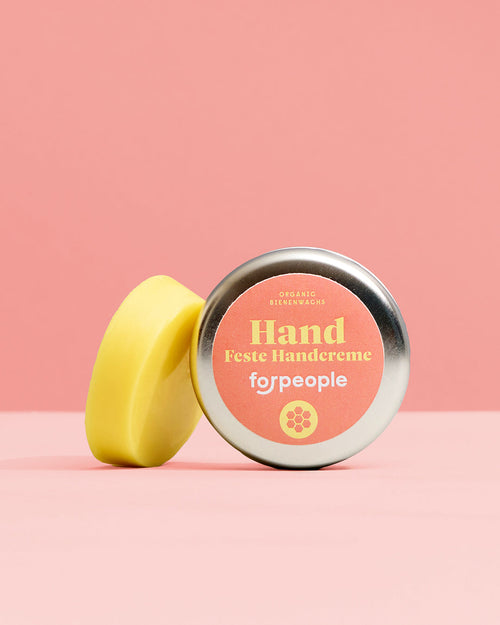
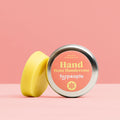
- Solid Hand Cream - Beeswax, 30 g, €9.90: for afterwards. According to the ingredient list, beeswax, olive and sunflower oil, St. John's wort and aloe extract; without water and without added scent.
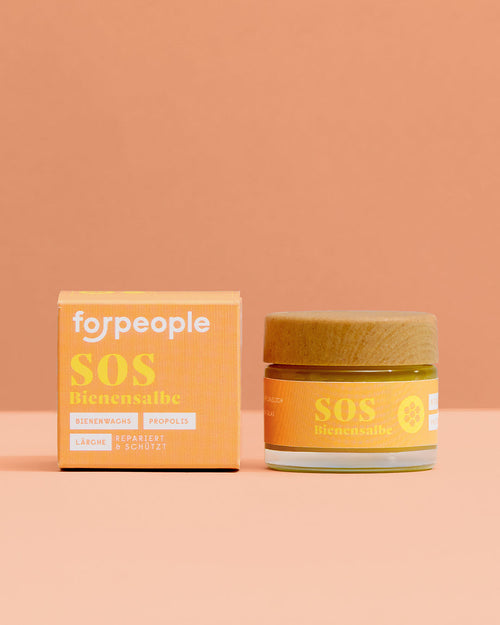
- Beeswax Salve Larch & Mandarin in a Glass Jar, 50 g, €12.90: a soft salve for the evening. It is scented and contains larch resin, propolis and essential oils.
If you notice a skin reaction, stop using the product. More on this: Peeling skin on your fingers: the causes · Dry, cracked hands from frequent washing: what helps? · Gym calluses: care for them or remove them?
From the blog: Hands and feet through winter: a routine for morning and evening
Sources
- Rawlings AV, Harding CR (2004): Moisturization and skin barrier function. Dermatologic Therapy 17 Suppl 1: 43–48. https://doi.org/10.1111/j.1396-0296.2004.04s1005.x
- Kalia YN, Pirot F, Guy RH (1996): Homogeneous transport in a heterogeneous membrane: water diffusion across human stratum corneum in vivo. Biophysical Journal 71(5): 2692–2700. https://doi.org/10.1016/S0006-3495(96)79460-2
- Wigger-Alberti W, Fischer T, Greif C, Maddern P, Elsner P (1999): Effects of various grit-containing cleansers on skin barrier function. Contact Dermatitis 41(3): 136–140. https://doi.org/10.1111/j.1600-0536.1999.tb06104.x
- Deutsche Gesetzliche Unfallversicherung (2026): DGUV Information 212-017 Auswahl, Bereitstellung und Benutzung von beruflichen Hautmitteln. Ausgabe August 2026. https://publikationen.dguv.de/regelwerk/dguv-informationen/853/auswahl-bereitstellung-und-benutzung-von-beruflichen-hautmitteln
- American Academy of Dermatology (2026): How to safely exfoliate at home. Zuletzt aktualisiert 06.02.2026 (abgerufen 08.10.2026). https://www.aad.org/public/everyday-care/skin-care-secrets/routine/safely-exfoliate-at-home
- Sethi A, Kaur T, Malhotra SK, Gambhir ML (2016): Moisturizers: The Slippery Road. Indian Journal of Dermatology 61(3): 279–287. https://doi.org/10.4103/0019-5154.182427