


Why skin peels at all
The outer layer of the skin, the stratum corneum, renews itself constantly. New cells form at the bottom, and at the top the oldest ones come off individually and invisibly. For this to happen, protein links between the cells, the corneodesmosomes, have to be broken down in a controlled way. This breakdown depends on the water content of the stratum corneum. If it is disturbed by environmental influences, the cells no longer come off individually but in flakes and strips, and the skin looks dry and scaly (Rawlings & Harding 2004). One review describes the stratum corneum as a protective layer that responds to environmental challenges and strain. Dry, scaly skin ranges there from the cosmetic problem of winter skin to serious skin conditions (Harding 2004). Most peeling fingers in everyday life belong to the first group.
Where the layer comes apart has been studied by materials scientists on isolated stratum corneum. When it was pulled apart, the cells separated along the spaces between them without the cells themselves tearing. How much force this took depended on temperature and moisture, and after the skin lipids were removed, the behaviour changed markedly (Wu et al. 2006). Put simply: the stratum corneum peels between its cell layers, and how easily this happens depends on water and fats. The basics are covered in The skin barrier explained simply.
The most common everyday causes
| Trigger | What happens to the skin | What to change |
|---|---|---|
| Cold and heated air | Dry air and cold reduce barrier function (Engebretsen et al. 2016) | Gloves outdoors, richer care in the evening |
| Frequent washing, hand sanitiser | Surfactants remove fats and interact with proteins of the stratum corneum (Ananthapadmanabhan et al. 2004) | Wash in lukewarm water, reapply cream after every wash |
| Long wetness, gloves, washing up | The stratum corneum swells, with hydration up to twice its thickness (Egawa et al. 2007), and then dries out again | Cotton gloves under rubber gloves, apply cream afterwards |
| Friction: guitar, climbing, dumbbells, tools | The skin thickens at pressure points; the edges come away | Keep calluses smooth, file edges instead of pulling them |
| A lot of sun without protection | The upper layers dry out and peel days later | Protect the backs of your hands in summer too |
| Cleaners, solvents, nail polish remover | Fats are dissolved out of the stratum corneum | Gloves, then care |
More on the individual triggers: Cracked hands from washing, Rough hands from washing up, Hand cream under gloves and Sun protection for the backs of your hands.
Fingertips that peel
On the fingertips the stratum corneum is particularly thick. When it comes loose, larger white strips or whole edges often come off, especially in people who grip, play or climb a lot. This is usually the result of pressure and friction. If you play guitar, you will find more in Caring for your fingertips as a guitarist; if you climb, in Calluses on your fingertips from climbing and Chalk and your skin. If your fingertips crack in winter, Cracked fingertips in winter helps.
What you can do
- Do not pull: Do not tear off loose bits of skin, or healthy skin often tears with them. If edges stick out, trim them close with clean small scissors.
- No scrubbing: Leave peels and pumice stones off peeling skin. The skin there has already become too thin.
- Wash less where possible: Lukewarm, brief, rinse well, pat dry.
- Moisture and film: After washing, apply a care product containing fats or wax to slightly damp skin. If you like, apply a water-based serum first and put cream on top; how that works is explained in Combining aloe vera serum with solid cream.
- More in the evening: Apply a richer layer so that the film stays on overnight.
- A new product as the trigger? If the peeling started after a new washing-up liquid, soap or cream, stop using the product and watch whether it improves.
When to seek medical advice
Peeling finger skin is often harmless. Have it looked at by a doctor if:
- it peels for no recognisable reason or keeps coming back,
- it itches a lot, stings or small blisters form,
- the skin is red, weeping or develops cracks that do not close,
- the soles of your feet, your nails or other parts of your body change as well,
- you also feel unwell, for example with a fever,
- it does not improve after two to three weeks despite consistent care.
Various skin conditions can be behind such signs. Telling them apart belongs in a doctor's hands; a care cream is no substitute.
Frequently asked questions
Why is the skin on my fingertips peeling?
Usually pressure, friction, frequent washing or cold is the cause. The thick outer layer of the fingertips dries out or thickens and then comes off in strips. If it peels for no recognisable reason, have it checked.
Is it harmless when the skin on my fingers peels?
Usually yes, if there is a clear trigger, the skin underneath looks normal and it improves with care. Redness, strong itching, blisters or frequent recurrence are reasons to see a doctor.
Should I pull off the loose skin?
No. Healthy skin easily tears with it. Carefully trim protruding edges and care for the area afterwards.
Why do my fingers peel after washing up?
Long wetness makes the stratum corneum swell, and afterwards it dries out. Together with the surfactants in the washing-up liquid, the top layer comes off faster. Gloves and care afterwards help.
Does hand cream help with peeling fingers?
It keeps the stratum corneum supple and slows evaporation. That helps if dryness is the cause. If a skin condition is behind it, it is no substitute for seeing a doctor.
At forpeople
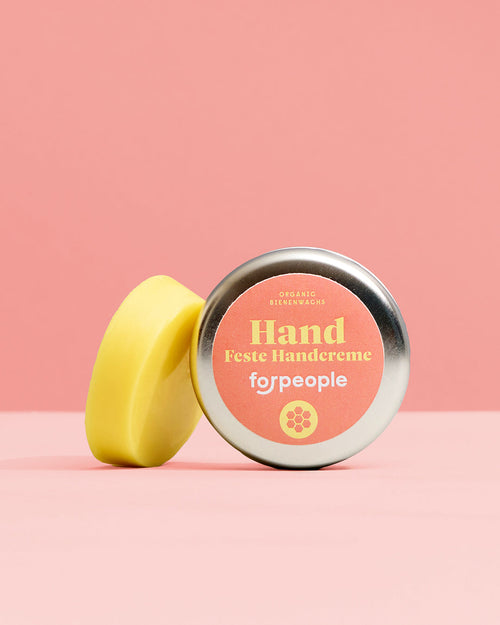
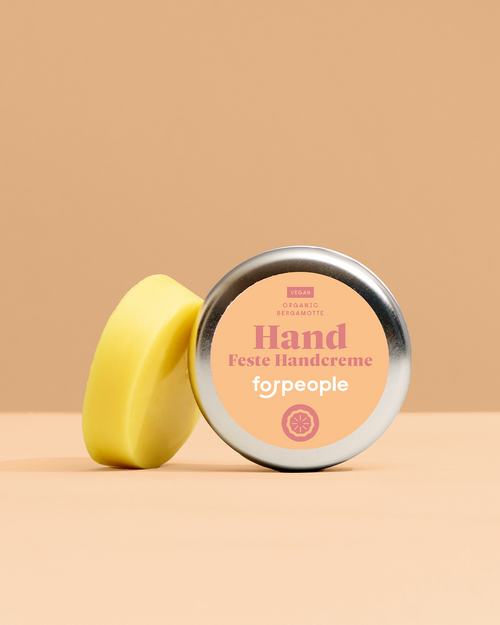
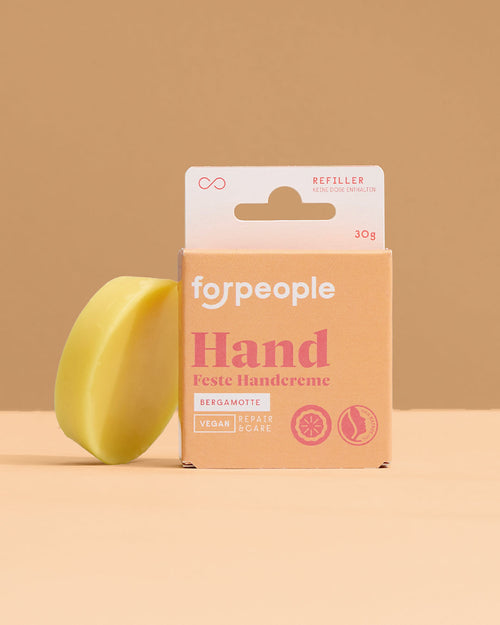
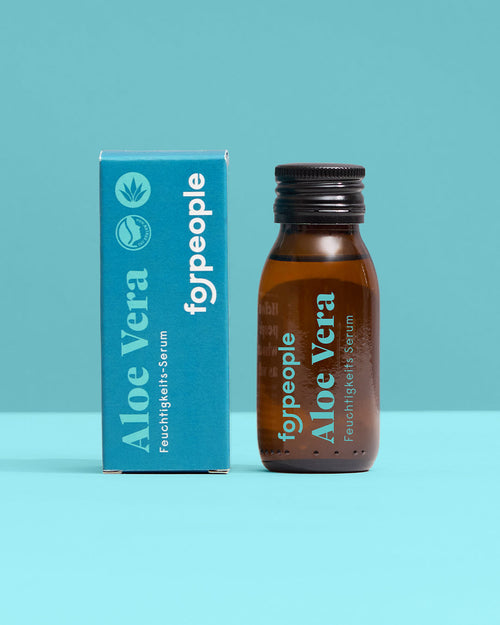
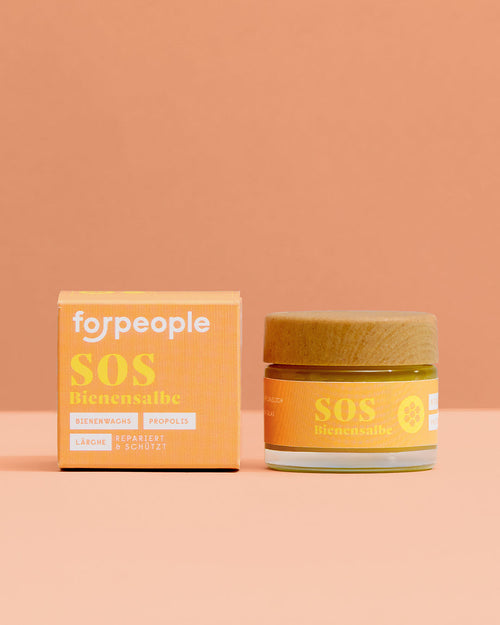
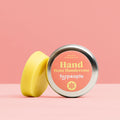
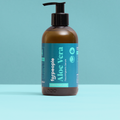
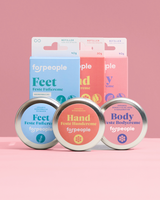
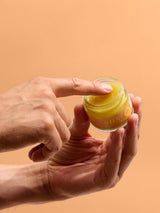
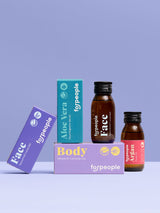
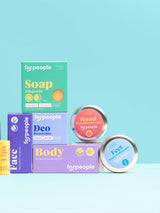
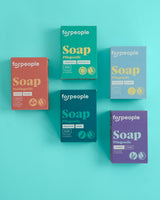
Our hand care is water-free and forms a film. According to its INCI list, the Solid Hand Cream - Beeswax (30 g, €9.90) contains no added fragrance and no essential oils; if you want to rule out a new product as the trigger, a short INCI list is helpful. The vegan Solid Vegan Hand Cream - Bergamot (30 g, €9.90) contains lemon and bergamot oil; you can refill its tin with the Solid Vegan Hand Cream Refill - Bergamot (€7.90). As a water-based layer underneath, the Aloe Vera Serum 99.6% (50 ml, €9.90) made of aloe juice, citric acid, potassium sorbate and sodium benzoate is a good fit. For the night there is the Beeswax Salve Larch & Mandarin in a Glass Jar (50 g, €12.90); it contains larch resin, propolis and essential oils, so read the allergy notes first. More on this: Dry hands despite moisturising · Dry cuticles · Dry knuckles · Without fragrance and essential oils
Sources
- Rawlings AV, Harding CR (2004): Moisturization and skin barrier function. Dermatol Ther 17 Suppl 1: 43–48. https://doi.org/10.1111/j.1396-0296.2004.04s1005.x
- Harding CR (2004): The stratum corneum: structure and function in health and disease. Dermatol Ther 17 Suppl 1: 6–15. https://doi.org/10.1111/j.1396-0296.2004.04s1001.x
- Wu KS, van Osdol WW, Dauskardt RH (2006): Mechanical properties of human stratum corneum: effects of temperature, hydration, and chemical treatment. Biomaterials 27(5): 785–795. https://doi.org/10.1016/j.biomaterials.2005.06.019
- Engebretsen KA, Johansen JD, Kezic S, Linneberg A, Thyssen JP (2016): The effect of environmental humidity and temperature on skin barrier function and dermatitis. J Eur Acad Dermatol Venereol 30(2): 223–249. https://doi.org/10.1111/jdv.13301
- Ananthapadmanabhan KP, Moore DJ, Subramanyan K, Misra M, Meyer F (2004): Cleansing without compromise: the impact of cleansers on the skin barrier and the technology of mild cleansing. Dermatol Ther 17 Suppl 1: 16–25. https://doi.org/10.1111/j.1396-0296.2004.04s1002.x
- Egawa M, Hirao T, Takahashi M (2007): In vivo estimation of stratum corneum thickness from water concentration profiles obtained with Raman spectroscopy. Acta Derm Venereol 87(1): 4–8. https://doi.org/10.2340/00015555-0183