


What chalk is
Climbing chalk is magnesium carbonate, more precisely usually a hydrated basic magnesium carbonate sold under the name magnesia alba. Measurements in climbing gyms show that the dust there consists almost entirely of this substance (Weinbruch et al. 2008). Chalk comes in different forms:
- Powder in a chalk bag, for dipping your fingers in directly.
- Block, which you crush yourself.
- Chalk ball, powder in a fine fabric pouch.
- Liquid chalk, magnesium carbonate in a fast-evaporating liquid – ethanol in the version studied (Weinbruch et al. 2012).
What chalk does to your skin
Magnesium carbonate soaks up moisture. On your fingers it binds sweat, but it also draws water from the top layer of the skin. The horny layer becomes drier and stiffer as a result. That is exactly what the authors of one lab study give as one reason why chalk can even reduce friction: dry skin gives less and moulds itself less well to the surface. On top of that, the grains themselves can form a slippery layer (Li et al. 2001).
Dry, stiff calluses give less under pull and pressure and tear more easily, especially on the fingertips and in the finger creases. The horny layer holds water well when it has enough moisture and lipids of its own. What makes the hand different from other skin is explained under Why hands dry out faster; how the top layer of the skin holds water, under The skin barrier explained simply.
Liquid chalk also contains alcohol, which can dry the skin further. If you use a lot of liquid chalk, you often notice it as dull, rough fingers.
Does chalk help your grip? What studies show
Climbers use chalk to bind sweat and hold on better. The evidence on this is mixed:
| Study | Set-up | Result |
|---|---|---|
| Li et al. 2001 | 15 people, fingertips on sandstone, granite and slate, with and without chalk, dry and wet | chalk reduced friction; water had no clear effect |
| Amca et al. 2012 | 11 experienced climbers hung from holds on a tilting board, sandstone and limestone | chalk increased friction, by 18.7% on limestone and 21.6% on sandstone |
| Kilgas et al. 2016 | 19 climbers, a climbing sequence followed by hanging, with and without chalk | no difference in friction, but longer hanging with chalk: on average 62.9 instead of 49.3 seconds |
| Bacon et al. 2018 | 9 recreational climbers, weight-assisted pull-ups on open-hand and pinch grips | more repetitions with chalk for both grip types |
The studies differ widely in set-up, rock and measuring method. A common thread can still be drawn. A study on holding objects found that the grip force needed was lowest at a medium, “optimal” skin moisture, not at the driest possible skin (André et al. 2010). So chalk mainly helps against too much sweat. More chalk on skin that is already dry brings no advantage and puts extra strain on the skin.
Chalk dust in the gym
In nine climbing gyms, fine dust (PM10) averaged 200 to 500 micrograms per cubic metre, and 1,000 to 4,000 at busy times. The values stayed below the German occupational exposure limits at the time, but were well above those of schools and ordinary sports halls (Weinbruch et al. 2008). In a follow-up study, only liquid chalk reduced the amount of dust about as much as banning chalk; chalk balls, blocks and coarse powder changed little (Weinbruch et al. 2012). For your skin, on the other hand, liquid chalk tends to be more drying because of the alcohol. It’s worth weighing up both, for example liquid chalk as a base and a little powder only when needed.
After the session: chalk off, care on
Chalk that stays on your skin for hours keeps drawing moisture. That’s why removing it is part of the routine.
- Tap and brush off: Tap off loose chalk over the chalk bag.
- Wash with lukewarm water: Use a mild soap and water that isn’t too hot. Hot water and long scrubbing remove extra skin oils. Why frequent washing dries out your hands is explained under Dry, cracked hands from frequent washing.
- Pat dry: Don’t rub, especially not on torn areas.
- Moisturise: A thin layer of cream made of waxes and oils on fingertips, palms and backs of the hands, ideally on still slightly damp skin. When which amount makes sense is explained under Moisturise before or after climbing?.
- Top up in the evening: A slightly thicker layer before bed.
A film of waxes and oils reduces evaporation from your skin until you go back to the gym. The principle is explained under Occlusion and transepidermal water loss. How to care for and file calluses on your fingers is covered under Fingertip calluses when climbing.
When to be careful
Open, torn or bleeding areas belong neither in the chalk bag nor under a cream. Keep them clean, cover them and give them a break. If an area becomes very red, swollen, warm or painful, or doesn’t get better after a few days, have it looked at by a doctor. If your skin reacts to chalk or liquid chalk with redness or stinging, stop using the product.
Frequently asked questions
Does chalk dry out my skin permanently?
Chalk draws moisture from the surface as long as it stays on your skin. If you wash it off after climbing and moisturise your hands, the horny layer recovers between sessions.
Is liquid chalk kinder to skin than powder?
Not necessarily. Liquid chalk creates less dust but usually contains alcohol, which dries the skin further. Which form you use is a trade-off between gym air and how your skin feels.
Should I moisturise before chalking up?
No, not directly before. A fresh oily film makes the chalk clump and can leave residue on holds. Moisturise after climbing and in the evening.
Why do my hands feel dull after washing?
Chalk and soap have removed oil and moisture from the surface. That’s the moment for a thin layer of cream.
Does more chalk help with very dry fingers?
No. Chalk binds moisture. If your fingers are dry anyway, extra chalk doesn’t give you more hold, it just makes the skin stiffer.
At forpeople
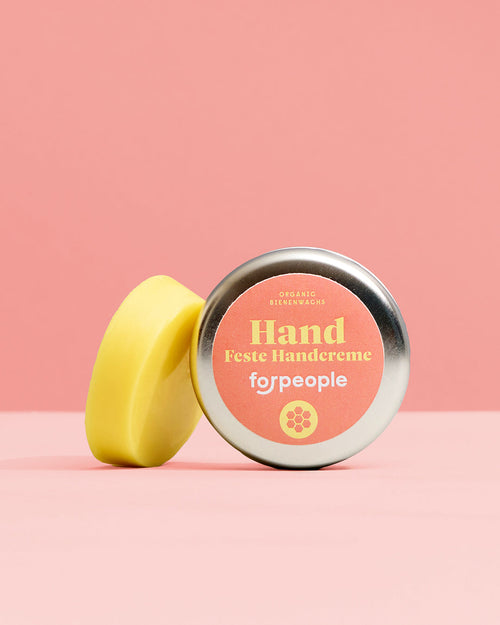
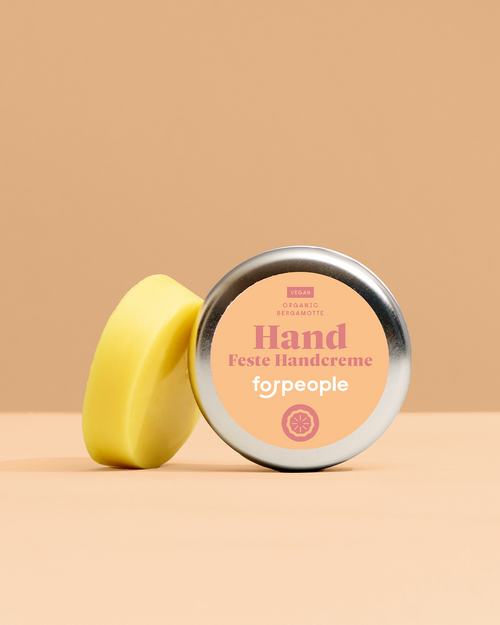
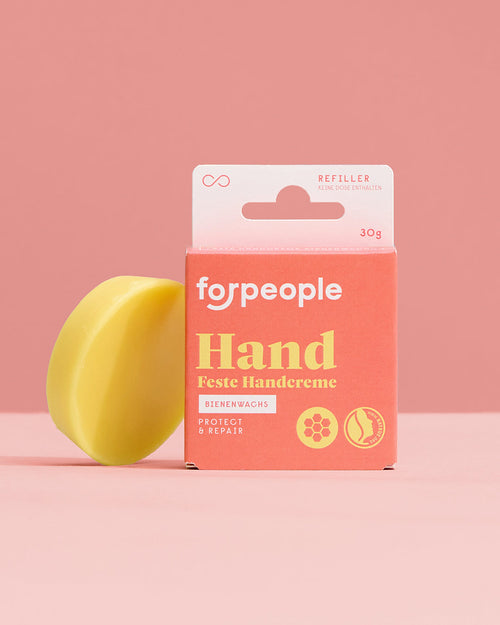
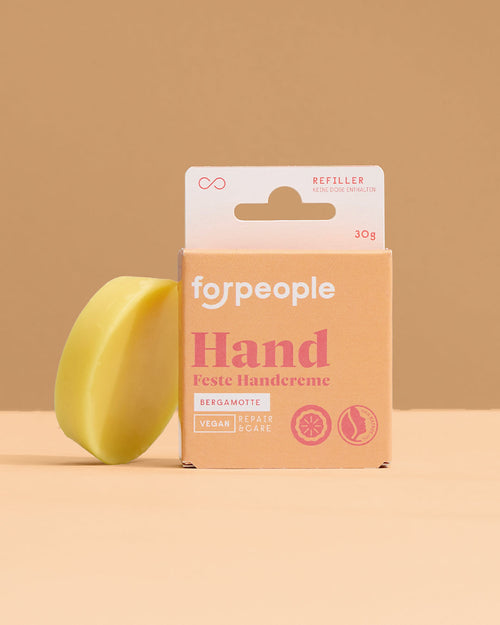
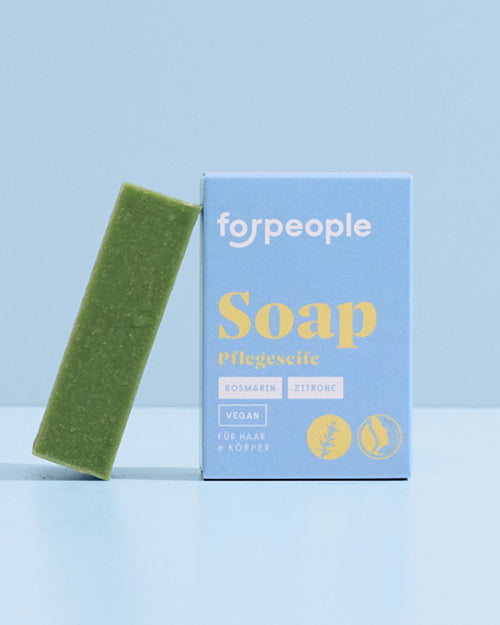
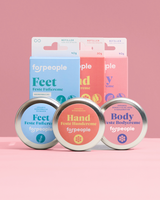
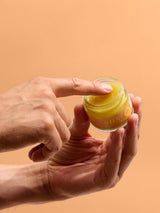
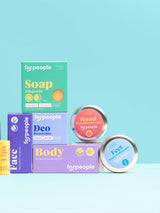
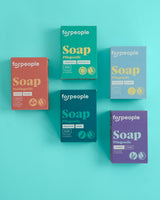
The solid hand creams are made for care after climbing. According to its ingredient list, the Solid Hand Cream - Beeswax (€9.90) consists of beeswax, olive oil, sunflower oil, St. John’s wort extract and aloe extract and contains no essential oils. The Solid Vegan Hand Cream - Bergamot (€9.90) is vegan, with candelilla wax, jojoba oil, olive oil, shea butter and hemp oil; its scent comes from lemon and bergamot oil. Both are water-free and can be applied in a thin layer. When the tin is empty, refill it with the Solid Hand Cream Refill - Beeswax or the Solid Vegan Hand Cream Refill - Bergamot (€7.90 each). For washing after the session, a solid soap such as the Aloe Vera Soap – Rosemary & Lemon (€8.90) works well; soaps contain water and are not water-free. You’ll find more about hand care for climbing in the blog articles Hand care for climbers and Vegan hand care for climbers.
More on this: Moisturise before or after climbing? · Fingertip calluses · Candelilla wax or beeswax · Hand care for manual work and gardening
Sources
- Li FX, Margetts S, Fowler I (2001): Use of 'chalk' in rock climbing: sine qua non or myth? Journal of Sports Sciences 19(6): 427–432. https://doi.org/10.1080/026404101300149375
- Amca AM, Vigouroux L, Aritan S, Berton E (2012): The effect of chalk on the finger-hold friction coefficient in rock climbing. Sports Biomechanics 11(4): 473–479. https://doi.org/10.1080/14763141.2012.724700
- Kilgas MA, Drum SN, Jensen RL, Phillips KC, Watts PB (2016): The Effect of Magnesium Carbonate (Chalk) on Geometric Entropy, Force, and Electromyography During Rock Climbing. Journal of Applied Biomechanics 32(6): 553–557. https://doi.org/10.1123/jab.2016-0009
- Bacon NT, Ryan GA, Wingo JE, Richardson MT, Pangallo T, Bishop PA (2018): Effect of Magnesium Carbonate Use on Repeated Open-Handed and Pinch Grip Weight-Assisted Pull-Ups. International Journal of Exercise Science 11(4): 479–492. PMID 29541333. https://pubmed.ncbi.nlm.nih.gov/29541333/
- Weinbruch S, Dirsch T, Ebert M, Hofmann H, Kandler K (2008): Dust exposure in indoor climbing halls. Journal of Environmental Monitoring 10(5): 648–654. https://doi.org/10.1039/b719344k
- Weinbruch S, Dirsch T, Kandler K, Ebert M, Heimburger G, Hohenwarter F (2012): Reducing dust exposure in indoor climbing gyms. Journal of Environmental Monitoring 14(8): 2114–2120. https://doi.org/10.1039/c2em30289f
- André T, Lefèvre P, Thonnard JL (2010): Fingertip moisture is optimally modulated during object manipulation. Journal of Neurophysiology 103(1): 402–408. https://doi.org/10.1152/jn.00901.2009