



Why calluses form on your fingers
The top layer of the skin, the horny layer, consists of dead, flat cells and renews itself constantly. Where skin is pressed and rubbed again and again, it forms more cells and the layer becomes thicker. When climbing, that means the fingertips, the finger creases and the areas below the base joints of the fingers. This thickening is normal and welcome: it spreads pressure and protects against abrasion.
Thickened skin has different properties from normal skin, though. A study of the soles of the feet showed that callused areas contained considerably less moisture and were less elastic and rougher than the surrounding skin (Hashmi et al. 2015). The study concerns feet, but the finding matches what climbers experience on their hands: thick, dry calluses become rigid. Why this leads to cracks on the heel is explained under Why heel skin gets so thick and cracks; why calluses come back after removal, under Calluses keep coming back.
Too thick, too thin or just right?
| Condition | How you notice it | What you do |
|---|---|---|
| Too thick | hard, yellowish bumps or edges that stick out from the skin; the edge catches on crimps and pinches | file bumps and edges smooth until they blend into the surrounding skin |
| Too dry | skin feels hard and rough, small cracks at the edges, chalk is hard to wash off | moisturise after climbing and in the evening, go easy on liquid chalk |
| Too thin | fingertips are shiny, pink and sensitive, holds burn | take a break or climb easier routes, stop filing, moisturise |
| Too soft | skin swells, for example after a long shower or with a lot of sweat, and slides on holds | don’t climb straight after showering, bind sweat with chalk |
| Just right | firm, even, no edges, gives a little when pressed and springs back | keep up your care, file only when needed |
The table describes experience from climbing practice, not measured values. Every skin reacts a little differently, and the same hand can look different on different fingers.
Filing and sanding: how to do it
- Work on dry skin: File calluses when they are dry, not straight after showering. Softened skin is hard to control, and you easily take off too much.
- Use a fine tool: A fine callus file, a fine sanding sponge or fine sandpaper. Coarse rasps, planes and blades are not suitable for fingers.
- Only bumps and edges: File the areas that stick out from the skin until the transition is smooth. The callus itself stays as protection.
- In one direction, with little pressure: Better short and often than a lot at once.
- Moisturise afterwards: Freshly smoothed skin dries out quickly. A thin layer of cream keeps it supple.
How often you need to file depends on how much you climb. Many climbers check their fingers after every session and file once a week. Filing doesn’t replace care, and care doesn’t replace filing: one keeps calluses even, the other elastic.
Care against brittle calluses
The horny layer only stays supple if it contains enough water. A study of individual horny cells showed that with more moisture the cells became more compliant and could withstand more strain before deforming permanently (Évora et al. 2024). How much water the horny layer can hold depends on its lipids and water-binding substances (Rawlings & Harding 2004). Chalk works against this: it dries the skin, and dry skin becomes less compliant (Li et al. 2001). What exactly chalk does to your skin is explained under Climbing chalk: what magnesium carbonate does to your skin.
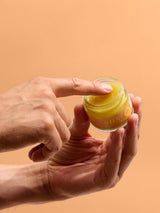
A cream made of waxes and oils leaves a film after climbing that reduces evaporation. That way, your calluses lose less water overnight. Timing matters: after the session and in the evening, not directly before climbing. The reasons are under Moisturise before or after climbing?. How to apply solid cream thinly and evenly is explained under How to apply solid cream.
Don’t soak your hands for long before climbing. In a lab study, skin that had been soaked beforehand warmed up faster under repeated friction than dry skin, which the authors interpret as a higher risk of friction blisters (Kirkham et al. 2014). The study concerns the heel, but the principle also applies to fingers: softened skin copes worse with friction.
Open areas and torn skin
If a piece of callus tears off, there is often an edge of loose skin with a sensitive or open area underneath. Here’s what applies:
- Don’t moisturise: Cream doesn’t belong on open or broken skin. The safety notes of most care products say so too.
- Keep it clean: Clean with clear water and dry carefully.
- Trim loose edges: Cut protruding, loose skin close with clean nail scissors so it doesn’t catch on holds and tear further. Don’t cut into healthy skin.
- Cover it and rest: Cover with a plaster or tape and don’t load the area until it has closed.
- Have it checked by a doctor: if the area becomes very red, swollen, warm or painful, oozes pus or doesn’t get better after a few days.
Once the skin has closed again, moisturise the surrounding area as usual and only file the edge once it is really dry and firm.
Frequently asked questions
Should I remove the calluses on my fingers completely?
No. Calluses protect your fingertips when climbing. Only file bumps and edges that stick out from the skin.
Does moisturising make calluses too soft for climbing?
Not if you moisturise after climbing and in the evening. The care is meant to keep calluses elastic, not to soften them. You don’t moisturise directly before climbing.
What is the best tool for filing?
A fine callus file, a fine sanding sponge or fine sandpaper. What matters is using little pressure and only working on areas that stick out.
Why do my calluses always tear in the same place?
Usually a thick edge has formed there that catches on holds, or the skin is particularly dry in that spot. File the edge smooth and moisturise the area after every session.
Can I keep climbing with a freshly torn area?
Better not. Cover the area and give it a break. If you climb anyway, only choose routes that don’t load it.
At forpeople
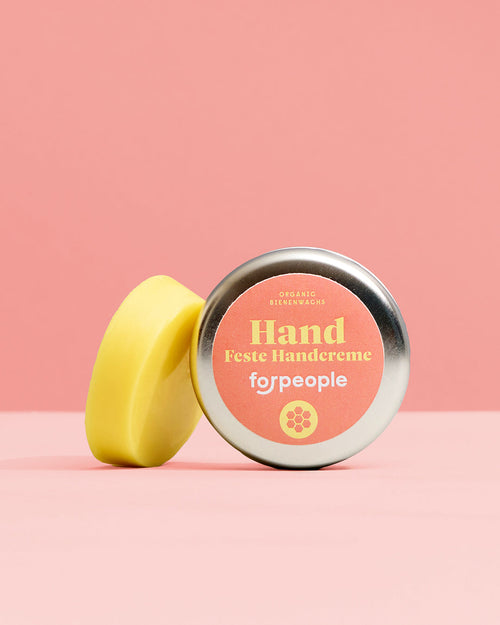
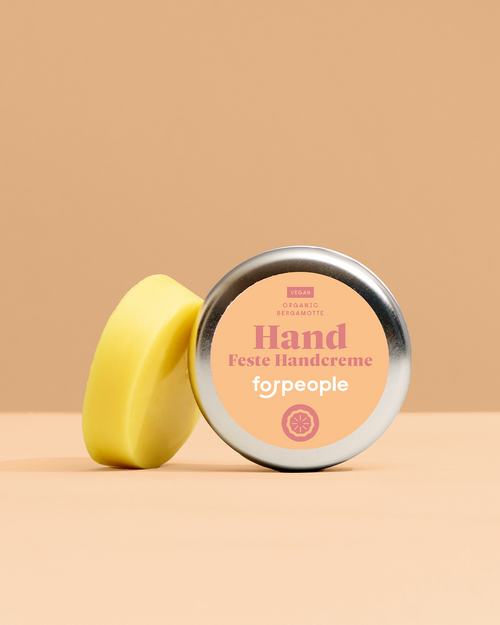
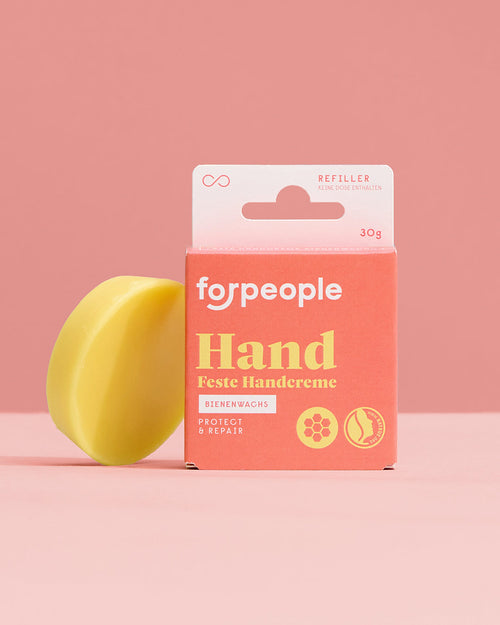
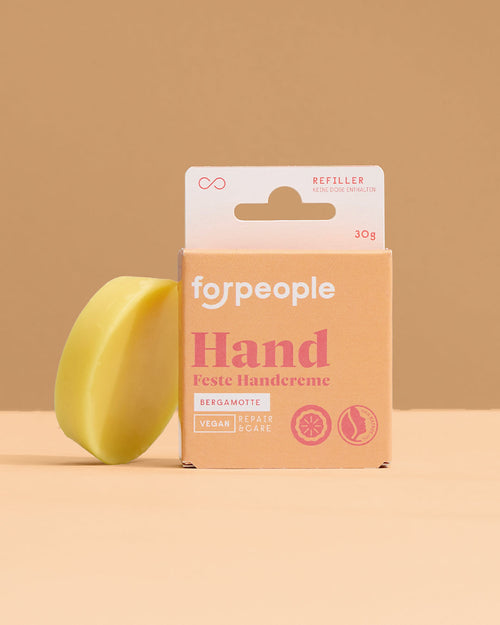
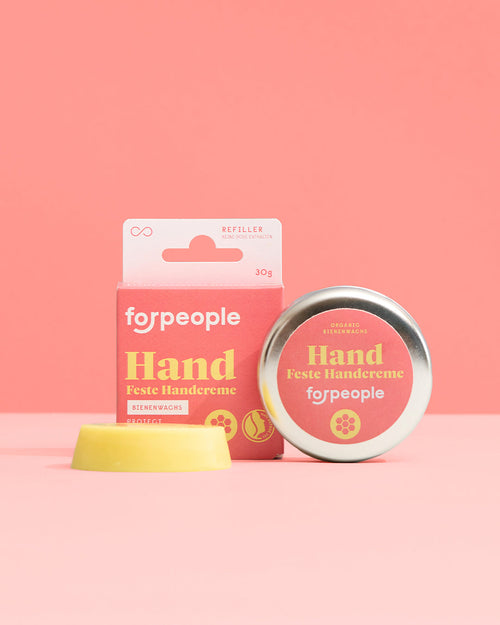
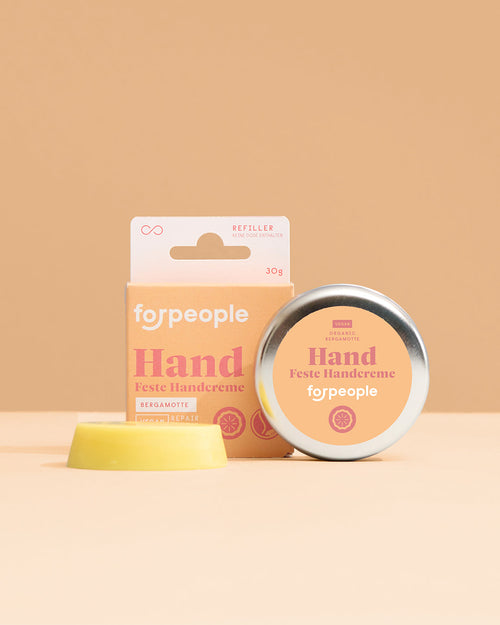
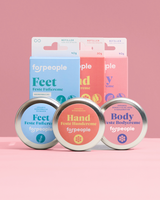
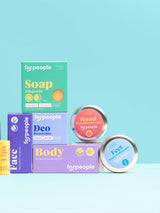
There are two solid hand creams for care after climbing. According to its ingredient list, the Solid Hand Cream - Beeswax (€9.90) contains beeswax, olive oil, sunflower oil, St. John’s wort extract and aloe extract, with no essential oils. The vegan Solid Vegan Hand Cream - Bergamot (€9.90) is based on candelilla wax, jojoba oil, olive oil, shea butter and hemp oil and smells of lemon and bergamot oil. Both are water-free and come in a tin that you refill with the Solid Hand Cream Refill - Beeswax or the Solid Vegan Hand Cream Refill - Bergamot (€7.90 each). If you want one tin for your climbing bag and one for home, take the Hand Care Set – For Rough, Cracked Hands (2× Solid Hand Cream) or the Vegan Hand Care Set – For Dry Hands (2× Bergamot) (€16.90 each). There is more about hand care for climbing in the blog articles Hand care for climbers and Vegan hand care for climbers.
More on this: Chalk and skin · Moisturise before or after climbing? · Candelilla wax or beeswax · How long does a care film last?
Sources
- Hashmi F, Nester C, Wright C, Newton V, Lam S (2015): Characterising the biophysical properties of normal and hyperkeratotic foot skin. Journal of Foot and Ankle Research 8: 35. https://doi.org/10.1186/s13047-015-0092-7
- Évora AS, Zhang Z, Johnson SA, Adams MJ (2024): The effects of hydration on the topographical and mechanical properties of corneocytes. Journal of the Mechanical Behavior of Biomedical Materials 150: 106296. https://doi.org/10.1016/j.jmbbm.2023.106296
- Rawlings AV, Harding CR (2004): Moisturization and skin barrier function. Dermatologic Therapy 17 Suppl 1: 43–48. https://doi.org/10.1111/j.1396-0296.2004.04s1005.x
- Li FX, Margetts S, Fowler I (2001): Use of 'chalk' in rock climbing: sine qua non or myth? Journal of Sports Sciences 19(6): 427–432. https://doi.org/10.1080/026404101300149375
- Kirkham S, Lam S, Nester C, Hashmi F (2014): The effect of hydration on the risk of friction blister formation on the heel of the foot. Skin Research and Technology 20(2): 246–253. https://doi.org/10.1111/srt.12136