




Why the fingertips in particular?
The skin on your palms and fingertips is built differently from the skin on the back of your hand. Its outer layer, the stratum corneum, is many times thicker: in a Raman spectroscopy measurement, the stratum corneum of the palm averaged 173 micrometres, the back of the hand 29.3 and the cheek 16.8 micrometres (Egawa et al. 2007). This thick layer protects you when you grip. But it only stays elastic if it contains enough water and fats.
That is exactly what the fingertips lack. Sebaceous (oil) glands are found almost everywhere on the body, but not on the palms and soles (Smith & Thiboutot 2008). So the inner side of your fingers gets no oily film of its own from within. Whatever fats water, soap and cold remove have to be replaced from outside. Why this affects the whole hand is explained in Why hands dry out faster. This page is about the fingertips themselves.
Then there is the mechanical side. Your fingertips press, pull, tap and grip all day. Where the skin bends over the edge of the nail or is stretched at the side of the nail, every movement creates tension. A supple outer layer gives way. A dry, hard one splits.
What winter adds
Cold outdoor air holds little water, and when it is heated indoors, the relative humidity drops further. A review concludes that low humidity and low temperatures reduce the skin's barrier function overall and make it more susceptible to mechanical stress (Engebretsen et al. 2016). Mechanical stress is the normal state for fingertips.
How dryness turns into a crack has been measured by materials scientists on isolated stratum corneum. As it dries, the stratum corneum contracts and tensile stresses build up, in the experiments up to about 3 megapascals over eight hours, depending on pre-treatment and ambient humidity. Surfactants increased these stresses, glycerin lowered them. The authors describe this drying stress as a mechanical driving force for damage to dry skin (Levi et al. 2010). Translated into everyday life: washing and dry air increase the tension in the skin, care reduces it.
What helps in winter in general is covered in Dry skin in winter. Why even a water-free cream does not protect against frostbite is explained in Cold protection cream: water-free, but no frost protection.
Typical spots and triggers
| Where it cracks | Common trigger | What you can do |
|---|---|---|
| At the side of the nail (nail fold) | Washing, picking at cuticles, tension from gripping | Include cuticles and nail edges when applying cream after washing; do not tear |
| Across the tip of the thumb and index finger | Cold, paper, cardboard, tools | Gloves outdoors and when working with cardboard or wood; salve in the evening |
| Fingertip with thick callus | Guitar, climbing, manual work | Keep calluses smooth instead of cutting them off; file edges carefully |
| All fingertips at once | Lots of water and soap, hand sanitiser | A small amount of care after every wash; gloves for wet work |
There are separate pages for instruments and sport: Caring for your fingertips as a guitarist and Calluses on your fingertips from climbing. For workshop and garden: Hand care for manual work and gardening.
A routine for your fingertips
The stratum corneum needs water for its maturation and for the shedding of the uppermost cells to run normally. If these processes are disturbed by environmental influences, the skin becomes dry and flaky (Rawlings & Harding 2004). Oily care holds this water better on slightly damp skin than on completely dry skin (Sethi et al. 2016). This gives a simple routine:
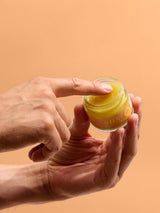
- After washing: Wash your hands in lukewarm water, pat them dry and apply a small amount of care specifically to fingertips and nail edges. Massage it in with the thumb of your other hand.
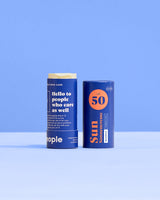
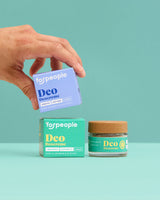
- During the day: Keep a small tin in your jacket or trouser pocket. You can pick up a solid cream straight from the tin with your fingertip without anything leaking. A lip balm stick is also handy: it lets you apply care precisely to a single fingertip.
- In the evening: Apply a richer salve a little more thickly to your fingertips. If you like, wear thin cotton gloves over it so that the film stays on overnight. More in Overnight hand mask.
- Outdoors: Gloves in cold and wind, even for short trips.
- Calluses: Do not cut them off with scissors or a blade. After a shower, when the skin is soft, carefully smooth hard edges with a fine file.
If your hands as a whole stay dry despite care, take a look at Dry hands despite moisturising. Cuticles have their own page: Dry, torn cuticles.
What to avoid
- Hot water to “warm up” your hands after being outside. Lukewarm is enough.
- Pulling cracks open, tearing off bits of skin or working on them with your teeth.
- Applying cream to open or bleeding areas. Keep them clean; see the section on medical advice.
- Frequent use of hand sanitiser without a reason. Where it is necessary, apply cream afterwards as soon as your hands are dry.
When to seek medical advice
Dry, rough fingertips are common in winter and can usually be managed well with care. Get medical advice if:
- cracks keep reopening for weeks or do not close after two to three weeks despite consistent care,
- cracks bleed or hurt so much that they limit you in everyday life,
- the skin around a crack is red, swollen or warm, or pus appears,
- you also notice blisters, weeping areas or changes to your nails,
- the problems are linked to your work; then also ask your company doctor.
Such changes can be caused by a skin condition. Assessing it belongs in a doctor's hands; a care cream is no substitute.
Frequently asked questions
Why do my fingertips crack every winter?
The outer skin layer on the fingertips is particularly thick and there are no oil glands. Cold, dry heated air and washing dry this layer out, and it then splits when you grip. Regular care after washing and in the evening helps prevent it.
What helps quickly with cracked fingertips?
Apply a salve containing fats or wax in the evening and leave it on overnight, possibly with cotton gloves. During the day, reapply a small amount after every wash.
Should I cut off the hard skin on my fingertip?
No. Cutting leaves edges that split more easily. Carefully smooth hard areas with a fine file after a shower and apply care afterwards.
Does hand cream help once the crack is already there?
On closed, dry and rough areas, yes; it keeps the surrounding skin supple. Open, bleeding cracks should not be creamed. If they do not close, ask a doctor.
Why does the skin crack right at the side of the nail?
That is where the skin bends and stretches with every gripping movement, and the thin cuticle dries out quickly. So include the nail edges when you apply cream.
At forpeople
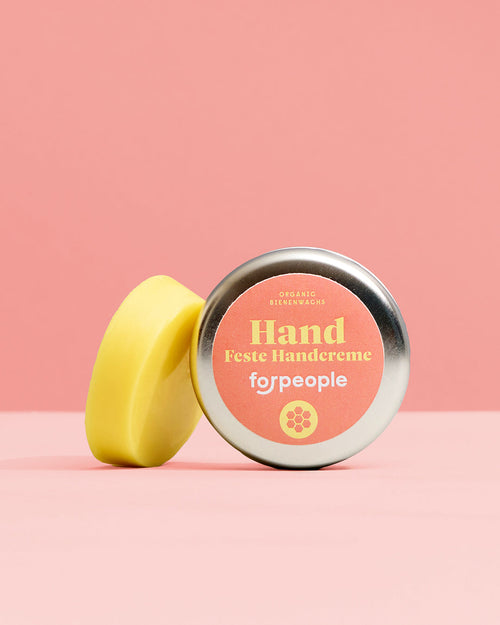
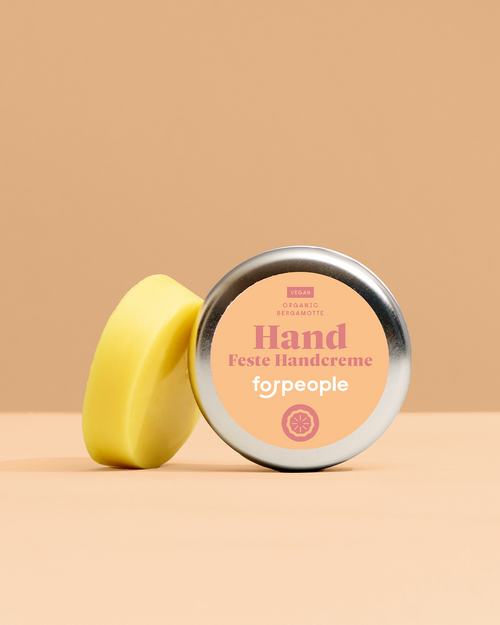
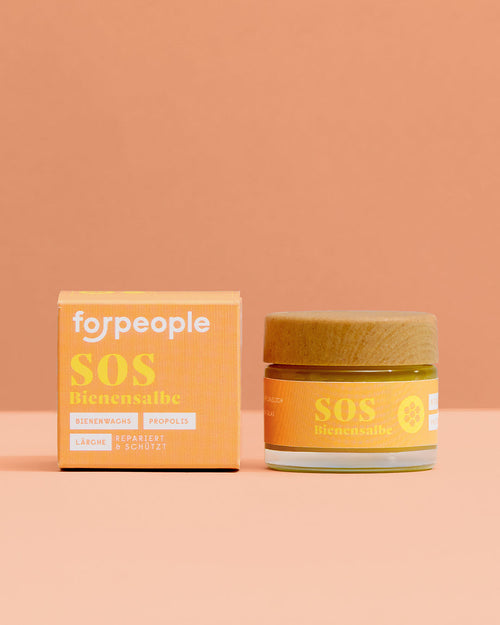
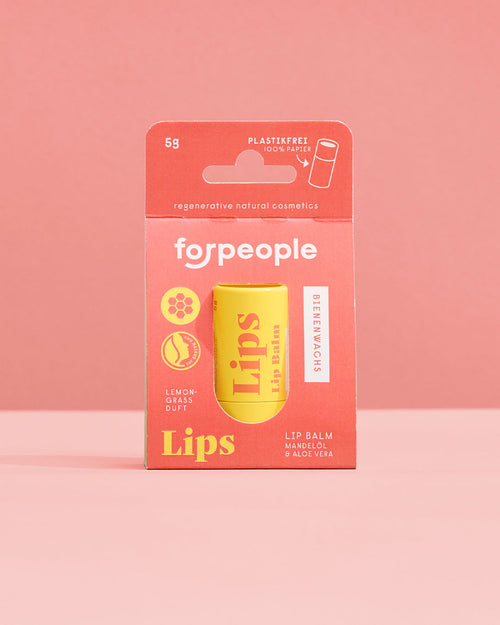
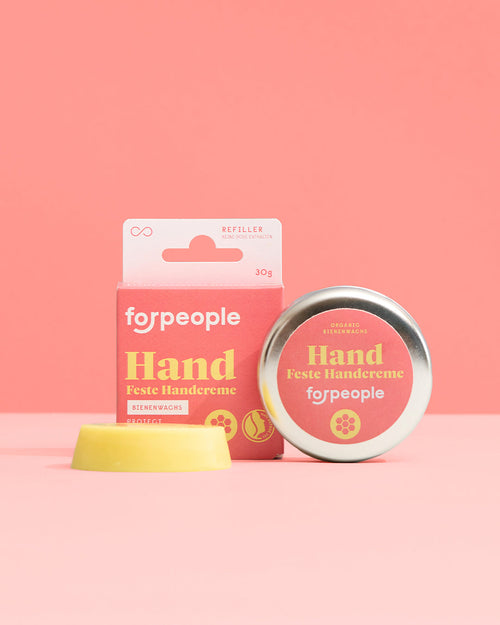
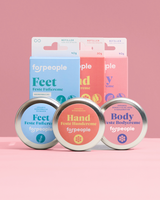
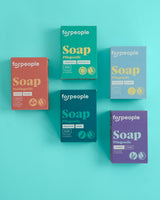
For fingertips, water-free care products that form a film are a good fit. According to its INCI list, the Solid Hand Cream - Beeswax (30 g, €9.90) consists of beeswax, olive and sunflower oil, St. John's wort and aloe extract and contains no added fragrance. The vegan Solid Vegan Hand Cream - Bergamot (30 g, €9.90) is based on candelilla wax and smells of lemon and bergamot. For the night there is the softer Beeswax Salve Larch & Mandarin in a Glass Jar (50 g, €12.90); it contains larch resin, propolis and essential oils, so read the allergy notes first. The Lip Balm - Lemongrass (5 g, €4.90) works as a stick for single fingertips. If you want one tin at home and one on the go, take the Hand Care Set – For Rough, Cracked Hands (2× Solid Hand Cream) (€16.90). More on this: Dry knuckles · Peeling skin on your fingers · Cracked hands from washing · How to apply solid cream
Sources
- Egawa M, Hirao T, Takahashi M (2007): In vivo estimation of stratum corneum thickness from water concentration profiles obtained with Raman spectroscopy. Acta Derm Venereol 87(1): 4–8. https://doi.org/10.2340/00015555-0183
- Smith KR, Thiboutot DM (2008): Thematic review series: skin lipids. Sebaceous gland lipids: friend or foe? J Lipid Res 49(2): 271–281. https://doi.org/10.1194/jlr.R700015-JLR200
- Engebretsen KA, Johansen JD, Kezic S, Linneberg A, Thyssen JP (2016): The effect of environmental humidity and temperature on skin barrier function and dermatitis. J Eur Acad Dermatol Venereol 30(2): 223–249. https://doi.org/10.1111/jdv.13301
- Levi K, Weber RJ, Do JQ, Dauskardt RH (2010): Drying stress and damage processes in human stratum corneum. Int J Cosmet Sci 32(4): 276–293. https://doi.org/10.1111/j.1468-2494.2009.00557.x
- Rawlings AV, Harding CR (2004): Moisturization and skin barrier function. Dermatol Ther 17 Suppl 1: 43–48. https://doi.org/10.1111/j.1396-0296.2004.04s1005.x
- Sethi A, Kaur T, Malhotra SK, Gambhir ML (2016): Moisturizers: The Slippery Road. Indian J Dermatol 61(3): 279–287. https://doi.org/10.4103/0019-5154.182427