



Why dry fingertips slip
The skin of your fingertips carries fine ridges, the lines of your fingerprint. The pores of the sweat glands sit on these ridges. A review article describes what follows from that: when dry, the outer layer of the skin (the stratum corneum) behaves like a hard, glassy polymer. The ridges touch a surface only with their highest points, the real contact area is small and friction is low. When the outer layer takes up moisture, it softens. The ridges mould themselves to the surface, the contact area grows, and friction grows with it (Adams et al. 2013).
Measurements on smooth glass show the order of magnitude. On first contact, the friction coefficient of a fingertip was around 0.2. When the finger stayed in place, sweat collected in the contact and the value rose to about 3 within some tens of seconds. When extra water was added, it fell again to roughly a third (Adams et al. 2013).
So there is an optimum. In a gripping experiment, the grip force needed was lowest at a medium level of fingertip moisture (André et al. 2010). With dry skin, a contact starts to slip more readily (André et al. 2011).
Paper, film, cards: what happens where
Paper is porous. It absorbs the sweat from your fingertip, so friction drops slightly the longer the contact lasts. Smooth, dense surfaces such as glass or the polymer polypropylene do not let the moisture escape. There, friction rises over some tens of seconds (Adams et al. 2013). A brief pinch with a dry fingertip gains little from that. The table applies this to everyday situations; it has not been measured for the individual objects.
| Situation | Why it slips | What helps right away | What helps in the long run |
|---|---|---|---|
| Turning pages of books and newspapers | Paper soaks up what little moisture there is; the hard outer skin layer slides over the sheet | Breathe on your fingertip or dab it on a finger moistener | Care for your fingertips in the evening, apply a very thin layer of cream during the day |
| Opening produce bags and bin liners | The layers of film cling to each other; a dry fingertip lacks the friction to shift them | Breathe on your fingertips, then roll the opening between your fingers | Dry your hands well after washing and apply a thin layer of cream |
| Counting banknotes and receipts | Smooth paper; every sheet takes a little moisture with it | A finger moistener or a rubber finger cone | Care after work, not before |
| Shuffling and dealing playing cards | Coated, smooth surface | Briefly wet your hands and dry them | On games night, apply cream early and thinly |
| Swiping on a display | Here, friction matters less than the electrical contact | Breathe on your fingertip | See Fingerprint not recognised: is it your dry fingers? |
Why it gets more common with age and in winter
Many people only notice the slipping from midlife onwards. That fits a study of 66 healthy adults aged between 22 and 86: from about the age of 50, fingertip skin became more slippery on a smooth surface, and participants gripped harder. The authors name lower skin moisture in old age as a possible reason (Cole et al. 1999). What changes in the skin is covered in Why do hands get drier with age?.
On top of that comes everything that dries out your fingertips. A review of friction measurements on skin sums it up: more moisture in the skin, from water or from a moisturiser, raises the friction coefficient; alcohol lowers it. The measured values depend on the body site and the measuring device (Sivamani et al. 2003). In everyday terms: heated indoor air in winter, frequent washing, alcohol-based hand sanitiser and working with paper make your fingertips smoother. More on this in Dry, cracked hands from frequent washing: what helps?, Hand sanitiser and hand cream: which comes first? and Dry hands from paper, cardboard and chalk: what causes it?.
What helps right away
All quick fixes bring a small amount of moisture into the top layer of the skin. Your fingertip should be slightly damp, not wet.
- Breathing on it: Warm breath contains water vapour. Two or three breaths on your fingertips are often enough for the next page or the next bag.
- Finger moistener: Stationery shops sell small tubs with a damp sponge or a paste for counting and leafing through paper.
- Wetting and drying: Hold your fingertips under water briefly and dry them. The skin is grippier for a short while afterwards; dripping wet fingers slip again.
- Licking your finger: It works for the same reason but is unhygienic, especially with money and borrowed books. Breathing on your finger does the same job.
What helps in the long run
Freshly creamed fingers do not grip better: a fresh film of wax and oil acts more like a lubricant between skin and paper and leaves marks on the page. The benefit comes earlier. A film of fats reduces the evaporation of water from the skin, and fingertips that dry out less stay more supple. We have not tested whether a cream measurably changes the friction of fingertips.
- Richer in the evening: Before bed, put a slightly thicker layer on your fingertips and the skin around your nails and massage it in.
- Very thin during the day: Use so little that your fingertips do not shine after massaging it in, and wait a few minutes before you touch paper. The technique is described in Hand care at the office without a greasy keyboard.
- After washing your hands: Dry your fingertips well too and apply a thin layer of cream.
- Keep moisture and film apart: A water-based product such as an aloe vera serum brings water onto the skin and leaves no greasy film. The water evaporates again if nothing is layered over it. The order is explained in Combining aloe vera serum with oil or solid cream.
When to seek medical advice?
Dry, smooth fingertips usually have a simple cause. Have it checked by a doctor if things fall out of your hand although your skin is not dry, if fingers are numb or tingle, if your strength fades or your hands tremble. Then it is not about the skin. The same goes for cracks on your fingertips that bleed or do not close, and for skin that peels heavily, reddens or forms small blisters. Cosmetics do not belong on open areas.
Frequently asked questions
Why do so many people lick their finger before turning a page?
Because a slightly damp fingertip has more friction on paper than a dry one. It is more hygienic to breathe on your fingertip or to use a finger moistener.
Does hand cream help dry fingers to grip again?
Not at the moment you apply it: a fresh greasy film tends to make your fingertips smoother. Care belongs in the evening and, during the day, on the skin in a very thin layer. It protects your fingertips from drying out; we do not promise an effect on your grip.
Why can I not get thin bags and bin liners open?
The layers of film cling to each other. To separate them you shift them against each other, and your fingertip needs friction for that. Breathe on your fingertips and roll the opening between your fingers.
At what age do fingertips become more slippery?
In a study of 66 adults, the slipperiness of skin on a smooth surface increased from about the age of 50. That is the result of a single study and not a fixed threshold.
Are wet fingers better than dry ones?
No. A slightly damp fingertip grips best. In measurements on glass, friction dropped to roughly a third as soon as extra water was added. So dry your fingers after wetting them.
At forpeople
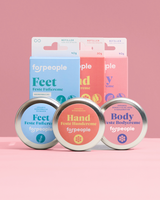
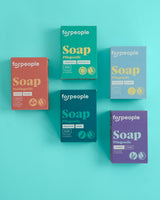
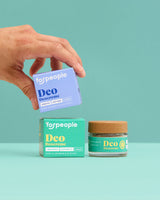
Our products are skincare and not grip aids: we have not measured whether they change the friction of fingertips. According to the product information, they are not to be used on injured or irritated skin.
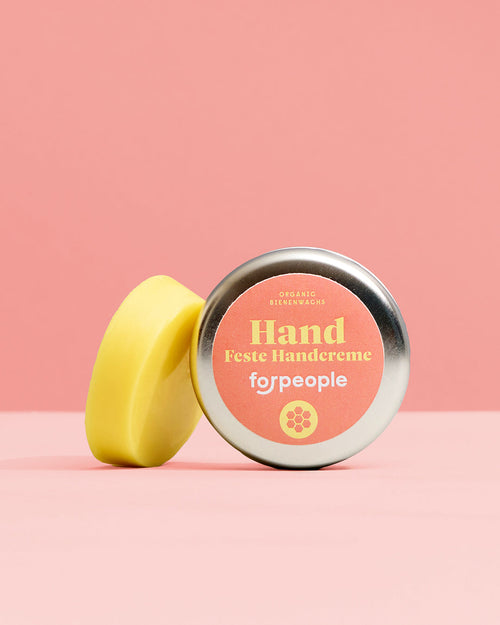
- Solid Hand Cream - Beeswax, 30 g, €9.90: according to the ingredient list, beeswax, olive and sunflower oil, St. John's wort and aloe extract. Without water and without added scent.
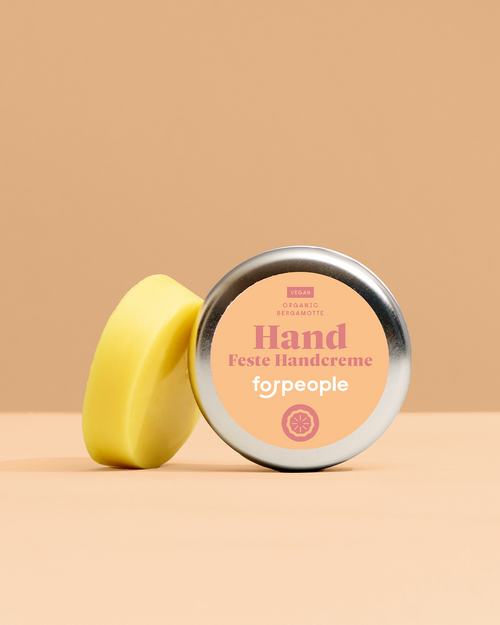
- Solid Vegan Hand Cream - Bergamot, 30 g, €9.90: vegan, with candelilla wax, jojoba oil and shea butter. It smells of lemon and bergamot oil, both essential oils.
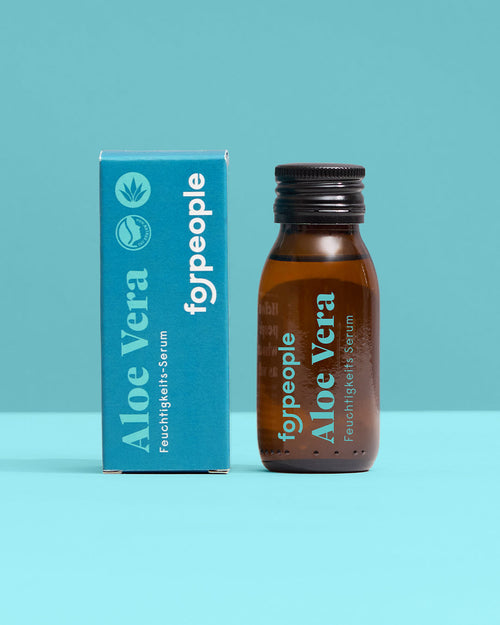
- Aloe Vera Serum 99.6%, 50 ml, €9.90: liquid, water-based and preserved. According to the ingredient list, it contains neither oil nor wax.
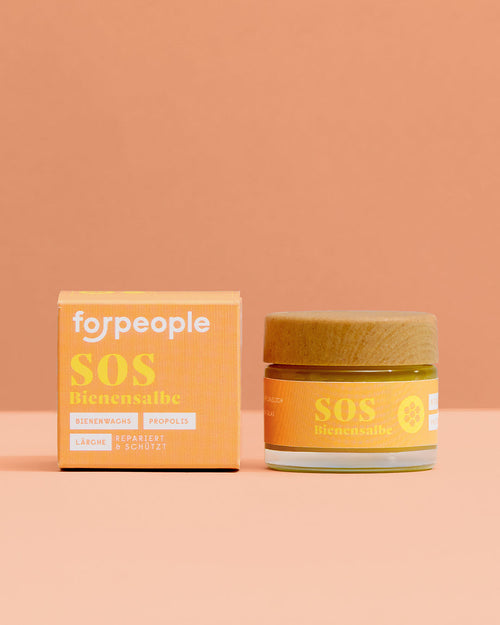
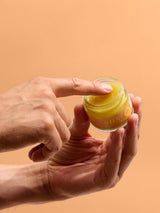
- Beeswax Salve Larch & Mandarin in a Glass Jar, 50 g, €12.90: a soft salve for the evening. It is scented and contains larch resin, propolis and essential oils; see Allergic to tree resin, colophony or propolis?.
If you notice a skin reaction, stop using the product. More on this: Cracked fingertips in winter: causes and care · Climbing chalk: what it does to your skin · Fingerprint not recognised: is it your dry fingers?
From the blog: Aloe Vera Serum: What It's Really Good For – and What It Can't Do
Sources
- Adams MJ, Johnson SA, Lefèvre P, Lévesque V, Hayward V, André T, Thonnard JL (2013): Finger pad friction and its role in grip and touch. Journal of the Royal Society Interface 10(80): 20120467. https://doi.org/10.1098/rsif.2012.0467
- André T, Lefèvre P, Thonnard JL (2010): Fingertip moisture is optimally modulated during object manipulation. Journal of Neurophysiology 103(1): 402–408. https://doi.org/10.1152/jn.00901.2009
- André T, Lévesque V, Hayward V, Lefèvre P, Thonnard JL (2011): Effect of skin hydration on the dynamics of fingertip gripping contact. Journal of the Royal Society Interface 8(64): 1574–1583. https://doi.org/10.1098/rsif.2011.0086
- Cole KJ, Rotella DL, Harper JG (1999): Mechanisms for age-related changes of fingertip forces during precision gripping and lifting in adults. Journal of Neuroscience 19(8): 3238–3247. https://doi.org/10.1523/JNEUROSCI.19-08-03238.1999
- Sivamani RK, Goodman J, Gitis NV, Maibach HI (2003): Coefficient of friction: tribological studies in man – an overview. Skin Research and Technology 9(3): 227–234. https://doi.org/10.1034/j.1600-0846.2003.02366.x