






What changes in the skin with age
The stratum corneum holds water mainly with the fats between its cells: ceramides, cholesterol and free fatty acids. A study at three body sites found clearly lower levels of all major types of fat with increasing age, especially ceramides. In winter the levels dropped further (Rogers et al. 1996).
A study in the Journal of Clinical Investigation compared younger and older people. At rest, older skin did not lose more water than younger skin. But it was easier to disturb: in older participants the barrier was disrupted after an average of 18 tape strips, in younger ones only after 31. And it recovered more slowly: after 24 hours to 15 per cent in the older group, to 50 per cent in the younger group. The authors attribute this to a general lack of fats in the stratum corneum (Ghadially et al. 1995).
In everyday terms: on a quiet day older skin looks unremarkable, but it copes less well with hand washing, cleaning products and cold and takes longer to recover from them. What makes up the skin barrier is explained in The skin barrier simply explained.
Other changes: the pH of the skin surface rises with age, and surface sensations such as heat are perceived more weakly and more slowly (Farage et al. 2008). The second point matters in practice: if you feel heat less well, it's easy to wash with water that is too hot.
Why the hands in particular
Hands are washed more often than any other part of the body, and the backs of the hands are almost always exposed to the sun. The effects of sunlight can considerably amplify the changes in ageing skin (Farage et al. 2008). A review of dry skin in older age names several causes that come together: changes in keratinisation and in the skin's fat content, certain medications such as diuretics, and a lot of heating or air-conditioned air (White-Chu & Reddy 2011). If you have the impression that your skin has been drier since starting a new medication, mention it to your doctor; don't stop anything on your own.
Why hands in general dry out faster is covered in Why hands dry out faster. There is a separate page on sun protection for the backs of your hands: Do the backs of my hands need sun protection?.
A care routine for mature hands
| Step | What you can do | Why |
|---|---|---|
| Washing | lukewarm, brief, little soap; check the temperature on your wrist | heat and surfactants remove skin fats; heat is perceived more weakly |
| Drying | pat dry, also between your fingers | avoid friction |
| Moisturising | after every wash, rich care | a film of fat reduces evaporation |
| Night | thick layer, cotton gloves | the film stays on undisturbed |
| Outdoors | sun protection on the backs of your hands, gloves in the cold | UV and cold dry the skin out further |
| Indoor air | air rooms regularly and briefly, don't overheat | dry heating air draws water from the skin |
Sources for the table: White-Chu & Reddy 2011 (humidity, washing habits, care), Farage et al. 2008, Sethi et al. 2016. Care works best on slightly damp skin directly after washing; the literature mentions once to three times a day depending on dryness (Sethi et al. 2016). Night care is described in Overnight hand mask, the daytime amount in How do I apply a solid cream properly?.
In practice: tin, jar or pump?
Over the years fingers often become stiffer, and small lids are more of an effort. That's a real reason to choose packaging deliberately:
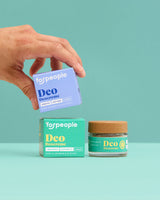
- Solid cream in a tin: you stroke the surface with a finger or the back of your hand; it softens with the warmth of your skin. If you have little strength in your fingers, warm the tin briefly in your hand.
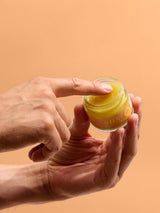
- Soft salve in a jar: it can be taken out without pressure. A screw lid with a large diameter is easier to open than a small cap.
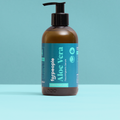
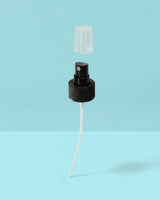
- Pump bottle: one press with the heel of your hand is enough, even if your fingers won't cooperate.
The differences between solid cream and tube are explained in Solid cream or tube, those between salve, balm and butter in Salve, balm, butter, solid cream.
What to look for in the ingredients
The review of dry skin in older age advises watching out for known contact allergens in care products and gives wool wax (lanolin), aloe vera and parabens as examples (White-Chu & Reddy 2011). That doesn't mean these substances bother everyone; but if you react to a product, check the INCI list. Fragrances and essential oils can also cause reactions. How to find them in the list is covered in Essential oils and fragrance allergens and Reading an INCI list. If you get redness, stinging or blisters after moisturising, stop using the product.
A hand cream doesn't change pigment spots and doesn't make skin firmer. Have new or changing spots checked by a doctor.
When to seek medical advice
Seek medical advice if your skin stays dry, red or cracked for weeks despite regular care, if cracks bleed or don't close, if the skin weeps or forms blisters, if it keeps you awake at night, or if the dryness suddenly appears all over your body.
Frequently asked questions
Why do my hands get drier with age?
The stratum corneum contains fewer fats and recovers more slowly after strain such as washing. On the hands, lots of water, soap and sun add to this.
How often should I moisturise mature hands?
After every hand wash and more richly in the evening. The literature gives once to three times a day as a guide depending on dryness; if you wash often, it can be more.
Does drinking more help?
It isn't well established that drinking more makes hands noticeably less dry. For the stratum corneum, care from the outside is what counts. How much you should drink is best discussed with your doctor.
Do hand creams help against age spots?
No. Care doesn't change pigment spots. Sun protection on the backs of your hands protects the skin from further UV radiation.
Is a rich cream too heavy for thin skin?
Usually not. If it feels too greasy during the day, use less during the day and more in the evening.
At forpeople
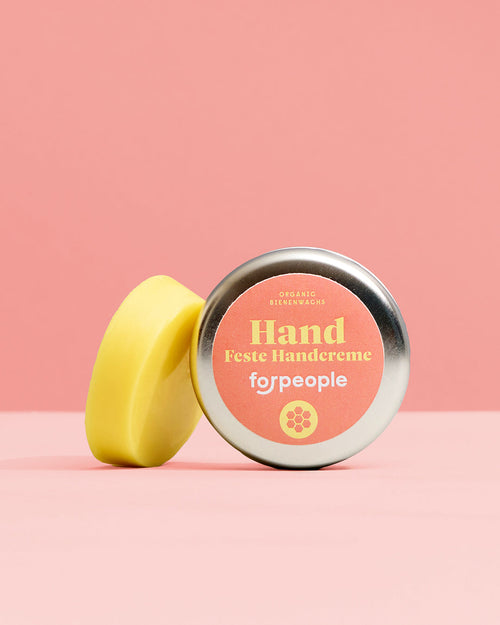
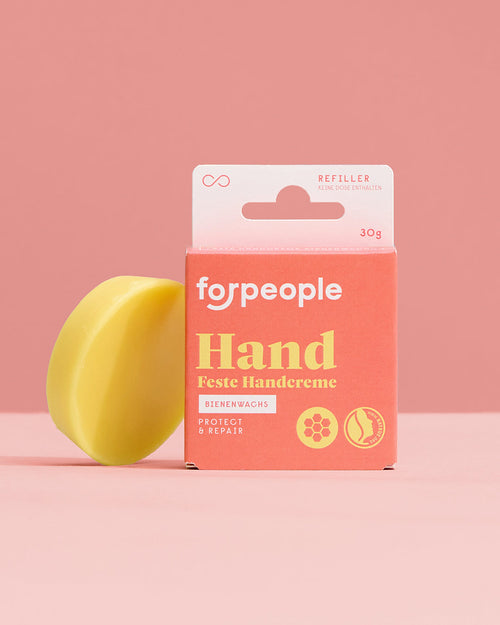
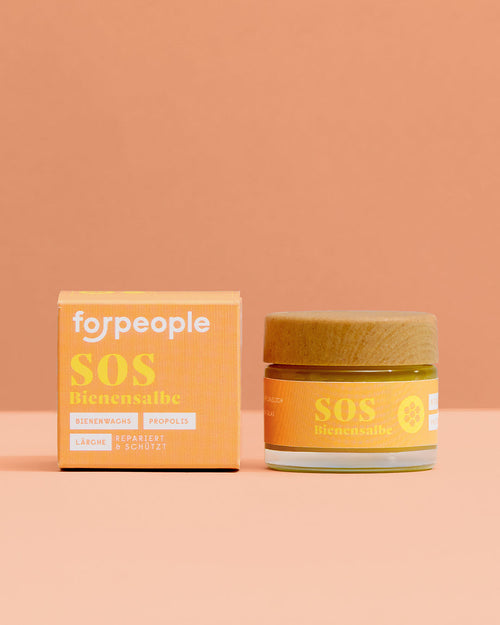
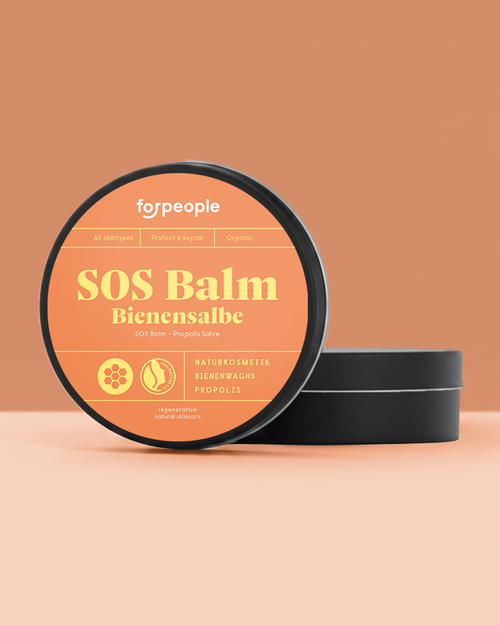
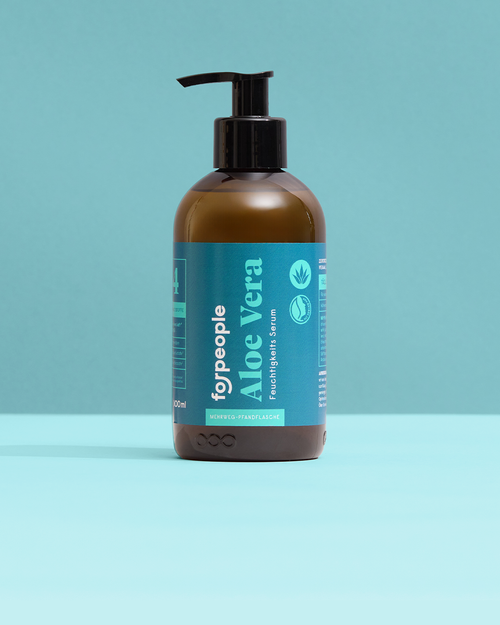
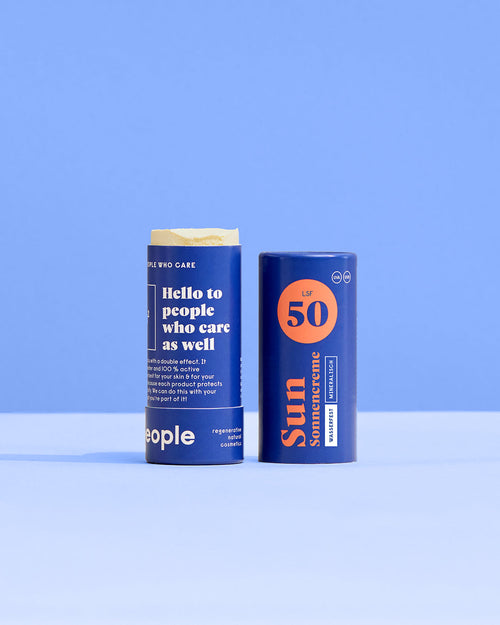
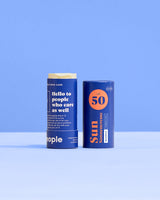
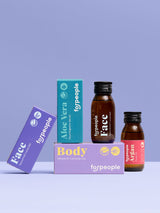
Our water-free creams and salves leave a film of fat on the skin. According to its INCI list, the Solid Hand Cream - Beeswax (30 g, €9.90) contains beeswax, olive and sunflower oil, St. John's wort and aloe extract and no added essential oils; you refill the tin with the Solid Hand Cream Refill - Beeswax (€7.90). Softer and easy to take out without pressure is the Beeswax Salve Larch & Mandarin in a Glass Jar (50 g, €12.90), also available as Bee Salve Larch & Mandarin in a Tin (150 ml, €34.90); it contains larch resin, propolis and essential oils. The Aloe Vera Serum 99.6% - Pump Bottle (300 ml, €27.90) can be dosed with one press; it is water-based and preserved. For the backs of your hands outdoors there is the mineral Solid Sunscreen SPF50 (40 g, €17.90) with non-nano zinc oxide and titanium dioxide. More on this: Dry skin in winter · Dry despite moisturising? · Allergic to resin and propolis · Cracked hands from frequent washing
Sources
- Ghadially R, Brown BE, Sequeira-Martin SM, Feingold KR, Elias PM (1995): The aged epidermal permeability barrier. Structural, functional, and lipid biochemical abnormalities in humans and a senescent murine model. J Clin Invest 95(5): 2281–2290. https://doi.org/10.1172/JCI117919
- Rogers J, Harding C, Mayo A, Banks J, Rawlings A (1996): Stratum corneum lipids: the effect of ageing and the seasons. Arch Dermatol Res 288(12): 765–770. https://doi.org/10.1007/BF02505294
- White-Chu EF, Reddy M (2011): Dry skin in the elderly: complexities of a common problem. Clin Dermatol 29(1): 37–42. https://doi.org/10.1016/j.clindermatol.2010.07.005
- Farage MA, Miller KW, Elsner P, Maibach HI (2008): Functional and physiological characteristics of the aging skin. Aging Clin Exp Res 20(3): 195–200. https://doi.org/10.1007/BF03324769
- Sethi A, Kaur T, Malhotra SK, Gambhir ML (2016): Moisturizers: The Slippery Road. Indian J Dermatol 61(3): 279–287. https://doi.org/10.4103/0019-5154.182427